
A Larger Imperial Family, but the Same Three Heirs
Japan's parliament has enacted the most significant revision to the Imperial House Law in more than seven decades, allowing princesses to remain royal after marrying commoners and creating a route for male descendants of former imperial branches to enter the household through adoption. The upper house approved the bill on Friday, following approval by the lower house one week earlier.
Contents
- A Larger Imperial Family, but the Same Three Heirs
- What Changes for Princesses Who Marry
- How Adoption Would Bring Former Branches Back
- Why Aiko Remains Outside the Succession
- How the Household Became So Small
- Public Support Meets Political Resistance
- Women Have Reigned Before
- The Constitution and the Emperor's Public Role
- What the Revision Means for the Next Generation
- Key Points
The changes address the shrinking membership of the world's oldest continuous hereditary monarchy. They leave its succession rules untouched: only men descended through the paternal line may inherit the Chrysanthemum Throne. Princess Aiko, 24, the only child of Emperor Naruhito, remains excluded despite surveys showing support for a female emperor reaching 83 percent.
The household now has 16 members, compared with 67 before the removal of former imperial branches in 1947. Just three men are eligible to succeed the emperor: Crown Prince Akishino, his younger brother; Prince Hisahito, Akishino's son; and Prince Hitachi, the emperor's uncle. Hisahito, born in 2006, is the only successor of his generation.
The legislation separates two problems that have become increasingly urgent: finding enough family members to carry out imperial duties and securing future emperors. Princesses who retain their status can help with the first. Their continued exclusion from succession leaves the second dependent on the paternal male line.
Conservative political leaders have defended that line as central to the monarchy's legitimacy. Critics, including historians, opposition lawmakers and constitutional scholars, argue that the revision provides a temporary answer to declining family numbers while avoiding the deeper succession crisis. The decision places a rigid rule excluding women at the heart of the state, even as Japan has advanced in gender equality in other areas.
What Changes for Princesses Who Marry
The revision to the 1947 Imperial House Law has two main provisions. The first allows female imperial family members to retain their royal status after marrying commoners, meaning people outside the imperial family. Previously, such a marriage automatically required a princess to surrender her title and leave the household.
Princess Mako followed that rule in 2021 when she married her college sweetheart. Her departure illustrated how a marriage could reduce the number of people available for official engagements, even when a princess had already spent years participating in public life.
Under the new rule, women can continue attending ceremonies, undertaking official duties and representing the imperial family after marriage. Keeping their birth status gives the household a way to retain experienced members without requiring them to remain unmarried.
The change also acknowledges the public role of women whose departure upon marriage had long been criticized as a symbol of institutional inequality. Its immediate practical purpose is to stabilize the number of working royals, rather than change who may become emperor.
Their husbands and children will not receive royal status under the revision. Questions about the structure of those families therefore remain unresolved. A princess can continue belonging to the imperial household while her spouse and children remain outside it.
How Adoption Would Bring Former Branches Back
The second provision opens a path for unmarried male descendants of 11 former imperial branches, aged 15 or older, to be adopted into the family. Those branches lost their imperial status after World War II. The proposal would reconnect the household with descendants whose families have lived outside it since 1947.
The adopted men would not themselves be eligible to become emperor. Any sons they fathered, however, could enter the succession line. The provision therefore aims to increase membership now while creating another possible source of eligible male heirs in the future.
Supporters argue that adoption is needed to keep the family large enough to function. Its members undertake public duties, religious ceremonies and international visits, all of which require people able to represent the institution. Retaining princesses and bringing in male relatives are intended to support that work.
Critics question whether enough young men would want to exchange private lives for the tightly regulated and heavily scrutinized existence of an imperial family member. The plan depends on a dwindling pool of potential adoptees, making personal willingness a practical issue as well as a political one.
Some historians have warned that the arrangement could place pressure on individuals to accept a role they never sought. Adoption would mean more than acquiring a title: it would bring the expectations and restrictions attached to membership of the imperial household.
Why Aiko Remains Outside the Succession
Princess Aiko's position is unchanged. The law permits women to remain imperial family members after marriage, but it continues to reserve the throne for males descended through an unbroken paternal line. Family membership and eligibility to reign remain separate legal questions.
A paternal line traces descent through fathers. Under the existing rule, being the emperor's daughter does not make Aiko eligible to succeed him. Her qualifications, popularity and growing public role do not change the legal requirement.
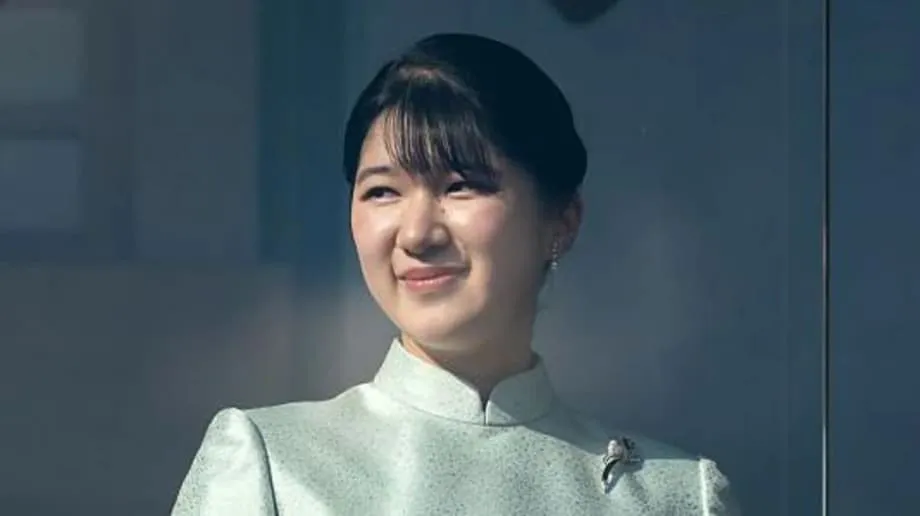
Aiko has increasingly undertaken formal duties and is often welcomed by enthusiastic crowds during public appearances. Advocates of reform had hoped her prominence would strengthen the case for allowing a woman to become emperor. The legislation instead preserves the barrier between her public service and the throne.
The current succession order remains Crown Prince Akishino, who is 60; Prince Hisahito; and Prince Hitachi, who is 90. With Hisahito the only successor of his generation, the future of the male line depends heavily on whether he eventually has a son.
Prime Minister Sanae Takaichi, Japan's first female prime minister, has defended the paternal male line as the basis of imperial legitimacy. Explaining her position, she said:
The unparalleled historic fact that the imperial line has been maintained through the male line for 126 generations is the foundation of the emperor's authority and legitimacy.
How the Household Became So Small
The present shortage has its roots in the changes made after World War II. In 1947, American occupation authorities and Japanese lawmakers rewrote the Imperial House Law. Fifty one members of 11 collateral branches were removed from the family, mostly as a measure to reduce costs.
Collateral branches are related family lines outside the emperor's immediate household. Their removal sharply narrowed the institution. Combined with the family's modest birth rate and the rule requiring women to leave upon marriage, the settlement left the household with its current 16 members and only three possible successors.
The ages of those successors make the problem more pressing. Akishino is 60 and Hitachi is 90, while Hisahito, born in 2006, stands alone among eligible heirs of his generation. The revision seeks to widen the family around them without changing the rules governing their place in the succession.
The household also faces a shortage of people to perform hundreds of engagements each year. These range from regional visits to religious rites at the Imperial Palace. A declining membership places those responsibilities on fewer people, regardless of whether a succession takes place soon.
The main stages in the development of the current system are:
- 1889: The Meiji government introduced the first Imperial Household Law, establishing the modern system restricting succession to men.
- 1947: The law was rewritten, 51 members of 11 branches lost imperial status, and women were required to leave the family upon marrying commoners.
- 2006: Prince Hisahito was born, becoming the only eligible successor of his generation.
- 2021: Princess Mako left the household after marrying her college sweetheart.
- July 2026: The lower house approved the revision one week before the upper house passed it on Friday.
Public Support Meets Political Resistance
Surveys in recent months have found support for a female emperor ranging from 70 percent to 83 percent. A June poll recorded more than 70 percent in favor, while another survey found 83 percent backing the idea. The ruling coalition nevertheless chose to preserve succession restricted to men.
The gap between those results and the legislation has fueled accusations that lawmakers are ignoring public opinion. Opponents argue that keeping women in the household while excluding them from the throne leaves the most widely debated question unanswered.
Seiichiro Noboru, a former Japanese diplomat with ties to the imperial family, has argued that the government's approach runs counter to popular opinion. He referred to the constitution when explaining why public consent matters:
Article 1 of the Japanese Constitution states that the Emperor is the symbol of the nation and that his position is determined by the will of the people.
Opposition parties in the upper house objected to the bill, and some members of the ruling coalition also expressed discomfort. The lower house passed the measure after only a few hours of committee debate, drawing criticism that parliament had rushed a decision touching the foundations of the state.
The disagreement concerns both the content of the law and how it was passed. Supporters prioritized maintaining a functioning imperial household within the existing male line. Critics wanted a fuller debate about whether that approach could secure the monarchy for future generations.
Women Have Reigned Before
Japan's history includes female emperors, despite the present restriction. Across nearly 12 centuries, eight women reigned as emperor. Most ruled during the Asuka and Nara periods, from 592 to 794.
Those women were all descendants of the male line, and none passed the throne to her own child. Their reigns were generally understood as temporary arrangements until a suitable male heir could take over. The historical precedent therefore involves women occupying the throne within a system that preserved paternal descent.
The modern legal restriction to men dates to 1889, when the Meiji government enacted the first Imperial Household Law. Meiji leaders viewed the emperor as the patriarch of a family state and as the military's commander in chief, with semi divine status in Shinto.
The wider legal position of women reflected that hierarchy. Under the Meiji civil code, married women were legally subordinate to their husbands. The imperial succession rule formed part of a political and social order built around male authority.
The Meiji law also permitted concubines as a practical response to the recurring difficulty of producing surviving male heirs. Historians have noted that nearly half of Japan's 125 emperors were born to concubines, complicating claims about the purity of the male line.
The history brings two different issues into the present debate: whether a woman may reign and whether succession may pass through a woman to her child. Japan's earlier female emperors provide precedents for the first, while the current political defense of the paternal line centers on preserving descent through men.
The Constitution and the Emperor's Public Role
Article 1 of Japan's postwar constitution identifies the emperor as the symbol of the nation and places the basis of his position in the will of the people. Article 14 guarantees equality under the law. Critics argue that excluding women from succession on the basis of gender sits uneasily with those principles.
The government has defended the arrangement by pointing to the special nature of the imperial institution. Opponents counter that the constitution makes the emperor's authority dependent on popular consent, bringing the strong polling support for a female emperor into the legal and political argument.
Emperor Naruhito addressed the discussion with unusual directness at a press conference last month. Speaking about efforts to maintain the household's membership, he said:
I hope that discussions on how to secure the number of imperial family members will gain the understanding of the people.
His rare public comment highlighted the sensitivity of the issue and placed public understanding at the center of the discussion. The question extends beyond the number of people available for ceremonies: it concerns how an institution meant to symbolize the Japanese people maintains their support.
What the Revision Means for the Next Generation
The immediate effect of the law is expected to be a modest increase in the people available to support imperial duties. Princesses can continue serving after marriage, and eligible men from former branches can enter through adoption. Those measures address the practical demands of a smaller household.
Prince Hisahito remains central to the existing succession plan. If he does not eventually have a son, or if the paternal male line fails at another point, the monarchy would face the crisis that critics say this legislation postpones. The adoption route provides a possible additional source of future heirs through sons born to adopted men.
Princess Aiko remains outside the succession regardless of her public appeal or qualifications. Future reform is still possible, but conservative opposition continues to block a political route to a female emperor. Some scholars warn that maintaining the restriction risks leaving the institution unable to adapt to the society it is intended to symbolize.
Japan has changed who can remain within the imperial family and who can be brought into it. It has kept the central rule governing the throne intact. The result offers help with the household's immediate workload while leaving its future tied to the continuation of descent through men.
Key Points
- Parliament enacted the most significant Imperial House Law revision in more than seven decades, with upper house approval following the lower house vote by one week.
- Female royals may keep their status after marrying commoners, but their husbands and children will remain outside the imperial family.
- Unmarried male descendants of 11 former imperial branches, aged 15 or older, may enter through adoption. They cannot become emperor themselves, but their sons could enter the succession.
- Princess Aiko, 24, remains ineligible for the throne. The three current successors are Crown Prince Akishino, Prince Hisahito and Prince Hitachi.
- The imperial household has 16 members, compared with 67 before the removal of 51 members in 1947.
- Recent surveys show 70 percent to 83 percent support for a female emperor, while Prime Minister Sanae Takaichi defends the paternal male line.
- Critics argue that the revision addresses declining household membership without resolving the deeper succession problem.