

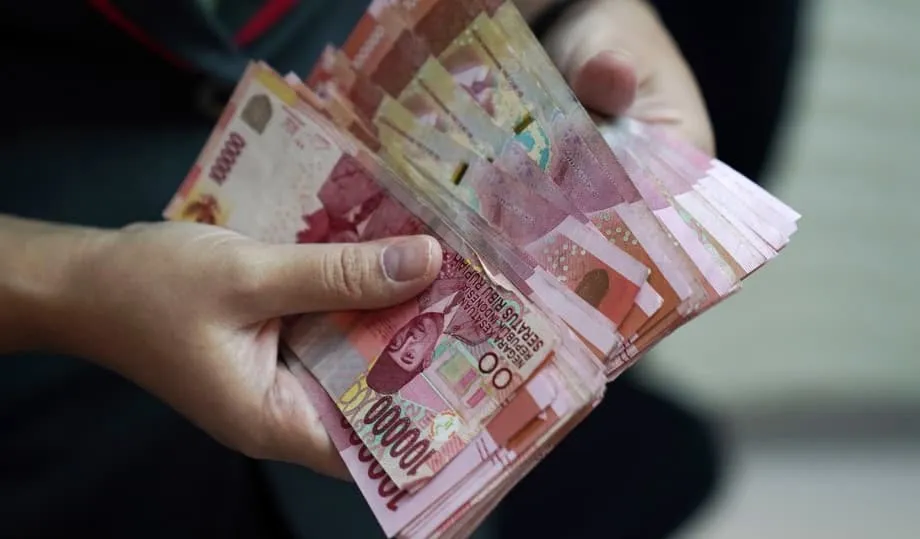
A Smaller Portion of an Everyday Staple
In Gunungkidul, Yogyakarta, tofu factory owner Agung Gunawan has reduced a box of tofu from 250 grams to around 220 grams. In Pejaten, Serang, Banten province, producer Budi has cut his daily soybean use from about 200 kilograms to between 100 and 150 kilograms. Across Indonesia, a weakening rupiah is changing how much food families get for their money.
Contents
- A Smaller Portion of an Everyday Staple
- Why Dollars Matter to a Rupiah Purchase
- Fuel Adds a Second Layer of Costs
- Inside the Workshops Making Less
- Why Producers Hesitate to Raise Prices
- Household Strain Meets Job Losses
- A Presidential Remark Draws Criticism
- Higher Interest Rates, Cheaper Soybeans
- The Budget Faces Competing Demands
- How Soybean Dependence Took Root
- What to Know
By July 17, 2026, the currency squeeze had reached two of the country's most familiar foods: tofu and tempeh. Imported soybeans, their main ingredient, had risen to about Rp 11,000 per kilogram in several regions, compared with the usual Rp 9,000 to Rp 10,000. Small producers were shrinking portions, reducing output and raising prices, sometimes doing all three.
Tofu and tempeh are among the cheapest and most widely consumed sources of protein for families with low and middle incomes. Fried, steamed or simmered in sambal, they appear in homes, school canteens and roadside stalls from Sumatra to Papua. Their affordability makes changes in their price or size a matter of daily concern.
The rupiah traded near Rp 17,726 per US dollar on one morning, while the Jakarta Interbank Spot Dollar Rate later touched Rp 18,171. In early June, the currency breached Rp 18,155 per dollar, described at the time as its lowest level on record. The 2026 state budget had assumed Rp 16,500 per dollar, leaving a substantial gap between government planning and the cost facing importers.
Indonesia imports around 85 to 90 percent of its soybean needs. For producers working with narrow profit margins, a falling currency quickly becomes a choice between charging more, selling less or making each portion smaller.
Why Dollars Matter to a Rupiah Purchase
Indonesia is Southeast Asia's largest economy, yet nearly 90 percent of the soybeans used for tofu and tempeh come from abroad, primarily the United States, Brazil and Argentina. Those beans are bought and shipped in US dollars. When more rupiah are needed to buy one dollar, the same cargo costs more in Indonesian currency.
Economists call this imported inflation: a country pays more in its own money for goods or raw materials purchased overseas. Businesses then pass some or all of that increase to customers. A family can feel the effect while paying entirely in rupiah, because the dollar cost enters the chain before the food reaches the shop.
Escalating conflict in the Middle East, including threats to shipping through the Strait of Hormuz, has pushed up oil prices and disrupted supply chains. During uncertainty, global investors tend to move money into assets priced in dollars, which they regard as safer. Money leaving other markets puts pressure on currencies such as the rupiah.
Domestic fiscal pressures, weakening external balances and declining foreign exchange reserves have also made investors more cautious. Together, these pressures have made imported food and energy more expensive at a time when many households have little money to spare.
Fuel Adds a Second Layer of Costs
Brent crude has been near $95 per barrel, compared with the $70 assumption in Indonesia's state budget. Indonesia is a net oil importer and runs a large oil trade deficit, so higher international prices add to its import bill.
Tofu and tempeh producers face both the higher price of soybeans and the fuel costs of cooking and delivering their products. More expensive transport and logistics spread the pressure across almost every product, extending the currency squeeze well beyond one ingredient.
Imported energy is pushing up transport and electricity costs. Imported wheat is raising noodle prices, while imported livestock feed is affecting meat and dairy. For families with low incomes, food typically takes 36 to 38 percent of monthly spending. Buying less protein or cutting another necessity are painful choices when basic food becomes more expensive.
Inside the Workshops Making Less
Budi, the tofu producer in Pejaten, has reduced daily soybean use by between one quarter and one half from his previous 200 kilograms. Less raw material means less tofu to sell and less revenue for a business already operating on a thin margin.
Budi explained how he was trying to keep his workshop profitable:
"To keep making a profit, we have reduced product size, cut production, and increased selling prices," Budi said.
A tray of tofu in his area has risen from around Rp 17,000 to Rp 19,300. That is an increase of Rp 2,300, or about 13.5 percent, for a food that forms part of everyday meal planning rather than an occasional purchase.
Agung Gunawan, the factory owner in Gunungkidul, has switched to cheaper soybean brands and reduced ingredient portions. The changes lower costs but affect quality and weight. He described the smaller packages his factory now produces:
"Usually one box contains 250 grams, now we make it around 220 grams," Agung said.
The reduction from 250 grams to 220 grams is 12 percent. Even when a package carries the same price, a customer receiving less food is paying more for each gram. This is often called shrinkflation, a price increase delivered through a smaller portion.
Tofu demand has nevertheless increased in recent weeks, partly because of local harvest festivals and partly because of the free nutritious meal program, known as MBG. The program supplies meals to students and others, creating additional demand for basic proteins.
More orders give producers a chance to earn more, but they also increase the pressure to supply affordable food while ingredient costs climb. For a small factory, strong demand does little to solve the problem if each sale leaves too little money to cover production.
Why Producers Hesitate to Raise Prices
Ardy Firmansyah, a tempeh maker in West Tebet, Jakarta, faces customers whose purchasing power is already weak. A sharp increase in the displayed price could drive them away, leaving his business with fewer sales.
Ardy explained why producers often change the quantity instead:
"If we raise prices too much, customers may stop buying, so many producers reduce the contents instead," Ardy said.
Similar decisions are being made in small workshops and market stalls across the archipelago. A tray or packet may look familiar on the outside while containing less than it did a month earlier. For customers counting every rupiah, the extra cost appears as food that runs out sooner.
Shrinkflation has become a survival strategy for producers trying to balance higher costs against the amount customers can afford. Families, meanwhile, must either buy additional portions, accept less food or redirect money from other needs. That pressure puts both household budgets and nutrition at risk.
Household Strain Meets Job Losses
More than 88,000 formal sector workers were laid off in 2025, according to government data. Another 23,470 lost their jobs between January and May 2026. West Java, Indonesia's manufacturing heartland, accounted for the largest share.
Temporary and informal workers often fall outside official statistics, so the number of people affected is likely higher. As factories slow production and consumer demand weakens, businesses face choices between protecting profits and retaining workers.
Real wages are stagnant, while many families in the middle class are postponing home and vehicle purchases, choosing cheaper brands and using savings to cover monthly shortfalls. More expensive staples arrive alongside those wider financial pressures.
Food prices also carry political weight. For Indonesians who remember the 1997 and 1998 Asian financial crisis, a currency falling to record lows recalls bank runs, soaring prices and street protests that helped topple a government. Today's squeeze is being felt through purchases that households make every day.
A Presidential Remark Draws Criticism
President Prabowo Subianto took office promising economic growth of 8 percent and ambitious welfare programs. The rupiah's decline has placed those promises alongside rising costs and growing concern about living standards.
Speaking at a village cooperative event in Nganjuk, East Java, on May 16, Prabowo suggested rural communities should not worry too much about the exchange rate because they do not use dollars. He said:
"As long as Purbaya can keep smiling, there is no need to worry. No matter how many thousand rupiah to the dollar, villages do not use dollars," Prabowo said.
The remarks went viral and were widely seen as insensitive. Economists pointed to the imported inputs behind village purchases: livestock feed, cooking oil, fuel and the soybeans used for tofu and tempeh. Rural households encounter the exchange rate through the prices of those goods, whether or not anyone has ever held a dollar bill.
Public frustration has also gathered around #IndonesiaGelap, meaning Dark Indonesia, particularly among younger Indonesians. Students have joined street protests alongside people from households with low and middle incomes.
Their grievances include limited transparency in government policies, concerns about the Danantara wealth fund, military influence in civilian agencies and a cabinet perceived as oversized. Political scientists describe the gap between expectations and lived experience as relative deprivation. When promised improvements feel distant while daily expenses rise, economic dissatisfaction can become a political crisis.
Higher Interest Rates, Cheaper Soybeans
Bank Indonesia has responded by raising its benchmark interest rate by 50 basis points to 5.25 percent, surprising markets. Fifty basis points means half a percentage point. The aim is to make holding rupiah more attractive and slow money flowing out of the country, supporting the exchange rate.
Higher interest rates also make borrowing more expensive for businesses and consumers. That can slow economic growth, creating a difficult balance between defending the currency and supporting spending and investment.
Trade Minister Budi Santoso has announced a soybean subsidy of Rp 2,000 per kilogram for tofu and tempeh producers. The initial phase covers roughly 250,000 tonnes of imported soybeans and is expected to cost Rp 500 billion, about $27.8 million.
Santoso explained the decision to provide assistance:
"Considering the significant increase in soybean prices, we decided to provide assistance to tempeh producers," Santoso said.
Coordinating Minister for Food Affairs Zulkifli Hasan said the subsidy is intended to buffer the domestic market against the weaker rupiah because Indonesia remains dependent on soybean imports. State logistics company Bulog has been assigned to sell the subsidized beans directly to producers.
Bulog President Director Ahmad Rizal Ramdhani described how the distribution would work:
"These products will not be distributed through the market. Instead, they will be sold directly to producers to ensure lower prices," said Bulog President Director Ahmad Rizal Ramdhani.
Direct distribution is intended to get the lower input cost to the businesses making tofu and tempeh. No starting date for distribution was given.
The Budget Faces Competing Demands
The soybean subsidy offers temporary relief while public spending is already under pressure. Some economists note that state spending grew by 21 percent, partly because of the MBG free meal program and the Merah Putih Village Cooperative.
MBG connects to the soybean squeeze in two ways: it contributes to demand for affordable protein, and it is part of the spending commitments competing for government funds. Producers serving that demand must still manage the rising cost of ingredients.
Fuel subsidies create another difficult choice. Keeping them in place widens the budget deficit, while removing them raises prices and inflation. A government trying to protect household purchasing power must also manage the cost of providing that protection.
The weaker rupiah and oil prices above the budget assumption make the balance harder. Interest rate increases address pressure on the currency, while soybean assistance targets one immediate food cost. Neither measure changes how much of Indonesia's soybean supply comes from overseas.
How Soybean Dependence Took Root
Indonesia produced about 1.9 million tonnes of soybeans on 1.6 million hectares of farmland in 1992. During 2002 to 2017, annual production had fallen to between 540,000 and 970,000 tonnes. The decline left the country increasingly dependent on imports for a staple ingredient.
Many tofu and tempeh producers prefer imported soybeans because they consider them more reliable and of higher quality. Local yields are only about half those of major producers such as the United States and Brazil, while thin profit margins have encouraged Indonesian farmers to switch to crops such as chili or corn.
Warnings about inconsistent efforts to increase domestic production were already being raised in 2022. Despite years of discussion about food security, Indonesia has continued to import roughly 80 to 90 percent of the soybeans it consumes.
The main milestones show how a longstanding agricultural weakness has met a more immediate financial shock:
- 1992: Domestic soybean production reached about 1.9 million tonnes on 1.6 million hectares.
- 2002 to 2017: Annual output ranged from 540,000 to 970,000 tonnes.
- 2022: Critics warned that policies to increase domestic production lacked consistency.
- 2025: More than 88,000 formal sector workers lost their jobs.
- January to May 2026: Another 23,470 formal sector layoffs added to household financial pressure.
- May 16, 2026: Prabowo addressed concerns about the rupiah at a village cooperative event in Nganjuk.
- Early June 2026: The rupiah breached Rp 18,155 per dollar, then described as a record low.
Food security specialists have proposed giving Bulog greater control over imports and linking private import quotas to purchases of domestic soybeans. Other proposals include minimum and maximum prices to protect farmers and consumers, subsidies and training to improve yields, and encouragement for seed companies to develop varieties suited to Indonesia's climate and soil.
Those proposals aim to make growing soybeans more attractive while improving the supply available to processors. The immediate task is keeping tofu and tempeh affordable. The longer task is reducing the exposure that makes a change in the dollar price visible in an Indonesian family's meal.
What to Know
- The rupiah's slide has raised the cost of imported soybeans, with prices reaching about Rp 11,000 per kilogram in several regions.
- Indonesia imports around 85 to 90 percent of its soybean needs, making tofu and tempeh sensitive to currency movements.
- Producers are cutting output, raising prices and shrinking portions. Agung Gunawan's tofu boxes have fallen from 250 grams to around 220 grams.
- Higher food costs are arriving alongside stagnant real wages and formal sector layoffs exceeding 88,000 in 2025 and reaching another 23,470 in January to May 2026.
- Bank Indonesia raised its benchmark rate by 50 basis points to 5.25 percent to support the rupiah.
- The government announced Rp 2,000 per kilogram in soybean assistance, initially covering 250,000 tonnes at an estimated cost of Rp 500 billion, with direct distribution through Bulog.
- Reviving domestic soybean production remains central to reducing exposure to international prices and a weaker currency.