A Perfect Storm on the Horizon
Sweltering days and thick haze may soon return to Southeast Asia. On May 7, Singapore Minister for Sustainability and the Environment Grace Fu warned that a phenomenon popularly called Godzilla El Nino could trigger more intense forest fires and transboundary haze later in 2026. Speaking at the annual Singapore Dialogue on Sustainable World Resources, she told more than 230 government, business, and civil society representatives that the region faces a perfect storm caused by a double blow of geopolitical tensions and climate change.
- A Perfect Storm on the Horizon
- The Science Behind a Godzilla El Nino
- Searing Temperatures and Water Shortages
- Transboundary Haze and Fire Risk Return
- Coral Reefs and Marine Life Face New Stress
- Crops, Commodities and the Cost of Survival
- Geopolitical Shockwaves Amplify Climate Stress
- How Governments and Communities Are Gearing Up
- Key Points
The warning arrives as Indonesia and Malaysia already report thousands of hotspots and burned hectares months before the traditional dry season peak. Sea surface temperatures in the equatorial Pacific are climbing rapidly, and forecasters from the World Meteorological Organization say the climate pattern known as El Nino could emerge between May and July 2026. If it reaches super strength, the event would rival the most destructive episodes in modern history, potentially pushing global temperatures to record levels in 2027.
A Godzilla El Nino is not merely a stronger version of the recurring climate cycle. It represents a threshold at which Pacific Ocean warming exceeds 2 degrees Celsius above the historical average, enough to reshape weather across the globe. Southeast Asia, sitting on the western rim of the Pacific, would feel the effects through hotter temperatures, prolonged drought, and heightened fire risk that could strain water supplies and agricultural output for millions of people.
The timing could not be worse. The ongoing conflict in the Middle East has already pushed energy and fertilizer costs higher, while disrupting shipping lanes such as the Strait of Hormuz. Higher input prices and supply chain bottlenecks are compounding the risk of crop losses caused by extreme heat. As Minister Fu put it, the region should not let a good crisis go to waste, but instead seize the moment to build stronger resilience against future shocks.
The Science Behind a Godzilla El Nino
El Nino is a naturally occurring climate cycle that begins when trade winds over the Pacific weaken, allowing warm water to slosh eastward toward the Americas. During a typical episode, sea surface temperatures in the central and eastern equatorial Pacific rise by at least 0.5 degrees Celsius above average, altering rainfall and temperature patterns worldwide.
The term Godzilla was coined by a NASA climatologist in 2015, when he realized that the developing El Nino that year would surpass the infamous 1997 and 1998 event. A super or Godzilla El Nino is declared when the central equatorial Pacific warms by more than 2 degrees Celsius. The United States National Oceanic and Atmospheric Administration currently estimates a 60 percent chance of El Nino forming between May and July 2026 and persisting through at least the end of the year. Some models place the chance of a super El Nino at roughly 25 percent.
Climate scientist Koh Tieh Yong, an adjunct associate professor at the National University of Singapore, expects the event to develop into a strong El Nino, defined by a 1.5 degree Celsius rise in sea surface temperature, during the final quarter of 2026. He notes that strong El Ninos tend to intensify rapidly once they emerge from the neutral phase.
Presently, it is still in the neutral phase, which means the event will emerge in the next one to two months and intensify rapidly, as strong El Ninos tend to do.
Previous super El Ninos occurred in 1982 and 1983, 1997 and 1998, and 2015 and 2016. The 2015 episode produced the worst haze crisis in recent memory, prompting daylong school closures in Singapore. The last strong event, in 2023 and 2024, helped make 2024 the hottest year on record as global average temperatures exceeded 1.5 degrees Celsius above levels typical before industrialization for the first time. The World Meteorological Organization has stated that there is no evidence climate change increases the frequency of El Nino, but a warmer ocean and atmosphere intensify associated extremes by providing more energy and moisture for destructive weather.
Searing Temperatures and Water Shortages
Singaporeans can expect hotter weather from July 2026 onward, according to the Meteorological Service Singapore. El Nino typically suppresses rainfall across the region during the southwest monsoon, and climate scientist Koh Tieh Yong warns that precipitation could fall sharply between June and October 2026, and again between February and May 2027. Those months already mark the drier part of the year for the southern ASEAN region.
Historical data underscores the risk. During the super El Nino years of 1983, 1998, and 2016, rainfall from February to May fell to historic lows. In 2016, water levels at the Linggiu Reservoir in Johor, which supplies Singapore with imported water, plunged to a record low of 20 percent capacity. If similar dry conditions return, Singapore may need to rely more heavily on desalination plants and NEWater to meet domestic demand. During dry spells, NEWater is already added into the national reservoirs to maintain adequate storage.
Clearer skies and reduced cloud cover also allow more solar radiation to heat the land surface, pushing daytime temperatures higher. Singapore defines a heatwave as three consecutive days with maximum temperatures of at least 35 degrees Celsius and daily mean temperatures of at least 29 degrees Celsius. The Republic last experienced such a heatwave in April 2016, and meteorologists say the coming months could bring more hot days and warm nights. Electricity demand for air conditioning is also expected to spike, straining power grids already stretched by higher cooling loads.
Neighboring countries are already feeling the strain. Malaysia and Thailand are currently grappling with intense heat, and Malaysian Prime Minister Anwar Ibrahim recently announced cloud seeding operations to bring rain to drought hit rice growing regions in the northern peninsula. In Bangkok, the heat index climbed above 52 degrees Celsius earlier in May, putting vulnerable populations at risk of heatstroke and dehydration.
Transboundary Haze and Fire Risk Return
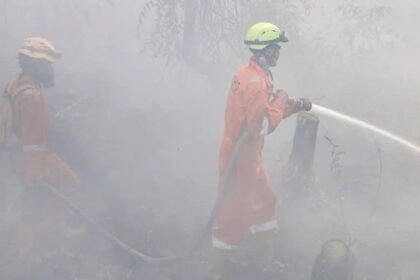
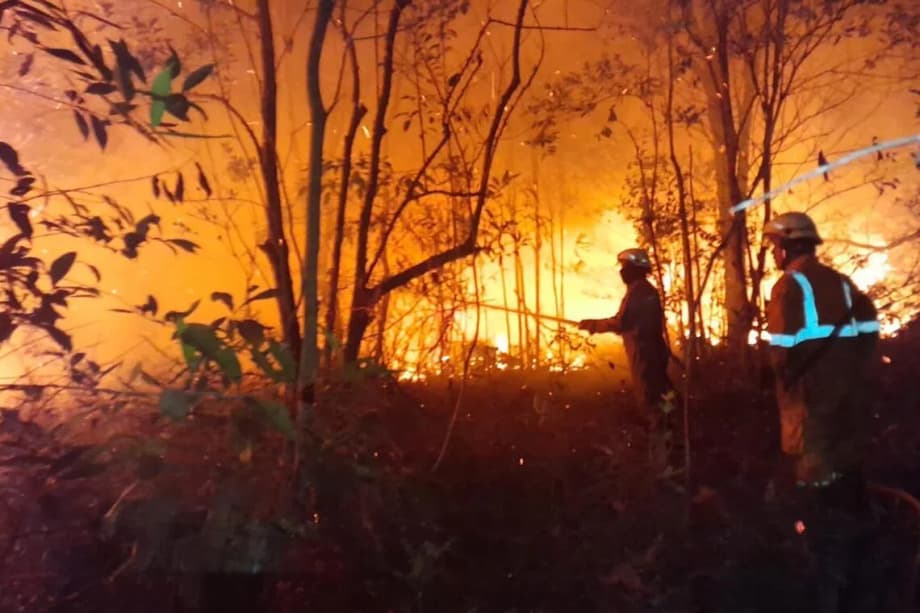
Forest and peatland fires are already flaring across Indonesia, even though the traditional dry season does not peak until later this year. By February 2026, burned area had reached 32,637 hectares, roughly 20 times higher than the same period in 2025, according to satellite monitoring. Independent watchdog Pantau Gambut detected 23,546 hotspots in peatland areas since January, with 12,942 of those appearing in March alone. Many of these hotspots sit inside oil palm and timber concessions, suggesting that legal permits alone do not guarantee land management that prevents fire.
The root causes of haze remain stubbornly human. Farmers and plantation companies often use cheap slash and burn methods to clear land, while drained peatlands become highly combustible. In Riau province, a community fire meant to clear 4 hectares of peatland ultimately consumed 342 hectares, and another attempt in the Meranti Islands burned 632 hectares. Professor Bambang Hero Saharjo of IPB University in Indonesia said that when fires are proven, legal action must follow, and corporations should face compliance audits before the dry season begins.
If fires are proven, legal action must be taken. Corporations should undergo a compliance audit before the dry season, with action taken against those who use fire for land clearing.
Deforestation is compounding the danger. Think tank Auriga Nusantara based in Jakarta reported that Indonesia lost 433,751 hectares of forest in 2025, a 66 percent jump from 2024 and the fastest pace since 2016. Nearly a fifth of that clearing was tied to government food and bioenergy estate programs. Peatlands targeted for conversion dry out, creating ideal conditions for fires that can smolder for weeks and release toxic smoke across borders.
Riau province, the second closest Indonesian province to Singapore, declared an emergency alert for forest and land fires on February 13 that runs through November 30. The provincial government has requested water bombing helicopters and cloud seeding aircraft from Jakarta to douse flames before they spread. Indonesia Environment Minister Hanif Faisol Nurofiq has called for stronger coordination between central and regional authorities, warning that forest fires cause trillions of rupiah in economic losses and chronic health impacts.
Coral Reefs and Marine Life Face New Stress
Beyond the land, warming oceans threaten fragile underwater ecosystems. The last strong El Nino of 2023 and 2024 triggered the fourth global mass coral bleaching event, affecting more than 80 percent of the world reefs. In Singapore waters, about 44 percent of coral colonies surveyed had bleached by July 2024, and roughly 5 percent eventually died. The mortality rate was double that during the 2016 super El Nino, when 10 percent of corals perished.
Coral bleaching occurs when stressed polyps expel the microscopic algae that give them color and food. Without recovery, the reefs turn white and can starve. Associate Professor Huang Danwei, deputy head of the National University of Singapore Lee Kong Chian Natural History Museum, said the probability of another widespread bleaching episode hinges on how quickly the Pacific warming translates into higher regional sea temperatures.
Huang is leading a research project under the National Parks Board Marine Climate Change Science programme that will transplant corals that resist heat to reef areas in the Southern Islands in late May 2026. He explained that the initiative aims to test whether microbes that tolerate heat can help minimize bleaching.
If these test corals perform better during the El Nino event, this approach could be scaled up to mitigate bleaching on our reefs to some degree.
Warming seas also alter fish migration patterns and can reduce catches for coastal communities that depend on seafood for protein and income. A repeat of the 2016 marine heatwave could therefore ripple through both ecological and economic systems that often go unnoticed until they fail.
Crops, Commodities and the Cost of Survival
Agriculture across Southeast Asia faces a precarious growing season. Rice production in Indonesia fell by about 2.3 million tons during the first four months of the 2024 El Nino, a drop of 17.5 percent compared with the prior year. The 1997 and 1998 episode slashed output by up to 6 percent. A strong 2026 event could trigger similar shortfalls in Indonesia, Vietnam, and Thailand, threatening food security for nations that depend on imports.
Minister Grace Fu highlighted that the Middle East conflict has driven fertilizer and shipping costs upward, creating a toxic mix for farmers already battling drought. She suggested that converting palm oil waste and wastewater into organic fertilizer and biogas could reduce dependence on fossil fuel markets. Sustainable practices such as crop rotation, regenerative agriculture, and responsible land use can help maintain ecological balance while keeping yields stable.
Trade pressures add another layer of risk. The European Union will impose rules against deforestation at the end of 2026, requiring companies to prove that agricultural goods sold to the bloc did not destroy forests or degrade land. Indonesia Vice Minister for Foreign Affairs Arif Havas Oegroseno warned that palm oil faces intensive scrutiny, while other vegetable oils grown in Europe receive less attention. He described the uneven standards as a thinly veiled trade barrier rather than genuine environmental protection.
Singapore has commissioned a study on climate change impacts on regional agriculture, with findings expected later in 2026 to be shared with ASEAN. The nation has also launched the Singapore Food Story 2 initiative to deepen global partnerships and buffer supply shocks. Indonesia national food agency says it has prepared government rice reserves to anticipate potential disruptions, though campaigners warn that access and affordability remain concerns for families with low incomes.
Geopolitical Shockwaves Amplify Climate Stress
The convergence of extreme weather and global conflict has created what Minister Fu called a perfect storm for Southeast Asia. Geopolitical tensions in the Middle East have taken center stage, compounding economic fragilities, supply chain disruptions, and inflationary pressures across the region. The agricultural commodity sector, which accounts for nearly 10 percent of ASEAN exports to the European Union, is particularly exposed to rising energy costs and maritime bottlenecks that inflate prices for fertilizer and transport. Fu warned that trade barriers erected alongside sustainability standards could stifle commerce, leaving growers, exporters, and importers worse off if coordination falters.
Fu urged regional governments to treat sustainability as a buffer against these shocks. Robust traceability along supply chains is essential, because a single supplier failing to comply can damage the reputation of an entire ecosystem. Collective responsibility and concerted action are therefore critical for maintaining market access and investor confidence. She also noted that converting palm oil waste and wastewater into organic fertilizer and biogas could reduce dependence on volatile fossil fuel markets, turning a liability into a strategic resource.
Indonesia Vice Minister for Foreign Affairs Arif Havas Oegroseno echoed the call for fairness, pointing out that palm oil faces intensive scrutiny and regulatory conditionality, while other vegetable oils grown in advanced economies often escape similar attention. He described the uneven application of green standards as a thinly veiled trade barrier rather than genuine environmental protection.
Singapore will assume the ASEAN chairmanship in 2027 and intends to advance initiatives such as the ASEAN Power Grid, a regional carbon neutrality strategy, and a circular economy framework. The challenges of the coming El Nino and the Middle East conflict will feed directly into that agenda, making the next two years a defining period for regional solidarity and economic planning.
How Governments and Communities Are Gearing Up
Across the region, authorities are racing to mitigate the worst effects before the dry season intensifies. Indonesia has prioritized fire control in border regions such as Riau, Riau Islands, and West Kalimantan, using helicopters for water bombing and cloud seeding to induce rain. Health officials have issued protocols for heat and haze, urging vulnerable residents to limit outdoor activity, wear masks, and maintain clean living habits to avoid acute respiratory infections.
Singapore has activated a national heatwave response plan that includes islandwide cooling centers at community centers and indoor sports halls. The government is installing additional fans in all classrooms by 2027 and has approved breathable uniforms for students during hot spells. The HTX agency has developed cooling vests with ventilation systems for frontline police officers and firefighters. Residents can check heat stress levels on the myENV application before heading outdoors.
Malaysia has placed Kuala Lumpur under a Level 1 heatwave alert and encouraged civil servants to work from home where possible. Shopping malls are adjusting air conditioning and ventilation systems, while some shared offices report surging electricity bills from continuous cooling. The Health Ministry has warned the public to avoid outdoor activities between 11 am and 4 pm, when temperatures peak.
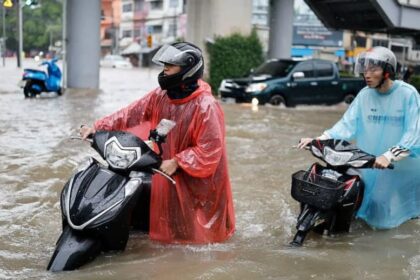
Scientists also caution that drought does not rule out flash floods. Andy Smith, chief operating officer of Fathom, which analyzes water risk, explained that extreme heat can fuel sudden bursts of intense rainfall that overwhelm drainage systems. The resulting climate whiplash means communities must prepare for both parched reservoirs and localized inundation.
Things get a lot hotter, nevertheless, and this is something that is kind of a little counterintuitive, but it can also mean that localised flooding increases.
Ultimately, preparedness will depend on how quickly ASEAN members share data, enforce fire bans, and redirect resources to vulnerable communities. The dry season is approaching, and the window for preventive action is narrowing.
Key Points
- A super El Nino, colloquially called Godzilla, may form by late 2026 with Pacific warming exceeding 2 degrees Celsius above average.
- Singapore and neighboring countries face hotter temperatures, reduced rainfall, and heightened haze risk from August to November 2026 and February to May 2027.
- Indonesia has already recorded 32,637 hectares of burned area by February 2026, with hotspot counts surging in concession lands.
- Coral reefs face renewed bleaching threats, after 2023 and 2024 saw 44 percent of Singapore colonies bleach.
- Geopolitical conflict in the Middle East is raising fertilizer and shipping costs, compounding climate stresses on agriculture and food security.
- Governments across ASEAN are deploying cloud seeding, heatwave response plans, and regional cooperation frameworks to limit damage.