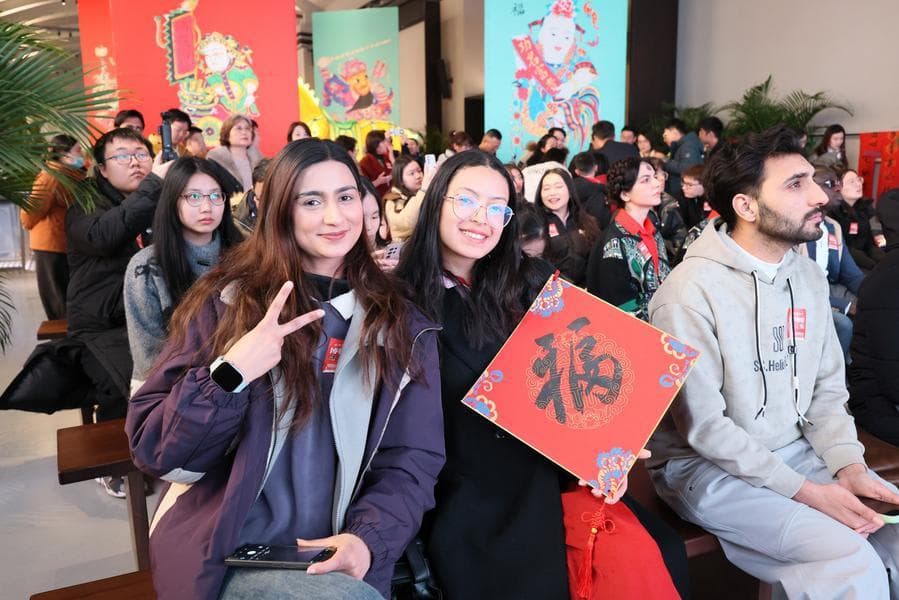
A New Era in Global Education
China has firmly established itself as a formidable force in the international education landscape, with official statistics revealing that more than 380,000 students from 191 countries and regions pursued degree programs, research, or training across the nation during the 2024-2025 academic year. This figure represents a 15 percent increase over the previous year, signaling a robust post-pandemic recovery and positioning China as a new growth pole in the global education market. The surge reflects a fundamental shift in how students worldwide perceive academic opportunities, moving beyond traditional Anglophone destinations toward an Asian superpower that combines world-class facilities with affordability and strategic geopolitical alignment.
- A New Era in Global Education
- Record Enrollment and Geographic Diversity
- The STEM Magnet and Economic Advantage
- Student Experiences and Cultural Exchange
- Global Shifts and Alternative Destinations
- Domestic Tensions and Policy Evolution
- Scholarship Diplomacy and Future Outlook
- Building a Shared Future
- Key Points
Record Enrollment and Geographic Diversity
The latest enrollment data, released by Xi Ru from the Ministry of Education’s Department of International Cooperation and Exchanges at the 2026 China Study Abroad Forum, reveals a deeply diverse student body. Asian students constitute the largest share at 61.1 percent, followed by Africa at 16.2 percent, Europe at 15.6 percent, and the Americas and Oceania combined at 7.1 percent. Among the 205,000 degree-seeking students, postgraduates represent 35 percent, indicating a growing appetite for advanced research opportunities in Chinese institutions.
This diversity stems from decades of deliberate policy cultivation. According to research from Trier University, the Belt and Road Initiative (BRI) has considerably increased scholarship recipients destined for study in China. In 2016, over 200,000 students came from 64 of the 68 Belt and Road countries, with Pakistan alone sending nearly 19,000 students, up from about 9,500 in 2012. Chinese government scholarship recipients now account for approximately 8 percent of total international enrollment, with 10,000 places reserved annually for BRI countries.
The STEM Magnet and Economic Advantage
Engineering has emerged as the most popular field of study among degree-seeking international students, capturing 27.8 percent of enrollments. Courses in applied technology and computer-related fields attract students seeking technical expertise that aligns with China’s industrial capabilities. This marks a significant evolution from previous decades when roughly 40 percent of foreign students traveled to China primarily to study the Chinese language, a figure that has dropped 15 percent since 2012 as technical and professional degrees gain prominence.
The economic appeal remains compelling. While international fees at United Kingdom universities can exceed £20,000 annually, average Chinese programs range between £1,300 and £2,400 per year. This affordability, combined with China’s 7 universities ranked in the global top 100 according to Times Higher Education, creates a value proposition that Western institutions struggle to match. Tsinghua University and Peking University now rank 12th and 14th globally, surpassing numerous Russell Group and Ivy League institutions.
Student Experiences and Cultural Exchange
Beyond statistics, individual narratives illuminate the human dimension of this educational migration. Zahid Khan, a cardiology postgraduate student at Xinjiang Medical University, represents the growing wave of Pakistani medical students in China. Nearly 29,000 Pakistani students currently study across China, with medicine accounting for 45 percent of this group.
Everything here, the laboratories, hospitals, and professors, is truly fantastic. Whatever you need for your research, they provide more than you expect.
Khan first arrived in Xinjiang in 2013 for undergraduate studies and returned for advanced training after working in Pakistan during the COVID-19 pandemic. He emphasizes the systematic clinical training, access to modern diagnostic tools, and consistent mentorship that strengthen professional competence. After completing his PhD, Khan plans to return to Pakistan to serve local communities, embodying the knowledge transfer that Chinese educational diplomacy seeks to cultivate.
In Ethiopia, the 25th Chinese Bridge Chinese Proficiency Competition recently brought together 19 contestants at Addis Ababa University, where participants demonstrated linguistic ability through martial arts, calligraphy, and traditional performances. Chinese Ambassador Chen Hai noted that learners increasingly serve as friendly ambassadors of cultural exchange, while Acting University President Samuel Kifle described Chinese studies as creating an important bridge between Ethiopian and Chinese youth.
Global Shifts and Alternative Destinations
China’s ascendancy coincides with declining attractiveness of traditional destinations. Recent data indicates that Asian student arrivals to the United States fell nearly 24 percent in August compared to the prior year, the lowest August figure outside the pandemic period. This decline follows restrictive measures including visa processing delays and the revocation of more than 6,000 student visas in 2025.
Madeline Zavodny, an economics professor at the University of North Florida, warned in a May 2025 report that the crisis could trigger college closures in the United States, with the sharpest impact on regional universities and small liberal arts colleges. A NAFSA analysis projected up to a 40 percent decline in new foreign student enrollment, potentially depriving local economies of $7 billion in spending and more than 60,000 jobs.
Domestic Tensions and Policy Evolution
Despite these international successes, China faces internal pressures regarding its educational openness. With 12.2 million domestic graduates entering the workforce in 2025 and youth unemployment reaching concerning levels, some Chinese citizens question the prioritization of foreign students. When China launched the K Visa in 2025 to attract STEM researchers without requiring job offers, social media exploded with posts voicing upset, some xenophobic.
I feel this visa doesn’t sound wise, and many in my industry share similar views. This whole thing leaves a bitter taste in the mouths of people like me who have climbed the ladder through sheer effort. China doesn’t lack talented people. We just lack job opportunities and resources.
This sentiment, expressed by Zheng Yifan, a 33-year-old tech worker from Chengdu, illustrates the tension between China’s global educational ambitions and domestic economic realities. Similarly, Jakky Yang, a 27-year-old investment adviser in Shenzhen, noted that many Chinese people are caught in cutthroat competition while foreigners can easily access benefits that locals fight hard to obtain.
China’s response involves a strategic pivot toward transnational education (TNE). The country now hosts over 1,000 joint ventures and international branch campuses, with 373 cooperative institutions offering postgraduate degrees. A new regulatory framework introduced in 2025 lifted enrolment caps on joint education institutes, allowing flexibility beyond the traditional 4+0 model and speeding up approvals through an AI-driven smart platform.
Scholarship Diplomacy and Future Outlook
Scholarship programs remain central to China’s educational strategy. At the 2024 Forum on China-Africa Cooperation Summit, China announced 60,000 new scholarships for African students. In The Gambia, 40 outstanding students recently received scholarships at the University of The Gambia, with Vice-Chancellor Herbert Robinson describing the gesture as an investment in talent and the future of young Gambians.
Student representative Omar K.B. Samura highlighted the transformative impact of such support. He explained that many students spend six to seven years completing four-year programs due to financial hardship, often balancing academics with work. The scholarships lift burdens that often blur the line between delay and progress.
Building a Shared Future
A report titled “Study in China: Contributing to the Building of a Community with a Shared Future for Humanity,” released by the Xinhua Institute, frames these educational exchanges within broader diplomatic objectives. The document argues that through diversified academic offerings and expanding exchange channels, China allows its wisdom and experience to benefit the world through the efforts of a new generation, building new bridges for exchange and mutual learning among civilizations.
QS projections suggest international enrollments in China will increase by 2.5 percent annually until 2030, reaching approximately 550,000 students. While this growth rate is lower than some European or Southeast Asian destinations, it represents expansion in a context where the United States, Australia, and Canada are experiencing contractions. The growth is supported by nearly 3,000 English-taught programs, making China the largest provider of such programs globally outside countries where English is an official language.
Key Points
- China hosted 380,000 international students from 191 countries during the 2024-2025 academic year, marking a 15 percent increase from the previous year
- Engineering and STEM programs dominate student choices, accounting for 27.8 percent of degree-seeking enrollments
- Asian students comprise 61 percent of the international student body, followed by African students at 16 percent
- Tuition costs average between £1,300 and £2,400 annually, considerably lower than Western alternatives
- The Belt and Road Initiative has channeled thousands of scholarship recipients toward Chinese institutions
- China now ranks third globally for international student enrollment, behind only the United States and United Kingdom
- Domestic concerns about youth unemployment and resource allocation are creating tensions regarding educational openness
- Transnational education partnerships have expanded to over 1,000 joint ventures and branch campuses