From Import Luxury to Daily Staple: The Blueberry Transformation
Once reserved for special occasions and imported at premium prices, blueberries have become a common sight in Chinese shopping baskets. In cold-storage facilities across Shanghai, crates of fresh berries from Southwest China’s Yunnan Province arrive daily, destined for supermarket shelves and e-commerce platforms within hours. A wholesale trader at a major Shanghai fruit market describes the rapid change that has reshaped consumer access.
- From Import Luxury to Daily Staple: The Blueberry Transformation
- Geographic Advantages Create Natural Perfection
- Technological Independence Ends Foreign Reliance
- Export Markets Drive New Growth
- Rural Prosperity Through Innovative Business Models
- Balancing Imports and Exports in a Dual Strategy
- Challenges and the Shift Toward Quality
- The Bottom Line
“The change has been striking in recent years. With more being grown and prices becoming more affordable, demand has picked up.”
Twelve boxes of 18-millimeter blueberries now sell for 98 yuan ($14), a price point that seemed impossible just a few years ago. This shift reflects deeper changes in China’s agricultural landscape. Since 2020, China has ranked as the world’s largest blueberry producer, with output reaching 810,000 tons in 2025 according to government figures, while industry conference data suggested growth toward 957,000 tons as expansion continues.
The fruit has transitioned from an occasional treat to a daily snack for millions of consumers. Ye Yufei, a 26-year-old office worker in Beijing, exemplifies this trend. She recently ordered 16 boxes in a single week. Social media has coined a term for this phenomenon: “blueberry freedom,” describing the ability to purchase the nutrient-rich berries without financial hesitation.
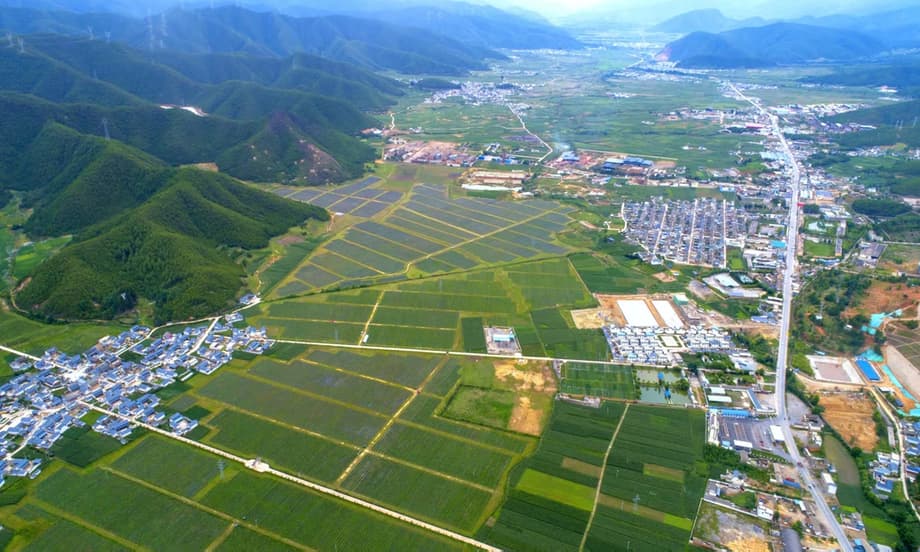
Yunnan Province has emerged as the cornerstone of this agricultural transformation. Roughly three out of every ten blueberries in China now originate from this southwestern region, with the province’s output reaching 280,000 tons in 2025 according to the Department of Commerce of Yunnan. The region has evolved from niche cultivation to industrial powerhouse in just over a decade.
Geographic Advantages Create Natural Perfection
He Jiawei, director of the Institute of Alpine Economic Plants under the Yunnan Academy of Agricultural Sciences, describes the province as an ideal environment for cultivation. The region offers abundant sunlight, significant temperature variations between day and night, and acidic soil conditions that allow sugars to accumulate fully while maintaining lower acidity.
“Yunnan is a natural habitat for blueberries.”
These geographic conditions produce berries with firmer texture, richer bloom (the protective waxy coating), and higher anthocyanin content compared to many international competitors. The province harbors 46 wild blueberry species, representing more than half of China’s total wild varieties. This biodiversity has provided genetic resources for developing cultivars specifically adapted to local conditions.
In the Honghe Hani and Yi Autonomous Prefecture, cities like Mengzi and Mile have become centers of protected greenhouse cultivation. Mengzi alone hosts over 2,300 hectares of greenhouse blueberry production, generating over 3 billion yuan in revenue and supporting more than 20,000 farming households. The economic impact extends throughout the value chain, with over 100 domestic and international companies operating in the Honghe area, creating jobs for more than 100,000 people.
Technological Independence Ends Foreign Reliance
The surge in production stems from systematic adoption of precision agriculture techniques. Yang Yaohong, who manages a blueberry base in Lanping, Yunnan, explains the transition from traditional open-field methods to standardized systems involving virus-free seedlings, substrate cultivation, integrated water-fertilizer drip irrigation, and green pest control. This industrialized model enables precise control over growing conditions, leading to higher yields and better quality.
“In the past, China’s blueberry market relied on imports from countries like Chile and Peru, with high costs from shipping, customs clearance and cold chain logistics keeping retail prices elevated.”
Technological upgrades now allow Yunnan to supply the market during the winter and early spring off-season, directly competing with Southern Hemisphere imports. The berries grow at higher altitudes with greater temperature differences, resulting in lower acidity and a purer sweetness profile.
A critical turning point came in 2019, when Chinese scientists developed Lanmei No 1, the first commercially viable variety with full domestic intellectual property rights. Previously, patents for floral-aroma varieties widely grown in Yunnan were held by an Australian company, with high licensing fees constraining industry growth. This breakthrough ended the foreign monopoly and helped reduce production costs and retail prices.
International collaboration continues to refine these techniques. Operations receive guidance from agricultural specialists including representatives from Spain and the United Kingdom, alongside partnerships with the Yunnan Academy of Agricultural Sciences and local universities. This combination of domestic innovation and global expertise has created a sustainable competitive advantage in both quality and efficiency.
Export Markets Drive New Growth
While domestic consumption drives volume, export markets are driving value and recognition. China’s blueberry exports have experienced what industry analysts describe as leapfrog growth, skyrocketing by 602 percent between 2023 and 2025. Customs data show export volumes surged from 177.9 tons in 2022 to 2,592 tons in 2024, with the export value growing from $805,900 to $23.14 million over the same period.
By the first three quarters of 2025, exports had already reached 6,099 tons, representing 162 percent year-on-year growth. The export footprint has expanded to 13 markets including Singapore, Malaysia, Thailand, Indonesia, Russia, and the Middle East. Yunnan dominates this trade, with Mengzi Customs overseeing 1,425 tons of exports in 2024, accounting for over half of China’s total blueberry exports.
Wang Rui, chairman of agricultural development company Fengji, describes the logistics network that makes this possible.
“Every four days we airfreight two tonnes of blueberries to Dubai.”
Customers in Dubai can enjoy fresh Yunnan blueberries within approximately 40 hours of picking. Chen Canling, sales manager at agriculture and technology company Anmei, emphasizes the precision required for international standards.
“To meet export standards, we have implemented precision management throughout the supply chain, from harvesting techniques to packaging and international logistics.”
Anmei successfully entered the Malaysian market this year with a goal of exporting 300 tons annually. The efficiency of China’s logistics network has transformed export capabilities. According to SF Express data, the volume of blueberries shipped via their network surged from 50,000 parcels in 2018 to 10.17 million parcels in 2025, with Shanghai, Beijing, Shenzhen, Hangzhou, and Chengdu serving as main destination cities.
Rural Prosperity Through Innovative Business Models
Beyond statistics, the blueberry boom has transformed rural livelihoods through innovative profit-sharing arrangements. Min Hongwei, who launched a 12-hectare plantation in Mile, describes the employment impact during harvest season.
“During peak harvest season, our workforce exceeds 150 people, most of whom are local villagers. They can earn at least 150 yuan per day, and some make up to 300 yuan.”
A unique structure known as the 622 business model has distributed wealth widely among farming communities. Under this system, farmers receive 60 percent of profits, 20 percent funds village infrastructure and collective services, and the remaining 20 percent goes to enterprises for marketing and operations. This arrangement has increased incomes for 20,000 households while providing guaranteed base wages.
Bian Yongzu, executive deputy editor-in-chief of Modernization of Management magazine, links Yunnan’s growing profile to China’s broader opening-up policy. The province, once considered a remote border region, now serves as a gateway to Southeast Asia and South Asia. Rising connectivity and policy support have boosted its global profile, allowing specialty products to reach international markets while supporting local development goals outlined in the central government’s annual No 1 document on rural policy.
The expansion aligns with growing health consciousness among Chinese consumers, particularly Generation Z. Survey data shows that over 60 percent of the Gen Z population prioritize health status, with 71 percent purchasing health-related products in the past year. Blueberries, rich in anthocyanins associated with anti-aging and eye-health benefits, fit perfectly with these consumption trends.
Balancing Imports and Exports in a Dual Strategy
China’s blueberry strategy has evolved into a sophisticated dual-track approach that balances domestic production with strategic imports. While Yunnan supplies the winter-spring market, Peru and Chile provide counter-seasonal imports during summer months. In 2024, China imported 38,700 tons of blueberries, with Peru supplying roughly 90 percent of the volume.
Dani Geng, director of blueberry products at Joy Wing Mau Group, explains that imports help ensure a steady supply of fresh blueberries while providing diversified options for Chinese consumers. Recent infrastructure developments have reshaped these trade flows. The inauguration of the Chancay Port route has reduced shipping time from Peru to China from over 30 days to approximately 20 days, markedly improving freshness for imported berries.
This logistical improvement allows Peruvian suppliers to complement rather than compete with Yunnan’s winter production. Luis Miguel Baanante, general manager of Camposol China, acknowledges the dynamic relationship.
“Rather than viewing Yunnan blueberries as competition, Camposol recognises their improving quality and growing export volume as catalysts for boosting overall demand for fresh blueberries.”
This symbiotic relationship expands the total market while allowing each origin to serve its optimal season. The coordinated national effort ensures year-round availability. Yunnan dominates the winter-spring market, Shandong and Liaoning provinces focus on summer-autumn supplies, Guizhou has become a hub for processing, and regions like Xinjiang are entering the market with late-season production.
Challenges and the Shift Toward Quality
Despite rapid growth, the industry faces structural challenges that require attention. Production remains heavily concentrated in March and April, with nearly half of annual volume hitting markets during these two months. This seasonal concentration creates price pressure and logistical bottlenecks that strain cold chain capacity.
Climate variability poses increasing risks to production stability. Quality control remains inconsistent across the sector, with some producers prioritizing volume over flavor and nutritional value. The lack of unified industry standards, particularly regarding quality and food safety, has restrained stable market growth in some segments.
Intellectual property protection for new varieties requires strengthening. While Lanmei No 1 broke foreign patent monopolies, the legal framework governing plant patents needs development to support long-term breeding innovation. As consumer expectations for blueberry flavor, texture, and packaging grow, variety selection has become a key driver of brand competitiveness.
He Jiawei stresses the need to move beyond raw fruit exports toward value-added processing.
“The national blueberry industry must move beyond price competition and pursue a path of high-quality development.”
Opportunities exist in deep processing, such as producing non-concentrated reconstituted juice and other anthocyanin-rich products. The blueberry juice market alone is expected to exceed $138.9 million by 2028, driven by health-conscious consumers seeking convenient nutrition.
The Bottom Line
- China has been the world’s largest blueberry producer since 2020, with 2025 output reaching approximately 810,000 tons according to official data, and industry projections suggesting growth toward 957,000 tons.
- Yunnan Province contributes roughly 30 percent of national production and over 50 percent of exports, with cultivation area expanding to 23,000 hectares and output reaching 280,000 tons.
- Exports grew 602 percent between 2023 and 2025, reaching 2,592 tons in 2024 and over 6,000 tons in the first three quarters of 2025, with destinations across 13 countries including Singapore, Malaysia, Thailand, and Russia.
- Technological advances including substrate cultivation, protected greenhouses, and the domestically developed Lanmei No 1 variety have ended foreign patent monopolies and reduced production costs.
- The 622 business model distributes 60 percent of profits to farmers, 20 percent to village infrastructure, and 20 percent to enterprises, supporting over 20,000 households in Yunnan with daily wages for pickers ranging from 150 to 300 yuan.
- A dual-track strategy maintains imports from Peru and Chile during domestic off-seasons while expanding exports of Yunnan blueberries during the winter-spring window, supported by improved logistics including the Chancay Port route.
- Seasonal concentration, climate variability, and the need for quality standardization remain key challenges as the industry shifts from quantity-focused expansion to quality-oriented development and value-added processing.