
A Dragon King Takes the Spotlight in Seoul
American scholar David A. Mason will give his eighteenth lecture for the Royal Asiatic Society Korea Branch on April 28, 2026, introducing a new book about Korean dragons and their place in Buddhist art. The presentation begins at 7:20 p.m. in the basement of the Seoul Public Activities Center, near exit 8 of Samgakji Station on Seoul Metro lines 4 and 6.
Contents
- A Dragon King Takes the Spotlight in Seoul
- Why Korean Dragons Tell a Different Story
- How the Dragon King Entered Buddhist Art
- A Temple Painting That Disappeared
- Four Decades Studying Korea's Spiritual Traditions
- A New Book Joins Ten Published Works
- A Volunteer Society Opens Korean Studies to the Public
- Gangnam's History Between the Towers
- Dates, Meeting Points and Admission
- Key Points
Mason, who recently retired as a professor of cultural tourism at Sejong University, will present K-Dragons: DaeHanYong — Korea's Dragon Traditions and their Yong-wang Monarchs. Planned across two volumes, the work examines creatures associated with mercy, sympathy, empathy and love, a contrast with the destructive dragons that breathe fire and guard piles of gold in familiar European stories.
The lecture will concentrate on Yongwang, the Dragon King, and the figure's relationship with Gwaneum, the Korean name for the Bodhisattva of Compassion. In Korean Buddhist artwork, the two frequently appear together, sometimes with the dragon carrying Gwaneum on its back.
Admission is 10,000 won for the general public and 5,000 won for students of all ages carrying valid identification. RAS Korea members enter free, and the lecture requires no advance registration. Copies of Mason's book will be available to purchase at the event.
A second RAS Korea event will explore the historical side of Gangnam on April 25. Led by Jun Y.G. Shin, the walking excursion will visit the Seolleung Royal Tombs, Bongeun Temple and Coex. Registration closes on April 23, the publication date of this article, because places are limited.
Why Korean Dragons Tell a Different Story
Mason's presentation challenges the familiar Western picture of a dragon as a dangerous creature living in a dark cave, breathing fire and protecting treasure. The Korean traditions he studies give dragons a different character, associating them with concern for others rather than greed and destruction.
Mercy, sympathy, empathy and love are central to that portrayal. Put simply, these qualities concern kindness toward others, care about their suffering and an ability to understand their feelings. They help explain why a dragon can appear beside a compassionate Buddhist figure rather than as an enemy to be defeated.
Yongwang provides the main focus for the April 28 lecture. Mason will examine the Dragon King's appearances in Korean Buddhist art and the relationship between the monarch and Gwaneum. The subject connects stories about mythical creatures with images that visitors can encounter in temples.
Mason's book brings these traditions together in what he describes as the first comprehensive examination of Korean dragons available in any language. Its planned two volumes will address the dragons themselves and their Yong-wang monarchs, placing their benevolent qualities within Korea's religious and cultural traditions.
How the Dragon King Entered Buddhist Art
Gwaneum and the Dragon King appear together in Buddhist images found throughout Korea. Some portray the dragon carrying the Bodhisattva of Compassion, making the connection between the two figures visible through their positions and actions.
Korean Buddhist art developed over centuries through the incorporation of Shamanic and Daoist folk deities. Mason will explore how that process brought different religious traditions into a shared visual culture. In plain terms, temple images could include figures associated with traditions beyond Buddhism, bringing them into a Buddhist setting.
The lecture will examine how this integration occurred and what the relationship between Yongwang and Gwaneum reveals about the development of Korean religious art. Mason also intends to show how understanding these images can support spiritual reflection when visitors look at temple artwork.
A Temple Painting That Disappeared
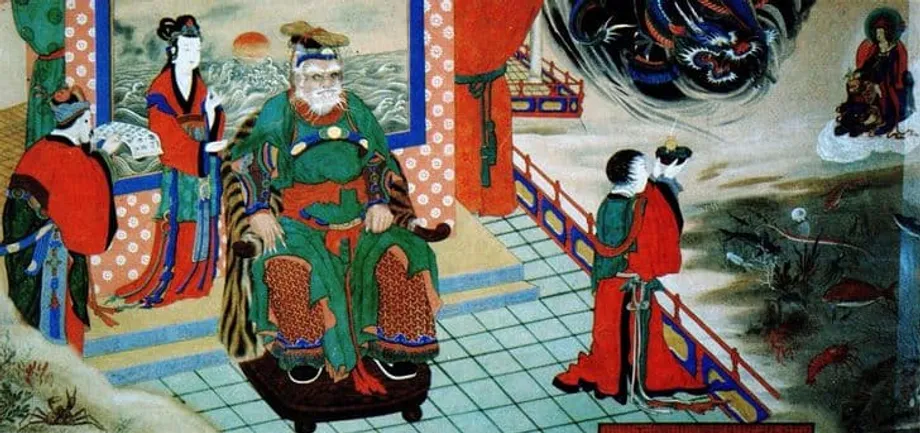
Haein Temple in Gayasan National Park provides a striking example from Mason's own photographic record. In 1983, he photographed a painting showing the Dragon King seated on his throne while a servant boy welcomed the Bodhisattva of Compassion.
Mason returned in 1986 and found that the painting had disappeared. Temple officials told him that it had been burned during a campaign to eliminate Shamanic influences from Buddhist sites.
The episode gives a concrete example of the fragility of the heritage he studies. The painting brought the Dragon King and the Bodhisattva of Compassion together in a single scene, but the same blending of traditions became the reason officials gave for its destruction.
Mason's recollection also connects the lecture's subject to an actual temple image and a specific sequence of events: a photograph taken in 1983, a return visit three years later and an explanation from temple officials about the painting's fate. His research concerns both the meaning of such artwork and the traditions represented within it.
Four Decades Studying Korea's Spiritual Traditions
David Alan Mason was born in Detroit in 1957 and first encountered Korea in 1982 while working as an English teacher. That experience began a lasting interest in the country's mountain traditions and spiritual practices. He moved permanently to Korea in 1986.
Mason earned a Master of Arts degree in Korean Studies from Yonsei University in 1997, specializing in the history of Korean traditional religions. His work over more than four decades has made him the foremost foreign expert on Sansin, the mountain spirits associated with shrines known as Sansin-gak in Buddhist temples and villages across the peninsula.
His research also addresses the Baekdu-daegan, the connected web of mountains that defines Korean geography and carries spiritual meaning. Before he began work on the subject in 2005, the concept was virtually unknown outside Korea. In 2011, the government appointed him Honorary Ambassador of the Baekdu-daegan mountain system in recognition of his work.
Mason's career included positions at Kangwon National University, Yonsei University Wonju Campus, Korea's Ministry of Culture, Sports and Tourism, and Kyung Hee University. His tenure at Sejong University began in 2014, before his recent retirement from its cultural tourism professorship.
His cultural work has also extended beyond academic research. He helped create the Temple Stay program in 2002, allowing international visitors to experience monastic life. He contributed to the World Pilgrimage Guide and helped design the Wonhyo Trail pilgrimage project in 2011.
A New Book Joins Ten Published Works
K-Dragons is presented as a publishing milestone in the study of Korean culture. Mason says it is the first comprehensive resource devoted to Korea's distinctive dragon traditions and their Yong-wang monarchs, with no comparable work in any language.
Mason, the author and the April 28 lecturer, described the scope of the publishing gap in these words:
No book like this exists in any language,
The project is planned across two volumes, offering detailed analysis of how these benevolent creatures function in Korean religion and culture. Copies will be sold during the lecture, giving attendees a way to continue exploring the subject after the presentation.
Mason's bibliography includes ten published works. Among them are Spirit of the Mountains: Korea's San-shin and Traditions of Mountain-Worship, Solitary Sage: the Profound Life, Wisdom and Legacy of Go-un Choi Chi-won, and An Encyclopedia of Korean Buddhism, which he wrote with Ven. Hyewon.
The dragon project continues subjects running through that work: traditional religious figures, places of spiritual importance and the ways Korean cultural practices are expressed. For the April 28 audience, its immediate focus will be the Dragon King and the Buddhist images in which the monarch appears.
A Volunteer Society Opens Korean Studies to the Public
RAS Korea has served as a primary hub for Korean Studies since before 1900. The society offers accessible presentations on academic subjects, helping specialized research reach expatriate residents and Korean audiences interested in their own cultural heritage.
Its usual program includes lectures twice a month at Somerset Palace in Gwanghwamun, along with economical excursions around Korea and abroad. Mason's April 28 presentation will take place at the Seoul Public Activities Center near Samgakji Station.
Volunteers support the society's activities, helping keep participation costs low. Special interest groups cover subjects ranging from Korean cuisine to photography, while the lecture series gives researchers an opportunity to explain their work to a broad audience.
Mason has a longstanding relationship with RAS Korea. The coming presentation will be his eighteenth lecture for the organization, and he has contributed to its journal, Transactions. His articles there include work on the sacred aspects of Taebaek-san and Jirisan mountains.
Gangnam's History Between the Towers
Jun Y.G. Shin will lead the April 25 walking excursion through Gangnam, the district south of the Han River widely associated with skyscrapers, shopping centers and contemporary Seoul. The route will bring participants to historical places within that modern setting.
The Seolleung Royal Tombs preserve burial mounds from the Joseon Dynasty in a quiet green space. Bongeun Temple, another stop, is one of Seoul's largest and most active Buddhist temples. Coex will provide a contemporary contrast to those older sites.
Shin, the excursion leader, described the district's less familiar side in an online invitation, contrasting its international reputation with the heritage along the route:
Since the runaway success of a satirical song by a rotund Korean rapper named PSY, the phrase 'Gangnam Style' has earned worldwide fame. There is, however, another side to Gangnam. Amid the hustle and bustle of the sleekest, most modern part of Seoul, lie quiet corners, lush greenery and traces of Korea's past.
The excursion costs 30,000 won for non-members and 25,000 won for RAS Korea members. Participants should expect approximately four hours of walking and wear suitable footwear for modern pavement and historical site pathways.
Dates, Meeting Points and Admission
The two events take place three days apart, with the Gangnam walk first and Mason's dragon lecture afterward. The immediate deadline is April 23 for excursion registration, which is required because capacity is limited.
- April 23, 2026: Registration closes for the Gangnam walking excursion.
- April 25, 2026: The walking group meets at 1 p.m. at exit 10 of Seolleung Station, served by Line 2 and the Suin-Bundang Line.
- April 28, 2026: Mason's K-Dragons lecture begins at 7:20 p.m. in the basement of the Seoul Public Activities Center, near exit 8 of Samgakji Station on lines 4 and 6.
The lecture requires no advance registration. General admission is 10,000 won, students of all ages pay 5,000 won with valid identification, and RAS Korea members attend free. Books will be available to purchase during the event.
The walking excursion requires registration by its deadline and costs 30,000 won for non-members or 25,000 won for members. Organizers advise proper shoes for the approximately four hours on foot. Further event information and registration details are available at raskb.com.
Key Points
- David A. Mason will give his eighteenth RAS Korea lecture on April 28, 2026, at 7:20 p.m. near Samgakji Station.
- His new K-Dragons book examines Korean dragon traditions and their Yong-wang monarchs in a project planned across two volumes.
- Mason describes the work as the first comprehensive study of these traditions in any language.
- The lecture focuses on Yongwang and its appearances alongside Gwaneum, the Bodhisattva of Compassion, in Korean Buddhist art.
- Korean dragons in these traditions are associated with mercy, sympathy, empathy and love.
- Mason has ten published works and helped create the Temple Stay program in 2002.
- Jun Y.G. Shin's April 25 Gangnam walk will visit the Seolleung Royal Tombs, Bongeun Temple and Coex.
- Registration for the walk closes April 23. The April 28 lecture requires no advance registration.