
New Signs Reinforce a Ban Commuters Still Risk Breaking
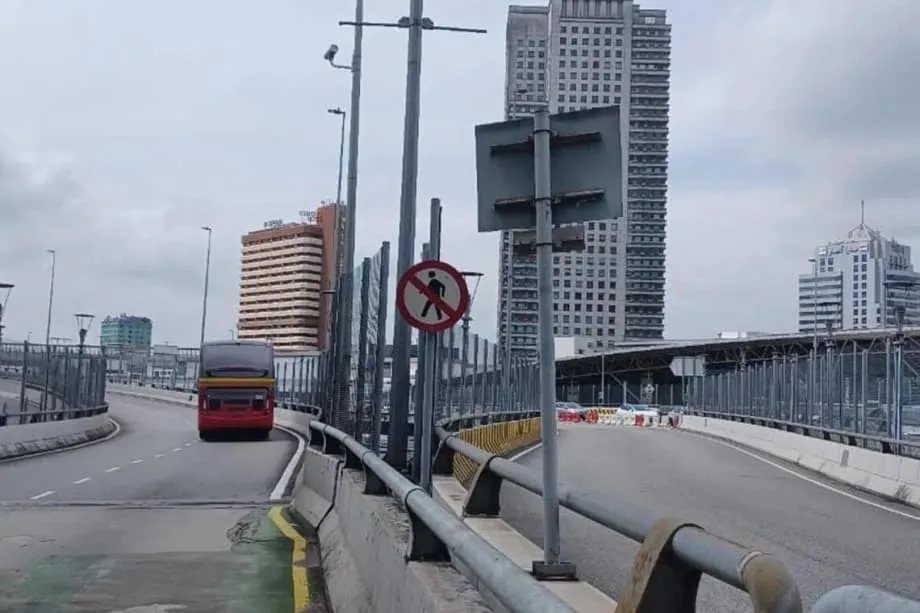
New signs near Johor's Bangunan Sultan Iskandar checkpoint have brought renewed attention to a prohibition dating to December 2008: pedestrians are not allowed to walk along the Johor-Singapore Causeway under Malaysian rules. Disregarding the traffic signs can bring fines ranging from RM300 to RM2,000. Yet thousands of workers continue to make the crossing on foot because crowded buses and traffic jams can leave them waiting too long to reach their jobs on time.
Contents
- New Signs Reinforce a Ban Commuters Still Risk Breaking
- Where the Rules Change on the Bridge
- Why Workers Leave the Bus Queue
- A Walk Without Continuous Protection
- Injuries Bring the Danger Into Focus
- Buses and Trains Offer Lower Costs, With Limits
- Licensed Taxis Cost More, While Illegal Operators Face Enforcement
- A Covered Walkway Remains a Political Demand
- What the 2027 Rail Link Leaves Unresolved Today
- What to Know
As of April 18, 2026, the Malaysian Highway Authority is reminding travellers that walking along the entire Causeway stretch is prohibited in either direction. Singapore's Immigration and Checkpoints Authority, however, says there are no specific rules preventing people from walking on the Singapore side of the bridge. A journey that begins on a pavement without an active walking prohibition therefore leads into an area where pedestrians face penalties.
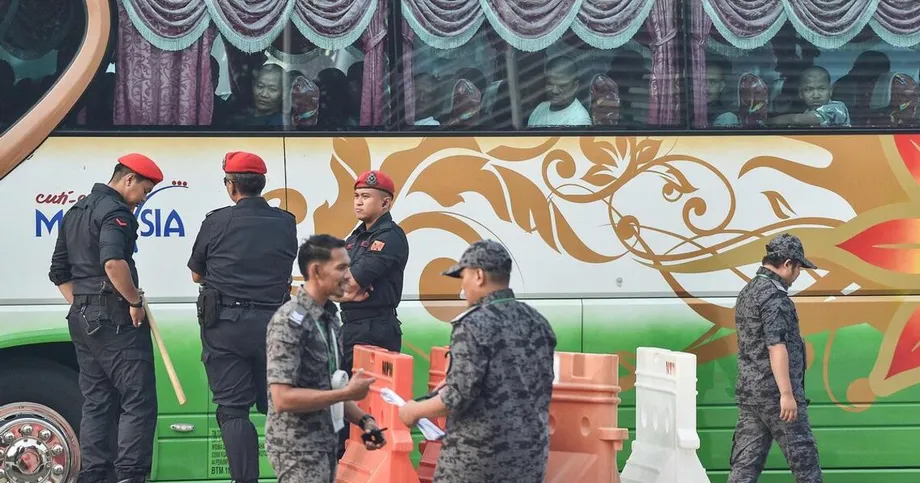
The disagreement has practical consequences on one of the world's busiest land borders. More than 300,000 Malaysians travel to Singapore daily for work or school. Most use chartered or public buses, but during busy periods, queues can last more than 30 minutes and extend to an hour. Walking becomes a way to keep moving when the transport they depend on is stuck.
The pressure is particularly acute for workers with fixed starting times and limited money for other transport. A 24-year-old Malaysian worker identified only as Mr He walks daily to reach his 8am shift in Woodlands. His decision reflects the central problem behind the renewed warnings: a rule intended to protect people meets a commute in which the available legal choices can be too slow or too expensive.
Where the Rules Change on the Bridge
The Causeway itself is 1.05 kilometres long, but the distance between the two checkpoints is approximately 2.4 kilometres. Pedestrians must therefore cover more than the bridge alone, including the approaches to the immigration facilities.
Singapore provides a paved pathway from Woodlands Checkpoint to the foot of a highway ramp leading towards Malaysia. There is no active prohibition against pedestrian movement on that side. At the international boundary, yellow boxes and a change in road markings from English to Malay mark the move between the two countries.
Malaysian authorities introduced the walking prohibition when the Bangunan Sultan Iskandar Customs, Immigration and Quarantine Complex opened in December 2008, citing security and safety reasons. The new signs reinforce that existing restriction rather than introduce a new ban.
The different positions leave commuters uncertain about whether walking is an accepted travel option or a punishable offence. Each country applies its own rules within its territory. Singapore's position allows pedestrians to use its side, while Malaysia's prohibition makes a complete crossing on foot subject to enforcement on the Malaysian side.
Why Workers Leave the Bus Queue
Peak travel periods combine two problems: too many passengers for the available buses and road congestion that slows the buses themselves. Even an affordable service can become difficult to use when passengers cannot board quickly or the vehicle cannot move through the traffic.
Johorean commuter Loo Yong Tat described how those conditions can leave travellers trapped at the checkpoint:
During peak hours, the current bus capacity is simply unable to cope with the overwhelming volume of people. Coupled with severe traffic jams, many commuters find themselves stuck at the checkpoint, unable to move forward or turn back.
Mr He, the Malaysian worker travelling to an 8am shift in Woodlands, explained why he continues walking despite the danger:
If the number of buses could be increased, I wouldn't choose to take the risk, but there's really no other way.
For these commuters, the choice is shaped by the need to arrive at work on time. Waiting preserves compliance with the Malaysian walking restriction, but a long delay can put their employment at risk. Walking offers movement through the congestion while exposing them to traffic and possible fines.
A Walk Without Continuous Protection
Accounts from people who have completed the journey describe a trek lasting 26 minutes. The route has no shelter from sun or rain, and walkers carry umbrellas and portable fans to cope with the weather. Heavy tropical downpours make an already exposed journey more difficult.
Beyond the initial Singapore pavement, pedestrians use narrow shoulders alongside fast moving motorcycles and buses. They must cross motorcycle lanes without zebra crossings, where the motorcycles retain right of way. At other points, walkers squeeze against concrete barriers in bus lanes where vehicles travel at 50 kilometres per hour.
The absence of a dedicated pedestrian route means people on foot and motor vehicles occupy the same limited space. Poor visibility increases the danger. Traffic bottlenecks also create unpredictable movements as vehicles navigate around stationary cars, leaving walkers with little room to respond.
A signboard near the Malaysian checkpoint describes the route towards Woodlands as a restricted area for pedestrians and warns that "any accidents are at your own risk." The Malaysian Highway Authority says walking along the Causeway is dangerous, violates established regulations and should be replaced by the use of available public transport.
Veteran commuters may describe the walk as "chicken feet," meaning easy for someone accustomed to it. Familiarity with the route, however, leaves the same narrow shoulders, exposed crossings and moving vehicles for them to negotiate each day.
Injuries Bring the Danger Into Focus
Two incidents have intensified concern about pedestrians sharing the Causeway with motorcycles. Social media posts in mid-April indicated that a woman was struck by a motorcycle and left unconscious. The motorcyclist also sustained bleeding injuries.
In January, a 54-year-old Malaysian woman suffered severe head injuries and blood clots after an alleged collision with a motorcycle. She fell into a coma following blood loss and a lack of oxygen reaching her brain. Her family said they had chosen to walk because traffic congestion had caused long bus queues.
The key developments span several dates:
- December 2008: The pedestrian prohibition began when the Bangunan Sultan Iskandar Customs, Immigration and Quarantine Complex opened.
- January: A 54-year-old Malaysian woman suffered severe injuries after an alleged motorcycle collision and subsequently fell into a coma.
- April 13: Stulang assemblyman Andrew Chen Kah Eng renewed his appeal for a covered pedestrian walkway.
- Mid-April: Social media posts described another collision that left a woman unconscious and a motorcyclist bleeding.
- April 18, 2026: Renewed warnings and new signage remain at the centre of debate over walking across the border.
- 2027: The Johor Bahru-Singapore Rapid Transit System Link is expected to begin operating.
The January family's explanation connects the injuries directly to the transport pressures described by other commuters. Long queues pushed them towards walking, and the route placed them close to motorcycles without a protected crossing.
Buses and Trains Offer Lower Costs, With Limits
Public bus services 160, 170, 170X and 950 provide legal crossings at fares ranging from S$1.81 to S$2.41. Those prices make buses an affordable choice for workers, but morning and evening demand exceeds the capacity described by commuters.
The Keretapi Tanah Melayu Shuttle Tebrau train connects JB Sentral and Woodlands at a cost of RM5 or S$5 per trip. Its limited services restrict how many people can use it as an alternative to the road crossing.
The train service is due to cease entirely once the Johor Bahru-Singapore Rapid Transit System Link opens in 2027. The transition therefore changes the available transport options rather than simply adding another service alongside everything already operating.
Workers earning minimum wage in Singapore face both financial and practical constraints when choosing between these options. A cheaper fare helps only when the passenger can board a service that gets them to work on time. Buses and trains offer legal routes, but queues, road delays and limited train departures reduce their usefulness for some daily commuters.
Licensed Taxis Cost More, While Illegal Operators Face Enforcement
Licensed taxis operating across the border provide door to door service, but charge S$60 to S$80 per trip. Airport journeys cost S$120. These prices put taxis beyond the daily budgets of many workers who would otherwise pay a bus fare of S$1.81 to S$2.41.
Recent policy changes allow licensed taxis from either country to drop passengers anywhere in the destination country. Previously, drop offs were restricted to designated terminals at Larkin Sentral or Ban San Street. The expanded destinations make licensed taxis more convenient, particularly for passengers whose final destination is far from those terminals.
Taxi pricing remains fixed despite peak traffic congestion. Drivers report waiting hours between fares because of low demand and strong competition from illegal operators. Greater flexibility over destinations therefore coexists with difficult operating conditions for licensed drivers.
Illegal ride hailing services have flourished despite strict prohibitions. Singapore's Land Transport Authority has stepped up enforcement, including impounding vehicles. Unlicensed operators face fines of up to S$3,000 and jail sentences of up to six months.
During one patrol in August, officers caught 19 illegal drivers at tourist hotspots. Passengers using these services lack proper insurance coverage, leaving them unprotected in the event of an accident.
Sun Xueling, Singapore's Senior Minister of State for Transport, said illegal operations harm the livelihoods of licensed drivers who follow the law while also endangering customers. Enforcement addresses that risk, but the prices of licensed taxis still make them a difficult substitute for the buses used by daily workers.
A Covered Walkway Remains a Political Demand
Andrew Chen Kah Eng, the assemblyman for Johor's Stulang constituency, has repeatedly called for safer pedestrian infrastructure. In an April 13 Facebook post, he urged Malaysia and Singapore to consider a covered walkway as an additional border crossing option:
Although I have repeatedly proposed the construction of a covered pedestrian walkway on the Johor Causeway without success, I still hope that the governments of both Malaysia and Singapore will seriously consider it, so that in the future, people will have an additional safe option to cross the border besides the RTS and buses.
Chen's proposal addresses both traffic exposure and the lack of shelter. It also seeks to preserve walking as a choice alongside buses and the coming rail connection, rather than leave pedestrians dependent on narrow road shoulders.
Social media reactions reflect the competing concerns. Some users criticise pedestrians for disregarding highway regulations. Others express sympathy for workers facing strict arrival times and transport delays. The debate centres on whether the warning signs can change behaviour while the reasons people walk remain in place.
The Causeway was constructed in 1923 primarily for motor vehicles, with little consideration for the large volume of pedestrian travel that would emerge nearly a century later. Its present use exposes a mismatch between the infrastructure and commuter needs: there is neither a designated pedestrian pathway nor enough public transport capacity during busy periods to absorb the demand described by travellers.
What the 2027 Rail Link Leaves Unresolved Today
The Johor Bahru-Singapore Rapid Transit System Link is expected to start operating in 2027, offering hope of relief for people crossing the border. Its fare structure had not been announced as of April 18, 2026, leaving commuters unable to judge the cost of making it their daily transport choice.
The coming service offers a future alternative, but workers still have to make their journeys now. The planned end of Shuttle Tebrau services also means the effect of the rail link will depend on how the new connection serves people currently using trains, buses and walking routes.
For workers with limited incomes, the walking prohibition can turn what they regard as a necessary journey into a punishable act. The rule responds to genuine road dangers, while the daily decision to walk is driven by crowded buses, congestion, expensive taxis and the pressure to avoid arriving late.
The immediate issue is therefore both safety and access to dependable transport. New signs make Malaysia's position more visible. Commuters' accounts explain why warnings alone may leave thousands making the same risky choice until they have a practical alternative.
What to Know
- Malaysia prohibits walking along the Causeway in either direction. Disregarding traffic signs carries fines of RM300 to RM2,000.
- Singapore's Immigration and Checkpoints Authority says no specific rules prevent walking on the Singapore side.
- The bridge is 1.05 kilometres long, while the distance between the checkpoints is approximately 2.4 kilometres.
- More than 300,000 Malaysians travel to Singapore daily for work or school. Busy periods bring bus queues lasting more than 30 minutes to an hour.
- Pedestrians lack a continuous dedicated route and must negotiate narrow shoulders, motorcycle lanes and bus traffic.
- January and mid-April incidents involved serious pedestrian injuries following reported or alleged motorcycle collisions.
- Legal choices include buses, Shuttle Tebrau trains and licensed taxis, with limits involving capacity, schedules or cost.
- Andrew Chen Kah Eng has renewed his call for a covered walkway supported by both countries.
- The RTS Link is expected to open in 2027. Fares remain unannounced, and Shuttle Tebrau services are due to end when it opens.