A Wallet Left Overnight, a Wider Story About Safety
After 11 pm in Beijing, a forgotten wallet sent a visitor rushing back to his hotel gym. It contained cash, bank cards, a copy of his passport and possessions with sentimental value. The gym had already closed. When he returned the next morning, the wallet was still where he had left it, with every yuan inside.
Contents
- A Wallet Left Overnight, a Wider Story About Safety
- Walking Through 14 Provinces After Midnight
- A Taxi Driver's Gesture That Stayed With a Visitor
- What the Safety Figures Say
- How Everyday Police Work Builds Confidence
- Culture, Poverty Reduction and the Debate About Surveillance
- Neighborhood Networks Behind Public Order
- Travel Videos Bring Personal Comparisons to a Wider Audience
- From a 2001 Arrival to the Latest Figures
- The Bottom Line
Adhere Cavince, a scholar based in Nairobi who was attending a seminar on digitization, recounted his friend's experience. Memories of warnings from home had shaped their expectations. The gym attendant treated the recovery as an ordinary part of the job.
It happens. We just keep it safe.
No police report followed, and nobody demanded a reward. For Cavince, the episode illustrated a feeling that other foreign visitors and residents have also described: being able to move through daily life with less concern about theft or personal danger.
Those accounts range from a taxi driver returning a laptop in Shanghai to visitors walking through unfamiliar streets after midnight. Shared under the social media tag "ChinaTravel," they form a growing collection of personal experiences that challenge the expectations some travelers bring to China, including impressions shaped by portrayals common in Western media.
The accounts sit alongside figures on crime and public confidence. Gallup's 2025 Global Safety Report placed China third among more than 140 countries and territories surveyed. China's Ministry of Public Security said criminal cases fell 12.8 percent in 2025 compared with the previous year, reaching their lowest level since 2000. Visitors describe safety through individual moments; the national figures describe a broader pattern of public order and confidence.
Walking Through 14 Provinces After Midnight
Tito Scohel spent more than a decade working in community services in Western Sydney before traveling through 14 Chinese provinces. His strongest impression came from walking along back streets late at night without the physical unease he had known elsewhere.
Scohel described the contrast through his experience of both places:
For over a decade, I worked in Western Sydney, streets where boredom and fear often walk hand in hand," Scohel recalled. "Yet across 14 Chinese provinces, strolling back streets way past midnight, I never once felt that primal tightening in my chest.
In Chongqing, he went looking for a hotpot restaurant at 1 am. In Changsha, he explored back alleys in search of local delicacies, including places outside the usual tourist routes. He said nobody approached him to beg or ask for money.
The police officers he encountered stood at crossroads, where foreign tourists queued to ask for directions. Scohel described them as unarmed and carrying no baton. In his account, the most visible role of the uniformed officers was helping people navigate the city.
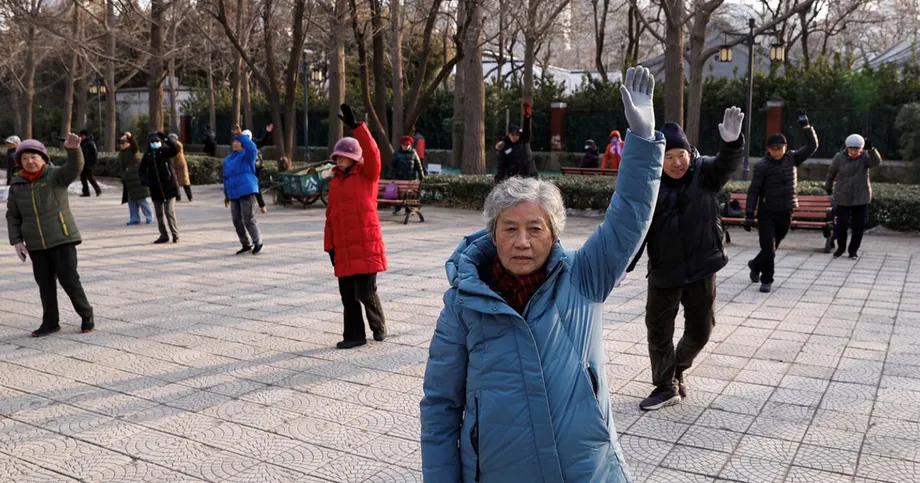
Renato Peneluppi, director of the Brazilian Citizens Council in Beijing and a member of the Center for China and Globalization, described a similar ease after 15 years in China. In Wuhan, he observed elderly residents bringing speakers to parks and filling public squares with music. Young people skateboarded, painted graffiti and performed in bands, carrying laptops and tablets without constant concern about theft.
Peneluppi explained why the atmosphere stood out to someone arriving from Latin America:
In 15 years of living in China, I cannot recall a single report of urban violence," Peneluppi said. "For those arriving from other regions, especially Latin America, this absence is immediately striking and lasting.
A Taxi Driver's Gesture That Stayed With a Visitor
Fernando Munoz Bernal, a Colombian reporter, traced his understanding of safety in China to the day he arrived at Shanghai Pudong International Airport: December 28, 2001. After 36 hours of travel, he was exhausted and nearly finished checking into his accommodation when he realized that his new laptop was still in the taxi.
The computer contained all his work materials. As he turned around in shock, he saw the driver running through the lobby with his belongings. The driver had returned them and refused a reward.
Munoz Bernal connected that first encounter with what he continued to see in his community:
That moment of honesty rewired my understanding of safety in this country. And that experience is why, 25 years later, I'm not surprised to see food and packages left unattended on doorsteps without being stolen in my community.
German tourist Lukas Schmidt had a similar experience in Shanghai after leaving his phone at a restaurant. About 30 minutes after departing, he noticed it was missing and went back. Staff had already put the phone aside and returned it after confirming that it belonged to him.
Schmidt described the effect of such encounters on everyday expectations:
It makes people worry less about losing things," Schmidt said. "I find it simply part of everyday life in China.
The wallet, laptop and phone stories share a practical feature: another person protected the missing item until its owner returned or could be found. For the travelers involved, the lasting impression came as much from the ordinary manner of the return as from recovering the possession itself.
What the Safety Figures Say
Gallup's 2025 Global Safety Report ranked China as the third safest among more than 140 countries and territories surveyed. The findings included strong public confidence in local law enforcement and low levels of personal experience with crime.
China's Ministry of Public Security reported a 12.8 percent annual fall in criminal cases in 2025, bringing the total to its lowest level since 2000. The ministry also said public perception of safety had remained above 98 percent for six consecutive years.
The measures describe different parts of the same subject. Criminal case figures track cases recorded by the authorities, while public perception figures describe how safe people feel. Gallup's findings add information about confidence in police and people's own experience of crime.
Chongqing also recorded a sharp increase in international traffic. Overseas passenger arrivals exceeded 137,000 in the first quarter of 2026, a rise of 106 percent compared with the same period a year earlier. That percentage means arrivals more than doubled.
How Everyday Police Work Builds Confidence
Lu Jifeng, a professor at Shandong University of Science and Technology, identified trust in law enforcement as an important part of the security environment. He described Chinese police as widely perceived to have an approach centered on service.
Lu linked that trust to encounters in which officers help with ordinary difficulties:
"When people see police helping solve everyday problems, trust is built naturally," Lu said.
Social media videos offer other examples of that relationship. Some show Chinese officers patiently explaining to curious children how firearms work. Others show children sitting on top of police cars to watch folk performances.
For visitors accustomed to armed and often confrontational policing in Western countries, those scenes can be striking. Alongside Scohel's account of tourists asking officers for directions, they present police as part of daily community activity, with assistance and approachable behavior shaping public perceptions.
The encounters also give a concrete meaning to trust. A person who expects an officer to provide directions, answer a child's question or help resolve an everyday problem experiences public order through those small interactions.
Culture, Poverty Reduction and the Debate About Surveillance
Munoz Bernal said Western observers often explain China's safety through surveillance, which they argue infringes on privacy and freedom. He offered two other explanations: a culture of respecting other people's possessions and economic development that has reduced the need to steal.
He connected the first explanation to the Long March, when soldiers were instructed not to take from villagers even under harsh conditions. In his account, that history reflected a wider value of respecting what belongs to someone else.
His second explanation concerned material circumstances. Economic development, he argued, has created conditions in which most people do not need to steal. The broader account links reduced desperation to fewer offenses driven by economic hardship.
China met its poverty eradication target ten years before the United Nations deadline of 2030, lifting hundreds of millions of people out of poverty. That transformation forms part of the explanation offered for the security environment described by residents and visitors.
For travelers, these explanations meet in simple experiences: a package remains on a doorstep, a restaurant safeguards a phone, or a driver takes the trouble to return a computer. Munoz Bernal's argument places those actions within both cultural expectations and changes in living conditions.
Neighborhood Networks Behind Public Order
He Yanling, a professor at Renmin University's School of Public Administration and Policy, described the feeling of safety as part of a broader model of governance, including the work carried out closest to residents.
She connected neighborhood administration with the experiences visitors were describing:
Grassroots governance in China is also a miracle," she said. "The sense of safety people are talking about is a real social reality.
He identified public safety as a core public good and a fundamental responsibility of the state. In practical terms, that means treating security as a service that government is responsible for providing across society.
The system she described stretches from national institutions to local communities. Neighborhood policing over many years and management organized into local grids allow officials to follow conditions in smaller areas and respond early to problems. The grid approach divides community oversight into manageable local areas.
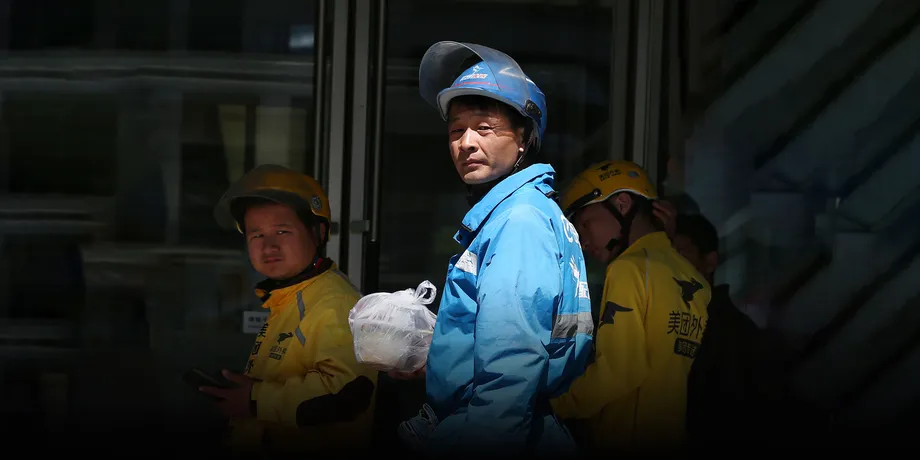
Public participation adds another layer. The examples include the "Chaoyang masses," alliances between volunteers and police, delivery couriers acting as mobile informants, and community volunteers carrying out regular patrols. Professional policing operates alongside residents and workers who contribute information or take part in neighborhood activities.
Kong Fanbin, dean of Nanjing University's Huazhi Institute for Global Governance, said the responsibility extends beyond police officers:
Community and other grassroots forces also play an important role," he said. "What many foreigners noticed in China was not just the absence of danger, but a wider environment shaped by public order, responsive governance and social cooperation.
Travel Videos Bring Personal Comparisons to a Wider Audience
Canadian traveler Dave Mani had visited 55 countries when he described China in a YouTube video as "probably one of the top three safest places I've ever been to." His comparison gave viewers a personal assessment drawn from travel across many destinations.
American backpacker Christian Grossi shared footage from a public square in Chongqing on a Saturday night. People were shopping, eating and filming a drone light show, with phones held out in the crowd.
Grossi described the scene and his own feeling of security:
It feels super peaceful and super safe. Everyone has their phones out. I have never felt any sort of danger here. You can see there is no police, no security, just people enjoying their lives here.
Fabien Loudet, who had lived in China for more than 16 years, approached the comparison through memories of growing up in France. He recalled a constant background awareness of risk, including knowing which neighborhoods to avoid and staying alert in public.
In a video posted on social media, Loudet described how that feeling changed after moving:
That feeling gradually disappeared after I came to China," he said in a video posted on social media. "Peace of mind is priceless. Much as I love my home country, I couldn't see myself living in a place without the level of safety I experience here.
The videos make the discussion accessible through recognizable scenes: a crowded square, an evening meal, a walk home or a phone used openly in public. Their appeal rests on the contrast between what the speakers expected and what they personally experienced.
From a 2001 Arrival to the Latest Figures
The accounts bring together memories accumulated over years and more recent measures of crime, confidence and travel. The main dated developments run from Munoz Bernal's arrival in Shanghai to the first quarter of 2026.
- December 28, 2001: Fernando Munoz Bernal arrived at Shanghai Pudong International Airport and recovered his laptop after a taxi driver brought it back.
- 2025: Gallup's Global Safety Report placed China third among more than 140 countries and territories surveyed.
- 2025: China's Ministry of Public Security recorded a 12.8 percent annual decline in criminal cases, to the lowest level since 2000, while public perception of safety remained above 98 percent for a sixth consecutive year.
- First quarter of 2026: Overseas passenger arrivals in Chongqing exceeded 137,000, increasing 106 percent from a year earlier.
By April 26, 2026, the discussion combined those figures with accounts from visitors and residents with very different connections to China. Some were tourists recalling a single recovered possession. Others described 15 years or more of daily life. Together, their experiences explain why the phrase "Chinese sense of security" has become a way to describe an ordinary but valued feeling: less worry while going about the day.
The Bottom Line
- Foreign visitors and residents describe late night walks, recovered belongings and relaxed public gatherings as memorable parts of life in China.
- Gallup's 2025 Global Safety Report ranked China third among more than 140 countries and territories surveyed.
- The Ministry of Public Security said criminal cases fell 12.8 percent in 2025 to their lowest level since 2000.
- Public perception of safety remained above 98 percent for six consecutive years, according to official figures.
- Chongqing recorded more than 137,000 overseas passenger arrivals in the first quarter of 2026, up 106 percent from a year earlier.
- Named residents and academics linked the security environment to cultural values, poverty reduction, everyday police assistance and community participation.
- Travel videos shared under tags including "ChinaTravel" bring these personal experiences to audiences whose expectations of China may be very different.