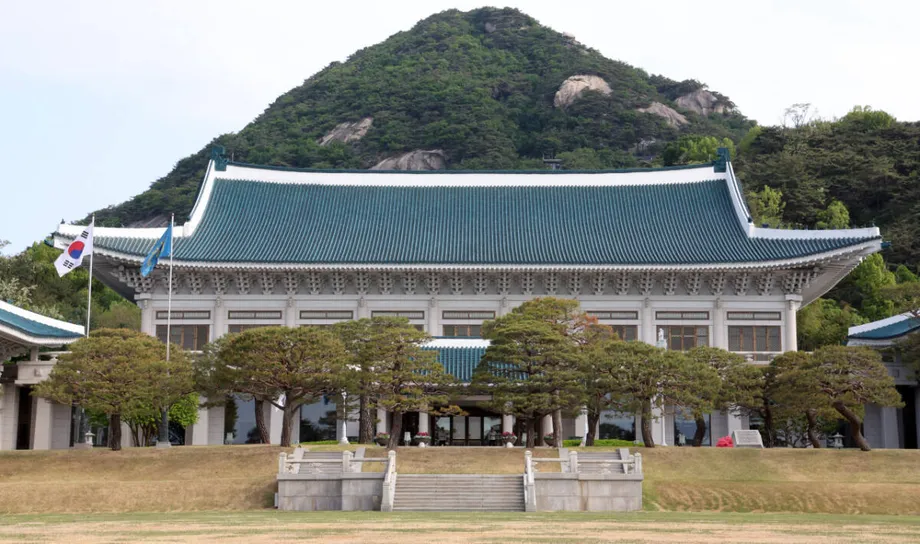
A Seoul rally puts Fu Bao's care at the center of a return campaign
A citizens' group gathered outside Cheong Wa Dae Sarangchae in Seoul on the morning of October 15, asking South Korea's government to seek the return of Fu Bao and obtain clearer information about the panda's health and treatment in China. Born at Everland in Yongin on July 20, 2020, Fu Bao was sent to China in April 2024, before her fourth birthday.
Contents
- A Seoul rally puts Fu Bao's care at the center of a return campaign
- What supporters want Seoul to explain
- Petitions began soon after the move
- A medical episode gave welfare concerns a sharper focus
- How the campaign developed
- Gyeongju protesters brought the demand to the APEC visit
- Why a return requires a new agreement
- A separate panda proposal exposes competing priorities
- Key Points
The Fu Bao Return Coalition said changes in her appearance and behavior in published photographs and videos had caused concern. It requested transparent information about her health, medical examinations, living environment and daily care. The group also asked Seoul to consult actively with Beijing, examine whether she could return and explain whether any effort was under way.
The coalition described the bond supporters feel with the panda in a short statement:
Fu Bao is family.
The campaign brings together two demands: reliable information about an animal's welfare and government action over where she should live. Those demands have developed through petitions, public demonstrations and concern following a documented episode of distress in December 2024.
Fu Bao's appeal extends well beyond the people attending rallies. She attracted more than 5.5 million visitors at Everland between 2021 and 2024 and became widely known as Princess Fu. Her departure ended the public's opportunity to visit her in South Korea, while photographs and videos from China became central to how supporters followed her life.
The coalition wants the government to turn that public attachment into a concrete response: information about her care, discussions with China and a responsible explanation of any progress toward a possible return.
What supporters want Seoul to explain
The October 15 demonstrators asked for more than a general assurance that Fu Bao was being cared for. Their requests covered whether she had received medical treatment, the condition of her enclosure and the way she was being kept. They linked those questions to changes they believed they could see in images released after her move.
South Korea's government was asked to address a separate diplomatic question: whether it would pursue another arrangement with China that could bring her back. The coalition urged officials to explain both their position and any progress, giving supporters a clearer picture of what the government was actually doing.
No agreed return arrangement or date was announced in connection with the rally. Supporters were asking the government to explore a possibility that would require China's agreement.
Fu Bao's birthplace explains why campaigners describe South Korea as her home. Her parents, Ai Bao and Le Bao, arrived in 2016 under a loan agreement lasting 15 years. Fu Bao was the first giant panda born in South Korea through natural breeding, meaning her parents conceived her without artificial insemination.
Petitions began soon after the move
A Seoul resident proposed another loan agreement in April 2024, suggesting that Fu Bao could be housed at Seoul Grand Park, which is operated by the city. Seoul's response was that she would adapt well to the environment in China.
A further petition, submitted by a person surnamed Koh, appeared on the National Assembly's online petition platform on May 29, 2024. It had gathered the initial 100 expressions of consent and was awaiting a review before wider publication and support.
That petition emerged amid anxiety over unverified photographs circulating on social media. Dark marks around Fu Bao's neck prompted speculation among some supporters that she had been chained. The images' origin and the cause of the marks were unverified.
The China Conservation and Research Centre for the Giant Panda released photographs and videos on May 28, presenting them as evidence that Fu Bao was in sound condition. It also said she would become available for public viewing in June. Supporters were therefore following both the center's updates and images circulating outside its official channels.
A medical episode gave welfare concerns a sharper focus
Chinese panda care officials said Fu Bao showed signs of distress, including convulsions, on December 3, 2024. She was subsequently cared for away from public exhibition for nearly four months.
A later announcement said continuous, detailed examinations and medical care tailored to her needs had found her in good health. Officials announced that she would return to public viewing on March 25, 2025, and released a video showing her eating.
The care announcement also said her habitat had been disinfected and that plants and other environmental features had been replenished before visitors returned. Those details addressed both her medical care and preparation of the space where she would be exhibited.
The December episode helps explain why later appeals focused on examinations and treatment as well as appearance. Supporters wanted information that connected what they could see in short videos with the findings of the people responsible for her care.
The center's assessment was that Fu Bao had recovered sufficiently to return to public viewing. The coalition's later request was for continuing transparency about her condition and daily life, alongside consideration of a move back to South Korea.
How the campaign developed
Fu Bao's story has unfolded through breeding arrangements, relocation, health updates and public pressure. Several dates show how a popular zoo attraction became the subject of repeated appeals to government:
- 2016: Ai Bao and Le Bao arrived in South Korea under a loan agreement lasting 15 years.
- July 20, 2020: Fu Bao was born at Everland in Yongin, Gyeonggi Province.
- April 2024: Fu Bao moved to China before turning four; a Seoul resident proposed seeking a new loan agreement.
- May 29, 2024: A National Assembly petition seeking her return reached the initial threshold of 100 expressions of consent.
- December 3, 2024: Chinese care officials said Fu Bao experienced distress, including convulsions.
- March 25, 2025: Officials announced her return to public viewing after nearly four months away from exhibition.
- October 15: The Fu Bao Return Coalition rallied outside Cheong Wa Dae Sarangchae in Seoul.
- October 30, 2025: A different group demonstrated in Gyeongju during Chinese President Xi Jinping's visit for the Asia-Pacific Economic Cooperation summit.
The October 15 rally focused on the South Korean government's responsibility to respond. The Gyeongju demonstration placed the return demand near an international gathering attended by China's president.
Gyeongju protesters brought the demand to the APEC visit
About 15 members of the animal rights group Fu Bao and Fu Deokis gathered at noon on October 30, 2025, in Hwangnam-dong, central Gyeongju. The location was roughly 15 kilometers from the Kolon Hotel, where Xi was staying during his visit for the Asia-Pacific Economic Cooperation summit.
The demonstrators wore yellow vests bearing the words "Save Fu Bao." Members of the group called for the panda's return:
Help endangered panda Fu Bao return to Korea!
The group said it planned to continue demonstrating the following day, October 31. Its stated aim included a sustainable world in which people and animals could coexist.
By then, Fu Bao was five years old and living at the Wolong China Giant Panda Garden in Shenshuping, Sichuan Province. The Gyeongju gathering showed that interest in her return had continued well beyond the initial petitions following her departure.
The Seoul coalition and the Gyeongju group were separately named organizations. Both sought Fu Bao's return, while the Seoul rally also set out detailed requests for information about her medical care and living conditions.
Why a return requires a new agreement
Fu Bao left South Korea under the arrangement governing pandas born overseas, which required her return to China before she turned four. Her parents' presence at Everland was also governed by a loan agreement, despite their public role as symbols of friendship between the two countries.
A new arrangement would need to address permission to move her, a receiving facility and responsibility for her care. The earlier Seoul Grand Park proposal offered one possible destination, while the October coalition asked the national government to explore the broader possibility of a return.
Animal welfare organizations have also challenged the practice of moving pandas for diplomatic exhibition. In a separate debate over a proposed loan of another pair of pandas, 12 groups, including Aware and Bear Sanctuary Project, called for the plan to be withdrawn. They cited transport stress, adjustment to unfamiliar surroundings and Fu Bao's health difficulties after her move.
The groups argued that decisions about loans, renewals and returns were too closely tied to relations between governments rather than the interests of the animals. Their position introduces a practical question for any return campaign: how a proposed move would meet the individual panda's medical and care needs.
South Korea has experienced the financial demands of panda loans before. A pair arrived in September 1994 under an arrangement intended to last 10 years, but they were returned after four years because of costs. The actual stay was therefore less than half the planned period.
A separate panda proposal exposes competing priorities
President Lee Jae Myung's request to Xi for another pair of pandas prompted discussion of Gwangju's Uchi Zoo as a possible home. A facility cost of about 30 billion won was cited during that debate, alongside suggestions that the zoo could receive national status.
The government said working discussions between the countries were taking place, while no panda loan had been finalized. It also said housing the animals at Uchi Zoo and changing the zoo's status had not been agreed.
The 12 animal groups opposing the proposal pointed to 199 farmed bears still living in inadequate conditions in South Korea. They argued that public money should first support animals already needing protection, rather than create another panda exhibition.
Their criticism connected the panda debate to the implementation of amendments to the Wildlife Protection and Management Act. The changes banned keeping and breeding bears for bile production, along with making, consuming and distributing bear bile, from January 1. Enforcement against farms was deferred for six months as sanctuary construction and arrangements to acquire the bears fell behind.
For Fu Bao's supporters, the immediate demand remains specific: a clear account of her health and care, and an explanation of whether Seoul will seek her return. For officials considering any panda arrangement, the competing demands concern where animals live, how moves affect them and how their care will be funded over time.
Key Points
- The Fu Bao Return Coalition rallied in Seoul on October 15, seeking health information and government talks with China.
- Fu Bao was born at Everland on July 20, 2020, and moved to China in April 2024 under the panda loan arrangement.
- Chinese care officials reported convulsions in December 2024 and later said examinations found her in good health before her return to public viewing.
- About 15 members of another group demonstrated in Gyeongju during Xi Jinping's October 2025 APEC visit.
- A return would require a new agreement; no return date was announced in connection with the Seoul rally.
- Animal welfare groups have separately opposed a proposed new panda loan, citing transport stress, costs and unmet needs among bears already in South Korea.