Chemically reset cells develop into organised embryo models
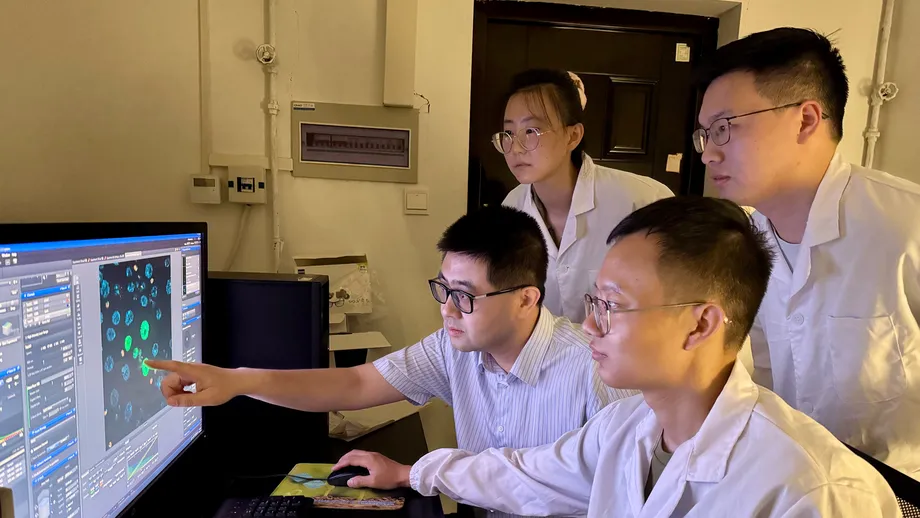
A Tsinghua University team led by stem cell researcher Ding Sheng has developed mouse embryo models from chemically induced stem cells, producing blood cells, developing blood vessels, early reproductive cell lineages and heart tissue capable of rhythmic contractions. The research, published in Nature on October 14, 2026, follows development from stages before implantation through the beginnings of organ formation, entirely outside the uterus.
Contents
- Chemically reset cells develop into organised embryo models
- What the chemical reset changes
- How the models move from a cell cluster to early organs
- The foundation was a three chemical mixture
- Three publications trace the field's progress
- A distinct approach reached similar developmental territory
- Why supporting tissues matter for pregnancy research
- Reproductive cells and blood vessels suggest further uses
- Further development remains the central challenge
- Key Points
The models closely resembled natural mouse embryos at embryonic day 8.5, known as E8.5. With extended culture, their functional cardiac tissues became highly comparable to those in natural embryos at E10.5, according to the Nature study, titled Modelling mouse embryogenesis from chemically induced totipotent stem cells.
Ding, the founding dean of Tsinghua's School of Pharmaceutical Sciences, and his colleagues began with one chemically induced cell type rather than sperm and eggs. Under suitable culture conditions, these cells organised themselves into structures containing both tissues of the developing body and supporting tissues normally formed outside it.
The central achievement is continuity: the same starting cell population generated successive stages of early development, rather than producing isolated pieces of tissue. No complete mouse has been produced. The work establishes an experimental system for investigating how early development unfolds and where it can fail.
What the chemical reset changes
The starting cells are called chemically induced totipotent stem cells, or ciTotiSCs. Totipotency describes the capacity to generate both the body's cell types and the supporting tissues needed for development, including tissues that contribute to the placenta. In mice, the fertilised egg and cells of the earliest embryo possess this exceptional developmental range.
Pluripotent stem cells have a narrower range: they can generate the body's many cell types, while totipotency extends to the supporting lineages outside the embryo. Ding's team uses chemicals to push mouse pluripotent stem cells toward that earlier state. The latest paper describes its starting cells as totipotent-like.
The experimental route therefore has several steps. Researchers establish a suitable stem cell population, chemically alter its state and then provide conditions in which it can begin organised development. The earlier foundational experiments used mouse pluripotent stem cells as their immediate starting material.
The phrase one cell type is also central to the result. Many embryo models depend on bringing together several specialised cell populations. Here, a single induced cell type supplied the different lineages needed to build the model, with cells gradually taking on distinct roles as development progressed.
How the models move from a cell cluster to early organs
The Tsinghua models passed through stages resembling the morula, an early compact cluster of cells, and the blastocyst, a structure with a cavity and distinct cell populations. The researchers found that their blastocyst structures resembled natural blastocysts in both shape and the separation of cells into different developmental lineages.
Natural blastocysts normally implant in the uterus before further development. The laboratory system supported continued development outside it, allowing researchers to follow processes that would ordinarily unfold within the mother.
Gastrulation was one of the major milestones. During this stage, cells reorganise into three foundational layers from which tissues such as the nervous system, muscle and gut develop. The models also established an embryonic axis, the spatial organisation that helps determine where different body regions form.
Blood cell formation and early organ development followed. The study's authors, describing the developmental sequence in their Nature paper, wrote:
The resulting ciTotiSC-derived EMs (ciToti-EMs) successfully progressed through key developmental milestones, including gastrulation, embryonic axis formation, haematopoiesis and early organogenesis, closely resembling embryonic day 8.5 (E8.5) natural embryos (NEs).
E8.5 and E10.5 refer to stages of natural mouse embryonic development used for comparison. The broader embryo model resembled E8.5 embryos, while the later E10.5 comparison concerned cardiac tissue after extended culture. Those benchmarks describe different aspects of the experiment.
The foundation was a three chemical mixture
Ding's team laid the groundwork in research first published online on June 21, 2022, and later appearing in Nature's May 2023 issue, volume 617, pages 792–797. That earlier chemical induction study established conditions for generating and maintaining ciTotiSCs from mouse pluripotent stem cells.
The mixture contained TTNPB, 1-azakenpaullone and WS6, collectively called TAW. TTNPB is a retinoic acid analogue, while WS6 blocks certain enzymes called kinases. Such small molecules can alter signals inside cells, changing which developmental programmes become active.
The induced cells resembled cells of mouse embryos at the two cell stage across three kinds of measurements: gene activity, chemical regulation associated with DNA and the molecules involved in metabolism. Together, these measurements gave researchers several ways to assess the cells' altered state.
The team also injected the cells into embryos at the eight cell stage. The introduced cells contributed efficiently to both embryonic and extraembryonic lineages. That experiment tested their developmental contribution alongside an existing embryo; the latest work instead follows models generated solely from the induced cell type.
Maintaining the cells over long periods was another essential part of the earlier work. A stable supply gives scientists repeated opportunities to investigate the same starting state, rather than relying on the brief window during which it occurs naturally.
Three publications trace the field's progress
The route to the latest result includes both the Tsinghua team's earlier cell induction work and a distinct chemical approach developed by researchers at other institutions. Their publication dates help separate advances that use similar language but different starting cells.
- June 21, 2022: Ding's team published its chemical method for inducing and maintaining ciTotiSCs online. The paper subsequently appeared in Nature in May 2023.
- August 7, 2025: Researchers affiliated with Guangzhou National Laboratory, Guangzhou Medical University, Fudan University, Westlake University and other institutions published an embryo founder cell approach online in Cell.
- October 14, 2026: The Tsinghua team's Nature paper described continuous embryo model development from ciTotiSCs, including early organ formation and functional cardiac tissues.
The shared direction is chemical control of cell identity. The experiments differ in the developmental state they induce, the chemical conditions they use and the evidence they provide about subsequent development.
A distinct approach reached similar developmental territory
The 2025 Cell study, titled A complete model of mouse embryogenesis through organogenesis enabled by chemically induced embryo founder cells, produced cells resembling those of mouse embryos at the eight to 16 cell stages. The researchers called them induced embryo founder cells, or iEFCs.
Their K4 induction condition involved CHIR99021, the ALK5 inhibitor E6165452 and the RARα agonist AM580. This is a different recipe from the TAW mixture associated with the Tsinghua ciTotiSC work, and it targets a different early developmental identity.
The iEFCs formed blastocyst models, called blastoids, with 95% efficiency. In experiments combining them with natural embryos, the reported efficiency of generating chimeric embryos with contributions to both embryonic and extraembryonic tissues ranged from 47% to 73%. A chimera contains cells from different starting populations.
The 95% figure concerns blastoid formation, while the 47% to 73% range concerns the chimera experiments. Each measures a different experimental outcome, and both belong to the iEFC study.
Those models reached a shape comparable to natural embryos at E8.5–E8.75. They formed six to 14 pairs of somites, repeated tissue blocks involved in building structures such as the spine and skeletal muscles. The researchers also described a looping heart tube, brain regions, optic buds, a gut, a tail bud and migrating primordial germ cells.
Placed beside the Tsinghua findings, the Cell work shows that chemically induced early cell states can support several routes toward organised embryo models. Comparing the routes could help scientists investigate how a starting cell's identity affects later development.
Why supporting tissues matter for pregnancy research
The Tsinghua models generate extraembryonic tissues as well as tissues of the developing body. These supporting lineages participate in the environment that allows an embryo to develop, making them a major part of the team's research agenda.
Ding sees the system as a way to investigate how abnormalities in extraembryonic tissues affect development and to explore possible interventions. Scientists could use such models to examine how signals between the developing body and its supporting tissues become disrupted.
Implantation and placental disorders are among the possible research applications identified by the team. A model containing both sides of those interactions offers a different experimental opportunity from studying one isolated cell population.
The practical value lies in following a process through time. Researchers can investigate how an early change in cell identity or tissue organisation is followed by later developmental problems, helping them connect an initial disturbance with its consequences.
Reproductive cells and blood vessels suggest further uses
Primordial germ cells appeared in the Tsinghua models. These are early precursors of the lineage that eventually produces sperm or eggs. After transfer into a specialised culture system, the precursors developed further and showed the capacity to enter early stages of meiosis, the division process that prepares reproductive cells to carry half the usual chromosome complement.
The cells remain immature, and their reproductive capacity has not been tested. Ding has proposed investigating whether people who lack functional sperm or eggs might eventually benefit from a route that begins with nonreproductive cells, generates reproductive precursors through a limited period of development and then uses further laboratory procedures.
For now, that is a proposed research direction. The immediate work concerns mouse development, cell identity and the conditions that allow reproductive lineages to emerge.
Developing blood vessels and blood cells suggest another possible use: improving organoids, small laboratory structures that reproduce some features of organs. Ding identified the lack of internal blood vessels as a constraint on how large and complex organoids can become.
A system in which vascular and organ tissues develop together could help researchers investigate ways to support larger structures. The experiment brings several developing tissue systems into the same model, offering a basis for studying how they coordinate with one another.
Further development remains the central challenge
The models become less efficient at continuing development as they advance, and some structures still differ from those of natural embryos. Researchers have yet to determine how much those limitations arise from the culture environment, the models themselves or a combination of both.
Ding says the team's immediate focus remains basic research. Its eventual experimental goal is development after transfer into a uterus and the birth of a healthy mouse. Reaching that goal would require overcoming the current losses in developmental efficiency and supporting more complete, coordinated growth.
Extending related methods to other mammals, especially humans, would bring further scientific difficulties and require stricter ethical review and public discussion. The possible reproductive applications therefore sit alongside questions about how such research should be governed.
The achievement already gives researchers a more continuous view of early mouse development: one induced cell type produces supporting tissues, embryonic structures and several emerging functions within a shared developmental sequence. The next experimental task is to understand why that sequence becomes less reliable as it proceeds.
Key Points
- Tsinghua researchers generated mouse embryo models solely from chemically induced totipotent-like stem cells, without fertilisation.
- The Nature paper, published October 14, 2026, described models resembling E8.5 embryos and later cardiac tissues comparable to those of E10.5 embryos.
- The models produced embryonic and extraembryonic tissues, blood cells, developing vessels and primordial germ cells.
- The work builds on the team's chemical induction method first published online in June 2022.
- A distinct Cell study published in August 2025 used induced embryo founder cells and a different chemical recipe to reach early organ formation.
- No complete mouse has been produced. Developmental efficiency declines as the Tsinghua models advance, and reproductive applications remain research proposals.