Turning discarded metals into a secure industrial supply
Japan aims to obtain about 30% of the raw materials for permanent magnets supplied domestically from recycling by 2030, under a government plan adopted on April 21, 2026. The target sits alongside a broader ambition to mobilise about ¥1 trillion in public and private investment in resource circulation by the same year.
Contents
- Turning discarded metals into a secure industrial supply
- Why recycling has become a management decision
- The missing link between buyers and recyclers
- What a domestic magnet recycling loop requires
- Where the investment would go
- Rules aim to create customers and simplify operations
- Companies already have pieces of the system
- Different metals need different measures of success
- An Asian collection network and a sequence of deadlines
- Key Points
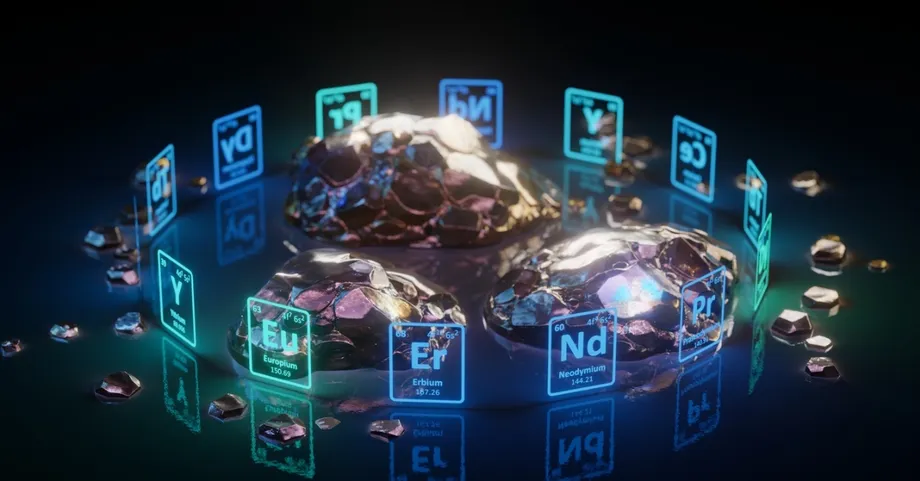
The permanent magnets used in electric vehicle motors, air conditioners and industrial machinery depend on rare earths whose supply is concentrated in a small number of countries. Japan has strong magnet manufacturing technology, but tighter Chinese export controls have increased the urgency of finding dependable raw materials.
The government's Circular Economy Action Plan, adopted by the ministerial meeting on the circular economy, treats recycling as an economic security and industrial competitiveness issue. Its central challenge is commercial: collecting and processing discarded materials must become a business that can reliably supply manufacturers and earn enough to keep operating.
Japan has spent decades promoting the three Rs, reduce, reuse and recycle. The new strategy asks a harder question: who will pay for the collection networks, sorting equipment and refining plants needed to turn that environmental commitment into a dependable source of industrial materials?
The answer matters for manufacturers, waste collectors and communities alike. Factories need predictable supplies of usable material. Recycling companies need customers before they can justify new equipment. Local collection systems must connect the two without losing valuable metals to disposal or overseas buyers.
Why recycling has become a management decision
Eiji Nakatsu of Hitachi described this shift during a discussion involving the Ministry of Economy, Trade and Industry, JX Metals and Hitachi. Concentrated mineral supplies, geopolitical risks and stronger European rules, he argued, have made resource circulation part of business continuity and competitiveness, rather than a matter left to environmental departments.
Junichiro Mimaki of the industry ministry said Japan's earlier recycling efforts largely addressed domestic problems such as illegal dumping and a shortage of landfill space. Cooperation from consumers and municipalities remains a strength, but the commercial foundations of recycling need further development.
The action plan describes international competition extending beyond newly mined resources to recovered materials. It points to China's tighter controls on critical mineral exports and its creation of a resource recycling group backed by government and business. It also identifies European moves to restrict exports of electronic scrap and require recycled plastics in new vehicles.
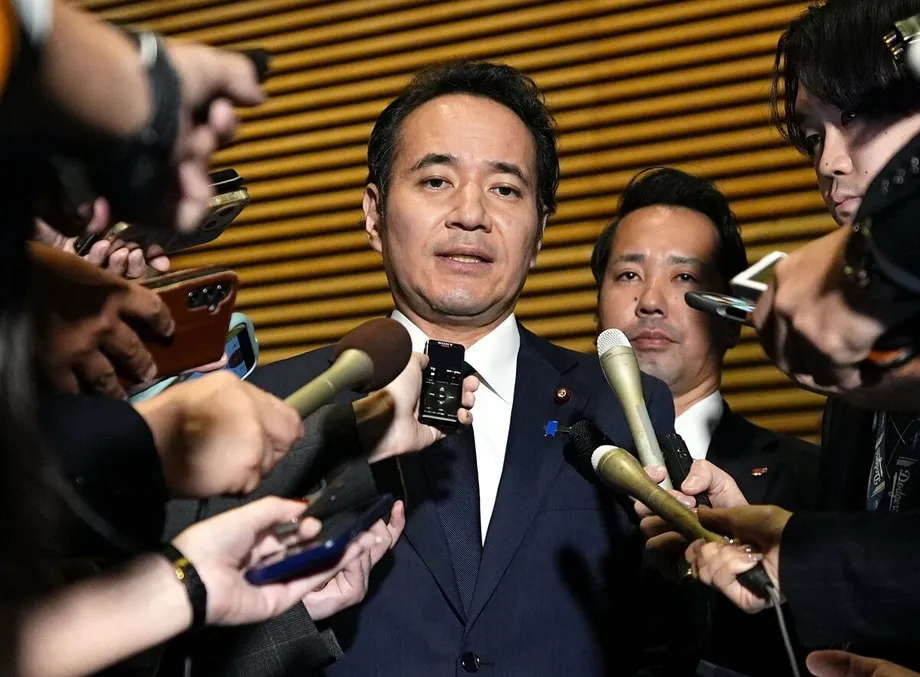
Chief Cabinet Secretary Minoru Kihara connected the investment drive to Prime Minister Sanae Takaichi's economic programme at the ministerial meeting:
It is important to promote public-private investment, accelerate the transition to the circular economy, and link the initiative to the (Prime Minister Sanae) Takaichi administration's growth strategy aimed at realizing a strong economy,
For a manufacturer, a circular economy means keeping useful materials in production through recovery and reuse. The business attraction is access to another source of inputs when overseas supplies become expensive or difficult to obtain.
The missing link between buyers and recyclers
Mimaki identified a basic investment problem: manufacturers struggle to plan without a dependable supply of recycled materials, while recyclers struggle to invest without dependable demand. Each side needs a commitment from the other before it can move.
The action plan explains why this problem is especially difficult in Japan. Much of the recycling industry consists of relatively small businesses spread across different regions. Few can offer the long contracts and large volumes that manufacturers require, while consistently meeting specifications for quality and cost.
Banks face a related difficulty. An advanced recycling plant can take years to recover its investment, and a manufacturer may be unwilling to guarantee purchases while the plant is still being planned. That leaves the recycler seeking finance before its future revenue is secure.
Recycled material also carries real processing costs. Discarded products must be gathered, stored, dismantled, sorted and refined. Mimaki said that, in many cases, recycled inputs currently compare unfavourably with newly produced materials on quality, available quantity and cost.
The government's response combines help for equipment investment with measures intended to create demand. The commercial logic is straightforward: more predictable orders can support financing, while better equipment can help recyclers deliver the consistency that buyers need.
What a domestic magnet recycling loop requires
The permanent magnet strategy covers the whole journey from recovery to reuse. Japan plans to connect collection, separation, reprocessing and the return of recovered materials to manufacturing within a domestic recycling loop.
Factory offcuts are the immediate priority described by Mimaki. These materials, known as post industrial recycled inputs, arise during production. They offer an earlier opportunity than retrieving magnets from products that have already been sold and used.
Magnets recovered from discarded vehicles, appliances and machinery require a wider collection system. Products must reach suitable dismantling facilities, magnets must be separated from other components, and recovered materials must be processed to a quality that manufacturers can use.
The action plan supports demonstrations and equipment installation for both production scrap and used products, followed by wider collection networks as practical methods develop. It also calls for cooperation with partner countries to recover magnets and rare earths from used products and bring them into Japanese resource circulation.
The 2030 target gives the supply chain a common destination: roughly three units of recycled raw material for every ten units used in permanent magnets supplied in Japan. Achieving that share will require coordinated purchasing, collection and processing rather than improvements at a single factory.
Where the investment would go
The government's implementation measures list ¥37.9 billion in the fiscal 2026 draft budget for investment support across the recycling supply chain. Eligible areas include storage, dismantling, sorting, preliminary processing, smelting and port infrastructure.
The broader ¥1 trillion ambition covers combined public and private investment through 2030 across resource circulation. The plan sets out initial investment assistance, possible lending arrangements and financing through public and private funds, including the Japan Green Investment Corp. for Carbon Neutrality.
Storage is one practical part of the strategy. Recovered materials may arrive at a different pace from factory orders, so stockholding facilities can help bridge changes in supply and demand. Ports and transport networks can bring together material collected in smaller quantities across different locations.
The plan also identifies product design as a cost issue. Equipment that is easier to dismantle and materials that are easier to separate can reduce work later in the recycling process. Spending on recovery technology therefore needs cooperation from the companies designing the original products.
The government has left the detailed division of price risk between manufacturers, recyclers and financiers to further policy development and commercial negotiations. It plans to reflect the action plan in its basic economic and fiscal guidelines in summer 2026.
Rules aim to create customers and simplify operations
The amended Act on the Promotion of Effective Utilization of Resources took effect in April 2026. The action plan describes requirements for covered manufacturers and other businesses to prepare plans for recycled plastic use and submit regular reports, with the government monitoring progress.
Officials will consider expanding the businesses covered and adding other recycled resources. For products where preparations are advanced, the plan also calls for considering a phased requirement for specified recycled plastic content by fiscal 2028.
These measures address demand, while another law addresses the way recycling businesses operate. The Act on Advancement of Recycling Businesses came fully into force in November 2025 and provides three types of ministerial certification.
Certified projects can receive exemptions from certain permit procedures under waste management law, subject to protection of the surrounding living environment. The government aims to certify more than 100 projects over three years, encouraging manufacturers and recyclers to build joint operations capable of supplying the required quality and volume.
Public purchasing provides another potential customer. By fiscal 2030, the government intends in principle to introduce resource circulation criteria, such as recycled plastic content, across all designated procurement items covered by its Green Purchasing Act basic policy.
Companies already have pieces of the system
JX Metals Circular Solutions began joint venture operations on July 1, 2024, with JX Advanced Metals owning 80% and Mitsubishi Corporation 20%. Its activities combine scrap collection, metal processing and the development of recycling for automotive lithium ion batteries.
The company's corporate business overview describes efforts to expand global scrap collection, increase recycled inputs in copper smelting and use digital systems to trace materials through recycling.
Ichiro Togami, president and representative director, says cooperation across the product's life is necessary to return recovered metals to their original uses:
This process is not always easy, and making it a reality requires frameworks in which the entire supply chain throughout the product life cycle collaborates to increase the efficiency of resources.
Its Tsuruga subsidiary began operating facilities for recovering high purity nickel sulfate in 2021, cobalt sulfate in 2022 and lithium carbonate in April 2023. The company describes continuing verification work aimed at returning metals from used automotive batteries to battery production.
The industry ministry's magnet supply programme also shows an existing industrial base for supply security efforts. Its certified plans include Aichi Steel, Shin-Etsu Chemical, Daido Steel, Santoku, Honda and Astemo, with certification dates ranging from August 25, 2023, to February 17, 2026.
These companies illustrate the range of participants needed: material suppliers, processors and manufacturers using the finished components. Recycling adds collection and recovery businesses to that chain.
Different metals need different measures of success
Japan's strategy sets separate targets because each material presents a different industrial problem. By 2030, it seeks about 30% recycled resource content in domestically produced electrolytic copper, a highly purified form of copper, and about 40% recycled origin in domestic production of wrought aluminium products such as sheets and bars.
Japan imports all of its primary aluminium ingot and copper concentrate, according to the action plan. Increasing recovered inputs would give both industries another source of material. Aluminium requires better separation of alloy types and removal of impurities, while copper requires expanded scrap processing and a financially sustainable smelting industry.
For iron, the target is about 2 million tonnes of additional annual capacity to upgrade scrap by 2030. Better sorting can produce cleaner scrap suitable for making demanding grades of steel in large electric furnaces.
Battery recycling has a different set of technical goals: recovery of 70% of lithium and at least 95% each of nickel and cobalt, at usable battery material quality and competitive cost. Japan aims to establish a domestic battery recycling system by 2030, ahead of European recycled content requirements beginning in 2031.
Those battery percentages measure how much metal a process can recover from its input. The magnet, copper and aluminium targets measure the recycled share of industrial materials or production. Businesses will need to track both processing performance and the amount that actually returns to manufacturing.
An Asian collection network and a sequence of deadlines
Japan intends to use its refining capabilities as the centre of an international resource circulation network. Cooperation under the Japan ASEAN resource circulation partnership covers legal systems, technical capacity and business links in Indonesia, Thailand, the Philippines, Malaysia and Vietnam.
The implementation measures seek electronic scrap processing of about 500,000 tonnes in 2030, 50% above 2020. Those figures imply a 2020 level of roughly 333,000 tonnes and an increase of approximately 167,000 tonnes a year by the target date.
Crossing borders creates another business cost. Under the Basel Convention, covered waste shipments require prior notification and consent between countries. Japan aims to digitise that process and reduce the time per case from several months to about one month, while strengthening action against improper scrap exports.
The policy timetable brings investment, regulation and industrial targets together:
- November 2025: The Act on Advancement of Recycling Businesses came fully into force.
- April 2026: The amended resource utilisation law took effect.
- April 21, 2026: Ministers adopted the Circular Economy Action Plan.
- Summer 2026: The government plans to incorporate the strategy into its economic and fiscal guidelines.
- By fiscal 2028: Officials will consider phased recycled plastic content requirements for products where preparations are advanced.
- By 2030: Japan aims to reach its investment ambition, magnet material target and other resource recovery goals.
The business test connects every deadline: recovered metals must reach factories in dependable quantities, at usable quality and at a price that supports continued collection and processing. Government support is designed to help build that market, while manufacturers and recyclers must turn it into durable purchasing and supply relationships.
Key Points
- Japan targets recycled sources for about 30% of raw materials in permanent magnets supplied domestically by 2030.
- The action plan seeks about ¥1 trillion in combined public and private resource circulation investment by 2030.
- The fiscal 2026 draft budget lists ¥37.9 billion for equipment investment support across the recycling supply chain.
- Factory scrap offers an immediate starting point, with wider recovery from used products requiring stronger collection networks.
- Separate targets cover copper, aluminium, iron scrap processing and battery metal recovery.
- Cooperation with five ASEAN countries and faster shipment procedures are intended to support Japan's role as a recycling hub.