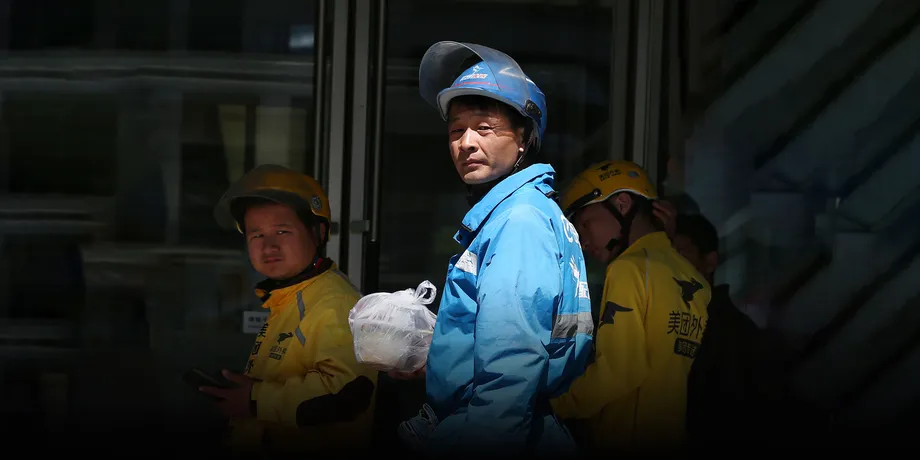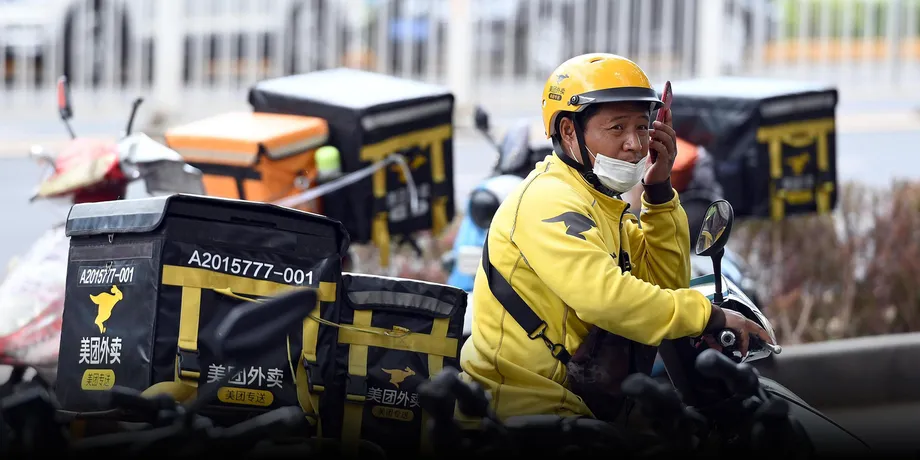
Nearly 30 million workers enrolled before nationwide expansion
China extended occupational injury protection to all 31 provincial regions and the Xinjiang Production and Construction Corps on July 1, 2026, building on a program that had enrolled 29.902 million workers by the end of June. Platform companies must pay the premiums, with charges calculated for each order and payments made monthly.
Contents
- Nearly 30 million workers enrolled before nationwide expansion
- What changes when protection follows an order?
- How the rollout reached the whole country
- What platforms must pay
- What an injured worker can receive
- Who files a claim, and who supplies the evidence?
- Why earlier protection left gaps
- Accident prevention reaches the delivery deadline
- Draft labor rules address pay and rest
- Key Points
The expansion covers ride services, instant delivery and freight transported within cities. It gives participating drivers and couriers a route to medical care and compensation after an occupational injury without first having to establish a formal employment relationship with a platform.
That change addresses a practical problem for workers who may take orders through several apps, sign service agreements rather than labor contracts, or work through contractors. When an accident happens, identifying an employer can become another difficult task alongside getting treatment and replacing lost income.
The Ministry of Human Resources and Social Security and eight other bodies set out the expansion in their joint expansion notice, issued on April 22, 2025. Its attached measures explain who pays, which injuries qualify, how workers can claim and how responsibility is assigned when several platforms are involved.
China is also considering broader protections covering pay, rest and automated management. Draft rules released on October 8, 2026, opened a consultation running until November 8. Together, the injury scheme and the proposed labor rules address two connected needs: helping workers recover after accidents and changing working conditions that expose them to danger.
What changes when protection follows an order?
Traditional occupational injury insurance is organized around an employer and an employee. Platform work often follows a different pattern: a driver can switch between apps, while a courier can accept individual deliveries without joining a regular staff roster.
The expanded scheme follows that pattern more closely. Platforms report worker and order information daily, calculate contributions by order and pay monthly. The rules require coverage for every eligible worker and every order within the scheme. Workers do not pay the premiums themselves.
Coverage generally runs from the point when a worker accepts an order and starts carrying it out until the task is completed. The measures also cover specified circumstances outside that period, including certain journeys associated with platform management requirements or returning home after completing orders.
Yu Feiyue, an associate professor at East China Normal University's School of Public Management, described why removing the employment requirement matters.
"By breaking away from the traditional requirement of a formal employment relationship, the new scheme is better suited to addressing occupational injury risks under the current realities of new forms of employment," Yu said.
Workers who qualify for regular occupational injury insurance remain entitled to that system under the rules. For other eligible platform workers, the new arrangement creates a dedicated route to injury benefits while their employment arrangements may remain flexible.
How the rollout reached the whole country
China began the pilot on July 1, 2022, in seven provincial regions, including Beijing, Shanghai and Guangdong, with seven platforms. By the eve of nationwide expansion, it covered 11 major platforms operating in 17 regions.
The main stages show how the government moved from a limited experiment toward broader participation:
- July 1, 2022: The initial pilot began in seven provincial regions with seven platforms.
- April 22, 2025: Nine bodies issued the expansion notice and revised protection measures.
- July 1, 2025: Ten more regions joined, taking the total to 17, while additional platforms entered the scheme.
- July 1, 2026: Coverage expanded geographically to all 31 provincial regions and the Xinjiang Production and Construction Corps.
- By the end of 2026: Provinces are expected to bring locally registered smaller platforms in the three covered industries into the scheme.
- 2027: Authorities plan to explore adding other industries with substantial occupational risks and intensive labor management.
The ten regions added in 2025 were Tianjin, Hebei, Liaoning, Zhejiang, Anhui, Fujian, Shandong, Hubei, Guangxi and Ningxia. Platforms joining that expansion included Didi's passenger and freight services, SF's city delivery operation and Manbang Shengsheng.
The July 2026 additions included T3, Huaxiaozhu, Meituan's ride service, Xiaoxiang Supermarket, Hema, Dingdong Maicai, Pupu and UU Paotui, among others. Nationwide geographic coverage is being followed by the work of enrolling smaller businesses within each province.
What platforms must pay
The national contribution benchmarks are small amounts attached to large numbers of transactions. Ride services have a benchmark of 0.01 yuan per order, instant delivery uses 0.07 yuan or 0.25 yuan, and freight within cities uses 0.18 yuan.
For 1,000 orders, those benchmarks equal 10 yuan for ride services, 70 yuan or 250 yuan for instant delivery, and 180 yuan for freight. These are illustrations of contribution costs calculated from the national rates, rather than amounts a worker receives after an injury.
Newly participating delivery platforms initially pay the 0.07 yuan benchmark. Provincial agencies can adjust platform rates according to claims spending and accident rates, using increments of 10%, with adjustments of up to 50% above or below the applicable benchmark. The rules also set conditions for moving delivery platforms between the two benchmarks.
The financing principle is to collect enough to meet benefit costs while keeping income and expenditure balanced. A platform with a more costly accident record can therefore face higher contributions, giving safety performance a financial consequence.
Yu warned that contribution decisions should take account of smaller platforms, which may face pressure to compete through cheaper and riskier orders. The challenge is to fund reliable protection while making safer operations, rather than greater pressure on workers, the more attractive business choice.
What an injured worker can receive
The measures cover medical treatment, rehabilitation, approved assistive equipment, disability benefits and payments to eligible relatives after a worker's death. Workers who cannot manage daily life independently may qualify for care payments following an assessment.
An accident while carrying out platform services can qualify, as can violence suffered during that work. The measures also include sudden illness resulting in death during an order, or death within 48 hours after unsuccessful emergency treatment. Specified traffic accidents on qualifying journeys are covered when the worker was not principally responsible.
Treatment normally takes place at medical institutions participating in the occupational injury system. In an emergency, workers can first receive care at the nearest medical facility. Eligible treatment and rehabilitation costs are paid through the occupational injury protection funds.
Platforms have a separate obligation to provide living support when an injured worker must stop working for treatment. The payment is based on the local urban minimum living allowance, calculated for the relevant treatment period. For someone whose earnings depend on completing orders, the amount of that support is an immediate household concern.
Gao Qijie, a driver in Suzhou, Jiangsu province, illustrates why platform income matters to workers who lose other jobs. He entered ride services in early 2023 after the supermarket where he worked closed, and reported earning as much as 400 yuan a day. He also worried about platforms not sharing pension and medical insurance costs. Occupational injury protection addresses accident costs; pension and general medical contributions remain separate concerns.
Who files a claim, and who supplies the evidence?
Platforms must provide a button in their apps allowing workers to report an accident with a single action. The report then passes through the national information platform to the agency responsible where the injury occurred.
The platform must apply for benefits within 30 days of the accident and supply information including order acceptance times, locations, route records and injury documents. If it fails to apply, the worker, a close relative or a trade union can apply directly within 90 days of the accident.
Authorities generally have 30 working days to decide whether an injury qualifies after receiving an application. Cases with clear facts and responsibilities should be decided within seven working days. Small medical reimbursement claims with complete paperwork should also generally be processed within seven working days.
Yu called for a unified system giving access to platform records so workers "are not left to solely shoulder the difficulty of providing evidence after an accident." The national measures already require a centralized information platform to collect order, enrollment, contribution and benefit information. Platforms must also help with investigations and claims.
The rules assign responsibility when workers use several apps: the platform that issued the order being carried out at the time of injury bears the platform responsibility. If a worker is handling several orders simultaneously and responsibility is difficult to determine, the first order accepted along the same route determines the responsible platform. Applying that rule depends on accurate timing and journey records.
Why earlier protection left gaps
Researchers Xiaoxing Ran of Peking University and Ying Zhao of the Chinese Academy of Labour and Social Security examined earlier arrangements in their 2023 comparative study. They compared commercial insurance bought through platforms, separate local occupational injury schemes and access through existing occupational injury insurance.
The study described local experiments in Wujiang, Jiangsu, and Jiashan, Zhejiang, alongside Didi's Guanhuaibao commercial insurance. Wujiang's model charged 180 yuan annually and offered a 120 yuan subsidy to eligible participants. Its premiums and benefits were about half the local occupational injury insurance averages, according to the paper.
Guangdong recorded 9,139 consultations involving gig workers from January through July 2022, a rise of 50.3% from a year earlier, the researchers reported. The consultations involved contract, civil liability and labor disputes, including traffic accident compensation, lost income and medical expenses. The figures show the range of problems workers sought help resolving.
The paper also cited a 2020 International Labour Organization project in which 2.5% of workers in nonstandard employment had experienced a workplace accident. Of those accidents, 44.5% happened during platform work. A separate survey cited in the study found that 28% of gig workers wanted occupational injury insurance.
A later insurance participation study, using 2021 Chinese Social Quality Data Archive survey data, found that willingness to buy occupational injury insurance was associated with education, labor contracts, government medical insurance and monthly salary. Making platforms responsible for contributions moves access away from an individual worker's decision about whether to buy protection.
Accident prevention reaches the delivery deadline
China has more than 200 million people in flexible employment, according to official estimates, including about 84 million in platform roles. The 29.902 million enrolled by June 2026 amount to roughly 36% of that estimated platform workforce, using the two published figures. Enrollment figures cover the scheme's participating industries and rollout period, while the broader estimate includes other platform occupations.
For couriers, safety can turn on the time allowed for an individual delivery. Xiao Hailin, a 33-year-old worker in Beijing who began delivering during evenings in May, said he limited himself to two orders per shift for safety. He described deadlines as a direct source of traffic risk.
"The time limits platforms impose are simply too tight. Riders end up speeding and running red lights just to avoid penalties, which dramatically increases the risk of traffic accidents," Xiao said.
The injury measures require platforms to improve algorithms, set reasonable workloads, strengthen protective measures and provide safety education. An algorithm is the set of computer instructions that helps decide who receives an order, how much time is allowed and how performance is assessed.
Yu argued that compensation should be paired with stronger prevention.
More importantly, economic incentives should be used to push platforms to actively reduce risks and lower the likelihood of workplace injuries. That is the more fundamental solution.
Rates linked to accident costs and duties to adjust workloads connect insurance with daily operations. For a rider, the practical result would be delivery targets that allow time for traffic lights, restaurant delays and access to buildings, alongside support if an accident still occurs.
Draft labor rules address pay and rest
The October 2026 proposals extend the policy discussion beyond accident compensation. They include breaks after four consecutive hours of work, payment at least monthly, higher rates for statutory holidays and consideration of expenses workers bear, such as vehicle costs, when calculating pay.
The draft would also require human review before accounts are suspended or order assignments stopped, rather than leaving those decisions entirely to automated systems. Written working agreements would be required. The consultation closes on November 8, and no implementation date was announced.
Different working arrangements make these provisions consequential. Crowdsourced riders accounted for 71.5% of Meituan's monthly active riders in 2024, according to its rider report for 2024 and 2025. Such riders generally accept deliveries individually rather than following a station roster.
Wang, a crowdsourced courier in Shenzhen identified by his surname, reported monthly earnings of 5,000 to 6,000 yuan. A 2025 survey by Zhejiang University researchers put average earnings for riders working frequent scheduled shifts at about 7,000 yuan. Wang preferred control over his hours, while also saying he received no pension or medical contributions through the work.
Li Jia, dean of Singapore Management University's School of Economics, said rules must account for the financial pressure that can make rest difficult.
"Meaningful rest rights mean not only that workers can choose to rest, but also that they do not have to sacrifice their health and safety to maintain a basic income," Li said.
The nationwide injury scheme now sets concrete obligations for contributions, claims and benefits. The next stages are enrolling smaller platforms by the end of 2026, considering other risky industries in 2027 and deciding the final form of the broader labor rules.
Key Points
- Occupational injury protection expanded nationwide on July 1, 2026, after enrolling 29.902 million workers by the end of June.
- Platforms pay the premiums for eligible workers in ride services, instant delivery and freight within cities.
- Benefits include eligible medical costs, rehabilitation, disability payments and support for relatives after a death.
- Platforms must submit claims within 30 days; workers, close relatives or unions can apply within 90 days if the platform fails to do so.
- Smaller local platforms are due to join during 2026, with other risky industries under consideration for 2027.
- Separate draft rules cover pay, rest and human review of account restrictions, with consultation ending November 8.