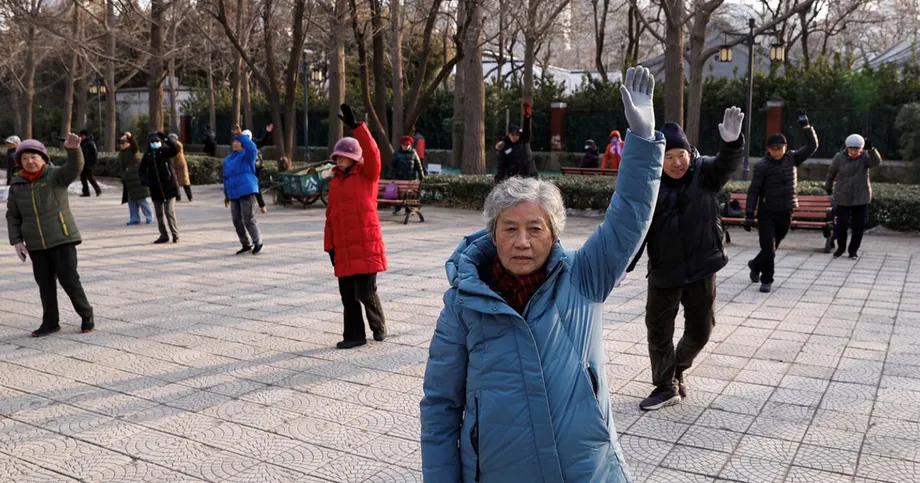
5.288 Million Older Residents and a Growing Need for Care
Beijing expects residents aged 60 and above to make up more than one third of its population by 2035, increasing pressure on pensions, family caregivers and neighbourhood services. The capital had 5.288 million permanent residents in that age group at the end of 2025, representing 24.3% of its population.
Contents
- 5.288 Million Older Residents and a Growing Need for Care
- What the 2035 Projection Means
- Which Population Is Being Counted?
- Some Districts Are Already Further Along
- Cash Support and Easier Access to Allowances
- More Care Close to Home
- Staffing Is a Central Test
- Older Residents Are Reshaping Demand
- A Local Shift Within a National Squeeze
- The Milestones Toward 2035
- Key Points
The projection, published on October 17, 2026, points to a city where roughly one person in every three will be at least 60. Beijing is responding with higher basic pensions, expanded meal services and plans for another 30,000 places providing care at home over three years.
The change is already visible in official figures. The Beijing Office on Aging's 2024 ageing report, released on September 9, 2025, counted 5.14 million permanent residents aged 60 and above, or 23.5% of the population. By the end of 2025, that number had risen by 148,000 and its share by 0.8 percentage points.
For residents, the practical issues are immediate: whether a meal service is nearby, whether help can reach someone living alone and whether a family can find trained care for a relative with dementia. For the government, the task is to expand those services while supporting retirement incomes and managing wider financial pressures.
China's population has been shrinking since 2022. Beijing's response therefore sits within a national challenge: providing more care as large numbers of people leave the workforce, while also trying to make raising children more affordable.
What the 2035 Projection Means
The latest projection puts Beijing's population aged 60 and above at around 7 million by 2035, with its share exceeding 33%. Compared with the 5.288 million counted at the end of 2025, that would mean roughly 1.7 million additional older residents, an increase of about 32%.
The term super aged describes a population with a particularly large share of older people. Using the classification based on residents aged 60 and above, the thresholds are 10% for an ageing society, 20% for an aged society and 30% for a super aged society. Beijing's projected share is above that final threshold.
Beijing officials have also described an earlier point for crossing into this category. Yang Zhiwei, deputy director of the Beijing Municipal Civil Affairs Bureau, said in September 2025 that the city was expected to enter a period of severe population ageing early in the 16th Five Year Plan, which covers 2031 to 2035.
The two forecasts describe different milestones: crossing the threshold early in that planning period and reaching about one third by 2035. Yang also said the older population could peak above 10 million around the middle of the century, extending the city's planning needs far beyond the next decade.
Which Population Is Being Counted?
Beijing's official statistics distinguish permanent residents, meaning people who usually live in the city, from residents with local household registration, known as hukou. The groups overlap, but their totals and age profiles differ because people can live in Beijing while remaining registered elsewhere.
In 2024, residents aged 60 and above accounted for 23.5% of the permanent population. Among people with Beijing household registration, the share was already 31.1%, or 4.475 million people. The permanent population is the measure used for the latest citywide projection.
Age cutoffs also matter. The official 2024 report counted 3.596 million permanent residents aged 65 and above, representing 16.5% of the population. A figure based on people aged 60 and above includes five additional years of ages and produces a larger share.
The city's official account puts its permanent population aged 60 and above in 2023 at 4.948 million, calculated from the 5.14 million recorded in 2024 and the stated annual increase of 192,000. Another published figure places approximately 5.29 million, or 23.8%, in 2023; the official series provides the consistent baseline for the annual comparisons here.
Some Districts Are Already Further Along
Beijing's citywide average hides large differences between districts. In 2024, residents aged 60 and above represented 30.8% of the permanent population in Xicheng, 30.6% in Mentougou and 30.4% in Dongcheng, according to a municipal government account of the September 2025 ageing services forum.
All three districts had already passed the 30% threshold while Beijing as a whole stood at 23.5%. Chaoyang, Haidian and Fengtai had the largest numbers of older permanent residents, creating a different planning challenge: serving large populations even where their share is lower.
Beijing also had 687,000 permanent residents aged 80 and above in 2024, equal to 3.1% of its total population. These residents accounted for roughly 13% of the city's population aged 60 and above, or about one in seven.
The city is directing more support toward advanced age, disability and dementia. A district with many active residents in their sixties needs different services from a neighbourhood with large numbers of people requiring help to eat, wash or move safely around their homes.
Cash Support and Easier Access to Allowances
Beijing distributed about 3.51 billion yuan in elderly care allowances and subsidies in 2025. The payments supported older people facing financial hardship, people unable to care for themselves and residents of advanced age.
The programme recorded 11.958 million beneficiary instances. This is a count of occasions on which support was received, so a person receiving payments repeatedly can appear more than once. It gives a measure of payment activity rather than the number of individual recipients.
Residents aged 80 to 89 are eligible for an allowance of 100 yuan a month. A change introduced in September 2026 allows recipients to receive cash through the financial account attached to their Beijing Tong elderly and disability assistance card, once that account is activated. They can then withdraw or transfer the money.
Beijing has also raised basic pensions for urban and rural residents in successive years. The latest account gives no new pension amount or effective date. The allowance change addresses a more specific issue: making money already due to older residents easier to access and use.
More Care Close to Home
Beijing's current network includes 620 registered elderly care institutions, 168 regional care centres and more than 1,500 community care stations. Together, its various types of care facilities provide 155,000 beds.
The city introduced its first comprehensive foundational local regulation on elderly care services in January 2026. It establishes a network across three administrative levels: districts, subdistricts or townships, and communities or villages. The arrangement gives neighbourhood services a place within a wider system of care.
Nearly 3,000 registered meal service sites now cover about 90% of urban and rural communities. In September 2025, officials recorded 2,666 meal sites with coverage already above 90%, showing that the network has expanded while maintaining broad geographic reach.
Beijing is also developing a service network intended to put care within a 15 minute journey. Its plan for 30,000 additional care places at home over three years builds on 28,000 such places reported in September 2025. These arrangements bring organised support into a person's home, allowing residents to receive assistance without moving into an institution.
Families form another part of that system. By September 2025, Beijing had provided training or professional support to 43,000 family caregivers, including relatives and domestic workers. For households managing daily care themselves, practical skills can be as necessary as access to a building or a bed.
Staffing Is a Central Test
Older people with disabilities, dementia and limited support at home are increasing demand for care. A shortage of professional elderly care workers is a key challenge as Beijing expands facilities and services.
Yang's September 2025 outline identified three priorities: improving institutions' ability to care for people with disabilities or dementia, adding regional service centres in neighbourhoods with many older residents, and expanding travel and seasonal accommodation services for active older people.
China's 2024 national ageing bulletin, issued by the Ministry of Civil Affairs and the National Office on Aging, sets out the wider effort to build care skills. It records more than 770 university programme locations in subjects including nursing and elderly services management, alongside extensive vocational provision.
The bulletin also records a national occupational standard for long term care workers and measures for assessing their skills. For families, the practical value of this training lies in finding someone equipped to support a person whose needs may include mobility assistance, chronic illness and memory loss.
Older Residents Are Reshaping Demand
Beijing's older residents are also a substantial consumer market. A municipal ageing industry study put spending by residents older than 60 at 291.4 billion yuan in 2023, compared with 55.8 billion yuan in 2010. That is more than five times the earlier amount.
A demand survey released at the September 2025 forum found that 89.5% of respondents expressed demand for food products and services for older people, 84.5% for education and 75.8% for health services. Education demand focused particularly on health, arts and social activities, while health demand included examinations and management of chronic conditions.
The findings show why Beijing's response extends beyond pensions and residential care. Older residents also seek classes, nutritious food, travel and ways to remain socially connected. Meeting those needs creates work for teachers, food providers, health services and other businesses.
The city's ageing industry study identified 18,256 businesses, including 4,516 whose activities covered technology for older people, or 24.75% of the total. Their fields included wearable devices, monitoring systems and care robots. Expanding these products alongside trained personal care gives Beijing several ways to respond to a larger older population.
A Local Shift Within a National Squeeze
China had 310.31 million people aged 60 and above at the end of 2024, representing 22% of its population, according to the national bulletin. Beijing's share that year was 23.5%, placing it 1.5 percentage points above the national level.
By the end of 2025, the national total had reached 323.38 million, or 23%. Beijing's corresponding share was 24.3%, keeping the capital above the national average.
The financial challenge involves both retirement income and care costs. At the end of 2024, China had 1.07282 billion participants in basic pension insurance. Its ratio of people aged 65 and above to those aged 15 to 64 was 22.8%, meaning roughly 23 older people for every 100 people in that working age group.
China approved a gradual increase in statutory retirement ages in September 2024 and has begun implementing the change. Affordability also affects pension participation among younger workers, as demonstrated by the delivery riders' pension gap: some riders continued to struggle with contributions even when subsidies reduced their payments.
Birth support adds another spending demand. An estimate puts the potential national cost of measures to encourage births in 2026 at about 180 billion yuan. Fewer children can eventually mean fewer new households and slower growth in consumption, while a larger older population increases demand for pensions, health services and daily assistance.
The Milestones Toward 2035
Beijing's next stage combines a demographic forecast with concrete service commitments. The important milestones show how quickly its older population has grown and how long the city expects that growth to continue.
- End of 2024: Beijing recorded 5.14 million permanent residents aged 60 and above, or 23.5% of its population.
- September 9, 2025: The 2024 ageing report was released, and officials outlined further care reforms at an industry forum.
- End of 2025: The population aged 60 and above reached 5.288 million, or 24.3%.
- January 2026: Beijing introduced a comprehensive local regulation establishing a service network across three administrative levels.
- September 2026: The city simplified cash access for eligible recipients of the allowance for residents aged 80 to 89.
- Over the next three years: Beijing plans 30,000 additional care places at home.
- By 2035: Residents aged 60 and above are projected to number around 7 million and exceed one third of the population.
The city's immediate task is to turn expanding budgets, facilities and training into reliable help in people's daily lives. Its longer task is to sustain that support as a much larger generation reaches older age.
Key Points
- Beijing expects more than one third of its residents to be aged 60 or above by 2035.
- The city had 5.288 million residents in that age group at the end of 2025, accounting for 24.3% of its population.
- Beijing distributed about 3.51 billion yuan in elderly care allowances and subsidies in 2025.
- Nearly 3,000 meal service sites cover about 90% of urban and rural communities.
- The city plans another 30,000 care places at home over three years.
- Care worker shortages, pension costs and rising demand for disability and dementia support are central challenges.