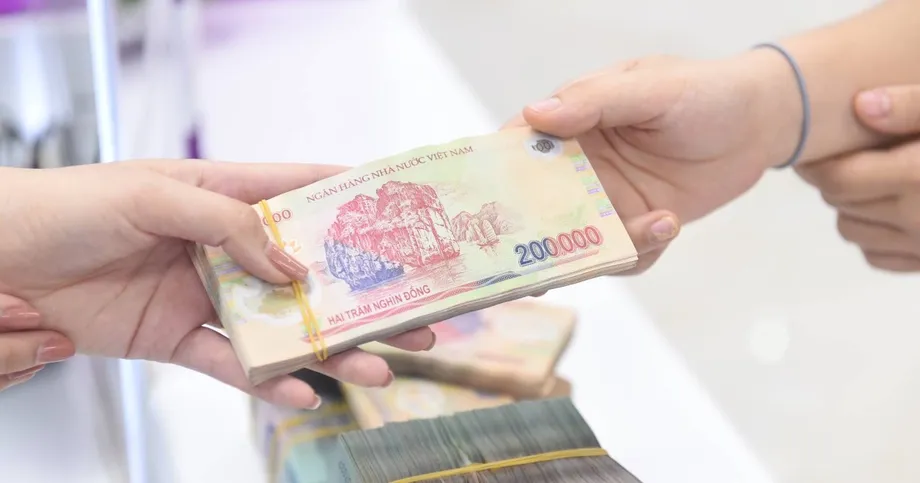
Foreign sellers dominate the first month
Vietnam's first month as a FTSE Russell secondary emerging market has brought about 24.8 trillion dong, nearly $1 billion, in net foreign share sales rather than the buying wave many investors expected. Overseas investors sold more than they bought in 19 of the first 20 trading sessions after the September 21, 2026 upgrade. The single session of net buying amounted to just 54 billion dong.
Contents
- Foreign sellers dominate the first month
- What FTSE actually approved
- Buying before the event, selling afterward
- The larger buying stages fall in 2027
- How much capital could arrive?
- FPT, PNJ and ETFs show the retreat
- The index favours finance over factories
- Higher rates weaken domestic buying power
- Earnings must compete with global alternatives
- Turning market access into lasting investment
- Key Points
The VN-Index fell nearly 110 points, about 6%, over that period, retreating toward 1,700. October net foreign selling exceeded 20 trillion dong after two months of lighter selling, putting renewed pressure on a market where domestic buyers were already facing higher borrowing costs.
Ho Chi Minh Stock Exchange figures put foreign net sales above 120 trillion dong for 2026, approaching the previous year's record of about 125 trillion dong. Overseas investors have been net sellers in every month of the year.
The immediate problem is a mismatch between selling happening now and buying scheduled over many months. Most of the expected purchases by funds following FTSE benchmarks lie in 2027. Meanwhile, fund managers who choose investments themselves remain free to sell, take profits or move money into other markets.
Vietnam has gained access to a broader pool of international investors. Winning a lasting place in their portfolios now depends on company earnings, market access and the returns available elsewhere, as well as the new classification.
What FTSE actually approved
FTSE Russell's March classification review, published on April 7, confirmed that Vietnam met all criteria for secondary emerging status under its Equity Country Classification Framework. It set the change for the opening of trading on September 21, 2026.
The index provider identified practical improvements: removing the requirement for foreign institutional investors to provide cash before trading and establishing a formal process for failed trades. Such a process sets out what happens when a buyer or seller cannot complete a transaction as agreed.
David Sol, FTSE Russell's Global Head of Policy, described the progress when the review was published:
FTSE Russell welcomes the continued progress made by the Vietnamese market authorities in aligning with international standards. The March interim review confirms that the key enhancements required to support the planned reclassification in September 2026 remain on track.
Circular 08/2026/TT-BTC established a framework for foreign investors to enter Vietnam through global brokers and improved the rules governing trading without advance cash deposits. Access through those brokers matters because international funds need to buy and sell the shares in their benchmarks efficiently.
Vietnam also introduced a new trading system developed with South Korea's stock market and pushed for more company information in English. These changes address how investors participate in the market, while their decisions about how much to invest depend on prices, profits and competing opportunities.
Buying before the event, selling afterward
Foreign investors bought a net 2.7 trillion dong of Ho Chi Minh Stock Exchange shares in the week before the upgrade, then sold a net 2.8 trillion dong in the first week afterward, according to exchange and London Stock Exchange Group data. The VN-Index lost 2.2% during that first week.
September 21 itself brought a 0.9% index decline, while exchange turnover fell 33% from the preceding Friday. Some funds had already bought ahead of the change, leaving room for profit taking when benchmark funds arrived.
Maybank Securities Vietnam strategist Hoang Huy said the upgrade was only one factor affecting stocks. DG Capital's Nguyen Duy Phuong, Senior Director of its Regular Financial Analysis Division, also explained that international investors would deploy capital gradually, with active managers assessing economic conditions, earnings, management quality and transparency.
The week's trading from October 12 to 16 showed how that caution played out. Foreign investors sold a net 3.007 trillion dong across all five sessions, while the VN-Index lost 29.18 points, or 1.68%, to finish at 1,705.91.
Vingroup led foreign net sales that week at 417 billion dong, followed by Techcombank at 282 billion, VIX Securities at 214 billion and FPT at 202 billion. Military Bank attracted net purchases of 230 billion dong. Foreign investors were still choosing individual stocks even as their combined position remained negative.
The larger buying stages fall in 2027
Funds that track an index, known as passive funds, adjust their holdings when the benchmark changes. Active funds choose their investments through their own research. Their buying and selling can move in opposite directions around the same index event.
About $220 million in passive capital had been deployed before the upgrade took effect. Maybank Investment Bank CEO Kim Thien Quang said purchases by funds tracking FTSE emerging market benchmarks helped ease foreign selling pressure in August and September.
Quang described four inclusion stages of 10%, 20%, 35% and 35%, running from September 2026 to September 2027. Kafi analysis director Luong Duy Phuoc described the same cumulative progression: 30% by March 2027, 65% by the middle of the year and 100% in September.
ACBS analysis and market strategy director Do Minh Trang gave different intermediate allocations of 15% in March and 30% in June, alongside 10% initially and 35% in September. The April FTSE announcement confirmed the effective date but did not provide tranche percentages. Investors therefore need the applicable index implementation notices for precise portfolio adjustments.
- October 2025: FTSE first announced Vietnam's upgrade timetable.
- April 2026: The interim review confirmed that Vietnam met the classification criteria.
- September 21, 2026: Secondary emerging status took effect and phased inclusion began.
- March and June 2027: Further allocations are expected to bring substantially more benchmark buying.
- September 2027: The inclusion process is scheduled to finish.
Those percentages describe stages of Vietnam's planned inclusion, rather than Vietnam's share of the entire global index. The timetable spreads purchases across a year instead of concentrating them on the upgrade date.
How much capital could arrive?
VCBF deputy investment director Nguyen Trieu Vinh estimated that the upgrade could attract $2.5 billion to $3 billion in passive capital. SSI Research had earlier estimated $1.7 billion, with purchases spread across several quarterly stages.
Quang's broader Maybank estimate is $6 billion to $8 billion over two to three years, with about three quarters coming from active funds. Applied to that range, the active component would be about $4.5 billion to $6 billion. HSBC has offered a more optimistic forecast of $10 billion.
The difference matters because much of the larger forecast depends on managers voluntarily choosing Vietnam. Those managers compare expected returns with technology shares in the United States, Japan and China, while weighing interest rates, exchange rates and geopolitical risks.
Phuoc expects conditions for sustained net foreign buying to become more favourable from the second quarter of 2027. Trang sees late in the first quarter and early in the second quarter as a period when rising benchmark allocations could create greater buying pressure. Both are forecasts, with earnings and global financial conditions still shaping investment decisions.
FPT, PNJ and ETFs show the retreat
FPT and jewellery retailer PNJ illustrate how far foreign appetite has changed. Both once regularly reached foreign ownership limits of 49%, and buyers sometimes paid premiums of tens of percent above market prices to obtain shares.
Foreign ownership has since fallen below 28% at FPT and below 27% at PNJ. Compared with the former 49% ceiling, those levels are lower by more than 21 and 22 percentage points respectively. FPT faced renewed selling in October, while foreign investors continued reducing PNJ holdings despite its share price stabilising.
October 16 showed that the pattern can shift within a single session. Foreign investors bought FPT on a net basis that day even as they sold a net 560 billion dong across the market. HDBank accounted for more than 182 billion dong of net sales. The VN-Index recovered more than seven points to about 1,706, although trading across all three exchanges remained below 12 trillion dong.
Existing exchange traded funds have also struggled to attract new money. VanEck Vietnam ETF went four consecutive months without inflows, and Xtrackers Vietnam Swap UCITS ETF went three. Fubon Vietnam ETF recorded withdrawals exceeding 4 billion Taiwan dollars, equivalent to more than 3 trillion dong, from the start of the year.
An ETF is a fund whose shares trade on an exchange. Its investors can withdraw money even while other funds are preparing to buy Vietnamese stocks under a different benchmark. Fubon's continuing withdrawals put it on course for a third consecutive year of substantial outflows.
The index favours finance over factories
FTSE added 27 Vietnamese companies to its global index framework, including 15 banks or securities firms. Financial businesses therefore represent about 56% of the companies by number. Only six entered the FTSE All-World Index: Vietcombank, Vingroup, Vinhomes, BIDV, VP Bank and Hoa Phat.
Hanh Le, a finance lecturer at RMIT University Vietnam, explained the reason for this concentration:
Index money follows the rules of the index, not the shape of the economy,
FTSE considers company size, trading activity and free float, meaning shares available for investors to trade rather than holdings locked with controlling owners. Much of Vietnam's manufacturing activity sits in businesses that are not listed locally.
Vietnam reported economic growth of 8.2% in the first half of 2026 and export growth exceeding 20% in the first seven months, despite a 20% United States tariff. Overseas investors buying the index receive more exposure to banks, securities firms and property businesses than those export figures alone might suggest.
ACBS puts banks at more than 30% of market value and about 50% of listed company profits. Their earnings prospects carry substantial weight for the market. Le also said Vingroup and Vinhomes accounted for most of the index's gains in the previous year, adding another layer of concentration.
Higher rates weaken domestic buying power
Domestic investors face rising costs just as foreign selling adds shares to the market. ACBS estimated that average deposit rates in the first three quarters of 2026 were about 1.3 percentage points above 2025 levels, while lending rates rose about 1.1 points.
Higher deposit rates make bank savings more attractive. Higher lending rates increase the cost of buying shares with borrowed money and raise financing expenses for listed companies. Nguyen Van Truc, head of analysis at National Securities Inc., linked higher margin loan rates to securities firms' rising funding costs.
Market trading value fell below 15 trillion dong per session in September. During October 12 to 16, average daily liquidity was about 13.182 trillion dong. Thin buying demand makes it harder to absorb foreign sales and new share issues by companies seeking fresh capital.
SGI Capital warned about high margin borrowing in these conditions. A margin loan lets an investor buy shares using borrowed money, with the shares serving as collateral. If their value falls too far, the broker can require more cash or debt repayment. Failure to meet that demand can lead to forced sales.
SGI also expects greater demand for cash during the fourth quarter as loans and investments mature. Slower property transactions can add pressure when investors sell more easily traded shares to meet other obligations. The severity depends on where borrowing is concentrated and whether investors can provide extra funds.
Earnings must compete with global alternatives
Corporate profit forecasts offer support, though the outlook varies widely. Yuanta expects listed company profits to rise about 17% in 2026, but projects that profits outside the Vingroup group could be nearly flat in 2027 as exceptional gains in oil, gas, fertiliser and mining fade.
SGI Capital expects third quarter earnings to remain above a year earlier while growth slows. ACBS forecasts annual banking profit growth of 10% to 15%, supported by credit growth around 15%, while warning that funding costs are rising faster than lending rates.
Oil and gas businesses may benefit from stronger commodity prices, while electricity producers and seaports could gain from power demand and trade. Property developers and securities firms face greater pressure from financing costs and weaker transactions. Trang forecast a VN-Index range of 1,700 to 1,900 through the end of 2026.
External conditions also affect those forecasts. Higher United States yields increase the returns available on dollar assets, while Middle East tensions and rising oil prices add to inflation concerns. Active managers weigh those alternatives alongside Vietnamese company valuations, making cheaper share prices only one part of their decision.
Turning market access into lasting investment
Foreign ownership on the Ho Chi Minh Stock Exchange has fallen to about 13%, from 15% a year earlier, according to exchange figures. Vinh's longer comparison put ownership at 20.6% at the end of 2024 and 12.5% early in October, illustrating the scale of the retreat over several years.
Don Lam, VinaCapital's CEO and Founding Partner, argued at the company's October 13 investor conference in Ho Chi Minh City that Vietnam must become a core allocation held for the long term. More than 140 investors and financial organisation representatives attended. Lam pointed to technology exports and infrastructure spending as growth supports, while calling for deeper capital markets, more investment products and greater capacity to absorb funds.
Ho Chi Minh City Chairman Nguyen Van Duoc identified technology and artificial intelligence, green energy, advanced manufacturing, logistics and financial services as priorities. Vietnam aims to raise $76 billion annually through capital markets by 2030, reducing reliance on bank lending.
MSCI still classifies Vietnam as a frontier market, citing foreign ownership restrictions. HSC senior market strategy research director Tyler Nguyen Manh Dung identified larger initial public offerings, easier account opening and a central counterparty clearing mechanism as potential attractions. Such a mechanism manages obligations between buyers and sellers, reducing the risk that a failed transaction spreads losses.
Dung also raised the possibility of an MSCI watchlist decision from June 2027. That remains an expectation rather than an announced decision. A future sovereign credit rating at investment grade could create another route to cheaper international funding.
Quang's central condition is continued improvement in governance, disclosure, legal rules and investor access. Vietnam's upgrade has widened the entrance to its market. Companies must now give investors reasons to stay.
Key Points
- Foreign investors sold a net 24.8 trillion dong in the first month after the September 21 upgrade.
- The VN-Index fell about 6%, while annual foreign net sales approached the 2025 record.
- Most planned FTSE inclusion occurs in 2027, with completion scheduled for September.
- Maybank estimates $6 billion to $8 billion in potential capital over two to three years, mostly from active funds.
- Financial firms account for 15 of the 27 Vietnamese companies added to FTSE's global index framework.
- Higher rates, weak trading liquidity and margin borrowing are limiting domestic buying power.
- Earnings, transparency and continued market reforms will shape whether foreign buying becomes sustained.