Hanoi Wants Foreign Factories to Say What They Will Buy Locally
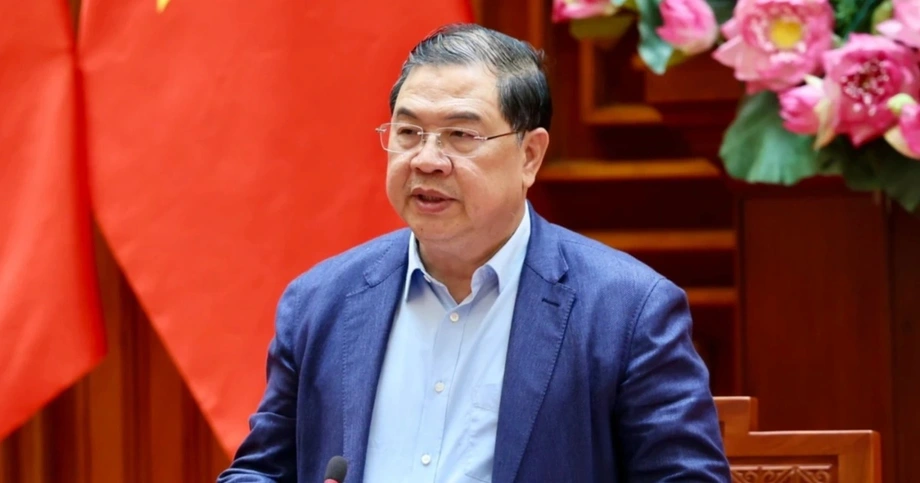
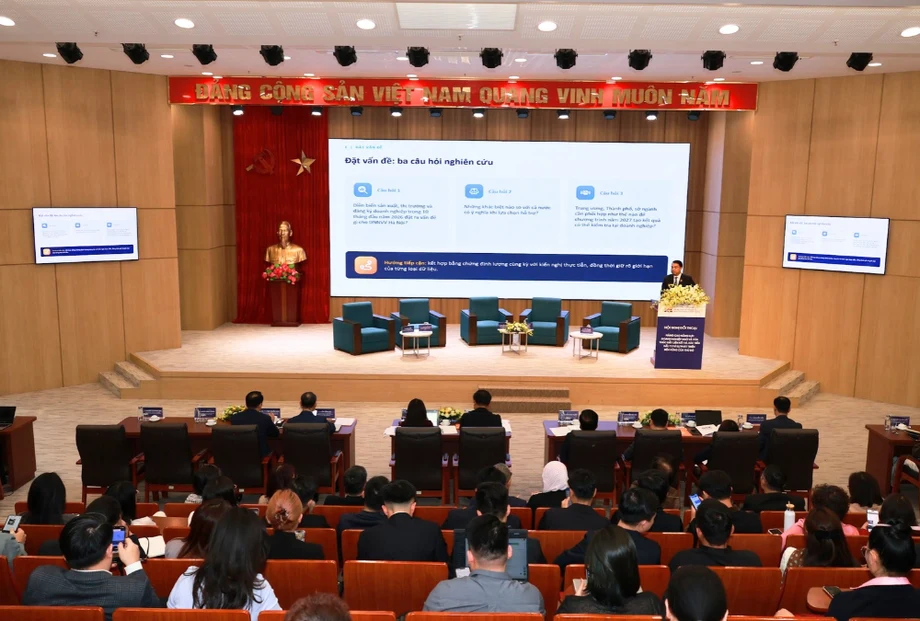
Hanoi will start asking foreign investors a question the city has rarely pressed: which products and services do you intend to buy in Vietnam, and what must a Vietnamese company prove to supply them? Le Trung Hieu, deputy director of the Hanoi Department of Finance, told a dialogue on small and medium enterprise competitiveness on November 27 that the answers will be published on the department's website and on that of the Hanoi Investment and Business Support Promotion Centre, handing local factories a public list of the orders they have been missing.
Contents
- Hanoi Wants Foreign Factories to Say What They Will Buy Locally
- Information Gaps Before Technology Gaps
- Enterprise Churn Raises the Stakes
- Technology Transfer Has Been Thin and Slow
- A New Bargain: Incentives for Performance
- Ten Thousand Suppliers by 2030
- Industrial Parks Built Around Buyers
- What Samsung's Arrival Did to Local Factories
- Clusters, Software and Standards
- Made in Vietnam Becomes a Sourcing Question
- Other Provinces Move on the Same Ground
- Key Points
The mechanism reverses the usual routine. Rather than gathering hundreds of businesses in a hall and hoping contracts follow, city officials will first fix a purchasing list with each foreign investor, then screen Vietnamese firms by sector and bring only the plausible ones to the table. Where a Hanoi manufacturer is close to winning an order but short of a quality certificate or a technical procedure, the department says it will help close the gap fast enough to keep the order alive.
An uncomfortable number sits behind the change. Local sourcing inside foreign invested production chains in Vietnam runs at about 20 to 25%, and much of the country's export value still arrives as imported components and leaves as finished goods. Domestic value added in those exports stays below half, behind other East and Southeast Asian economies, particularly in manufacturing and electronics.
Hanoi's own accounts are strong enough to pay for a push. Budget revenue reached an estimated 652.2 trillion VND in the first 10 months of 2026, 0.3% above the full-year target and 11.2% higher than a year earlier, and public investment disbursement of 118.2 trillion VND kept the city first in the country. The figures carry a demand. Gross regional domestic product is meant to grow more than 11% a year from 2026 to 2030 and 11% or more from 2031 to 2035, reaching an economy of about $200 billion by 2035.
Information Gaps Before Technology Gaps
Closed supplier ecosystems are the first obstacle. Foreign groups moving into a new market usually bring their own component makers with them, and replacing a familiar supplier adds cost and risk for the buyer, Hieu said. Vietnamese firms, for their part, tend to make what they already know how to make rather than what the buyer asked for, so samples fail on impact resistance, fit or ergonomic standards.
Neither side holds the data it needs. Vietnamese companies do not know what foreign factories buy, in what volumes or against which technical standards, while investors do not know which Hanoi firms could meet them. Hieu described the result in blunt terms.
The gap in information means many connection events stop at exchanging business cards or signing memorandums of understanding. Limits on capital also leave small and medium enterprises struggling to invest in machinery and technology to upgrade their production capacity.
Nguyen Van, vice chairman of the Hanoi Supporting Industries Business Association (HANSIBA), said foreign partners now set very high requirements on data transparency and smart production management. Firms that do not invest in digital transformation and standardise their operating processes, he said, will fail supplier assessments even when they have cheaper labour or a convenient location.
Enterprise Churn Raises the Stakes
Hanoi's small firms are leaving the market faster than they are forming. In the first 10 months of 2026 the city registered about 27,800 new enterprises and saw close to 11,500 resume operations, Mac Quoc Anh, vice chairman and secretary general of the Hanoi Small and Medium Enterprise Association, told the same dialogue. Over the same period about 27,800 companies suspended operations, up 9.7%, and 12,600 were dissolved, up 59.2%.
Mac traced the exits to weaker consumer demand, high borrowing costs and thin management capacity. His request to the city was direct.
State agencies need strong measures to clear the flow of capital and bring lending rates down, because the current high interest rates leave businesses struggling to find any profit. Alongside cutting costs and shortening administrative procedures, the city needs trade promotion and real matching of supply and demand so businesses can find orders and open markets.
Can Van Luc, a member of the National Financial and Monetary Policy Advisory Council, listed the pressures as external uncertainty, policy that changes faster than firms can follow, difficulty in reaching land, premises and capital, and costs that climb while selling prices cannot.
Technology Transfer Has Been Thin and Slow
Bui Thu Thuy, deputy director of the Foreign Investment Agency at the Ministry of Finance, said technology transfer from foreign invested firms remains limited and has improved only slowly. Ministry of Science and Technology data she cited shows about 600 technology transfer contracts registered nationwide between 2006 and 2016, less than 4.3% of foreign investment projects. Around 400 were recorded between 2018 and 2022, mostly transfers inside the same company group, from a parent company to its Vietnamese branch, aimed at supporting the investor's own production.
The content of those transfers shows how far they sit from building independent Vietnamese capability.
- Technical support accounted for 77% of transfers
- Training accounted for 71%
- Production processes accounted for 73%
- Transfers involving intellectual property made up 13%
Thuy also said many foreign invested companies want to buy more from Vietnamese enterprises. Competition for those orders is tightening: small and medium firms from Japan and South Korea, facing saturated home markets, are following their big manufacturers into Vietnam and pressing Vietnamese suppliers on their own soil, she said, adding that the distance between most Vietnamese firms and the volume, consistency and delivery discipline foreign buyers demand remains wide.
A New Bargain: Incentives for Performance
The Politburo's Resolution 10-NQ/TW of June 8, 2026 on developing the foreign invested economy commits Vietnam to selecting investment rather than simply attracting it. The Ministry of Finance is studying amendments to the Investment Law to tie preferences to what investors deliver: technology transfer to Vietnamese firms, worker training, technical support and openings in their supply chains. An amended Investment Law passed by the National Assembly on November 20, 2026 follows the same logic, linking incentives and support to how well investors meet their commitments.
Nguyen Anh Tuan, chairman of the Vietnam Association of Foreign Invested Enterprises (VAFIE), said proposals to make local content, export ratios or the use of Vietnamese suppliers a licensing condition ran into a legal wall.
With Vietnam deeply integrated, imposing requirements on localisation rates, export rates or the use of domestic firms as conditions for granting an investment licence could breach our international commitments.
What is being built instead is a set of rewards. Under the new approach, the state can cover part of what a foreign company spends training Vietnamese suppliers, a reversal of the older model in which Samsung trained its vendors to its own standards at its own expense. Investors that add research and development, train workers or bring more Vietnamese firms into their chains can draw extra support from the Investment Support Fund.
The Foreign Investment Agency is also finishing a set of criteria for judging how well foreign investment performs, for submission to the Prime Minister. Land use efficiency, technology level, green performance and the spread of benefits to domestic firms would sit alongside capital size and investor profit, and localities would use the criteria when licensing and managing projects. No date has been given for that submission.
Ten Thousand Suppliers by 2030
Resolution 10-NQ/TW sets a target of about 10,000 Vietnamese firms inside the value and supply chains of foreign invested enterprises by 2030, including 500 to 1,000 tier 1 suppliers. The 2026-2035 supporting industry development scheme, approved under Decision 929/2026/QD-TTg, makes the technical requirements, quality standards and localisation rates of lead companies the yardstick for which projects receive support.
Manufacturing already carries the export account. Electronics and computers held their place as Vietnam's top export category on the strength of Samsung, LG and Apple, according to KPMG's 2026 outlook, which also points to rising use of automation, artificial intelligence and industrial internet technology as a source of demand for industrial machinery. The same report urges local manufacturers to move past basic assembly, and reads U.S. penalties on transhipped goods as a signal for Vietnamese firms to raise domestic content in what they export.
Industrial Parks Built Around Buyers
Hanoi's physical offer is being reshaped around suppliers. The city has the 1,586 hectare Hoa Lac high technology park and 10 working industrial parks covering 1,348 hectares, nine of them nearly full, plus plans for three new parks of 663 hectares and 70 industrial clusters hosting close to 5,000 businesses.
Phase one of the Southern Hanoi Supporting Industrial Park covers 76.92 hectares and has drawn multinational manufacturers of AI servers, smart electronics and precision engineering products. The Vietnam-Japan Technopark, developed by N&G Group with Japan's Onaga, has started up its first factory and runs AS9100 aerospace certification training for Vietnamese suppliers. The city intends to break ground on the park's second phase by the end of 2026.
A 2026-2030 supporting industry programme offers land rental reductions, preferential loans, help with international certification and workforce training, with the aim of assisting 200 to 500 businesses a year. Hanoi has also announced 276 further investment projects, among them 23 industrial park and cluster infrastructure schemes and 61 high technology projects at Hoa Lac.
Money for younger firms is thin but forming. A Hanoi venture fund set up in 2026 began with 100 billion VND, 70 billion from the city and 15 billion each from technology company CMC and Bach Khoa, Hieu said. About 10 large companies have expressed interest in joining, which could take the fund to several thousand billion VND, though any expansion will depend on how quickly it can disburse.
What Samsung's Arrival Did to Local Factories
The clearest evidence of what a large foreign plant can do to its host economy comes from Samsung. The company has invested $22 billion in Vietnam since 2008, a sum the researchers below compare with $18 billion of total foreign investment into Vietnam and with all of Indonesia's intake in 2022. Its Vietnamese operations exported $60 billion in 2018, about one third of the country's exports, and its plants account for 45% of total foreign investment in Bac Ninh province and 73% in Thai Nguyen.
Researchers Dang Thi Kim Dung and Changkeun Lee of the KDI School of Public Policy and Management, in a study of Samsung's spillovers, measured total factor productivity gains for Vietnamese firms in the same industry and province, and weaker but positive effects on suppliers in upstream industries such as metal products. Gains were stronger for new entrants than for established firms, which the authors read as evidence that Samsung's presence pulled more productive companies into existence. Wages rose in neighbouring provinces, while productivity did not spread regionally.
Timing mattered. Samsung began a consultation programme for local vendors in 2015, offering technical advice and training, and the productivity effects were stronger afterwards. Before that programme, the same-industry effects were weaker and the upstream productivity gains were small and not statistically meaningful. Management at Samsung's Bac Ninh plant had told the researchers that the control systems and management quality of local firms did not yet meet its standards.
Cha Ji Ho, deputy general director in charge of Samsung Vietnam's procurement centre, said the company is shifting from expanding suppliers' production capacity to building deeper specialised capabilities and a supplier ecosystem, widening support from Bac Ninh and Ho Chi Minh City to Phu Tho, Hai Phong and Thai Nguyen. Samsung has proposed a standing arrangement among the government, the company and Vietnamese enterprises, built on a supplier database, and the publication of an annual Supplier Development White Paper to track how the supply chain develops over time.
Clusters, Software and Standards
Geography is part of the answer. Bringing anchor plants, component makers, logistics providers and testing laboratories into the same zone cuts transport and warehousing costs for small firms, shortens delivery times and lets them share expensive facilities such as accredited laboratories and waste treatment plants that none could finance alone. Phan Dang Tuat, chairman of the Vietnam Association for Supporting Industries (VASI), said Vietnamese businesses are generally small and would struggle to meet multinational demands for volume and consistency if they operated separately, and that clusters led by anchor enterprises would cut transaction costs and help them join global manufacturing ecosystems rather than stay on the sidelines.
Software is the other half. Buyers audit the management system behind a production line, not only the sample, and most Vietnamese SMEs still run on individual experience and scattered paper records, which produces uneven quality and slow tracing of technical defects. Enterprise resource planning systems that track material use, defect rates and progress at each stage in real time are becoming a condition of entry. The same data underpins compliance with ISO and IATF automotive standards, and the carbon accounting that European, American and Japanese buyers now ask for.
Made in Vietnam Becomes a Sourcing Question
Local content is about to carry legal weight on shop shelves as well. Decree 384/2026/ND-CP, which takes effect on January 1, 2027, sets the rules for labelling goods as made in Vietnam, and changing a single component supplier can alter whether a product qualifies.
Le Khanh Hung, global trade director at EY Vietnam, said a product built from imported inputs can still be Vietnamese in origin if it meets one of two tests: a change in the four digit tariff heading between inputs and finished product, or Vietnamese value content of at least 30% of the ex factory price. Simple operations do not count.
Under the decree, simple activities such as packaging, labelling, sorting or simple assembly are not enough to create Vietnamese origin. For a device imported almost complete, boxing it and putting on a label at a domestic factory does not create grounds to write made in Vietnam.
Factories that claim Vietnamese origin must prove it on request, with purchase invoices, bills of materials, production descriptions and related documents. For plants that both export and sell at home, the same paperwork can serve both purposes, but the origin test follows the destination: exported goods face the importing country's rules and the relevant trade agreement, whether EVFTA, CPTPP or RCEP, when tariff preferences are claimed.
Other Provinces Move on the Same Ground
Hai Phong held its own matching session between domestic suppliers and foreign investors on November 27. The port city expects growth of 12.39% in 2026, with processing and manufacturing at 44.41% of gross regional domestic product and high technology products at 63% of industrial output, and exports of $55.6 billion, of which foreign invested firms supplied about $39.45 billion. It hosts 1,913 active foreign projects worth $54.24 billion in registered capital, employs more than 500,000 people in them and counts about 60,000 domestic enterprises, including 7,500 set up in 2026.
Le Trung Kien, vice chairman of the city people's committee, framed the task as three questions: what foreign firms need, how far domestic firms can meet it, and what must be done to narrow the distance. He asked foreign investors to share purchasing needs and technical standards and to develop local supplier networks, and asked domestic firms to modernise technology and standardise management.
Lang Son, on the Chinese border, is working from a smaller base. The province had 21 active foreign projects worth $417.03 million as of October 2026, 14 of them in production, against import and export turnover of $118 billion in the first 11 months of the year, about 11% of the national total. VSIP Lang Son industrial park covers 599.76 hectares, with 217.2 hectares of phase one land handed over and 187.87 hectares leased. Nguyen Canh Toan, chairman of the provincial people's committee, said the province would approach investors with financial capacity and advanced technology and publish its project lists and incentive policies, while acknowledging that results so far fall short of its advantages.
Key Points
- Hanoi will require foreign investors to disclose what they plan to buy in Vietnam and publish the lists so local firms can bid for the work
- Local sourcing in foreign invested production chains sits at about 20 to 25%, with domestic value added in exports below half
- Resolution 10-NQ/TW of June 8, 2026 and an amended Investment Law passed on November 20, 2026 tie incentives to technology transfer, training and supplier development
- Vietnam targets about 10,000 domestic firms in foreign supply chains by 2030, including 500 to 1,000 tier 1 suppliers, under Decision 929/2026/QD-TTg
- Just 600 technology transfer contracts were registered from 2006 to 2016, under 4.3% of foreign projects, and about 400 from 2018 to 2022, mostly within company groups
- Samsung, which has invested $22 billion since 2008, produced measurable productivity gains for Vietnamese firms, strongest for new entrants and after its 2015 vendor consultation programme began
- Hanoi's Southern Supporting Industrial Park phase one covers 76.92 hectares, with phase two to break ground by the end of 2026
- Hanoi recorded about 27,800 new enterprises and 12,600 dissolutions in the first 10 months of 2026, the latter up 59.2%
- Decree 384/2026/ND-CP, effective January 1, 2027, requires a four digit tariff heading change or 30% Vietnamese value content for made in Vietnam labels