The 2026 Deadline Gives Way
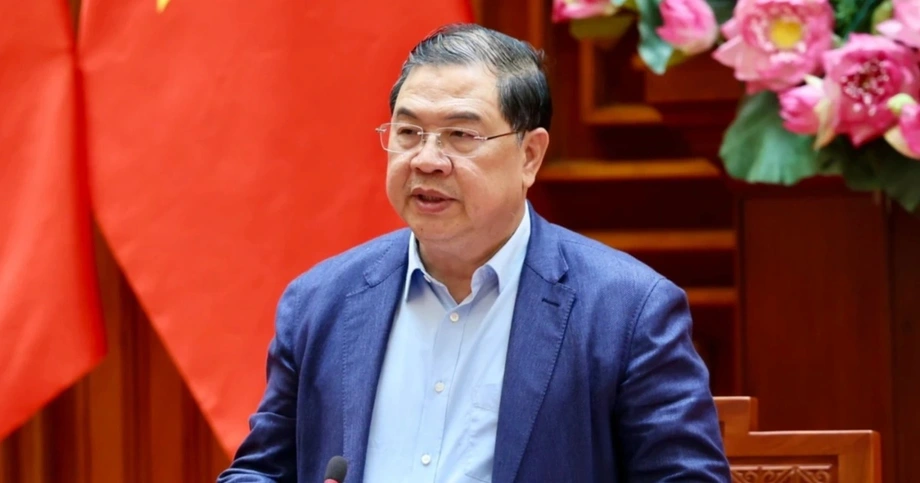
The Airports Corporation of Vietnam has told the government it cannot finish the third component of Long Thanh International Airport this year, the part that covers the passenger terminal systems, the first cargo terminal, the car park and the airport management systems that tie an airport together. At a meeting chaired by Standing Deputy Prime Minister Pham Gia Tuc on November 25, the corporation put work on that component at 88.6% complete and disbursement at 57% of the contract value, and asked for phase 1 to be allowed to run into 2027 or 2028.
Contents
- The 2026 Deadline Gives Way
- Three Kinds of Problem in the Files
- Police Take the Central Role
- What the Inspectorate Found in the Bidding Files
- The Political Deal That Allows Repair
- Who Pays, and in What Currency
- Airlines Are Not Packing Their Bags Yet
- Getting There Is a Separate Project
- What Will Actually Open, and When
- Hangars, Cargo and a Free Trade Zone
- Key Points
The request runs against the investment decision approved by the National Assembly, which requires phase 1 to be completed and put into operation in 2026. Pham Gia Tuc called the remaining volume large and the task very difficult, and set a condition that overrides the calendar: the airport opens only when every requirement is met and absolute safety is guaranteed.
Long Thanh occupies about 5,000 hectares in Dong Nai, roughly 40 kilometres east of Tan Son Nhat International Airport in Ho Chi Minh City. The full project has been costed at nearly US$16 billion across three phases. Phase 1, with two runways and one passenger terminal, is designed for 25 million passengers and 1.2 million tonnes of cargo a year, and officials had been working toward a December 24 opening date for the first commercial flights.
Four packages carry most of the risk: the passenger terminal, Cargo Terminal 1, the car park and the airport management system. ACV now expects them to be finished, or to have completed trial runs, in June 2027.
Three Kinds of Problem in the Files
ACV grouped its difficulties into three, and all of them concern work that was built before the paperwork caught up with it.
- Some materials and equipment differ from the contract in manufacturer, brand, type, origin or source. They were ordered, delivered and installed before the investor approved the change and before the parties signed an amendment.
- Some works were built and accepted against construction drawings that do not match the approved technical design, and the design has not been adjusted to match.
- Some works began before the construction drawings were approved.
Those gaps block formal acceptance of the completed works and the licensing that lets an airport take traffic. Clearing them is a condition for both, ACV told the meeting.
Deputy Minister of Construction Pham Minh Ha asked the corporation to review the value and cost of the substituted materials, test their quality and show they meet technical requirements, with ACV arranging the tests. Deputy Minister of Justice Nguyen Thanh Tu asked for a specific completion date.
Nguyen Cong Long, general director of Vietnam Air Traffic Management Corporation, said remaining work on component 2, which holds the air traffic control facilities, depends on infrastructure finished under component 3, and asked for technical works and connections to be prioritised so control systems can be brought into use in step with the terminal.
Police Take the Central Role
The government's conclusion from the meeting hands the Ministry of Public Security the job of speeding up the investigation and handling of violations, with clear responsibility for individuals and organisations, and asks it to establish the degree of violation in each bid package and each component. That finding is meant to give agencies the basis for remedies and for clearing the bottlenecks, in line with the Politburo's guidance.
Police are already deep inside the project. On March 4, ACV notified the Hanoi Stock Exchange that its chairman Vu The Phiet and deputy chief executive Nguyen Tien Viet had been arrested in connection with alleged "violations of regulations on bidding resulting in particularly serious consequences" and "for accepting money to facilitate contractors in winning bids".
Three days later Vinaconex, a member of the consortium building the terminal, confirmed the arrests of board member and deputy general director Nguyen Huu Toi and of Duong Van Mau, also a board member and deputy general director. The company said Nguyen Huu Toi was held "for violating bidding regulations causing extremely serious consequences" and for "giving money to the investor to be given favourable conditions to win the bid".
Investigators at the police department for corruption, economic and smuggling crimes have prosecuted 31 people in the ACV case on four charges: violating bidding regulations causing serious consequences, giving bribes, receiving bribes and embezzlement. Vu The Phiet faces two of them, the bidding charge and receiving bribes. Nguyen Tien Viet, who also directs the Long Thanh airport project management board, faces the same two.
The contract at the centre is worth US$1.3 billion. ACV awarded it in August 2023 to a consortium led by Turkish contractor IC Içtas and including nine Vietnamese firms, Vinaconex among them. The corporation had first tendered the package in September 2022 and cancelled it when the only bid, from a domestic group, failed to meet its requirements.
What the Inspectorate Found in the Bidding Files
Government Inspectorate Conclusion No. 318/KL-TTCP, published on June 18, 2026, traced how work was passed down the chain and how the paperwork failed. It found that main and subcontractors signed contracts handing parts of packages XD01, XD02, 5.6 and 5.10 to other firms without the investor's approval. Under Clause 8, Article 89 of the 2013 Law on Bidding, that amounts to transferring a contract, which is not allowed.
The sums involved are specific. In package 5.10, Newtecons, Ricons, Hancorp, Vinaconex, ATAD and Phuc Hung passed on work worth 1,596 billion dong without approval, and the Vietur consortium signed contracts for a further 1,652 billion dong. In package 5.6, Hancorp, Vinaconex and Fecon signed out 87 billion dong of work. In package XD02, Corporation 36 transferred 75 billion dong of work and, with Newtatco, signed contracts worth 99 billion dong.
The inspection also faulted the money trail. Vietnam Air Traffic Management Corporation failed to recover 18 billion dong in advances from Corporation 36 and 4 billion dong from Newtatco on time, paid 90% of a design contract worth 3.8 billion dong to Vietnam Construction Consultants, and accepted and paid 37 billion dong on files whose price appraisals carried no information on the brand or origin of materials.
On the investor side, the conclusion says ACV approved the list of standards and codes for the project before it approved the project itself, approved feasibility studies for two items out of sequence, and built its total investment figure on the sums in earlier approvals, which is not permitted. In the early phase the model in which the investor manages the project directly did not suit the scale of the work, and project management staff went without full practising certificates for stretches of the build. Vietnam Air Traffic Management Corporation approved its own project before finishing the design of an office item.
One detail carries a direct cost. In package 5.10 the Vietur consortium priced part of its bid in foreign currency, the tender side did not catch it, and the contract was signed and paid in US dollars, which the inspection said risks losses for ACV as exchange rates move. The inspectorate passed its files to the police and asked for penalties that would serve as a warning across the whole construction sector.
The Political Deal That Allows Repair
None of this can be fixed without a decision at the top of the Party, and one exists. On April 13, 2026, the Politburo issued Conclusion No. 24-KL/TW on clearing difficulties in projects that have stalled for years. It approved in principle that obstacles be examined and removed at the same time as responsibility is handled, with three conditions attached.
Allow difficulties and obstacles for the projects to be reviewed, handled and cleared at the same time as responsibility is dealt with for the violating groups and individuals, ensuring no legalisation of violations, no new violations arise, and a plan to remedy the damage is in place.
That text is the footing for everything the ministries are now doing on Long Thanh. It lets the government approve changes to work already built while the police pursue the people who approved it, and it forbids using the repair to wipe the record clean.
The pressure from above sharpened in June. Party General Secretary and State President To Lam chaired the 30th meeting of the Central Steering Committee for the Prevention and Combat of Corruption, Waste and Negative Phenomena at the Party Central Committee headquarters in Hanoi on June 18. Dang Van Dung, deputy head of the Party Central Committee's Internal Affairs Commission, briefed journalists afterwards and said the committee wanted investigations into Long Thanh and into the Ministry of Foreign Affairs headquarters project pushed forward, along with cases in food safety, environmental protection, minerals, energy, land management, and finance and banking.
The same meeting set a wider timetable. The committee asked the government's Party Committee and provincial Party committees to resolve long stalled projects, unfinished construction and surplus public property left by administrative reorganisation by the end of 2026, and treated asset recovery as a key measure of how well enforcement works.
Who Pays, and in What Currency
Money is the practical blockage. ACV's report to the meeting said acceptance and payment are stuck because some procedures by the investor and contractors were not carried out correctly, and that special policies are needed to clear them. The conclusion puts the Ministry of Finance in charge of working with ACV on payment, financial mechanisms, price appraisal and the exchange rate applied to imported equipment.
ACV had raised the details in Submission No. 21/TTr-TCTCHKVN dated November 9, 2026. The Ministry of Construction is to study that document and the corporation's report, guide ACV on construction law, and where problems remain, require ACV to set out the obstacle, the responsibility, the proposed fix, the legal basis, who has authority to decide and a specific list of the works for which special treatment is sought. The ministry must finish its report to the government and the prime minister before December 10, 2026, so that the investment policy can be adjusted.
Contractors were told to bring in maximum manpower, machinery, equipment, materials and money, to add shifts and crews, and to be replaced if they fall short.
Take firm action against contractors that fail to meet their contractual obligations or report them to the relevant authorities for action.
That was Pham Gia Tuc's instruction. ACV must also clear advance and interim payments within its authority so contractors keep cash, and must assess the quality and suitability of the disputed materials and equipment. For the opening period it has to produce a dust control plan so phase 1 can operate safely while phase 2 is built next door.
Two dates shape the coming weeks. ACV must send its schedule adjustment report to the Ministry of Construction within a week of the meeting, which the conclusion sets at December 5, 2026. The ministry then reports to the government before December 10.
Airlines Are Not Packing Their Bags Yet
The opening plan depends on airlines moving, and most foreign carriers are reluctant. ACV wants long distance international flights, cargo included, shifted from Tan Son Nhat during the summer 2027 schedule that begins in late March, with the remaining international flights following in the winter 2027 schedule from late October, except routes shorter than 1,000 kilometres flown by Vietnamese airlines.
A survey by the Civil Aviation Authority of Vietnam found 34 foreign carriers asking to postpone their move. Of those, 24 want to wait for the winter 2027 schedule and the rest are looking at summer 2028 or later. All of them back the move eventually, and all worry that going early would hurt operations, service quality and competitiveness.
A representative of an airline flying between Ho Chi Minh City and India said the timing is unclear and set out what a relocation involves.
Moving our entire operational setup from Tan Son Nhat to Long Thanh before its infrastructure is fully integrated will pose major challenges to operations.
The same representative said preparation usually takes 6 to 12 months, covering route networks, aircraft deployment, crews, ground handling, ticketing and support services, and that ACV has not given enough information about when individual facilities and services will be ready.
A second carrier, which flies to Japan, said most of its passengers are travelling to Ho Chi Minh City itself, while the trip from Long Thanh depends on roads that are often congested. Delays of several hours or overnight force airlines to find meals and hotel rooms, and that standard exists around Tan Son Nhat and not yet around Long Thanh.
Passengers only see the services provided by the airline; they do not care whether the airport has sufficient facilities or services to meet their needs.
Vietnam Airlines and Vietjet said they are preparing to operate at Long Thanh under the approved plans and warned that building and flying at the same time could put safety and service quality at risk. Vietnam Airlines noted that international passengers buy tickets months ahead, so airlines need notice.
Getting There Is a Separate Project
Long Thanh's usable capacity rests on roads as much as on the terminal. The Ministry of Construction told the government that access routes must carry peak hour traffic, that quality public transport, parking and smooth transfers between Tan Son Nhat and Long Thanh are needed, and that airlines will set schedules and routes on that basis.
Travel from Ho Chi Minh City to Long Thanh runs entirely on roads today. Several expressway sections and the An Phu interchange are still being built and are expected to be largely finished early in the second quarter of 2027, which means transport capacity and traffic management cannot be fully judged at opening. The ministry asked local authorities and Vietnam Expressway Corporation to speed up and to prepare for disruption.
Dong Nai has approved a road and bridge programme worth more than 37 trillion dong for Cat Lai Bridge, Dong Nai 2 Bridge and the second phase of Huong Lo 2 Road, with substantial completion targeted for 2028, later than the airport's first operating years.
Ground works continue too. On November 28, the Dong Nai City Land Fund Development Centre said more than 40 hectares of the 96 hectare site for the drainage project outside the airport had been handed over, 42% of the total. The channel runs about 19 kilometres and regulates lakes 2, 3, 4 and 5 of the airport. Its two parts are budgeted at more than 836 billion dong and more than 436 billion dong, with compensation and clearance under way since August 2026.
What Will Actually Open, and When
ACV still targets commercial operations from midnight on December 24, starting with the west wing and the central section of the passenger terminal and about 20 to 30 flights a day. The ramp up uses a programme called Operational Readiness and Airport Transfer, which ACV says covers 55 scenarios run in three rounds from September to December.
The Ministry of Construction called that a short testing period for an airport with many complex systems, leaving little time to find and fix faults, and said the opening must follow the actual level of readiness. It told ACV to work with the Civil Aviation Authority of Vietnam on the operating plan and licensing, and the authority is to review that plan before it goes to the ministry.
The date has slipped before. In October the ministry warned that the passenger terminal, internal roads and technical infrastructure, Cargo Terminal 1 and the car park were unlikely to meet December targets, after four major packages fell behind schedule, and the commercial opening has already moved once from June 2026.
Pham Gia Tuc asked ACV to review every remaining item in component 3, fix dates for finishing construction, installing equipment, running trials and putting the airport into service, and tell airlines once authorities give a formal start date so they can plan.
Hangars, Cargo and a Free Trade Zone
The companies that will use the airport are being pushed as well. Vietnam Airlines and Vietjet are to speed up work on inflight catering facilities, ground handling and Hangars 1, 3 and 4, and to finish investment procedures for Hangar 2, Cargo Terminal 2, the express cargo terminal and warehouses 5 to 8, all under component 4.
ACV has its own plan for the land around the runways. It proposed to the Ministry of Finance and the Ministry of Construction an integrated air logistics centre and non tariff zone on 136 hectares in the airport's southwest area, operating under current tax and customs law at first and able to become an international free trade zone with government approval. The corporation estimates the centre would add 0.7% to the southern region's economic output and 1 to 2% to national export earnings, lift air cargo import and export value by 15 to 20% a year and create about 15,000 jobs.
Dong Nai has been told to plan commercial and service zones around the airport once the Long Thanh special economic zone is approved. Health, tax, customs and anti smuggling teams must be staffed and drilled before flights begin, with joint procedures for incidents written in advance. The Ministry of Construction is to review the airport's master plan and propose who should build phase 2.
Key Points
- ACV says it cannot finish component 3 of Long Thanh airport in 2026 and wants phase 1 extended to 2027 or 2028.
- Work on the component stands at 88.6% complete, with 57% of the contract value disbursed.
- Four packages, including the passenger terminal and Cargo Terminal 1, are now expected to finish or complete trials in June 2027.
- Standing Deputy Prime Minister Pham Gia Tuc told the Ministry of Public Security to pinpoint the level of violation in each bid package.
- ACV chairman Vu The Phiet and deputy chief executive Nguyen Tien Viet were arrested in March, and 31 people have been prosecuted in the case.
- The Government Inspectorate found unapproved transfers of work worth 3,248 billion dong in one package alone.
- Politburo Conclusion No. 24-KL/TW allows difficulties to be cleared while responsibility is handled, without legalising violations.
- 34 foreign carriers want to delay their move, 24 of them until the winter 2027 schedule.
- ACV's schedule report is due at the Ministry of Construction by December 5, and the ministry reports to the government before December 10.