Countdown to the First Commercial Flights
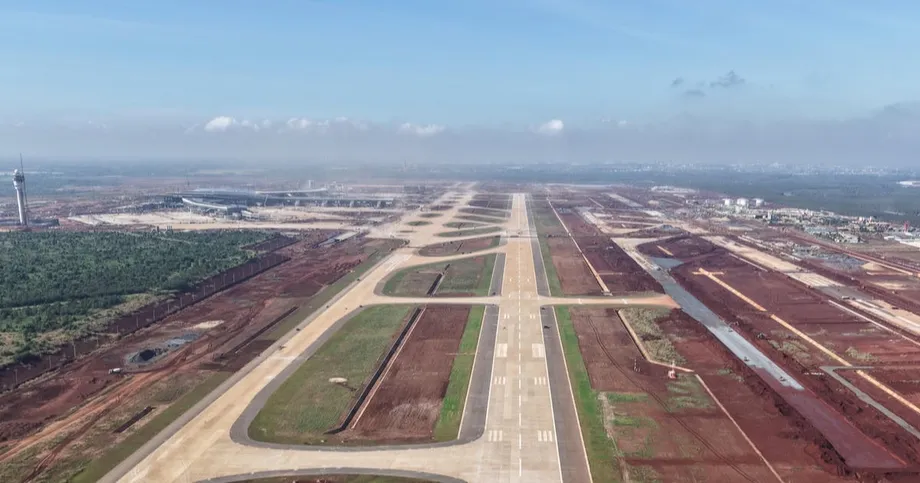
Vietnam is preparing for a major change in its aviation network as the new Long Thanh International Airport targets its opening day on December 24, 2026. Located in Dong Nai province about 40 kilometers east of Ho Chi Minh City, the facility aims to relieve chronic congestion at the existing Tan Son Nhat Airport. The Airports Corporation of Vietnam, the main developer, is working with aviation authorities to complete licensing for the first commercial flights scheduled to begin at midnight. The project spans about 5,000 hectares with a total estimated investment of more than VND336.63 trillion (US$13 billion). Its first construction phase is designed to handle 25 million passengers and 1.2 million tons of cargo per year, while the fully completed development is intended to accommodate up to 100 million passengers and 5 million metric tons of cargo annually.
Contents
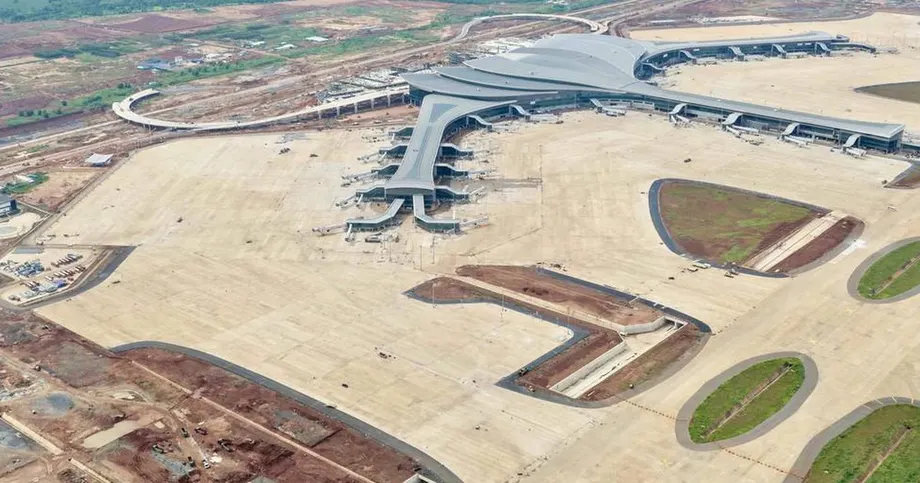
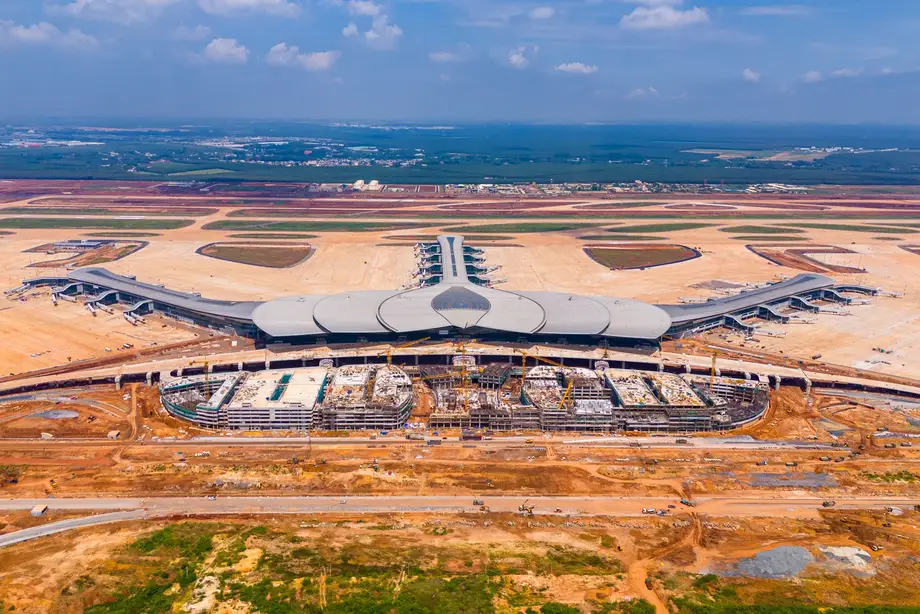
Construction began in 2023 for the passenger terminal, which features a lotus-shaped design. The building has four floors, stands 45 meters tall and covers a construction area of approximately 376,000 square meters. Exterior glass panels and boarding bridges cover approximately 70,000 square meters, and the terminal will include 32 passenger boarding bridges to facilitate boarding and disembarking. According to official progress updates, overall progress on the first phase has reached approximately 86 percent, with contractors finishing technical systems and interior fittings ahead of the launch.
Phased Operating Schedule and Airline Registrations
Operations at the new aviation hub will scale up gradually through a structured timeline divided into three distinct operational phases. The first phase runs from December 24, 2026, through the end of March 2027, corresponding to the winter flight schedule. During this initial period, the airport will use the western wing and central section of passenger terminal T1, utilizing roughly 6 to 10 percent of its designed capacity. The second phase will span from April to October 2027 following the summer schedule, and the third phase will begin in October 2027. Based on slot allocation data from the Civil Aviation Authority of Viet Nam and official operating plans, the airport expects to handle a maximum of 226 flights per week during the initial phase, consisting of 182 domestic flights and 44 international services. This figure is lower than earlier projections of up to 366 flights per week. The airport will prioritize domestic routes and short-haul international services while international cargo operators and foreign airlines complete their preparations.
Vietnam Airlines and Vietjet Air are leading the domestic launch. Vietnam Airlines has registered 28 weekly flights on the Long Thanh-Hanoi route and plans two test flights in December before regular operations begin. Vietjet Air has registered up to 154 flights per week across five domestic routes connecting Long Thanh with Hanoi, Hai Phong, Vinh, Thanh Hoa and Da Nang. In the international sector, Vietnam Airlines is the first carrier to register services connecting Long Thanh with Beijing, Guangzhou, Hong Kong and Manila, operating up to 44 flights a week. Meanwhile, 34 international carriers have requested to delay their transfer from Tan Son Nhat Airport until the 2027 winter schedule or later to allow six to 12 months for network adjustments, crew assignments, and ground service preparations.
Ground Transportation and Regional Infrastructure Links
Transport connectivity is a critical element for the new mega-airport, as passengers and cargo operators require reliable links to Ho Chi Minh City and surrounding areas. Provincial authorities and transport officials are working to accelerate regional road projects so they open alongside the facility in December 2026. These infrastructure efforts include component projects for the Bien Hoa - Vung Tau expressway and project component three of the Ring Road 3 initiative. Local road connections such as routes 25B and 25C in Dong Nai are also targeted for completion to ensure synchronized traffic flow when commercial flights begin. The government's report outlines these ongoing coordination efforts between local authorities and aviation operators to establish secure passenger transport networks. Earlier regional planning also includes major bridge corridors and road extensions, such as the Cat Lai Bridge, the Dong Nai 2 Bridge, and the second phase of Huong Lo 2 Road, which received substantial provincial funding approved for roads and bridges to ease chronic congestion along the heavily traveled southern economic corridor.
Technical preparations have also involved large-scale structural milestones, such as the lifting of the terminal steel roof weighing more than 5,300 tonnes after an eight-day lift using 56 hydraulic jacks to position the asymmetrical structure above the passenger terminal. Regional authorities held working sessions with developers to review security, fire prevention, emergency response, and quarantine readiness. The Dong Nai Department of Construction issued specific plans to organize traffic and integrate expressways with airport access routes. Officials emphasized that seamless coordination among local agencies, airport operators, and airlines remains essential for safe operations, particularly as the airport begins functioning while final finishing work continues on auxiliary packages.
Operational Readiness and Financial Incentives
To ensure all systems function smoothly under realistic conditions, the airport recently conducted comprehensive operational trials known as ORAT, which stands for Operational Readiness and Airport Transfer. During these trials, 50 airport personnel acted as simulated passengers to test end-to-end service flows across domestic and international departures and arrivals. Participants walked through the complete closed-loop process involving check-in counters equipped with 160 traditional stations and 64 automated baggage drop-off machines, boarding pass checks, security screening, immigration, health quarantine, and customs. Specialized scenarios were also tested to evaluate accessibility and wheelchair assistance for passengers with reduced mobility across elevators, priority counters, and dedicated transit routes. These dry runs help technical teams identify and resolve operational bottlenecks before the first commercial passengers arrive.
Financial policies are also being implemented to attract airlines and cargo companies to the new facility during its initial rollout. The Airports Corporation of Vietnam plans to reduce aviation service prices by 20 to 50 percent during the 2026 and 2027 operational period. These reductions complement preferential pricing structures established under regulatory guidelines issued by the Ministry of Construction. Despite these incentives, the project has faced construction hurdles, including material shortages, worker constraints, and a procurement scandal involving detained executives over bidding regulations. Furthermore, international cargo handlers indicated they may require up to another 12 months to finalize technical assessments for customs clearance and cargo processing facilities. As targeting a December opening approaches, airlines and operators continue finalizing their schedules for the initial flight phase while completing remaining technical certifications.
Key Milestones Leading to Commercial Launch
The development of Vietnam's largest aviation hub follows a multi-year construction timeline involving complex engineering projects and phased infrastructure rollouts. The sequence of key events spans from early structural milestones to the final preparations for commercial operations:
- May 30, 2025: Construction officially began on the second runway to expand airfield capacity.
- December 15 and 19, 2025: Air traffic control systems successfully supported test flights, and the first runway served an arrival on December 19.
- June 27, 2026: The Airports Corporation of Vietnam committed to completing main construction packages for a commercial opening in December.
- September 2026: Scheduled completion for terminal technical readiness and integrated operational testing.
- November 19, 2026: The Standing Committee of the Dong Nai City Party Committee held a working session with the airport developer to review opening preparations.
- December 24, 2026: Scheduled commercial opening of Long Thanh International Airport with initial domestic and short-haul flights.
The successful launch of the new hub depends on the coordinated efforts of national aviation regulators, provincial governments, and commercial carriers. As infrastructure projects reach completion and operational trials conclude, the aviation sector prepares for a transitional period where flights will be shared between Tan Son Nhat Airport and the expanding facilities in Dong Nai. The upcoming opening represents a major structural shift for the country's transport network, designed to accommodate long-term passenger and cargo growth across the region.
The Bottom Line
- Long Thanh International Airport is scheduled to open for commercial flights at midnight on December 24, 2026.
- The first operational phase runs from December 2026 through March 2027, utilizing the western wing and central section of terminal T1.
- Initial operations will handle between 20 and 30 flights daily, with a maximum capacity of up to 226 flights per week during the first phase.
- Vietnam Airlines and Vietjet Air are leading the domestic launch with routes connecting Long Thanh to Hanoi, Hai Phong, Vinh, and other cities.
- The project spans approximately 5,000 hectares in Dong Nai province with a total planned investment exceeding VND336.63 trillion (US$13 billion).