A midnight opening for Vietnam's largest airport
Long Thanh International Airport is targeting its first commercial operations at midnight on December 24, 2026, with Vietnam Airlines and Vietjet expected to lead a gradual launch. Airports Corporation of Vietnam (ACV) has outlined an initial operating plan of up to 366 flights a week, comprising 322 domestic and 44 international services.
Contents
- A midnight opening for Vietnam's largest airport
- How many flights will operate at the start?
- Two airports need a coordinated timetable
- What passengers will pay
- Construction is nearing completion, with complex work remaining
- Trials are testing people as well as equipment
- Cargo will open on a separate schedule
- Getting to Long Thanh remains part of the opening challenge
- The remaining dates before commercial service
- Key Points
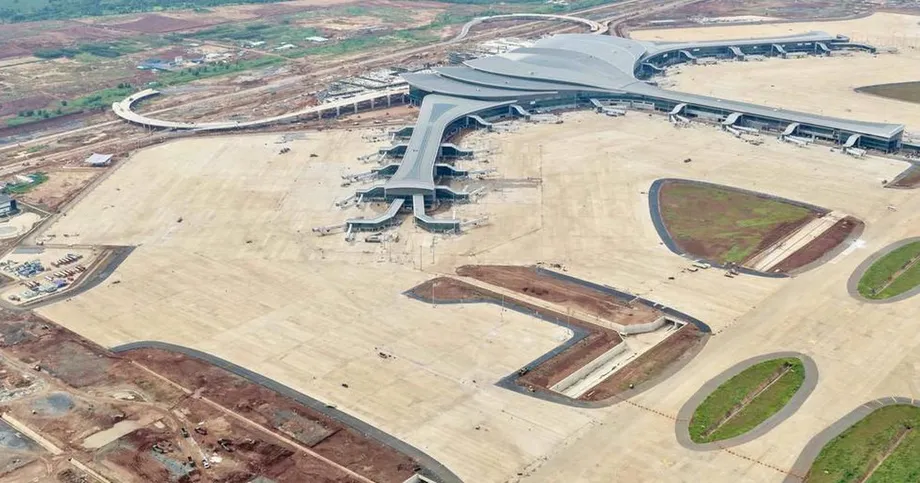
ACV set out the proposed opening date in a notice to the Dong Nai People's Committee, asking local agencies to help complete preparations for safe operations. The government portal's airport opening update says the western wing and central section of the passenger terminal will open first, with four check-in islands, the groups of counters where passengers register for flights and hand over luggage.
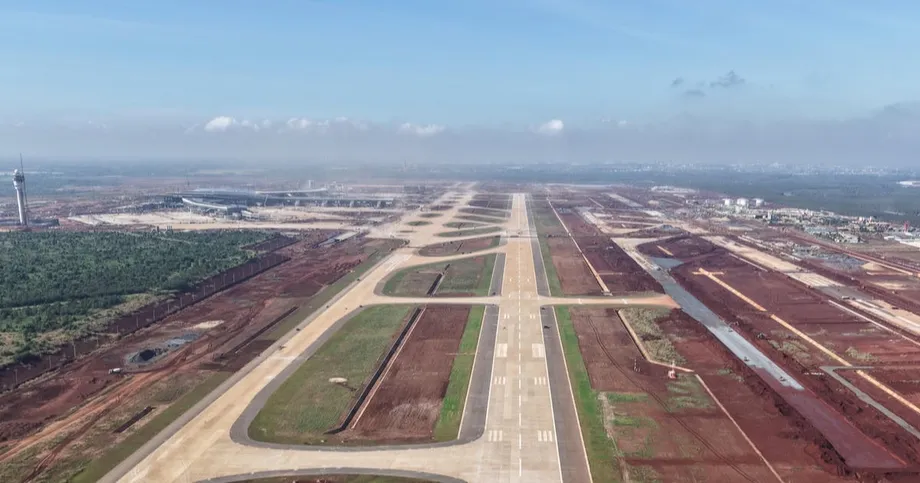
The airport occupies 5,000 hectares in Dong Nai, about 40 kilometers from Ho Chi Minh City. Its first construction phase is designed for 25 million passengers a year, while the completed development is intended to accommodate 100 million. The opening will begin with only part of that capacity in use.
For travelers, the immediate changes involve a new departure airport, different road connections and a gradual allocation of flights between Long Thanh and Tan Son Nhat. As of October 30, neither Vietnam Airlines nor Vietjet had opened ticket sales for Long Thanh services. The December date remains a planned launch, with construction acceptance, operating certification and other approvals still being completed.
How many flights will operate at the start?
ACV describes the period from December 2026 through March 2027 as the first stage of operations. The western wing and central terminal area are expected to serve both domestic and international passengers, initially handling about 20 to 30 flights daily. Airline registrations represent roughly 6% to 10% of designed capacity.
The corporation also gives a ceiling of 366 flights a week, equivalent to about 52 daily. ACV has not explained how that weekly ceiling relates to the lower daily estimate for the opening period. Passengers will need the published airline schedules to see which services actually operate on particular days.
Domestic services account for about 88% of the proposed weekly maximum, calculated from 322 of the 366 flights. International services make up about 12%. Long Thanh's earliest schedule will therefore be weighted heavily toward travel within Vietnam, even as the airport prepares for a larger international role.
Vietnam Airlines plans to operate between Long Thanh and Hanoi, alongside several international routes. Vietjet intends to connect the new airport with major economic and tourism centers across Vietnam. Other terminal areas and systems will enter service as operations expand.
Two airports need a coordinated timetable
Aviation regulators, airport operators and airlines are working together on flight allocations between Long Thanh and Tan Son Nhat. Their decisions must account for operating conditions, international aviation agreements and available takeoff and landing slots.
A slot is an assigned time for an aircraft to arrive or depart. Coordinating those times helps match airline schedules with the capacity of runways, terminals and the teams handling aircraft and passengers. At Long Thanh, that work also involves deciding how services will be shared with the existing airport serving Ho Chi Minh City.
Several international airlines have expressed interest in Long Thanh, according to ACV. Airport and corporation representatives also met airlines and airport representatives at Routes World 2026 in Frankfurt to discuss market demand, the opening timetable and possible route development.
The practical task is to turn those discussions into workable schedules. Aircraft need ground services, passengers need processing facilities, and airlines need arrangements that fit their wider networks. ACV is coordinating operational transition plans and staffing with the carriers preparing to use the airport.
What passengers will pay
The Ministry of Construction has set the passenger service charge for domestic departures at VND90,909, approximately $3.52, excluding value added tax. The international departure charge is $25 before tax. The rates apply to tickets issued from October 1, 2026.
Passenger service charges pay for the use of airport facilities and form one part of the cost of air travel, separate from the airline's fare. Long Thanh's domestic charge matches those at Tan Son Nhat and Hanoi's Noi Bai airport. Its international charge equals Noi Bai's and is $5 higher than Tan Son Nhat's.
Passengers who book a flight from Tan Son Nhat and subsequently have that flight transferred to Long Thanh will not have to pay additional passenger service charges. That protection matters during the transition, when airlines are preparing to introduce services at the new airport.
Airport access will be another practical part of the change. ACV is developing bus and shuttle connections linking Long Thanh with Ho Chi Minh City and Tan Son Nhat, while proposing priority traffic arrangements on major routes.
Construction is nearing completion, with complex work remaining
ACV says construction has passed 86% of contract value. An October 9 assessment put essential works under Component Project 3 at approximately 86%. That component covers facilities needed to operate the airport, and the percentage measures progress by the value of contracted construction work.
Four of the 16 main construction packages have been completed, while 12 remain underway. Most of the ongoing packages are expected to finish in December 2026. Contractors are concentrating personnel and equipment on the larger, technically demanding facilities.
The remaining priorities include the passenger terminal, Cargo Terminal 1, parking facilities, internal roads and technical infrastructure. Each serves a different part of the airport's daily operation, from moving passengers through the terminal to supplying utilities and allowing vehicles to circulate.
Key facilities are scheduled for completion and acceptance inspections in November. Acceptance is the process of checking completed work against the requirements before it is put into service. Environmental procedures, aviation security arrangements and staffing preparations are expected to be finalized in early December.
The opening infrastructure extends well beyond the terminal building. ACV lists runways, taxiways, aircraft parking aprons, lighting, navigation equipment, fuel systems, rescue and firefighting facilities, security systems and the air traffic control tower among the facilities being prepared together.
Trials are testing people as well as equipment
ACV is conducting three rounds of operational readiness and airport transfer trials from September through December. Known as ORAT, the program rehearses how the airport will work when equipment, staff, airlines and government agencies must act together.
On October 27, teams tested runway and taxiway lighting and rehearsed a failure of runway centerline lights. The exercise covered communications, access for repairs, checks for foreign objects and technical reporting. Those steps help staff practice responding to a problem while protecting aircraft movements.
A meeting on October 28 brought together airport representatives, consultant IAC, airlines, ground handling teams, border police, customs officials and Dong Nai health authorities to review passenger service trials planned for November. Preparations covered passenger movement, check-in procedures, staffing, equipment and coordination between organizations.
Other exercises have simulated fuel leaks, medical emergencies and the arrival of aircraft from areas affected by disease outbreaks. Staff have also acted as passengers during trials, helping operating teams practice the journey through the new terminal.
Authorities are preparing customs, immigration, quarantine and other government personnel for commercial operations. Airport certification, aviation security approval and permits for staff and vehicles working in restricted aircraft areas are being processed alongside the physical tests.
Cargo will open on a separate schedule
Part of Cargo Terminal 1 is expected to begin handling domestic cargo on December 24. International cargo flights are planned from January 2027, excluding routes to Europe and the United States during that initial stage.
The cargo timetable is separate from the passenger plan, which includes some international services in the opening period. Businesses moving goods will need to plan around the destinations and handling services available as the cargo terminal gradually expands its activities.
Long Thanh's first construction phase is designed to handle 1.2 million tonnes of cargo annually. The completed airport is planned for five million tonnes a year, more than four times the initial capacity.
Economist Huynh Thanh Dien argues that Long Thanh's position in Southeast Asia and its connection with the Cai Mep–Thi Vai deepwater port complex could help Vietnam compete for connecting passengers and freight. His assessment points to opportunities in electronics, higher value goods and international online commerce, where transport time and reliable connections affect business costs.
Getting to Long Thanh remains part of the opening challenge
Ho Chi Minh City and surrounding areas are expected to supply much of Long Thanh's international passenger traffic. ACV considers transport connections central to the airport's early performance, making buses, shuttles and road management part of the operational preparations.
Plans include connections between the city, Tan Son Nhat and Long Thanh. Direct transfers between the two airports will matter for travelers whose journeys involve services divided between them. ACV is also seeking priority traffic arrangements to support airport access.
Longer term, Dong Nai has approved more than VND37 trillion, about $1.45 billion, for new roads and bridges intended to improve the corridor. The package covers Cat Lai Bridge, Dong Nai 2 Bridge, also called Long Hung Bridge, and the second phase of Huong Lo 2 Road.
Those projects target substantial completion by 2028, after the airport's proposed opening. Existing roads and the transport services being prepared now will carry the earliest airport traffic. The earlier airport timetable associated with those approvals had envisaged commercial operations in the middle of 2026; ACV's current target is December 24.
The future Thu Thiem–Long Thanh railway has also been identified as a transport investment to prioritize. For the launch period, preparations are focused on road access and bus and shuttle links.
The remaining dates before commercial service
Long Thanh's final preparations follow several overlapping schedules. Construction teams are completing facilities while operating teams test procedures and authorities process the approvals required for passenger and cargo services.
- September to December 2026: Three rounds of operational readiness and airport transfer trials test infrastructure, systems, procedures and personnel.
- October 27: Teams rehearse runway lighting checks and a simulated failure of centerline lights.
- November: Key facilities are scheduled for acceptance inspections, with passenger service trials also planned.
- Early December: Environmental, aviation security and staffing preparations are expected to be finalized.
- December: Aeronautical information needed for commercial operations is expected to be published.
- December 24, at midnight: Planned start of commercial operations, including domestic cargo handling in part of Cargo Terminal 1.
- January 2027: International cargo services are expected to begin, initially excluding Europe and the United States.
- March 2027: End of the opening operating stage described by ACV.
Aeronautical information gives airlines and flight crews the official technical details needed to plan and conduct flights. Its publication sits alongside airport certification, security approvals and facility inspections in the final preparations.
The investment behind the airport exceeds $16 billion across three construction phases. Phase one costs approximately VND109 trillion, or $4.22 billion. Its annual passenger capacity of 25 million represents one quarter of the eventual 100 million, showing how much expansion is planned beyond the opening facilities.
Long Thanh is intended to ease pressure on Tan Son Nhat and support a larger role for southern Vietnam in international aviation. The first operating period will center on a smaller task: bringing the initial terminal areas, routes, cargo services and ground connections into dependable daily use.
Key Points
- ACV targets midnight on December 24, 2026, for Long Thanh's commercial opening.
- The initial plan allows up to 366 flights weekly, including 322 domestic and 44 international services.
- Vietnam Airlines and Vietjet are expected to lead the launch, using the western wing and central terminal area.
- Construction has passed 86% by contract value, with inspections, certification and operational trials continuing.
- Domestic cargo handling is planned from December 24, followed by international cargo services in January 2027, with initial route exclusions.
- Bus and shuttle connections are being developed, while major new road and bridge projects target completion in 2028.
- Phase one is designed for 25 million passengers and 1.2 million tonnes of cargo annually.