Three new routes for a busy airport corridor
Dong Nai Province has approved more than VND37 trillion, about US$1.45 billion, for two bridge corridors and a road extension intended to improve connections between Ho Chi Minh City and Long Thanh International Airport. The projects are Cat Lai Bridge, Dong Nai 2 Bridge, also known as Long Hung Bridge, and the second phase of Huong Lo 2 Road.
Contents
- Three new routes for a busy airport corridor
- Huong Lo 2 will give Dong Nai a more direct expressway connection
- Cat Lai Bridge will offer an alternative to the ferry
- Long Hung will connect National Highway 51 to Ring Road 3
- More crossings mean more choices for passengers and freight
- Long Thanh's opening comes before the new links are finished
- Rail from Thu Thiem is being studied for later airport access
- Expressway widening and Ring Road 3 must work with the bridges
- Land clearance and funding will shape delivery
- A wider transport network for southern Vietnam's economy
- What to Know
The package targets a crowded transport network along the roughly 40 kilometer corridor between downtown Ho Chi Minh City and the airport under construction. It is intended to ease congestion, add crossings over the Dong Nai River and give passengers, commuters and freight operators more direct routes.
As of November 12, 2025, Long Thanh is targeting technical flights in December 2025 and commercial operations in mid 2026. The three road and bridge projects are targeted to be substantially complete by 2028. Their schedules therefore extend beyond the airport's planned opening, making existing roads and other improvements essential during its first operating years.
Ho Chi Minh City and Dong Nai form the core of southern Vietnam's economy, but industrial expansion and rapid urban growth have put heavy pressure on their roads. Much of the traffic crossing the river uses Dong Nai 1 Bridge on National Highway 1, Long Thanh Bridge on the Ho Chi Minh City to Long Thanh to Dau Giay Expressway, and Nhon Trach Bridge on Ring Road 3.
Those crossings are often overloaded. An accident or a lane closure can cause delays elsewhere because drivers have relatively few alternatives. Provincial and city authorities see the new links as the backbone of a broader southeastern transport corridor, connecting expressways, ring roads and eventually railways into a network intended to serve the next two decades.
Huong Lo 2 will give Dong Nai a more direct expressway connection
The Dong Nai People's Council approved the second phase of Huong Lo 2, extending the road from Vam Cai Sut Bridge to the Ho Chi Minh City to Long Thanh to Dau Giay Expressway. The project is valued at more than VND5.9 trillion and will use a public private partnership, commonly called a PPP.
A PPP brings public authorities and private investors together to deliver infrastructure. For this project, the state will contribute about VND573 billion specifically for land clearance, while the partnership is intended to mobilize private investment for construction.
Huong Lo 2 has a total planned length of roughly 15.5 kilometers. Its first phase, from National Highway 51 to Vam Cai Sut Bridge, began in 2020. The second phase covers about 7.5 kilometers, with construction scheduled to start in late 2025 and finish by 2028.
For Dong Nai residents and businesses, the extension creates a more direct feeder road into the expressway toward Ho Chi Minh City and the airport area. A feeder road gathers traffic from surrounding places and brings it onto a larger route. Here, it should reduce the need to double back through busier junctions.
Cat Lai Bridge will offer an alternative to the ferry
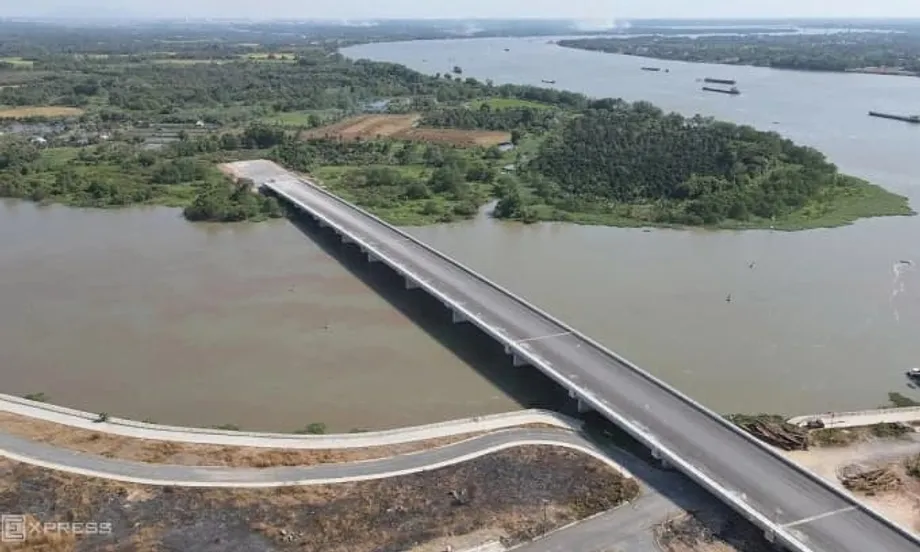
Cat Lai Bridge is the largest project in the package by estimated cost, at more than VND20.5 trillion. Its approximately 11.6 kilometer corridor will connect Nguyen Thi Dinh Street in Ho Chi Minh City's Cat Lai Ward with Dai Phuoc Commune in Dong Nai.
The main bridge will be about 3 kilometers long. The design provides six lanes for motor vehicles and two lanes for nonmotorized traffic, with speeds of up to 80 kilometers per hour. Construction is expected to begin by late 2025, with completion planned for 2028.
Cat Lai will provide an alternative with greater capacity than ferry services at a longstanding bottleneck on the city's eastern edge. Port traffic, expanding residential areas and industrial logistics all converge there, creating demand from several kinds of road users at once.
The corridor is intended to redistribute traffic from southern and eastern parts of Ho Chi Minh City and the port zone. Giving drivers another river crossing should reduce pressure on the existing expressway before they reach its usual choke points. Its value extends beyond airport journeys to daily commuting and the movement of goods.
Long Hung will connect National Highway 51 to Ring Road 3
Dong Nai 2, also known as Long Hung Bridge, will create a corridor of about 12 kilometers, including a bridge section of roughly 2.3 kilometers over the Dong Nai River. It will link National Highway 51 in Tam Phuoc Ward to Ring Road 3 in Long Phuoc Ward.
The project has an estimated investment of around VND11.76 trillion. Its design includes six lanes for motor vehicles and two lanes for light vehicles. Along with Cat Lai and Huong Lo 2 phase two, it forms part of the package targeted for substantial completion by 2028.
National Highway 51 is a major route through Dong Nai and toward Ba Ria Vung Tau. Ring Road 3 is becoming a principal route for traffic moving around Ho Chi Minh City and toward Long Thanh. The bridge corridor will join those two networks, creating a new route running east to west.
Airport traffic using National Highway 51 will gain another way to reach the metropolitan ring road system. This can distribute vehicles across more routes instead of directing them toward crossings and junctions that already face congestion.
More crossings mean more choices for passengers and freight
Drivers traveling between Ho Chi Minh City and the Long Thanh area currently rely mainly on the Ho Chi Minh City to Long Thanh to Dau Giay Expressway and a limited number of bridges. Cat Lai and Dong Nai 2 will add alternatives with substantial capacity, while Huong Lo 2 will improve access to the expressway from Dong Nai.
The projects serve different starting points. Cat Lai draws traffic from the city's eastern and southern areas and its port zone. Dong Nai 2 connects National Highway 51 with Ring Road 3. Huong Lo 2 brings residents and freight onto the expressway without requiring a detour through busier junctions.
Factories in Nhon Trach and Long Thanh districts stand to benefit from more reliable access to the airport and ports. Exporters working to tight delivery windows need predictable journeys as well as short ones. Fewer delays at river crossings can help lower logistics costs, meaning the expense of moving goods between factories, transport hubs and customers.
Additional crossings also provide backup when one bridge needs maintenance or an accident blocks a lane. Traffic can use another route, reducing the risk that trouble at one crossing disrupts movement across the wider region. The expected gains center on both shorter journeys and less variation in travel times.
Long Thanh's opening comes before the new links are finished
Long Thanh International Airport is Vietnam's largest aviation project to date. Its first phase covers a 5,000 hectare site and includes one runway, a passenger terminal and support facilities designed to handle up to 25 million passengers and about 1.2 million tons of cargo each year.
The airport is planned to develop across three phases, eventually reaching four runways and capacity close to 100 million passengers annually. That expansion will increase the demands placed on the surrounding transport network over time.
Airports Corporation of Vietnam (ACV), an operator majority owned by the state, leads the development. It has financed large portions of early work from its own reserves while arranging domestic credit lines for later stages. Credit lines give a borrower access to financing as spending needs arise.
Major terminal and airside contracts were awarded after bidding was repeated in recent years, and construction accelerated. Airside works cover the operational areas used by aircraft. Complex land clearance and supply chain problems have affected the project, although construction activity has recently intensified under government oversight.
The main milestones show how the airport and its surrounding roads are being developed on different schedules:
- 2020: Construction began on Huong Lo 2 phase one, between National Highway 51 and Vam Cai Sut Bridge.
- Late 2025: Huong Lo 2 phase two is scheduled to start, and Cat Lai Bridge construction is expected to begin.
- December 2025: Long Thanh is targeting technical flights.
- Mid 2026: Commercial airport operations are planned to begin.
- 2028: The three approved road and bridge projects are targeted to be substantially complete.
Long Thanh will have no rail connection at opening. With the airport about 40 kilometers from downtown Ho Chi Minh City, dependable road access will be central to predictable passenger journeys, cargo movements and airline scheduling from the first day of service.
Rail from Thu Thiem is being studied for later airport access
City and provincial leaders are pursuing a proposed railway between Thu Thiem, the new financial district in eastern Ho Chi Minh City, and Long Thanh Airport. The line is under active study, with early estimates putting its investment requirement at around US$3.5 billion.
Projected capacity is on the order of 30,000 to 40,000 passengers per hour in each direction. That figure describes how many people the line could carry during an hour of operation, rather than an annual passenger total.
Local authorities have discussed a public private partnership and called for a single locality to act as the lead authority. A designated lead would help speed decisions on a project that involves more than one jurisdiction. No opening date has been given for the proposed line.
Longer term plans also include a station at Long Thanh for the north south high speed railway and a possible light rail connection toward the city. Those links would join existing and planned urban transport, including Ho Chi Minh City's Metro Line 1, allowing passengers to transfer between services rather than depend on private cars.
Rail will take years to deliver. In the meantime, roads, buses and facilities where travelers can park and transfer to public transport are expected to bridge the gap. The airport's early years are likely to depend on express buses, ride hailing services, taxis, private cars and company shuttles.
Dedicated lanes along parts of the network, clear signs and service schedules coordinated with groups of arriving and departing flights can help those road services work efficiently until rail becomes available.
Expressway widening and Ring Road 3 must work with the bridges
The Ho Chi Minh City to Long Thanh to Dau Giay Expressway remains a major bottleneck on the main route toward the airport. Traffic often exceeds its designed capacity during rush hours. An expansion to eight to ten lanes, costing more than VND15 trillion, has been identified as a priority.
Widening the expressway would complement the new connecting roads. Vehicles reaching it through Huong Lo 2 or other routes still need enough space to continue their journeys. Adding connections and increasing capacity on the main corridor are parts of the same effort to keep traffic moving at steadier speeds.
Ring Road 3 is another essential part of the network. As sections open, including the Tan Van to Nhon Trach alignment across the Dong Nai River, drivers and buses will gain routes that bypass the inner city and approach Long Thanh from several directions.
Dong Nai 2 is planned to connect directly to Ring Road 3, while Cat Lai will draw traffic from eastern districts. Together, the bridges, ring road and expressway expansion are intended to spread traffic more evenly and reduce pressure on central arteries.
Land clearance and funding will shape delivery
The approved package combines public and private capital, with separate funding plans and schedules for each project. Huong Lo 2 phase two illustrates the approach: private investment is intended to support construction, while the local budget contributes funding for land clearance.
Land clearance is often the most difficult stage of a large transport project. Authorities must secure the land needed for roads, bridge approaches and related works, which can require compensation and relocation. The Long Thanh area has already experienced extensive relocation for the airport itself, and the new transport links need additional land.
Transparent compensation, resettlement support and early coordination across districts can help shorten delays. Investors also need clear schedules and predictable approvals. For routes crossing provincial boundaries, a single lead agency can reduce the time spent resolving decisions between authorities.
Construction schedules face pressure from material supplies and contractor capacity when several large projects advance together. Bridges over the Dong Nai River must also meet navigation requirements and strict safety standards, adding engineering complexity to work above a river used by vessels.
National leaders have pressed ministries and localities to remove bottlenecks affecting major transport works, including Long Thanh. Clear procurement, quality control and timely payments help contractors keep workers and equipment on site. Coordinating the sequence of construction is essential so that roads, bridges and airport facilities connect as planned.
A wider transport network for southern Vietnam's economy
Manufacturers in Dong Nai, Binh Duong and eastern Ho Chi Minh City will gain additional routes to Long Thanh and deep water ports. More reliable delivery times can support export production, while better airport access is expected to benefit tourism, trade and investment.
Airlines and logistics companies depend on a ground network that brings passengers and goods from a broad area. Improving that network expands the airport's catchment area, meaning the places from which people and businesses can reasonably reach it, and supports cargo operations.
Authorities are also planning an airport city with logistics parks, aircraft maintenance zones and service areas near the terminals. Coordinating those developments with land use plans could direct growth toward places with strong transport access and reduce pressure on crowded urban neighborhoods.
Jobs in construction, operations and services are expected as the airport moves from its first phase toward later expansion. For travelers, the immediate objective is a more predictable journey through added river crossings, a wider expressway and a growing ring road network. Later, frequent trains from Thu Thiem could shift more trips away from private cars and strengthen Long Thanh's role as a regional aviation hub.
The coming three years will test coordination between Ho Chi Minh City, Dong Nai and neighboring provinces. Several major corridors are under construction or in final preparation, while airport operations are scheduled to begin sooner than the new bridge and road package is completed. Delivering the connecting pieces on schedule will determine how quickly the planned network becomes useful to passengers and businesses.
What to Know
- Dong Nai approved more than VND37 trillion, about US$1.45 billion, for Cat Lai Bridge, Dong Nai 2 Bridge and Huong Lo 2 phase two.
- Huong Lo 2 phase two covers about 7.5 kilometers, costs more than VND5.9 trillion and includes about VND573 billion in state funding for land clearance.
- Cat Lai's 11.6 kilometer corridor includes a main bridge of about 3 kilometers and has an estimated cost above VND20.5 trillion.
- Dong Nai 2, also called Long Hung Bridge, will connect National Highway 51 to Ring Road 3 through a 12 kilometer corridor costing around VND11.76 trillion.
- The three projects are targeted to be substantially complete by 2028, after Long Thanh's planned commercial opening in mid 2026.
- Long Thanh's first phase is designed for 25 million passengers and about 1.2 million tons of cargo annually, with technical flights targeted for December 2025.
- Expressway widening to eight to ten lanes and Ring Road 3 connections will support airport access during the early operating years.
- The proposed Thu Thiem to Long Thanh railway remains under study, with an estimated investment requirement of around US$3.5 billion.