Hanoi closes a packed CPTPP year with seven decisions
Vietnam closed its 2026 chairmanship of the Comprehensive and Progressive Agreement for Trans-Pacific Partnership with a burst of decisions over two days in Hanoi. The Vietnam government portal said the 11th CPTPP Council meeting ran on 26 and 27 November 2026, with an international press conference on the afternoon of 27 November. The meeting was chaired by Lê Mạnh Hùng, Vietnam's minister of industry and trade, and the results were presented by Lương Hoàng Thái, deputy minister of industry and trade.
Contents
- Hanoi closes a packed CPTPP year with seven decisions
- What happened, and what comes next
- A small office with a large job
- What the treaty upgrade will cover
- Three new membership talks put expansion back in motion
- The EU connection becomes an alarm system
- Businesses move from outside observers to policy input
- Trade pressure shapes the Hanoi agenda
- Who steers CPTPP after Vietnam's year
- What changes for companies and consumers
- Key Points
The theme of Vietnam's chair year was Shared Visions, Shared Actions. Under that banner, ministers approved seven documents, the largest number adopted in any CPTPP chair year since the agreement entered into force. The results covered four areas: running the bloc, upgrading the treaty, adding members and bringing businesses closer to policy.
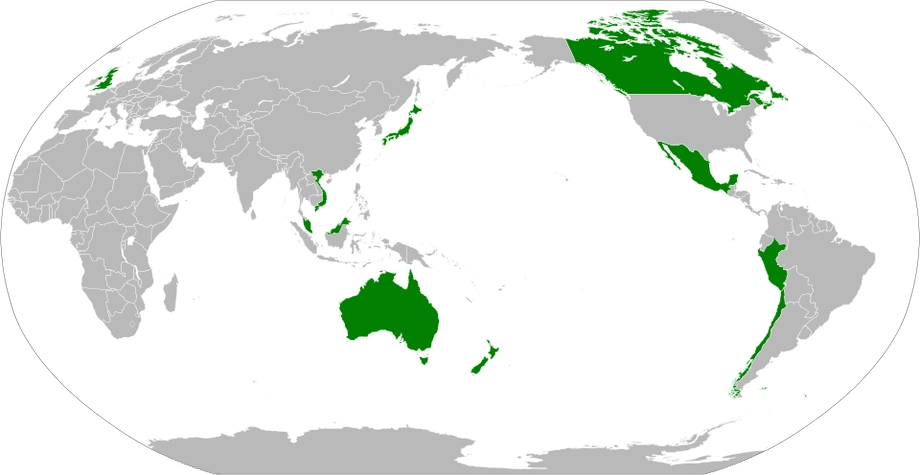
The agreement itself now has 12 members: Australia, Brunei, Canada, Chile, Japan, Malaysia, Mexico, New Zealand, Peru, Singapore, the United Kingdom and Vietnam. Together they cover nearly 600 million people and about 14.4 percent of global gross domestic product, roughly US$15.8 trillion. That makes the CPTPP the world's fourth largest free trade area by economic output, behind the United States Mexico Canada Agreement, the European single market and the Regional Comprehensive Economic Partnership.
For ordinary readers, the meeting matters because CPTPP rules shape the price and availability of goods, the rights of online shoppers, the paperwork exporters face and the way governments handle trade pressure. The Hanoi decisions did not lower a tariff on a specific product. They set the machinery that will decide how trade rules change, who joins next and how members warn each other when supply chains break.
What happened, and what comes next
The council meeting sat inside a wider week of talks. Senior officials met in Hanoi from 23 to 27 November, then ministers took over. Vietnam also hosted dialogues with the European Union and ASEAN and a ministerial business forum.
- 26 November 2026: The CPTPP and EU launched a Supply Chain Early Warning Network during their second Trade and Investment Dialogue in Hanoi.
- 26 November 2026: Prime Minister Lê Minh Hưng received CPTPP ministers, heads of delegation and the EU Commissioner for Trade and Economic Security Maroš Šefčovič.
- 27 November 2026: Lê Mạnh Hùng opened the ministerial session and the 11th CPTPP Council meeting.
- 27 November 2026: Lương Hoàng Thái announced the outcomes at the press conference.
- Early 2027: The first meeting of the CPTPP and EU supply chain network is due to take place.
- 2027: The interim CPTPP Support Office is expected to begin operations, with Peru taking the chair and Vietnam and Malaysia serving as vice chairs.
- Mid 2027: Negotiations to upgrade the agreement are targeted for substantial completion.
No opening day was announced for the support office, and no final text of the upgraded rules was released in Hanoi. The next firm dates are the early 2027 network meeting, the 2027 office launch and the mid 2027 negotiation target.
A small office with a large job
Members agreed to create a CPTPP Support Office, to be based temporarily in Japan. The Vietnam government account said the office exists to improve coordination, keep activity continuous and handle the needs of a treaty that is growing. Japan's state minister for the Cabinet Office, Tomu Tanigawa, said the office would arrange meeting schedules and manage documents. Operations are targeted for 2027.
Tomu Tanigawa, a state minister at Japan's Cabinet Office, spoke after the ministerial meeting about the practical work of the new office. He said it would give ministers and officials a steadier base for meetings and implementation.
I expect that the new support office will underpin the CPTPP members' discussions and activities, and contribute to the effective implementation of the trade agreement.
Vietnam first raised the idea at the ninth CPTPP Commission meeting in Melbourne on 20 and 21 November 2025, where it won unanimous support. Vietnam carried the proposal through its 2026 chair year. Along with a push for stronger business participation, it became one of the two Vietnamese initiatives that members formally backed in Hanoi.
What the treaty upgrade will cover
Ministers agreed to negotiate changes in services trade, electronic commerce, customs administration and trade facilitation, services sold across borders, competitiveness and business facilitation, and trade and women's economic empowerment. The target is substantial completion by mid 2027. The aim is to keep the treaty high standard and able to respond to shifts in global production and digital trade.
Those subjects affect daily commerce. Tariffs are import taxes. Rules of origin decide where a product is considered to come from, which decides whether it gets lower tariffs; trade facilitation means simpler customs paperwork. The treaty has 30 chapters, including goods, investment, digital trade, labour, environment, government procurement, intellectual property, small businesses and dispute settlement.
The goods chapter aims to eliminate tariffs on about 99 percent of tariff lines, meaning almost all product categories in customs schedules. The electronic commerce chapter asks members to keep or adopt laws against fraud and deceptive commercial activity. A chapter on companies owned by governments requires information sharing because such firms can receive advantages that distort competition.
The upgrade also follows a decision to establish a platform for cooperation on economic coercion. The Hanoi statement did not spell out every sanction the platform could use. Economic coercion means using trade or investment pressure to make another country change a policy. The platform gives members a place to compare experiences and coordinate responses.
Three new membership talks put expansion back in motion
The 12 members agreed to start accession negotiations with the United Arab Emirates, Indonesia and the Philippines. Each will have its own working group. New Zealand, Australia and the United Kingdom are ready to chair those groups respectively, according to the Hanoi outcomes. Ministers also repeated their aim of concluding Uruguay's accession talks early.
Deborah Elms, head of trade policy at the Hinrich Foundation, said joining the bloc takes more than a political decision. She pointed to the need for applicants to understand the agreement's obligations and for members to settle their concerns before a deal is done.
Negotiations with the three nations are all complicated and will require serious effort to get across the line. This includes capacity building for some applicants to make certain that everyone is clear on what the CPTPP requires, as well as careful work to ensure that member concerns are addressed.
The agreement takes decisions by consensus, so every existing member has a say. New members must accept sweeping tariff cuts and open digital trade rules. The United Kingdom became the first member without a Pacific coast when it joined in 2024. Costa Rica concluded accession negotiations on 6 May 2026, but the Hanoi announcements did not say when it would become a party.
- China applied on 16 September 2021.
- Taiwan applied on 22 September 2021.
- Ecuador applied on 29 December 2021.
- Ukraine applied on 5 May 2023.
- Cambodia applied in December 2025.
- Argentina applied on 3 June 2026.
At the 10th CPTPP Commission meeting on 26 June 2026 in Vietnam, ministers had already decided to begin preparatory discussions with Indonesia, the Philippines and the UAE. The Hanoi meeting turned that preparation into formal negotiations.
The EU connection becomes an alarm system
The European Union and CPTPP members launched a joint Supply Chain Early Warning Network in Hanoi on 26 November 2026. It was created during the second CPTPP and EU Trade and Investment Dialogue. Think of it as a shared alarm for trade routes: governments can flag a problem before it becomes a shortage.
The network brings together government officials to assess disruptions, look at effects along upstream and downstream value chains, and exchange working practices. Participation is voluntary, and its consultations are not binding. It operates under each participant's domestic laws and international obligations. The first meeting is scheduled for early 2027.
The published terms of reference say alerts can be triggered by severe procurement problems involving strategic, critical or essential goods, by major transport shocks, or by spillovers that could affect economic activity or diversification. Information shared through the network is protected by confidentiality rules under domestic disclosure laws. Members can hold ad hoc technical meetings to study upstream dependencies and downstream risks.
The network is jointly chaired by the EU and a rotating CPTPP party. Japan takes the first CPTPP chair role alongside the EU through late 2027, after which any member may volunteer. Officials will keep a registry of technical contacts, reviewed every year. The terms also provide for technical seminars, risk simulations and a review of the mandate by the end of 2027.
Participants also voiced concern about market distorting practices, excess industrial capacity and economic coercion. Officials were tasked with stronger origin and customs rules against illegal transshipment and duty circumvention, plus work on digital trade, trade facilitation, environmental measures tied to trade, supply chain diversification, logistics services and World Trade Organization reform.
Businesses move from outside observers to policy input
Vietnam used its chair year to place companies closer to the centre of CPTPP work. The CPTPP, ASEAN and EU Business Forum brought together ministers, heads of CPTPP and ASEAN delegations, Maroš Šefčovič and representatives of Vietnamese and CPTPP companies. ASEAN ministers and delegation heads joined online.
The message from Hanoi was practical. Members want CPTPP policies and cooperation programmes to reflect what companies actually face: customs delays, unclear origin rules, limited contacts in other markets and difficulty joining supply chains. Better use of the agreement can increase trade and investment and connect firms across the bloc and beyond it.
Lê Mạnh Hùng, Vietnam's minister of industry and trade, used his opening address to set that test. He said the success of the agreement should be measured by the opportunities and benefits that reach companies and people in member economies, alongside market access and negotiations. He also pointed to digital change, green transition and supply chain shifts as reasons members need to adapt.
Beside the main meeting, Vietnam's trade leadership held bilateral contacts with Japan, the United Kingdom, New Zealand and Australia. Those talks covered economic relations, trade and subjects of shared interest. Prime Minister Lê Minh Hưng welcomed stronger economic links between CPTPP and the EU when he received delegates on 26 November.
Trade pressure shapes the Hanoi agenda
The meeting took place under heavy pressure from outside the bloc. It came hours after the Trump administration proposed tariffs on 14 trading partners, including four CPTPP members: Japan, Malaysia, Singapore and Vietnam. The proposal followed an investigation into excess factory capacity. Tariffs raise the cost of imported goods and can push companies to shift where they manufacture.
CPTPP members also used the Hanoi meeting to address coercion and unfair practices. The decision to create a platform for cooperation on economic coercion puts that subject inside the bloc's formal work. The EU dialogue added concerns about market distorting practices and excess industrial capacity, which can flood markets with goods sold at low prices and squeeze producers elsewhere.
The bloc has become a practical alternative for countries that want deep trade rules while global efforts to reform the World Trade Organization struggle. Its joint ministerial statement set out six pillars: keeping the treaty fit for the future, expansion under the Auckland Principles, benefits for users, stronger institutions, wider regional partnerships and protection of the agreement's integrity. Officials also advanced reviews of disciplines for companies owned by governments under OECD guidelines and set up an ad hoc group on duty circumvention and illegal transshipment.
Who steers CPTPP after Vietnam's year
Peru will take the 2027 CPTPP chair, with Vietnam and Malaysia as vice chairs. Lương Hoàng Thái said the bloc would keep developing under Peru's leadership with support from the two vice chairs. The handover closes a year in which Vietnam coordinated senior official meetings, guided consensus and put forward two initiatives that members adopted.
Seven documents were adopted: the 11th ministerial council statement; joint statements on CPTPP and EU and CPTPP and ASEAN trade and investment dialogues; decisions setting up accession working groups for the UAE, Indonesia and the Philippines; and decisions on the interim Support Office, the economic coercion platform and the list of arbitration panel chairs.
CPTPP grew out of the Trans-Pacific Partnership, a deal originally led by the United States before Washington withdrew in 2017. Eleven remaining countries revived it as CPTPP in 2018, keeping about two thirds of the earlier text and suspending 22 provisions. The agreement was signed in Santiago on 8 March 2018 and entered into force on 30 December 2018. Vietnam's National Assembly ratified it on 12 November 2018, and it took effect for Vietnam on 14 January 2019.
At the ninth Commission meeting, six countries signed the Birrarung Statement on including Indigenous perspectives in trade. That detail shows how the agenda has widened since the treaty's early focus on tariffs. The Hanoi decisions now add institutional support, enlargement, digital rules and supply chain warning systems to that longer list.
What changes for companies and consumers
For a factory in Vietnam, Indonesia or the Philippines, accession can mean fewer tariffs on exports and clearer access to markets such as Japan, Canada and the United Kingdom. It can also mean competition from imports. Better customs and origin rules may make it easier to claim lower tariffs, while electronic commerce rules can protect online buyers from fraud.
For Europe and CPTPP economies, the early warning network creates a formal route to share information before a shortage spreads. A logistics shock in one place can affect parts, packaging and finished goods elsewhere. Sharing alerts gives governments and firms a better chance to prepare. The network is voluntary, so participants share within their laws.
The expansion push is a test of the bloc's standards. New members must accept deep rules on tariffs, digital trade and the behavior of governments. Deborah Elms's warning about capacity building explains why accession can take years: a government may need to rewrite domestic rules before it can meet the treaty. The final upgrade text, accession timings and the reach of the coercion platform are still to be settled. The next milestones are the network's first meeting in early 2027, the office launch in 2027 and the mid 2027 negotiation target.
Key Points
- The 11th CPTPP Council meeting took place in Hanoi on 26 and 27 November 2026, closing Vietnam's 2026 chairmanship.
- Ministers adopted seven documents, the largest number in any CPTPP chair year since the agreement entered into force.
- Members agreed to create a temporary Support Office in Japan, with operations targeted for 2027.
- Upgrade talks will cover services, electronic commerce, customs, services traded across borders, competitiveness and women's economic empowerment, with substantial completion targeted for mid 2027.
- Accession negotiations started with the UAE, Indonesia and the Philippines, while Uruguay's talks are to be concluded early.
- The EU and CPTPP launched a Supply Chain Early Warning Network, with a first meeting due in early 2027.
- Peru takes the 2027 chair, supported by Vietnam and Malaysia as vice chairs.