A Growth Model Built Around Research
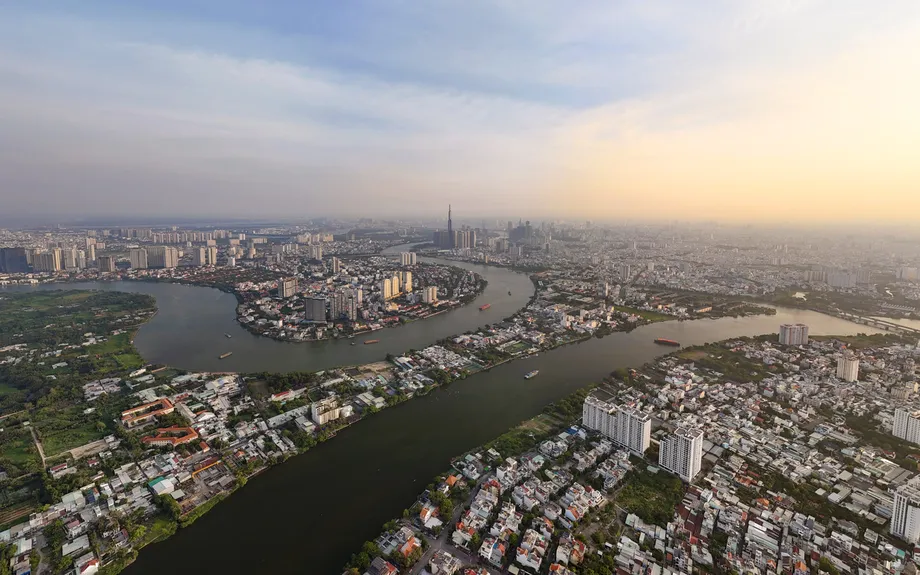
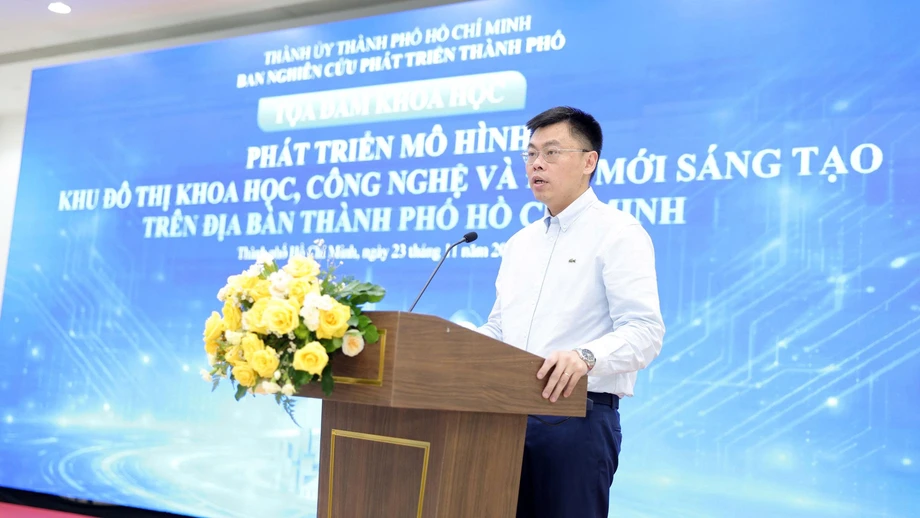
Ho Chi Minh City is trying to turn the former Binh Duong area into a place where a university lesson, a laboratory result and a factory product sit within the same urban system. At a seminar on 23 November 2026, city leaders, ministers, university chiefs, scientists and business representatives discussed a plan for a science, technology and innovation urban area in the northern part of the city, centered on Binh Duong ward.
Contents
- A Growth Model Built Around Research
- Who Met, and What They Were Asked to Solve
- Why 2026 Gives the Plan a Legal Opening
- What the Northern Urban Area Would Look Like
- How Research Would Reach the Factory Floor
- Which Four Programs Would Becamex Like to See Run Together
- Who Would Manage the Rules and Money
- The Real Estate Warning
- What It Means for People Who Live and Work There
- What Remains to Be Decided
- Key Points
The idea is simple in purpose but complex in delivery. Instead of expanding roads, factories and housing outward, the city wants growth from knowledge: new chips, software, robots, advanced materials and services that can be sold. In plain language, a science and technology urban area is a district planned so that researchers, students, companies, labs, homes and services are close enough to work together every day.
Truong Minh Huy Vu, vice chairman of the Ho Chi Minh City People's Committee, the city's executive arm, opened the discussion by framing the plan as a change in the city's economic engine. He was explaining why Ho Chi Minh City needs stronger international competitiveness and a bigger contribution to national growth.
the city is facing a strategic development opportunity.
The same city official said the old model, based mainly on spreading investment across more land and labor, cannot carry the city forward at the speed it needs. The new approach would connect the state, schools, research institutes and companies from an early stage, with the aim of turning plans into output that raises gross regional domestic product (GRDP), the measure of economic production in a locality.
Who Met, and What They Were Asked to Solve
The seminar took place at the Binh Duong Conference and Exhibition Center and was organised by the Ho Chi Minh City Research and Development Board with committees of the People's Council and city departments. It was chaired by Vu Hai Quan, Minister of Science and Technology; Vo Van Minh, chairman of the People's Council, the city legislature, and deputy head of the board; Nguyen Thi Thanh Mai, director of Vietnam National University Ho Chi Minh City; Truong Minh Huy Vu; and Le Van Thang, director of the city Department of Science and Technology.
Organizers counted 50 expert and scientific papers, while the seminar program listed 40. The submissions came from specialists, universities, research institutes and businesses. Their job was not abstract. They were asked to define criteria, legal powers, management methods, priority sectors and a route for moving research into production.
City leaders set four questions for discussion: what model and industries should be chosen, what legal and policy tools are needed, how power should be delegated to the city, and how to mobilize private and social resources. Seminar materials also grouped the technical review into five areas, including the legal corridor for building, managing and operating such districts and the bottlenecks in land, finance, infrastructure and human resources.
The questions matter because a science district cannot work on research papers alone. It needs rules for investment, land use, public buildings, intellectual property, technology transfer and controlled testing of new products. It also needs homes, schools and transport for the people who will work there.
Why 2026 Gives the Plan a Legal Opening
The timing is tied to a new legal and planning framework. The National Assembly recently passed the Law on Urban Development, which gives the Ho Chi Minh City People's Council authority to issue criteria for science, technology and innovation urban areas. City officials also pointed to Resolution 09-NQ/TW of the Politburo dated 19 May 2026, Resolution 57-NQ/TW dated 22 December 2024 on science, technology and national digital transformation, and the city master plan for 2025 to 2050 with a vision spanning 100 years.
The master plan, announced on the morning of the seminar, sets out five growth poles, five satellite centers, five strategic linkage systems and ten development management regions. The northern science urban area is being presented as one way to fill that framework with real functions, not just a label on a map.
The project itself has already moved through several dates. A short timeline shows how the idea reached the seminar:
- 26 December 2025: Tran Luu Quang, secretary of the Ho Chi Minh City Party Committee, inspected the Binh Duong area and worked with Becamex.
- 14 January 2026: the People's Committee approved the northern science and technology urban area project under Decision 315/QD-UBND.
- 15 January 2026: the city held a public announcement with Becamex and VSIP.
- 19 May 2026: the Politburo issued Resolution 09-NQ/TW.
- 23 November 2026: the master plan was announced and the seminar was held.
- December 2026: a draft resolution on criteria and policies is expected at the People's Council session.
These dates show a plan moving from inspection and approval toward rules, investment and construction. The December council session will be the point where the city turns broad direction into a legal framework.
What the Northern Urban Area Would Look Like
Becamex, the company that has built much of the industrial and urban ecosystem in the area, described a structure with three connected parts: a core for research, training and innovation; a belt of factories using advanced technology; and transport and digital links at several levels.
The core would sit in central Binh Duong ward and cover about 220 hectares, with about 103 hectares more planned. Its center would be a science, technology, innovation and digital transformation center created by changing the use of the former Binh Duong Provincial Administrative Center. Around it would be Eastern International University, a concentrated digital technology zone of 15.4 hectares, an education and research development park, an advanced manufacturing center, a microelectronics research center, shared laboratories and a World Trade Center complex for conferences, exhibitions and trade links.
The surrounding belt would draw on industrial land in Cay Truong, expanded Bau Bang, Lai Hung, VSIP III and VSIP IV. Those areas together have more than 3,100 hectares of industrial land, including about 1,020 hectares set aside for advanced technology and concentrated digital technology zones. Becamex also pointed to the Bau Bang 1 and Bau Bang 2 solar projects, covering 286 hectares, and a power network with 500 kV, 220 kV and 110 kV lines designed with an N minus one backup. In simple terms, that means the system can keep operating if one part fails.
How Research Would Reach the Factory Floor
The central promise of the plan is a chain that runs from teaching to research, testing, production and sale. A factory with a problem in automation or energy use could pass that problem to a university or institute. A lab result could be tested in a nearby plant, improved, and then turned into a product for customers. This process is called commercialization, meaning the step that turns an idea into something people can buy or use in business.
The priority fields named at the seminar include semiconductors, artificial intelligence, digital technology, automation, robotics and advanced manufacturing. A test field for the low altitude economy is also planned, giving drone makers and aerial service providers a place to try products under controlled conditions.
Becamex listed possible research partners from Singapore, Germany and Taiwan, including A*STAR, ARTC, the National University of Singapore, Fraunhofer ENAS and ITRI. The company argues that placing a research core close to production on a large scale will shorten the distance between an idea and a market. It also wants suppliers and strategic investors to follow the research institutions into the area.
Pham Ngoc Thuan, a board leader at Becamex, described the aim in terms of a new growth engine for the whole city. He was speaking about what the company expects from years of work in industrial, urban and service ecosystems.
Becamex believes that the northern Ho Chi Minh City science and technology urban area will become a model for science, technology and innovation development, and a source of strong growth, fast growth and growth that will last.
The wording was promotional, but the operational idea was specific: universities and labs would not sit apart from industry, and companies would be invited into the same physical network from the start.
Which Four Programs Would Becamex Like to See Run Together
Becamex has proposed four programs and is already preparing pieces of them. The first covers public transport, urban railways and links to the region. The company says work on Metro Line 1 from Binh Duong New City to Suoi Tien could start in late 2026 or early 2027. It also plans a railway carrying passengers and freight from Chon Thanh through Bau Bang and An Binh to Cai Mep in 2027, using a partnership between public and private sectors.
The second program is industrial relocation under the model known as Nơi đi - Nơi đến, or moving from an origin to a prepared destination. Becamex says it has ready, or is preparing, industrial land for the first phase totaling 3,641 hectares. The idea is to prepare land, factories, housing and social services before moving production, so supply chains do not stop.
The third program focuses on science, technology and innovation projects, including the 15.4 hectare digital technology zone, shared research centres, testing facilities and advanced manufacturing centers. The fourth concerns money and people. Becamex has proposed restructuring capital held by the state from 2026 to 2030, with the state retaining at least 65 percent of charter capital, the registered capital base of a company, while drawing in stock market funds, private investors, public and private partnerships and international investors.
Talent is treated as infrastructure in this plan. A university area of about 500 hectares and a cultural, entertainment, sports and university education complex of about 1,500 hectares are intended to make the district a place where experts can study, work and live, not just a place people commute to.
Who Would Manage the Rules and Money
The plan asks the city to design a policy framework that could be used in more than one science urban area, not only in the north. The Department of Science and Technology would act as the lead agency for gathering comments and completing the draft resolution. The People's Council will consider the parts within its authority, while the People's Committee is expected to organise implementation.
Vu Hai Quan, the science and technology minister, said the new legal rules allow the city to invest in shared infrastructure and hand its management to a suitable body, even if that body is not directly under city government. He gave the example of Vietnam National University Ho Chi Minh City, which is under the Ministry of Education and Training, managing some infrastructure under new rules. His ministry also pledged support for controlled testing spaces, drones, industrial parks of a new generation and talent policies.
A controlled testing space, often called a sandbox, is a safe set of rules that lets a company try a new product in real conditions while regulators watch the results. The seminar also discussed venture capital funds, visa and reward policies for foreign experts, and ways to resolve problems in land, public assets, intellectual property and technology transfer.
City leaders want fewer layers between a project and a decision. One proposal is a single local management point, with stronger checks after approval based on digital data and measurable results. Public money would be used as initial funding for shared infrastructure such as laboratories, data centers, fast data networks and incubators, while private capital would be drawn into later stages.
The Real Estate Warning
Vo Van Minh, chairman of the Ho Chi Minh City People's Council, set the standard that city leaders want to write into policy. He was warning against projects that use science and innovation as a name while relying on land sales or property benefits for returns.
Policies must encourage innovation but be transparent, with conditions and risk control, and must not let development drift towards real estate.
The same official said the district must be judged by what it produces. His test focuses on real capabilities and products, which is intended to keep public support tied to research and business results.
Vo Van Minh, chairman of the People's Council, said success should be visible in companies, residents and city finances. He linked the model to the idea that each policy needs a task, a responsible body, a timetable and a result that can be measured.
Success must be proved by technological capacity, commercialized products and real value brought to businesses, residents and the city.
The proposed criteria would assess research strength, commercialization results, links between institutions, management quality and contribution to growth. The city also wants a roadmap to 2030, a clear set of priority tasks and a way to recognize and carry over projects that were already approved.
What It Means for People Who Live and Work There
For residents, the plan is about more than laboratories. Becamex has included housing, education, health and social services, shops, culture, sport and green space because scientists and skilled workers rarely move to a place just for a research building. Families need schools, transport and homes, and companies need staff who can see a future in the area.
The transport map includes National Highway 13, the road from My Phuoc to Tan Van, the Ho Chi Minh City, Thu Dau Mot and Chon Thanh expressway, Ring Road 3 and Ring Road 4, plus planned metro and rail links. These routes connect the area with the city center, industrial zones, ports and international airports. Better connections would shorten trips for commuters and lower the cost of moving goods.
For a child or a new graduate, the change is easier to picture this way: the plan wants the place where people learn, the place where they experiment and the place where products are made to be neighbors. If that works, a student can train for a semiconductor job, visit a lab, test a component in a factory and see it reach customers without leaving the same urban network.
What Remains to Be Decided
The seminar produced direction rather than a final construction program. The draft resolution on criteria, mechanisms and policies is due to go to the People's Council in December 2026. After that, the People's Committee must turn council decisions into implementation plans with named agencies, schedules and results.
Some practical details were not set out at the seminar: the total cost of the wider program, the full list of first investors, the timing of every laboratory and training building, and the exact land procedures for each site. Those choices will shape whether the northern district becomes a working innovation ecosystem or a slow collection of projects.
The next dates are clear. Metro Line 1 is targeted for late 2026 or early 2027, the railway carrying passengers and freight to Cai Mep is targeted for 2027, the policy roadmap points to 2030, and the city's plan runs to 2050 with a vision spanning 100 years. The test for the council resolution will be whether it can attract investment while keeping the district focused on research, production and products that people can use.
Key Points
- The seminar was held on 23 November 2026 in Binh Duong ward to shape a science, technology and innovation urban area for northern Ho Chi Minh City.
- The plan centers on a 220 hectare research core, with about 103 hectares more planned, and a technology production belt of more than 3,100 hectares.
- Becamex proposed four linked programs covering transport, industrial relocation, research infrastructure, and funding and talent.
- City leaders want a resolution ready for the December 2026 People's Council session and a roadmap to 2030.
- The city warned that science and technology incentives must not become a route for real estate development.
- Metro Line 1 is targeted for late 2026 or early 2027, and a railway carrying passengers and freight to Cai Mep is targeted for 2027.