A Night Decided by Small Margins
The 63rd Golden Horse Awards ended on Sunday, November 22, 2026, at the Taipei Music Center with a result that refused to cluster around one film. Double Happiness and Kung Fu each won three awards, and no film won more than three. The Golden Horse executive committee said no prize was split. The jury, chaired by Sylvia Chang, completed its final decisions shortly after 3 p.m., an unusually quick finish for a night with several tight contests.
Contents
- A Night Decided by Small Margins
- A Short Timeline of the Story
- What the Ballot Boxes Showed
- Why We Are Born Good Took the Top Prize
- Double Happiness Wins Director and Actor
- Angela Yuen Turns a Close Race Into a First Win
- Shu Qi Turns Repression Into an Image
- Supporting Awards Bring Firsts and a Long Wait
- New Performer Finds a Language Without Words
- Singapore's Record Haul: Three Wins From 15 Nominations
- Hong Kong Films Take a Prominent Place
- The Wider Winners List
- What Changes for the Winners
- Key Points
The committee described the distribution as diverse, with winners across comedy, drama, animation, documentary, short film and craft categories. The Golden Horse Awards are one of the main stages for Chinese language cinema, and this edition stretched from Hong Kong social dramas to Singapore animation and Taiwanese craft work.
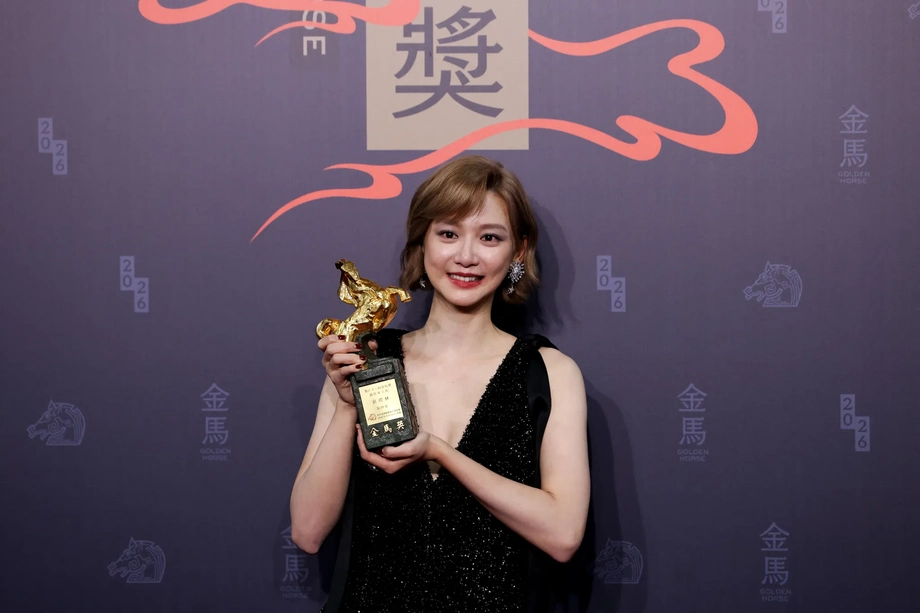
Viewers saw a ceremony in which famous names won new kinds of recognition. Shu Qi, already an established actor, took Best New Director for her first film as a director. Angela Yuen, long known for a softly spoken screen image, won Best Leading Actress for a performance the jury praised for constant change. Nandagopall Mohan, a Malaysian Indian actor, became the first person from that community to be nominated for and win Best New Performer.
A Short Timeline of the Story
Several dates shape this year's Golden Horse story, from Yuen's early career to the political debates around Hong Kong films.
- 2015: Yuen appeared in a Maxim's Cakes Lunar New Year advertisement and gained the nickname Maxim's girl.
- 2016: She made her acting debut in the ViuTV series We I U.
- 2019 and 2020: Hong Kong protests and Beijing's national security law shaped the backdrop for several Hong Kong films in competition. Hong Kong added its own security code in 2024.
- 2022: Yuen played Candy in The Narrow Road, a performance that brought Golden Horse and Hong Kong Film Award nominations.
- November 22, 2026: The 63rd Golden Horse Awards were held at the Taipei Music Center.
- November 23: Jury voting details and post-ceremony comments became public.
Those dates meet in the awards because the winners carry earlier careers, earlier struggles and current politics into one room. The result gave established performers new milestones and gave smaller film industries a larger platform.
What the Ballot Boxes Showed
Three categories were decided by one vote. Best Action Choreography went to Kung Fu, 8 votes to 7 over the film listed in Chinese as 狂忘警探. Kung Fu's other wins were Best Visual Effects and Best Makeup and Costume Design, giving it three trophies. Best Documentary Feature went to Scenes from Departure by Ray Chan Kam-hei, 8 votes to 7 over the film listed as 那道陽光在外明媚. Best Animated Short Film went to Deep End by Zhang Puzhen, 8 votes to 7 over You Are Not in This Cake.
Those narrow margins fit the jury's account of the night. In the Best Narrative Feature race, every nominated film received a vote in the opening round, and the decision took three rounds. The jury said the contest finally narrowed to We Are Born Good and Double Happiness. The acting categories also began with votes spread across all nominees before the field narrowed.
The fuller vote counts for those earlier rounds were not given. What was disclosed shows a jury that kept several choices alive rather than settling quickly on a small group of favourites.
Why We Are Born Good Took the Top Prize
We Are Born Good (善男信女), also listed in English as Good Men, Good Women, won Best Narrative Feature and Best Original Screenplay for Yeung Leung-chuen and Thomas. The Hong Kong film follows a former prisoner who meets a struggling young actor. A screenplay is the written script of a film, and an original screenplay is one written for the screen rather than adapted from an existing work.
The jury said the film had an excellent structure, constant surprises and lively, precise performances. It praised the way the story starts with ordinary people and opens onto wider society. The jury also liked that the film has the pleasures of a crazy comedy without forcing a romance between the two leads. Instead, the relationship becomes a form of redemption that moves in both directions, with each person helping the other change.
The win matters because the film's subject is far from the usual awards picture of heroes or national history. It places a former prisoner and an actor in the same frame and lets their needs drive the comedy. The jury's reasoning shows that it valued shape, performance and emotional movement over scale.
Double Happiness Wins Director and Actor
The Best Director contest ended in round two. Joseph Hsu Chen-chieh won for Double Happiness after the jury weighed his work alongside Anthony Chen's work on We Are All Strangers and Herman Yau's work on We're Nothing at All, also listed as We Are Nothing at All. The committee said each director had supporters before Hsu secured a majority.
The top acting contests also took more than one round. Liu Kuan-ting won Best Leading Actor for Double Happiness in round two after the jury focused on his performance, Ethan Ruan's work in the film listed as 狂忘警探 and Chen Ze-yao's work in Black Tide. The jury said Liu showed deep emotion and a difficult kind of acting. It also described Tai Li-jen moving easily between wild elements, Yang Wei-lun giving layered realism to a hard life and Ruan building up loneliness layer by layer.
Liu Kuan-ting, the Best Leading Actor winner, used his acceptance speech to encourage performers who doubt themselves. He said he entered acting at 18 and was now 38, with many moments of uncertainty behind him.
Keep going. You are an actor, and you should hold your head high. When someone asks what you do, tell them: 'I am an actor.' I am Liu Kuan-ting. I love cinema. I love acting. Thank you, everyone.
Liu's win was his third Golden Horse award after two earlier Best Supporting Actor wins. His speech, like the jury's comments, placed craft and persistence at the centre of the night.
Angela Yuen Turns a Close Race Into a First Win
The Best Leading Actress race began with votes for every nominee and narrowed to Yuen for Afterpiece, also listed as The Fourth Act, Chung Suet Ying for We Are Born Good and Yeo Yann Yann for We Are All Strangers. Yuen won in round two. The award has been presented annually since 1962 by the Taipei Golden Horse Film Festival Executive Committee. Maggie Cheung holds the record with four wins, while Sylvia Chang holds the record for nominations with 11.
The jury said Yuen's performance changed constantly and surprised at each turning point. It also singled out Jennifer Yu for natural and real emotion, Liang Cuishan for precision in a contradictory situation, Chung for balancing good and evil and the real with the unreal, and Yeo for several moving scenes.
Angela Yuen, the Best Leading Actress winner, described the award as a new beginning after receiving her first prize in the category on her second nomination. She said she had won that day but would start again the next day.
I've won this award today, but tomorrow I start afresh. I hope to keep my sense of adventure and continue exploring new possibilities.
Yuen, 33, built a career that moved from modelling to demanding screen roles. She studied accounting at Hong Kong Baptist University's College of International Education before a 2015 cake advertisement made her widely recognisable. She signed with Starz People, acted in We I U in 2016 and later joined One Cool Group's Triple S Artiste Management after a contract dispute. Her role as Candy, a struggling single mother in The Narrow Road, brought major nominations. She also won Best Actress at the New Zealand Asia Pacific Film Festival for 24 Flavours, co-starring with Sylvia Chang.
Japan knew Yuen before many awards voters did. She worked with photographer Kotobuki Kojima, appeared on a record cover for the band Ging Nang Boyz, acted with Joe Odagiri in The White Girl and starred in Vaundy's Tokimeki music video, which has more than 30 million views online. Her promotion of The Narrow Road in Japan drew interviews and queues of fans.
After the win, Yuen said she would not raise her fee. She argued that a larger share for her could squeeze the budget and rights of crew members in a difficult film market, calling the matter one of ethics. She also spoke about severe stage fear, saying she can work best when she treats hosting or performing as a role. She revealed that Louis Koo sent a voice message of congratulation and described him in private as a deadpan comic with a tender side. Her father and sister attended the ceremony, but she did not thank her father on stage because she worried his recent worry about his appearance would make him uncomfortable on camera. As a fan of Crowd Lu, she ended with a playful wish that he would ask her to appear in a music video.
In October, Yuen also spoke publicly about sexual harassment and inappropriate behaviour in the industry, including an unwanted kiss by a senior actor. A journalist involved in one of the incidents later apologised publicly. Her Golden Horse win landed after a year in which she had become more willing to discuss both her craft and the power imbalances around it.
Shu Qi Turns Repression Into an Image
The Best New Director contest followed the same pattern as the acting races. Every nominee received a vote in the opening round before the choice narrowed to Shu Qi for Girl and Yeung Leung-chuen for We Are Born Good. The jury praised Shu Qi for turning repression into images, showing a mature and confident viewpoint and joining a sense of period with the inner life of her characters.
Girl is Shu Qi's directorial debut, meaning her first film as a director, and was inspired by her own childhood. She beat Singapore director Hong Yuju, whose Bubblegum Girl was also nominated for Best Adapted Screenplay and Best New Performer for Wang Xuanjing, age 10. The Bubblegum Girl team left without a prize. Shu Qi's win was her third Golden Horse prize.
Shu Qi, the actor turned director who won Best New Director, apologised to the other nominees and thanked director Hou Hsiao-hsien in an emotional acceptance speech. She said her long career in acting had made the new role unexpected.
I want to say sorry to the other Best New Director nominees, because I am an actress who has moved into directing after more than 30 years in the industry. I want to share this award with you.
Shu Qi, fighting back tears, also said the film fulfilled a promise to Hou Hsiao-hsien and credited his early encouragement with shaping her career.
This is the film I promised director Hou Hsiao-hsien I would complete. Without him, there would be no Girl, and I would not be who I am today.
Supporting Awards Bring Firsts and a Long Wait
The supporting actor race began with votes for all nominees. The second round focused on Anson Kong Ip-sang for We're Nothing at All, Tenky Tin Kai-man for Double Happiness and Lin Weiwen for We Are All Strangers. The final duel was between Kong and Tin. The jury said Kong's role was extremely difficult, moving between strength and weakness before reaching a fierce final act that matched the director's style.
Anson Kong, a MIRROR member and a first time Golden Horse nominee, won Best Supporting Actor. He beat Tin Kai-man, who had been widely tipped, and thanked his parents and fans. Kong recalled travelling to South Korea 12 years ago to train as an idol before returning to Hong Kong and working as a concert dancer.
Mum, Dad, I've won!
Judy Ongg won Best Supporting Actress for Sunshine Women's Choir in the fastest result of the night, taking more than half the votes in the opening round. The jury praised her as a gentle and steady force in the film. Ongg, 76, had not won a Golden Horse award for 54 years, since her 1972 Best Leading Actress win for True and False Daughter, also rendered as True and False Heiresses.
Judy Ongg, the Best Supporting Actress winner, said the film taught her a lesson about family time and urged people to thank their parents while they could.
parents' love is boundless, but their time is limited
New Performer Finds a Language Without Words
Four nominees shared support in the Best New Performer race: Bai Xiaoying, Wang Xuanjing, Ho Man Hei and Nandagopall Mohan. The jury encouraged Bai and Ho, and praised Wang Xuanjing's mix of innocence and maturity in Bubblegum Girl. The decisive praise went to Mohan, who won for SAYANG, also listed as Sayang Sayang.
The jury said Mohan's performance was unusual because he had no dialogue. He used tense physical movement to show emotion and longing, and used dance to replace words he could not speak. In the jury's view, the dancing became a fuller language rather than a display of movement. Mohan is the first Malaysian Indian actor to be nominated for a Golden Horse Award and the first to win in the category.
Singapore's Record Haul: Three Wins From 15 Nominations
Five Singapore films received a record 15 nominations across 12 categories and won three awards. The numbers show a sharp contrast between the films: The Violinist converted two of its three nominations into wins, while We Are All Strangers converted one of seven. Buah and She Said were both nominated for Best Live Action Short Film, and Ah Girl sought Best Adapted Screenplay, Best New Director for Priscilla Ang Geck Geck and Best New Performer for Ong Xuan Jing.
The Violinist won Best Animated Feature and Best Adapted Screenplay for Ervin Han and Jordan Katherine See. An adapted screenplay turns existing material into a film script. The film is set in Singapore and Malaya before and during the Japanese Occupation, the period when Japan controlled much of Southeast Asia during World War II. It follows two gifted young musicians whose friendship and dreams are broken apart by war. Earlier this year, it won the top feature prize at the Annecy International Animation Film Festival.
Ervin Han, co-director of The Violinist with Spanish animator Raul Garcia, said the Best Adapted Screenplay award recognised the team's effort and dedicated the animation prize to Singapore.
I hope this achievement will inspire more Singapore creators and animators to bring our stories to the world stage. This honour is dedicated to Singapore.
We Are All Strangers won Best Original Film Score for Kin Leonn, also named He Jianliang, and Thomas Foguenne, also named Fuduoma. A film score is the music written to support a film's mood and story. Kin Leonn, one of the score's composers, said writing film music had been a dream since childhood.
Scoring films has always been a childhood dream of mine. Like literally since I was 8 or 9 years old.
Foguenne said he had loved Ilo Ilo and Wet Season and had never imagined he would one day work with their director. We Are All Strangers is Anthony Chen's third film in his Growing Up trilogy, after Ilo Ilo and Wet Season. It follows 21 year old Junyang, played by Koh Jia Ler, as he and his widowed father handle work, family duties and unexpected change. The film premiered at the 76th Berlin International Film Festival, opened the Hong Kong International Film Festival, received a special mention at the Far East Film Festival in Udine and became Singapore's official entry for Best International Feature Film at the 99th Academy Awards. Yeo Yann Yann also received a Best Performance nomination at the 19th Asia Pacific Screen Awards.
The Singapore films were supported by the Infocomm Media Development Authority. Yvonne Tang, assistant chief executive at the authority's Media Industry Group, said the wins recognised the work of the teams behind the nominations.
Behind every nomination and win is a team of talented individuals who have poured much effort into their craft. To have five films receive 15 nominations is itself a remarkable achievement, and the three wins tonight are a further recognition of that work. We congratulate all the nominated and winning teams.
Ah Girl director Priscilla Ang said the nomination itself was a dream and that she would keep making films that give voice to people who need it. She added that Ong Xuan Jing was already a winner to her.
Hong Kong Films Take a Prominent Place
Hong Kong performers and films were visible from the red carpet to the main awards. Will Or, the Hong Kong actor hosting the ceremony for the first time, said the nominations came from many places and that the awards brought together Chinese language films from different locations. Angela Yuen said she felt proud to stand among the Hong Kong filmmakers who won.
Two Hong Kong films drew attention for their links to the city's democracy movement. Three Little Pigs, a dark humour film about two teenagers on a mission to steal a pig's head, won Best Live Action Short Film. Scenes from Departure, which won Best Documentary Feature, explores the relationship between a Hong Kong filmmaker and his estranged father against the backdrop of the huge and sometimes violent protests of 2019.
Andy Law, a representative for Three Little Pigs speaking on behalf of director Chung Kam-nei and the crew, dedicated the award to people in prison and described the film as a small source of companionship for them.
Maybe in one instant our work will be seen by those in prison, becoming a small yet unwavering light for them, and genuine companionship. I want to dedicate this award to every 'little pig' who has been or is still in prison. We'll see each other in the future.
The political setting matters to the ceremony. Beijing imposed a national security law on Hong Kong in 2020, and critics say it has quelled dissent. Hong Kong enacted its own security code in 2024, and both laws have been used in cases involving activists and protest leaders. Since a Taiwanese director voiced support for Taiwan's independence in a 2018 acceptance speech, Chinese directors and major stars have largely stayed away. Beijing banned entertainers from attending in 2019. Taiwan governs itself as a democracy, while Beijing claims it as part of its territory.
Hollywood also entered the ceremony by video. Zendaya and Jason Momoa appeared with Dune co-star and Golden Horse chairman Chang Chen to present an award, giving the night a global film flourish alongside its regional stories.
The Wider Winners List
Night Journey by Tsai Ming-liang took Best Documentary Short Film. Dead Tide won Best Cinematography for Kartik Vijay and Best Original Film Song for Gone With the Tide, with lyricist David Ke, composer Katayama Ryota and performers Katayama Ryota and Hung Pei-yu. Arrested Memory won Best Art Direction for Chen Po-jen and Best Sound Effects for Patrick Tu and Tu Duu-chih. Moya Chou received Outstanding Taiwanese Filmmaker of the Year, and Yu Kan-ping received the Lifetime Achievement Award.
Kung Fu's three wins spanned the technical side of filmmaking. ArChin Yen, Chen Yen-ping, Tseng Huai-ju and Wayne Tseng won visual effects. Karen Yip, Hsiao Pai-chen and Liu Hsien-chia won makeup and costume design. Chang Jae-wook and Kim Kyoung-woo won action choreography. Those awards explain why Kung Fu shared the night's top tally with Double Happiness even though it did not win the main dramatic prizes.
What Changes for the Winners
Yuen's win changes the next stage of her career. She has a first Best Leading Actress trophy, a wider Taiwanese fan base and a public position on pay that puts crew budgets into the conversation. Shu Qi's win changes her name in the awards record from actor to award winning director. Mohan's win gives the Malaysian Indian acting community a first winner in this category.
Singapore leaves Taipei with proof that a small slate can travel far. Fifteen nominations and three wins are a strong return for five films, and The Violinist now carries a Golden Horse prize after an earlier top prize at Annecy. Hong Kong's winners leave with a mix of celebration and political weight, especially the films dedicated to people affected by imprisonment.
The jury's public account gives readers a rare look at how close the choices were. Several major categories started with wide support, and three awards came down to 8 votes to 7. The exact totals for the early rounds of the acting and directing races were not released, so the sequence of support is known but not every count behind it.
Key Points
- The 63rd Golden Horse Awards were held on November 22, 2026, at the Taipei Music Center.
- Double Happiness and Kung Fu won three awards each, and no film won more than three.
- We Are Born Good, also listed as Good Men, Good Women, won Best Narrative Feature and Best Original Screenplay.
- Angela Yuen won Best Leading Actress for Afterpiece on her second nomination and said she would not raise her fee.
- Liu Kuan-ting won Best Leading Actor, Shu Qi won Best New Director and Joseph Hsu Chen-chieh won Best Director.
- Anson Kong and Judy Ongg won the supporting acting awards, while Nandagopall Mohan became the first Malaysian Indian actor to win Best New Performer.
- Singapore's five films earned 15 nominations and three wins, led by The Violinist with two awards.
- Three categories were decided by 8 votes to 7: action choreography, documentary feature and animated short film.
- Hong Kong films and performers took a prominent place, including awards for We Are Born Good, Three Little Pigs and Scenes from Departure.