A vast boom meets a quality reckoning
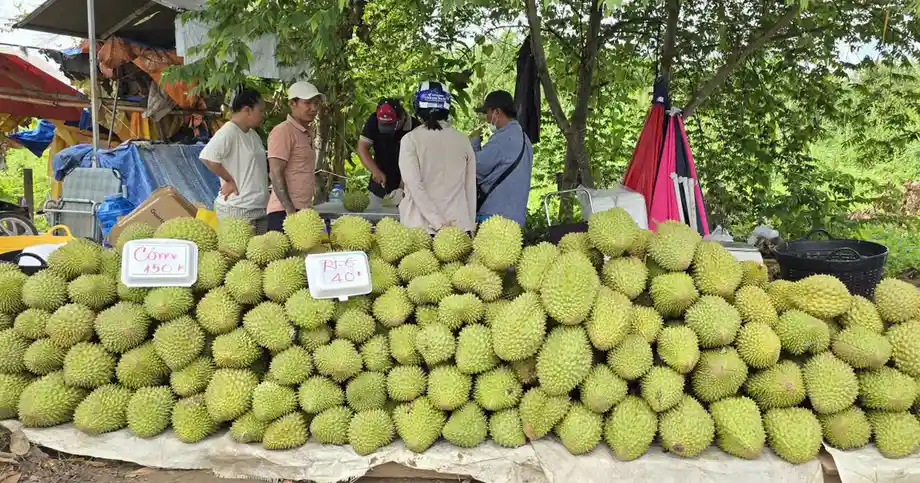
Vietnam is calling a halt to the expansion of durian acreage after a decade in which orchards spread almost sixfold, leaving the country's most valuable fruit export with uneven quality, residue risks and falling prices for its best fruit. To Van Huan of the Plant Production and Protection Department put the 2025 growing area at 195,000 hectares, against 33,400 hectares in 2016, while output rose from 399,000 tons to 1.8 million tons. The government's forum account used 185,000 hectares for 2025 but gave the same output. Area growth averaged 21.9 per cent a year and output growth 18.8 per cent, with a marked acceleration from 2022.
Contents
- A vast boom meets a quality reckoning
- A suspension days before the forum
- What the cadmium tests found
- Dong Thap's certification gap
- More codes bring harder checks
- Prices and profits squeeze farmers
- The repair starts with soil, roots and harvests
- Fresh volume outruns processing
- What competition changes through 2030
- What to Know
Durian exports earned US$3.86 billion in 2025, supplying 45.1 per cent of Vietnam's fruit and vegetable export revenue. The figure was US$177.7 million in 2021, meaning earnings increased almost 22 times in four years. Cultivation is estimated at 200,000 hectares in 2026, with projected production of 2.08 million tons. Authorities now want to protect suitable existing orchards, review plantings outside planned zones and stop treating additional acreage as the main route to growth.
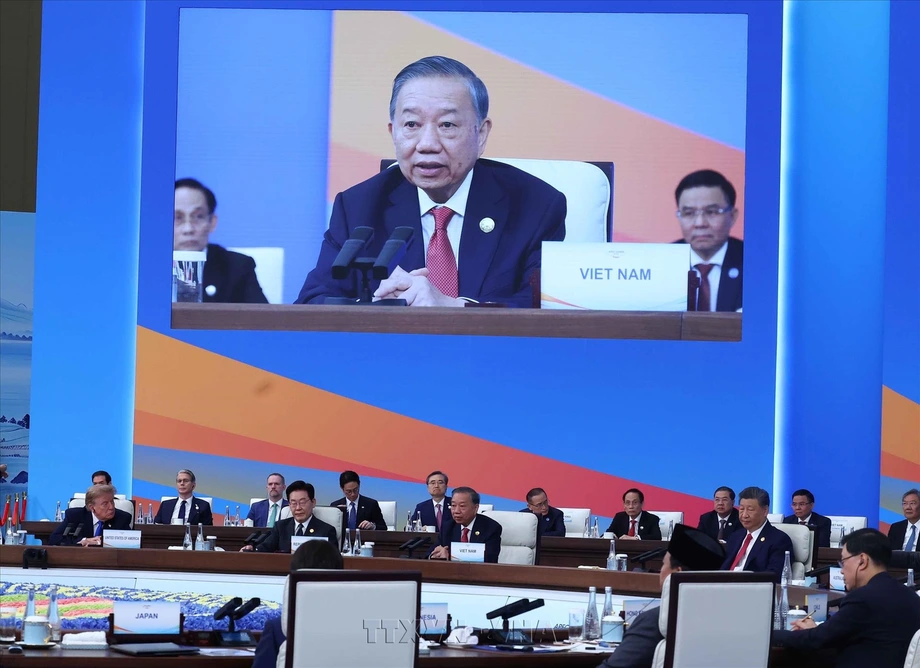
The change was set out on 25 November at a Dong Thap forum organized by Agriculture and Environment Newspaper, the Plant Production and Protection Department, the Southern Horticultural Research Institute and provincial agencies. In the government forum account, Nguyen Quoc Manh, deputy director of the department, said investment in quality had failed to keep pace with planting.
The phase of hot growth in the durian industry is gradually coming to an end. In the years ahead, the sector needs to shift its focus from expanding area to improving quality and production efficiency.
Manh linked that shift to food safety controls, stronger growing zones and preserving farmers' incomes. The immediate problems include fruit harvested before maturity, pests, excessive chemical use, heavy metal residues and a declining share of fruit meeting Grade A requirements.
A suspension days before the forum
China's General Administration of Customs gave the policy debate a concrete warning on 18 November, when it notified Vietnam of food safety violations in dragon fruit and durian shipments. From 21 November, it suspended imports associated with two pairs of growing area and packing facility codes in Lam Dong. The durian pair comprised growing area VN-LDOR0090 and packing facility VN-LDPH143, following a cadmium detection. Hoa Sen Lang Son Import Export Company Limited exported the shipment under phytosanitary certificate 009213/26/0705, issued on 7 November.
The second case involved dragon fruit growing area VN-BTHOR0041 and packing facility VN-BTHPH199, which were flagged for Acephate, a pesticide active ingredient. Star Trade Import Export Company Limited exported that shipment with certificate 008394/26/0705 dated 25 October. Both suspensions were calculated according to when the goods departed, making shipment dates an essential part of export supervision.
- 25 October: The phytosanitary certificate was issued for the dragon fruit shipment later flagged for Acephate.
- 7 November: The certificate was issued for the durian shipment later flagged for cadmium.
- 18 November: Chinese customs notified Vietnam's Plant Production and Protection Department of the violations.
- 21 November: Suspensions took effect for shipments connected with the two code pairs.
- 25 November: Officials, researchers, cooperatives and companies met in Dong Thap to discuss quality and greener production.
The department instructed Lam Dong to identify the causes, carry out corrective measures and assess the results for each growing area and packing facility. Provincial authorities must then report through the department so information can be passed to China. It cited Decree 38/2026/ND-CP dated 24 January and Resolution 36/2026/NQ-CP dated 31 July, which address code procedures and simpler administration. No date was given for restoration of the suspended codes.
What the cadmium tests found
Cadmium is a heavy metal that can occur in soil and water and enter plants as their roots absorb nutrients. It requires control throughout production, from land and irrigation to fertilizers and fruit. Auramine O presents a different hazard: it is an industrial dye banned from food, rather than a pollutant naturally absorbed from an orchard.
A 2025 survey by the Southern Horticultural Research Institute, known as SOFRI, found cadmium above 0.05 milligrams per kilogram in about 60 per cent of 63 durian orchard soil samples. Separately, 5 per cent of more than 300 durian flesh samples exceeded China's food safety threshold of 0.05 milligrams per kilogram. Huynh Thanh Loc, deputy director of SOFRI's technology transfer center, connected the soil findings with excessive chemical input use and deteriorating soil health.
Dong Thap's own 2025 testing provided another warning. Twenty-three of 115 fruit samples collected in growing areas exceeded 0.05 milligrams per kilogram, or 20 per cent. Seven of 45 fruit samples tested at packing facilities also exceeded the threshold. These were distinct sample sets covering orchards, packing sites, soil and flesh, together showing why checks only at the final packing stage would miss risks earlier in the chain.
The province is mapping cadmium danger through 1,724 survey points covering 8,620 durian orchards. Le Chi Thien, deputy director of the Dong Thap Department of Agriculture and Environment, said areas would be classified as uncontaminated, potentially at risk or high risk. Planned equipment includes sensors for soil, water and air, alongside rapid cadmium tests on fruit, leaves and soil before harvest. Phu Ho Cooperative said many farmers still needed practical instruction on contamination causes, testing and control. No completion date was announced for the map or equipment program.
Dong Thap's certification gap
Lam Dong has Vietnam's largest durian area at 44,300 hectares, while Dong Thap was described in the national presentation as the leading producer, with 557,000 tons. Tran Thanh Tam, head of Dong Thap's crop production and plant protection agency, gave a higher provincial figure: 36,204 hectares of durian, including 27,316 hectares being harvested, with output above 649,158 tons. The presentations did not explain the different production totals.
Dong Thap's orchards occupy 26.1 per cent of its roughly 138,500 hectares of fruit trees, with concentrations in Ngu Hiep, Long Tien, Binh Phu and Thanh Hung. The province has 492 growing area codes covering more than 18,500 hectares, 261 packing facility codes and 46 cooperatives participating in production and sales links.
Certification remains the striking weakness. Only 692 hectares hold valid VietGAP certification, approximately 2.5 per cent of the harvested area. VietGAP, short for Vietnamese Good Agricultural Practices, provides requirements for safer and more consistent farm production. The official provincial summary said household growers within the same coded zone often use different techniques and inputs, keep inconsistent cultivation diaries and apply uneven quality controls.
For an exporter, that inconsistency complicates traceability, the ability to follow fruit back through a packing facility to the orchards that supplied it. For farmers, it can mean lower grades and weaker prices even when their province's total production continues to rise.
More codes bring harder checks
Vietnam had 1,577 active durian growing area codes and 274 packing facility codes on 2 November. They covered nearly 47,000 hectares and an estimated 1.175 million tons of production, equivalent to about 25 tons per hectare. Set against the national 2026 projection, the coded area represented roughly 24 per cent of 200,000 hectares, while its output estimate equalled about 56 per cent of the projected 2.08 million tons.
To Van Huan said 2,225 new growing area and packing facility codes were registered in nearly three months after Resolution 36 took effect on 1 August. Removing area limits and simplifying procedures helped registrations grow. People's Committees at commune level now issue growing area codes and have three months to conduct inspections after approval, creating a defined period to check whether cultivation practices match the registration.
Vietnam has also asked Chinese customs to approve another 576 growing area codes and 303 packing facility codes. Remediation results have been submitted for 86 growing area codes and 83 packing facility codes that China flagged. No decision deadline was announced for those requests.
Ngo Tuong Vy, chairwoman and chief executive of Chanh Thu Fruit Import Export Group, described a code as an orchard's identity document rather than a finish line.
A growing area code is like a citizen ID for farm produce.
Chanh Thu is helping growers obtain codes, keep cultivation diaries and form linked production zones of at least 10 hectares. Vy said companies must maintain relationships with farmers after registration, and she wants production management software that orchard owners can use easily.
Le Chi Thien identified a practical cost problem when export containers combine fruit from several codes.
In reality, one container of farm produce can gather products from many growing area codes. If samples must be tested separately for every code, costs will rise sharply, affecting the competitiveness of businesses and the entire sector.
Dong Thap is preparing organized raw material zones that connect companies, cooperatives, farmers, scientists and regulators from input supply through sales. Pilot participants were still being selected, and no date for wider implementation was given.
Prices and profits squeeze farmers
Chanh Thu's purchases illustrate the contradiction between rising supply and weaker returns. The company bought 18,000 tons in 2024, increased that to between 31,000 and 32,000 tons in 2025 and expects about 40,000 tons in 2026. Its average purchase price for Grade A durian nevertheless fell from VND90,000, or US$3.54, per kilogram in 2024 to VND80,000, or US$3.15, in 2025. The projected 2026 average is VND70,000, or US$2.76.
Vy attributed the decline to trees being pushed too hard when prices were high, alongside inappropriate fertilizer and pesticide use. The share of Grade A fruit has trended downward while Grade B and Grade C supplies have increased. Her explanation links orchard exhaustion directly to the price buyers are prepared to pay.
The Dong Thap Department of Agriculture and Environment calculated average durian production profit at about VND369 million per hectare for 2026. Growers compared that with close to VND1 billion per hectare during periods of high purchase prices. Nearly 8,900 hectares in the province have yet to enter harvest, so local output will continue increasing even without further planting.
A separate market snapshot on 27 November showed how strongly variety, grade and location affect returns. Selected top grade Thai durian fetched VND94,000 to VND95,000 per kilogram in the Southeast and Southwest, while selected Ri6 in the Southwest brought VND63,000 to VND65,000. In the Central Highlands, mixed lots were quoted at VND25,000 to VND30,000 for Ri6 and VND32,000 to VND35,000 for Thai fruit.
The repair starts with soil, roots and harvests
Nguyen Thanh Hieu, acting director of SOFRI, said durable production must begin with standardized planting material and better cultivation. He called for controls over grafting material from approved mother trees and mother orchards, and for rootstocks able to tolerate Phytophthora, a water mold that can damage roots and fruit, particularly when conditions are wet.
SOFRI has selected seven promising rootstock lines. Four can tolerate Phytophthora and three can withstand salinity of 2 parts per thousand, offering possible options for areas exposed to drought and saltwater intrusion. Researchers are also studying fruit bagging to reduce rot, insect damage and pesticide spraying. The work must identify suitable materials and timing for each variety while controlling ants and mealybugs that may develop inside bags.
Common orchard mistakes add to the problem. Hieu identified planting too deeply, burying the graft and using too little organic fertilizer and beneficial microorganisms. Those practices can compact soil, weaken roots and increase disease risk during the rainy season. Loc recommended balanced nutrition, organic and microbial fertilizers, better soil pH, irrigation guided by soil moisture and water salinity, and reliable drainage. He also supported Internet of Things monitoring, which uses connected sensors to track orchard conditions.
Integrated pest management combines monitoring, biological controls and targeted treatment instead of routine spraying. Integrated plant health management broadens that approach to soil, nutrition and water. SOFRI also urged compliance with national standard TCVN 10739:2026 as part of efforts to curb harvesting before fruit is mature.
Nguyen Minh Chau, a former SOFRI director, said maturity at harvest directly affects flesh quality and commercial value. He advocated wider use of drones for crop protection spraying to reduce pesticide use and labour. Manh identified breeding, deeper processing and byproduct treatment, and food safety compliance as central investment needs. Dona accounts for about 80 per cent of Vietnam's durian plantings and Ri6 about 20 per cent, leaving little varietal diversity.
Some farmers are already changing inputs. Vo Tan Loi, chairman of the Dong Thap Durian Association, said models using organic fertilizer, biological products, efficient irrigation and newer technology had cut chemical fertilizer use by 25 per cent while raising economic efficiency by 15 to 25 per cent compared with conventional production.
Fresh volume outruns processing
Vietnam overtook Thailand in fresh durian shipments to China in 2025, exporting 941,004 tons against Thailand's 920,749 tons. Vietnamese fresh durian reaches 28 countries and frozen durian more than 20, yet China absorbs more than 95 per cent of fresh export volume. That concentration gives one market's residue rules and buying behaviour exceptional influence over orchard incomes.
Forum estimates put durian exports above US$3.45 billion in the first nine months of 2026, roughly 25 per cent higher than a year earlier, with about US$3.3 billion going to China. Department figures through October instead gave US$3.315 billion, up 13 per cent. No explanation was provided for the lower total over the longer period.
Processing captures much less value than fresh sales. Chanh Thu put frozen products at about 15.6 per cent of Vietnam's durian exports, equivalent to roughly US$600 million, and compared that share with 84.5 per cent in Malaysia. Around 90 to 95 per cent of Vietnamese frozen durian sent to China is supplied as raw material. Chinese importers then package and distribute it under their own brands, leaving Vietnamese companies with limited presence on consumer shelves.
Chanh Thu is considering finished processing and packaging in Vietnam or a packaging plant in China, but has not announced a chosen investment. Vy sought preferential interest rates and better access to capital for technology and product development. Officials also identified inadequate cold storage and long road journeys as threats to quality alongside premature harvesting.
The wider produce trade remains large. Vietnam's fruit and vegetable exports exceeded US$9.2 billion in the first 11 months of 2026. November shipments were estimated at US$913.18 million, down 9.96 per cent from October but up 30.2 per cent from a year earlier. Imports rose 32.1 per cent to nearly US$3.3 billion during the 11-month period, leaving a trade surplus above US$5.9 billion.
What competition changes through 2030
Thailand, Malaysia and the Philippines are competing for durian buyers while China researches varieties suitable for domestic production. Vietnam can harvest and export throughout the year, but that advantage will carry less value if fruit arrives unripe, unevenly ripened or unable to meet residue limits. Competitive production increasingly depends on reliable orchards, preservation, transport and processing rather than volume alone.
The experience of dragon fruit's export decline offers a relevant warning about supply and market concentration. Vietnamese dragon fruit earned US$485.2 million in the first 11 months of 2025 after annual earnings had once exceeded US$1 billion, while Chinese production expanded enough to satisfy most domestic demand. Durian has different biology and market conditions, but it shares the exposure created by relying heavily on Chinese purchases.
Manh's direction toward 2030 is to review growing areas whose soil, climate or land conditions are unsuitable and shift the industry's measure of success from tonnage to quality and production efficiency. The department's proposed work covers stronger production bases, organic fertilizers, integrated pest and plant health management, water storage, lower emissions and new varieties. It also calls for avoiding forced production outside suitable seasons when water is insufficient.
After harvest, investment is needed in preservation, processing and transport. Market development is to rest on VietGAP, organic production and more credible links between farmers, cooperatives and exporters. For growers, the practical changes include recording input use, avoiding excessive fruit loads, harvesting at the correct maturity and selling through organized zones. Exporters face closer orchard checks and greater pressure to build recognizable processed products.
Dong Thap wants the green transition judged by orchard health and lifespan, fruit quality, production cost savings and farmers' actual income. Those measures will determine whether the sector can retain its export earnings while the remaining young orchards enter production and importing countries tighten their controls.
What to Know
- Vietnam is ending durian acreage expansion as its main growth strategy and prioritizing quality, efficiency and food safety.
- National output reached 1.8 million tons in 2025, with 2.08 million tons projected for 2026.
- Durian exports earned US$3.86 billion in 2025, supplying 45.1 per cent of fruit and vegetable export revenue.
- China suspended imports tied to one Lam Dong durian growing area and packing facility pair after detecting cadmium.
- SOFRI found elevated cadmium in about 60 per cent of 63 soil samples and excessive cadmium in 5 per cent of more than 300 flesh samples.
- Only 692 hectares, about 2.5 per cent of Dong Thap's harvested durian area, hold valid VietGAP certification.
- Chanh Thu's average Grade A purchase price fell from VND90,000 per kilogram in 2024 to a projected VND70,000 in 2026.
- Rootstock breeding, soil restoration, harvest maturity, stronger code inspections and deeper processing form the core of the proposed response.