A Chiba Classroom Shows How Close the Race Has Become
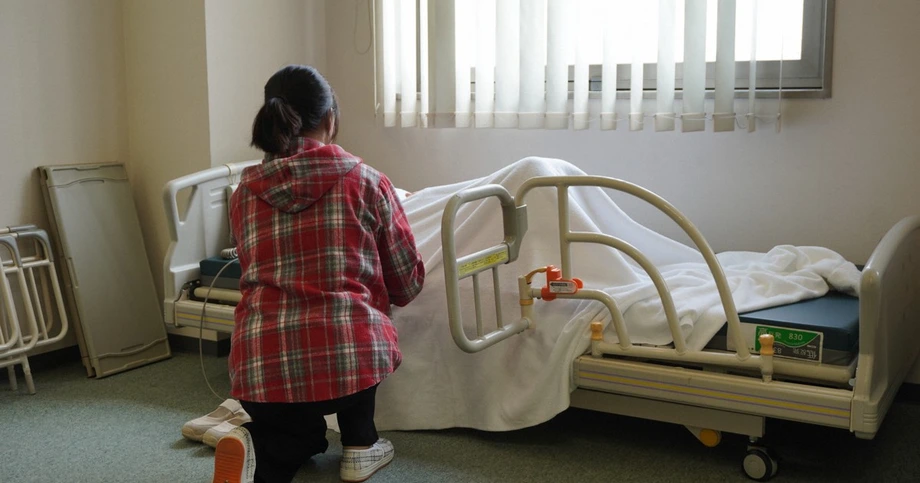
In June, 14 Vietnamese and other foreign trainees sat in a Japanese language class at a training center in Chiba, practicing the small routines of care work. One crouched to eye level with a colleague lying in bed, acting as a resident, and checked the room temperature. The exercise looked like a classroom drill. It is also part of a contest Japan is increasingly losing: the search for skilled care workers from abroad.
Contents
- A Chiba Classroom Shows How Close the Race Has Become
- How Japan's EPA Route Works
- Why Vietnamese Candidates Became a Benchmark
- The Pay Gap Pulling Workers Toward Germany
- Why Qualifications Matter Beyond the First Paycheck
- Workers Were Already Comparing Other Countries
- Japan Raises Pay, but Care Providers Face a Squeeze
- The Workforce Gap Is Already Measured in Millions
- Many Returnees Still Value Their Time in Japan
- What Changes for Workers, Facilities and Vietnam
- Key Points
The numbers behind that competition are stark. Vietnam sent 117 certified care worker candidates under the Economic Partnership Agreement in fiscal 2014. The annual intake peaked at 193 in fiscal 2020, fell to 55 in fiscal 2025 and stood at 57 in fiscal 2026. That is a fall of about 70% from the fiscal 2020 peak, even as Japan's need for care staff grows.
Japan's Ministry of Health, Labour and Welfare says in the ministry's EPA guidance that candidate intake from Indonesia, the Philippines and Vietnam began in fiscal 2008, fiscal 2009 and fiscal 2014, respectively, and that cumulative intake from the three countries exceeded 10,000 by the end of July 2026. The same document says the framework was negotiated at a strong request from partner countries as part of wider economic ties, rather than as a general channel to fill care worker shortages.
For a trainee, the choice is no longer simply Japan or home. Germany, South Korea, Taiwan and jobs in Vietnam's growing economy all sit on the same mental list.
How Japan's EPA Route Works
Japan has several ways to accept care workers from abroad, including Specified Skilled Worker status and the Nursing Care status of residence. The EPA route, about 20 years old, has the longest history and has been praised as an advanced way to develop well trained care workers. Candidates work at care facilities while studying for the national qualification as a certified care worker. Under the agreement for care workers, the stay is limited to four years, with three years for nursing candidates. The revised agreement with Indonesia that took effect in August 2026 extended the upper limit to five years for both nursing and care candidates.
JICWELS, the Japan International Corporation of Welfare Services, is the only body allowed to coordinate intake under the program. Employment agencies and worker dispatch firms may not mediate candidates. Japan sets a yearly maximum intake number to limit effects on its labour market and keep the public framework orderly. Candidates sign employment contracts with facilities and must be paid at least the same as Japanese workers doing the same work. Japanese labour laws and social and labour insurance apply to them.
The ministry lists support measures that include more study help at facilities, changes to terminology on the national exam, help for people retaking the exam and a review of staffing standards for care. The agreements also provide six months of Japanese language training. After a candidate passes the national exam, there is no limit on renewals of the period of stay as a nurse or certified care worker.
Why Vietnamese Candidates Became a Benchmark
Vietnamese applicants have faced a demanding filter. They must have completed three or four years of nursing education in Vietnam and reach at least N3 on the Japanese Language Proficiency Test, an intermediate level. Indonesia, which has a similar EPA arrangement, generally uses around N4 after training before departure. The Philippines uses around N5. Those levels are lower on the same scale, with N5 closest to beginner Japanese.
That higher bar has produced high pass rates. Vietnamese candidates have recently passed the national care worker exam at rates of 80% to 90%. Candidates from Indonesia and the Philippines have recorded rates from 20% to 60%. An ERIA study by the Economic Research Institute for ASEAN and East Asia found that the first Vietnamese group did even better. In the January 2018 exam, 89 of 95 candidates passed, a rate of 93.7%. Filipino and Indonesian candidates passed at about 40% in that exam, while Japanese examinees passed at 73.7%.
The study tracked 966 Vietnamese nurse graduates sent to Japan in six batches from 2014 to 2019. The first group had 124 people selected in October 2012. Of those, 117 arrived in Japan in June 2014, including 115 with N3 and two with N2. Before departure, they had trained in Vietnam for about a year, with roughly 1,500 hours of Japanese language study and 300 hours of sociocultural adaptation. After arrival, they had another 140 hours of each before starting work at care facilities in August 2014.
The Pay Gap Pulling Workers Toward Germany
Salary is the clearest reason Vietnam's candidates are looking farther afield. Data from Germany's Federal Employment Agency for 2025 put median gross monthly pay for elderly care specialists at about 799,000 yen and for assistants at about 600,000 yen, converted at 180 yen per euro. Median means half of workers earn more and half earn less. Gross means the amount is counted before tax.
Japanese figures for July 2026 put certified care workers at about 360,000 yen a month and beginning care workers at about 335,000 yen. Those Japanese numbers cover employees working full time and include bonuses spread across the year and allowances. The work, statistics and living costs differ between the countries, but a worker comparing pay notices sees a large gap before rent, tax and daily expenses are counted. Workers with Japanese care experience are being viewed by some European employers as highly valued hires, another sign that experience in Japan travels.
The weak yen makes the Japanese offer less valuable for workers sending money home. A payment of 100,000 yen was worth about $909 when the exchange rate was 110 yen to the dollar. At 160 yen to the dollar, the same payment was worth about $625. That is a drop of about 31% in dollar value, even before any change in wages. Vietnam's economic growth and better job options at home add to the pull.
Kiichi Inagaki, director of the acceptance support department at JICWELS and head of its mediation office, said the shift is visible in Vietnam and is tied to pay.
In Vietnam, more people are going to Germany instead of choosing Japan.
Inagaki added that currency movements are changing how Japan is judged by potential workers.
As the yen weakens, we are losing potential human resources over pay.
Why Qualifications Matter Beyond the First Paycheck
Pay is only one part of the decision. Vietnamese candidates often arrive with nursing education and professional experience from home. Japan's care worker route does not turn a foreign nursing licence into a Japanese licence. It asks candidates to work as care workers while they study for a Japanese national exam. Germany, by contrast, can review foreign professional credentials for equivalence and use education or testing to bridge gaps. German language ability and accreditation are still required, but the path gives trained nurses a way to connect earlier study to later work.
That mattered to the Vietnamese returnees studied by the research team. A returnee identified as Informant 6 said her job after coming home let her use what she had learned in Japan.
If I didn't have this job, I would probably still be in Japan. [...] I want to work for this company most because I can use my knowledge of care work (obtained in Japan). Also, the treatment (salaries and benefits) is good.
The same research found that all 11 interviewees worked in education or support roles for young people aiming to work at Japanese care facilities. They used professional nurse networks to find those jobs. For a worker weighing destinations, that changes the value of a qualification. Experience in Japan can lead to a teaching, interpreting or preparation role in Vietnam, even if the worker does not remain in a Japanese care facility.
Workers Were Already Comparing Other Countries
A joint study by Yokohama City University and Hanoi University, published on April 11, 2025, surveyed 27 Vietnamese people preparing for technical intern training in care work in Japan. Technical intern training is a work route meant to transfer skills, though it has also been used as a path to employment. In the survey, 41% were also considering other countries. Among those respondents, 50.0% named Germany, 21.4% named Taiwan, 21.4% named South Korea and 7.1% named China.
The sample was small, but the answers match what JICWELS sees in recruitment. The organisation points to Vietnam's development, the growth of jobs at home and the popularity of Specified Skilled Worker status, created in 2019, which allows people to reach Japan faster than the EPA route. The EPA has strengths: it rests on an agreement between governments, has no recruiter fee burden for candidates and avoids many opaque placement problems in private overseas recruitment. Proximity also draws workers who want to remain near Vietnam.
Japan sets its intake ceiling each fiscal year. No fiscal 2027 ceiling was given. Annual limits matter because they decide how many candidates can enter the EPA program at a time when facilities are competing with other destinations and with employers inside Vietnam.
Japan Raises Pay, but Care Providers Face a Squeeze
Japan has started to raise care pay. A November 2026 survey of care worker conditions by Japan's Ministry of Health, Labour and Welfare found average monthly pay up 16,690 yen from a year earlier. Basic salary plus fixed allowances rose by 11,130 yen a month. For workers, those increases arrive after years of heavy duties, including help with bathing, toileting and transfers. The work also involves the safety and daily lives of people receiving care.
Care providers face a difficult pricing rule. For services paid through care insurance, the national government sets reimbursement rates. Providers cannot freely raise those prices when wages, food, utilities or equipment cost more. If they do not raise pay, they struggle to hire and keep staff. If they do raise pay, their finances tighten under fixed reimbursement.
Company failure figures for 2025 counted 176 bankruptcies among care providers and 653 closures or dissolutions, a total of 829. Bankruptcies among providers visiting people at home rose from 67 in 2023 to 81 in 2024 and 91 in 2025. Demand for care is rising, yet some providers are failing under labour shortages, higher personnel costs and rising prices.
That pressure helps explain why a wage increase alone is not changing the choice quickly. Japan's care system needs more workers and also needs providers strong enough to employ them under conditions that workers in Vietnam can compare with Germany.
The Workforce Gap Is Already Measured in Millions
Japan's workforce estimates show the scale of the need. The Ministry of Health, Labour and Welfare counted about 2.15 million care workers in fiscal 2022. It projects that 2.40 million will be required in fiscal 2026 and 2.72 million in fiscal 2040. The 2026 gap is about 250,000 workers compared with the 2022 count. By 2040, the country expects to need about 570,000 more workers than it had in 2022.
An ageing population raises this demand because more people need help with daily tasks, while a smaller share of the population is available to provide it. Foreign recruitment is one response, but it places Japan in a market where workers compare languages, wages, qualifications and family ties. The EPA was designed to develop qualified nurses and care workers; it was not built as a mass labour import scheme.
Providers with services outside care insurance can set their own rates and use higher fees to improve conditions. Services funded by insurance have less room because reimbursement is fixed. This creates two levels of care work in the same country: one able to respond faster to wage competition, the other tied to public rates. Foreign candidates entering Japan usually meet the insurance funded side first.
Many Returnees Still Value Their Time in Japan
The first Vietnamese group shows why the story is more complicated than a simple exodus. By five years and six months after arriving in Japan, 53 of the 117 candidates, or 45.2%, remained as EPA certified care workers. The other 64, or 54.8%, had left those occupations in Japan. The departures happened in stages: 22 left before the January 2018 exam, 24 certified care workers left within the year after that exam and 12 more left by January 2020.
A questionnaire answered by 17 returnees found that family reasons led the decision to go home. About 82.3% cited care for family in Vietnam, and 70.5% cited married life in Vietnam. Some 88.2% disagreed that they were dissatisfied with work in Japan, and 70.5% disagreed that they were tired after work there. Of 13 respondents who answered whether they would return to Japan, 10 said yes.
One returnee interviewed by the research team, identified as Informant 1, said family expectations outweighed her own wish to stay in Japan.
My family was worried about me being unmarried. They want me to be stable here. I still wanted to stay in Japan, but I decided to leave because of my family.
That finding changes how the fall in applicants should be read. It shows that Japan can be valued as a place to train and work even when workers return home. It also shows why Vietnam matters in the competition: returnees can turn Japanese care experience into jobs that prepare the next generation for work abroad.
What Changes for Workers, Facilities and Vietnam
For candidates, Japan's offer is now a set of choices. The EPA route offers a formal agreement, protected employment terms and proximity to Vietnam. It demands Japanese study, a national exam and a long period of work before full qualification. Germany offers higher gross pay in care roles and a route that can recognise nursing training from Vietnam. Vietnam itself now offers more jobs than it did when the program began. Family duties, especially for women, can decide the outcome even when workers enjoy the job abroad.
For care facilities, the answer is practical. The ministry already calls for stronger study support at facilities, revised exam terms, help for candidates retaking the exam and changes to staffing standards. Facilities that want EPA candidates must provide training aimed at the national qualification, not just jobs. The yearly ceiling gives the government a lever, but it cannot by itself make Japan more attractive when pay and recognition elsewhere are stronger.
For Vietnam, the fall in candidates does not erase the value of the EPA program. Returnees who passed the exam have built a pool of people who can teach Japanese, explain care work and prepare students for facilities abroad. Their professional networks help newcomers adjust. At the same time, those same skills make returnees valuable to countries competing with Japan.
Annual intake numbers will be set for the coming fiscal year under the official framework. For a Vietnamese nursing graduate aged 19, the decision is immediate: which country will value the training, pay reliably and leave room for a life near family.
Key Points
- Vietnamese EPA care worker candidates fell from 117 in fiscal 2014 and a peak of 193 in fiscal 2020 to 55 in fiscal 2025 and 57 in fiscal 2026.
- Cumulative intake from Indonesia, the Philippines and Vietnam exceeded 10,000 by the end of July 2026, with JICWELS as the sole intake coordinator and annual ceilings set each fiscal year.
- Vietnamese candidates have passed the national care worker exam at 80% to 90% in recent years; the first group passed at 93.7% in the January 2018 exam.
- Germany's gross monthly pay figures are far above Japan's, and a weaker yen reduces the value of earnings sent home.
- Japan has raised care pay, while providers face fixed insurance reimbursement, labour shortages and rising company failures.
- Many Vietnamese returnees value their time in Japan, with family care and married life in Vietnam driving returns and professional networks turning experience into teaching and support jobs.