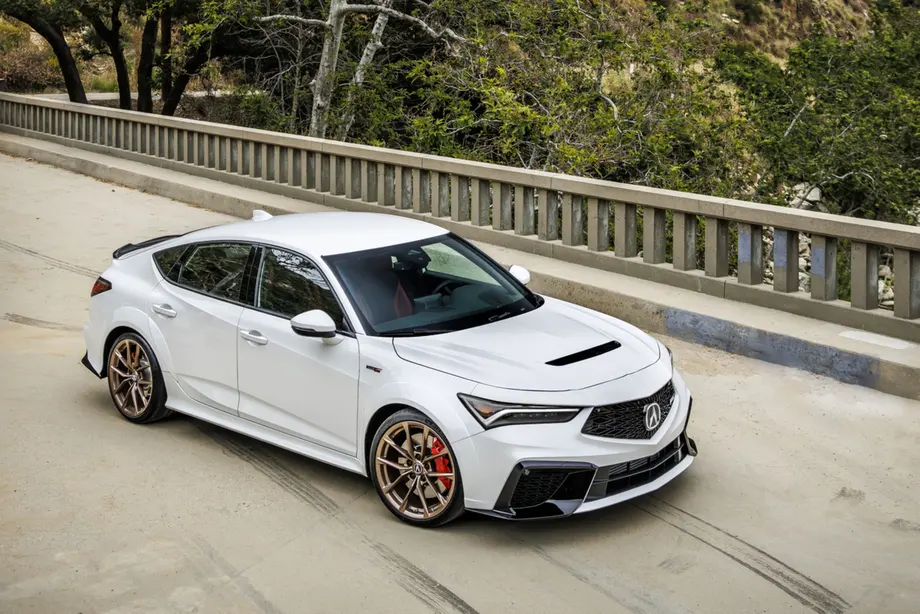
A Rare Acura Arrives in Japan
Honda will begin selling the Acura Integra Type S in Japan on December 18, 2026, with only 250 cars available. The price is 8,998,000 yen including the 10 percent consumption tax. Honda lists a 2.0L VTEC TURBO engine producing 239 kW, described as 325 horsepower in Japanese units, and 420 Nm of torque. The gearbox is a manual with six gears, power goes to the front wheels, and the steering wheel sits on the left. Dealers will handle 220 cars. Honda will run a lottery for the other 30.
Contents
- A Rare Acura Arrives in Japan
- Why Integra Fans Know the Name
- How a Car From Ohio Becomes Legal in Japan
- Why the Steering Wheel Stays on the Left
- What the Engine and Chassis Actually Offer
- Why It Is Not Just a Civic Type R With an Acura Badge
- Who Can Buy One and When
- Inside, Premium Comfort Meets American Habits
- Safety Technology and One Clear Limit
- Trade Pressure Shapes the Launch
- What the First Owners Will Notice
- Key Points
The launch is a small event with a large symbolic load. It is the first time Acura, Honda's premium performance brand founded in 1986, is officially sold in Japan. It also brings the Integra name back to its home market about 20 years after Honda ended production of the fourth generation there in 2006. The Acura version was developed in North America and has been sold there since 2023.
Honda said the model uses a new Japanese approval route for passenger cars built in the United States. That means Japan is getting a car shaped by American roads, American rules and American demand, with only a small set of changes for local use.
Why Integra Fans Know the Name
The Integra story in Japan began in 1985, when Honda introduced the first generation. The fourth generation ended in 2006. North America kept the name alive with a fifth generation in June 2022, and the Type S version, the top sports grade, went on sale there in 2023.
Acura used the Integra as a launch model when the brand began in 1986. That history gives the Japan release an extra layer for enthusiasts. Local fans had already seen the car before the sales announcement: it appeared at the Tokyo Auto Salon in January 2026 and at Osaka Auto Messe in February 2026. Before official sales, at least one Japanese owner had imported a North American version and showed it at an October 2026 Integra gathering in Shizuoka with air suspension and wheels made in three pieces.
- 1985: First generation Integra appears in Japan.
- 2006: Fourth generation production ends in Japan.
- June 2022: Fifth generation goes on sale in North America.
- 2023: Integra Type S goes on sale in North America.
- January 2026: The Type S is shown at Tokyo Auto Salon.
- February 2026: The car appears at Osaka Auto Messe, and the certification system takes effect on February 16.
- November 26, 2026: Honda announces the Japan sale and opens lottery applications.
- December 18, 2026: Sales begin.
- January 8, 2027: Lottery applications close.
- January 2027: Lottery winners are announced.
How a Car From Ohio Becomes Legal in Japan
Honda's release says the Ministry of Land, Infrastructure, Transport and Tourism created the American passenger car certification system in February 2026, with enforcement from February 16. Under the rule, a passenger car made in the United States and meeting American safety and pollution standards can be treated as meeting Japanese safety standards if the transport minister certifies that there is no safety or pollution problem.
For a reader, the easiest way to understand the rule is to think of it as a recognition system. Japan is accepting certain checks already done in the United States instead of demanding a full new round of Japanese testing. It is narrow. Honda describes the car as an American specification model with some American standards retained, and buyers receive a notice that explains the differences.
Honda also says it plans to use the same system for the Passport TrailSport Elite, a large SUV. Other makers are using similar routes: Toyota is preparing a Camry built in the United States for December 23 after the Tundra and Highlander, and Subaru has said it will bring the Ascent built in Indiana to Japan.
Why the Steering Wheel Stays on the Left
The Japan car keeps the steering wheel on the left because Honda is importing the North American version almost as it is. Changing that layout would cost a great deal, and the Civic Type R interior could not simply be reused to make a car with the steering wheel on the right. The approval route also leaves limited room for changes. Some Japanese buyers like a car with the steering wheel on the left because it feels more authentic and distinctive.
The choice changes small daily actions. A Japanese driver uses the left hand on the steering wheel and the right hand on the gear lever. That is the reverse of the Civic Type R sold in Japan. Hideki Kakinuma, the Integra Type S development chief who also led the Civic Type R project, explained that the shifter hardware was shared and that the visible change was the knob:
ジオメトリーはまったく一緒' '違うのはノブの形状と革巻きであること' '高さも同じ
The meaning in English is that the geometry is the same, the difference is the shape and leather covering of the knob, and the height is the same. Kakinuma suggested that using the opposite hand changes how the shift feels.
What the Engine and Chassis Actually Offer
Honda says the engine is a 2.0L VTEC TURBO unit with 239 kW and 420 Nm. VTEC is Honda's system for changing valve timing and how far the valves open, helping the engine breathe at low and high speeds. A turbocharger uses exhaust gas to push more air into the engine, which lets a smaller engine make more power. Torque is the twisting force an engine makes.
The figures need one translation note. Honda gives 239 kW as 325 horsepower for Japan, while the catalog used in North America rates the car at 320 horsepower and 310 lb ft of torque. Both describe the same basic engine, with the Japanese number converted from the American catalog value.
The Integra Type S uses a manual transmission with six gears, a helical differential that limits wheelspin, adaptive dampers that can change firmness, Brembo front brakes with calipers that have four pistons, and wheels that measure 19 inches in diameter with Michelin Pilot Sport 4S tires. A differential that limits wheelspin matters here because power goes to the front wheels. It helps both wheels pull when one starts to lose grip and reduces the tug on the steering wheel known as torque steer. Adaptive dampers are shock absorbers that can change their firmness. The front suspension uses two axes to reduce that pulling effect under acceleration.
In United States testing, the car reached 60 miles per hour from rest in 5.2 seconds. The body measures 4,745 mm long, 1,900 mm wide and 1,405 mm high, with a 2,735 mm wheelbase. It is 150 mm longer and 10 mm wider than the Civic Type R, while keeping the same height and wheelbase.
Why It Is Not Just a Civic Type R With an Acura Badge
Honda calls the development goal Stunning Street Performer. The Civic Type R was built around circuit performance. The Integra Type S was tuned for acceleration and sound felt on ordinary roads, especially when the driver is not fully pressing the accelerator. In Acura's current range, Type S is the top sports version, S stands for Sports, and it sits above RS.
That idea shows up in the throttle mapping. When a driver presses the pedal part way, the Integra opens the throttle more than the Civic Type R does. Honda says this gives stronger response at half pedal input. On a closed section of the Hakone Skyline, a test found the Integra more willing on rough roads and the Civic Type R sharper and quicker on smoother surfaces. The Type R is about 30 kilograms lighter, and one comparison found it faster on a closed course.
The exhaust is another difference. American noise rules are looser than Japan's rules for locally sold cars, so the Integra's exhaust is louder than the Japanese Civic Type R's. The system uses an active valve and produces real burbling during gear changes, not just sound through speakers. Honda added sound insulation and active noise control to keep unwanted drone down before shaping the engine note.
A road test of the American car liked the grip, braking and everyday comfort. It also called the clutch pedal overdamped and said the Civic Type R offered better value. That matters in Japan because the Acura's listed price is 8,998,000 yen, while the Civic Type R Racing Black Package is listed at 6,179,800 yen. The difference is 2,818,200 yen, about 2.8 million yen.
Who Can Buy One and When
Honda has set aside 220 cars for its sales companies. Customers interested in one of those cars should contact a dealer directly. The other 30 will be sold through a lottery on Honda's product site for the model. Applications opened on November 26, 2026, and close on January 8, 2027. Honda says winners will be announced during January 2027.
The official sales date is December 18, 2026. Before the announcement, the expected date had been December 25. The launch price is 8,998,000 yen including tax. A test article printed 8,999,800 yen, but Honda's announcement lists 8,998,000 yen. Insurance, other taxes, registration costs and recycling fees are extra.
In the United States, the advertised starting price was $53,400 before destination charges and taxes. A 2026 manual test car was listed at $55,295, and the 2027 model was listed at $54,600 plus a $1,395 destination charge. Japan's price is close to those American figures after currency conversion, but it sits far above the Civic Type R sold in Japan.
Honda did not say whether more cars will be imported after the first 250, and no date was given for the planned 2027 refresh. The next date buyers can mark is the January 2027 lottery result.
Inside, Premium Comfort Meets American Habits
The cabin uses vertically shaped sports seats with foam hardness and coverings chosen for different parts of the body. A pad running from the passenger side toward the center console separates the driver's area from the passenger area. Honda says the design lets the driver focus while keeping the passenger space comfortable.
Equipment includes a head up display, an audio system with 16 speakers and a 530 watt amplifier, a display measuring 9 inches, a driver display measuring 10.2 inches, a driver seat that adjusts by power and is heated, left and right temperature control, wireless charging and USB ports. Apple CarPlay and Android Auto let owners use their phones for navigation.
Japan receives three body and interior pairings: Double Apex Blue Pearl with ivory, Platinum White Pearl with red, and Slate Gray Pearl with black. The United States offers six exterior colors, with Solar Silver Metallic as the only paint that costs nothing extra. The other five colors cost $600 each.
The car keeps some habits that may surprise Japanese buyers. The climate display stays in Fahrenheit, the main displays are in English, and the door mirrors fold by hand. The speed display can switch from miles to kilometers. Because the import rules allow only limited changes, Honda changed the headlight aim for roads on the left, added an emergency flare, fitted a license plate mounting base and adjusted the Wi-Fi frequency. A Canadian version uses Celsius, but the certification route did not allow Honda to bring that version in.
Safety Technology and One Clear Limit
The Integra Type S comes standard with AcuraWatch, the suite of driver aids Honda lists for this model. AcuraWatch includes nine functions:
- Collision mitigation braking, known as CMBS.
- Road departure suppression.
- Traffic sign recognition.
- Adaptive cruise control, known as ACC.
- Lane keeping assistance, known as LKAS.
- Automatic high beams.
- Rear exit support.
- Nearby collision braking.
- A parking sensor system.
One part of that suite needs special attention. The sign recognition function was developed using American sign data and recognition logic, so it cannot accurately recognize Japanese signs. Honda tells drivers to check the road and signs themselves. The red star sticker on the rear window shows the car was certified under the American passenger car system.
These driver aids can help, but they have limits. Adaptive cruise control can keep a set distance from a car ahead, lane keeping can make small steering corrections, and collision braking can act in some crash risks. A driver still needs to watch the road.
Trade Pressure Shapes the Launch
Honda's move lands in the middle of a trade dispute. Vehicles are the largest part of the United States trade deficit with Japan. A trade deficit happens when a country buys more goods from another country than it sells there. Around $34 billion worth of vehicles travels from Japan to the United States each year, while about $1 billion goes the other way. That makes the flow in one direction about 34 times the value of the flow back.
United States President Donald Trump raised tariffs on imports from other countries, including Japan, last year under a policy aimed at reducing trade imbalances. A tariff is a tax on imported goods. Talks later brought the tariff rate on Japanese vehicles to 15 percent, and the certification route became part of the arrangement. Japanese automakers are now bringing more cars built in the United States home: Toyota's Camry is due on December 23 after the Tundra and Highlander, Subaru is preparing the Ascent built in Indiana, and Nissan has brought in the Murano.
Acura, Honda's premium performance brand, described demand for the model in the new market this way:
demonstrates strong demand for the premium sport compact model.
Honda has exported nearly 300,000 vehicles built in the United States to Japan since 1988, including Accord, Civic Coupe and second generation NSX models. The Integra Type S is built at the Marysville Auto Plant in Ohio, and its K20C engine comes from the Anna Engine Plant nearby. The transmission also comes from Ohio.
What the First Owners Will Notice
Owners will get a car that is rare and more serious than the Acura badge might suggest. Test drivers on the Hakone Skyline found the suspension close to the Civic Type R's firmness, even though the ride can soften in Comfort mode. The drive modes are Comfort, Sport, Sport Plus and Individual, and they change engine sound, damper firmness and steering response. Sport Plus also turns the gauge needles yellow as a nod to the DC2 Integra Type R.
Owners also need to plan around the car's volume. The guidance for buyers recommends Comfort mode in city streets, residential areas, early mornings and late nights. In other modes, the active exhaust opens more and the car can produce strong burbling sounds during gear changes. The cars sold in Japan are from 2026 production, and before the sales announcement they were already being shipped from the United States.
For everyday use, the Type S is a liftback with four seats and a usable cargo opening. A liftback is a car with a rear door and window that lift together. United States figures list 24.3 cubic feet of cargo space, fuel economy of 21 miles per gallon in the city and 28 on the highway, and a range of about 298 miles. Those figures are for the American car. Japanese fuel economy figures were not given in the launch announcement.
Key Points
The main developments are set out below.
- Honda will sell 250 Acura Integra Type S cars in Japan from December 18, 2026, at 8,998,000 yen including tax.
- Dealers will handle 220 cars, while 30 will be sold by lottery with applications closing on January 8, 2027.
- The car keeps the steering wheel on the left and uses a special certification route for passenger cars built in the United States.
- Honda lists 239 kW, described as 325 horsepower in Japanese units, and 420 Nm from a 2.0L VTEC TURBO engine with a manual transmission.
- The launch marks the first official sale of an Acura branded vehicle in Japan.
- Buyers get premium equipment, but the sign recognition system cannot accurately read Japanese signs.
- The import is tied to trade pressure, with Japanese vehicle exports to the United States worth about 34 times the value moving the other way.