Winter subsidies pull electricity prices down
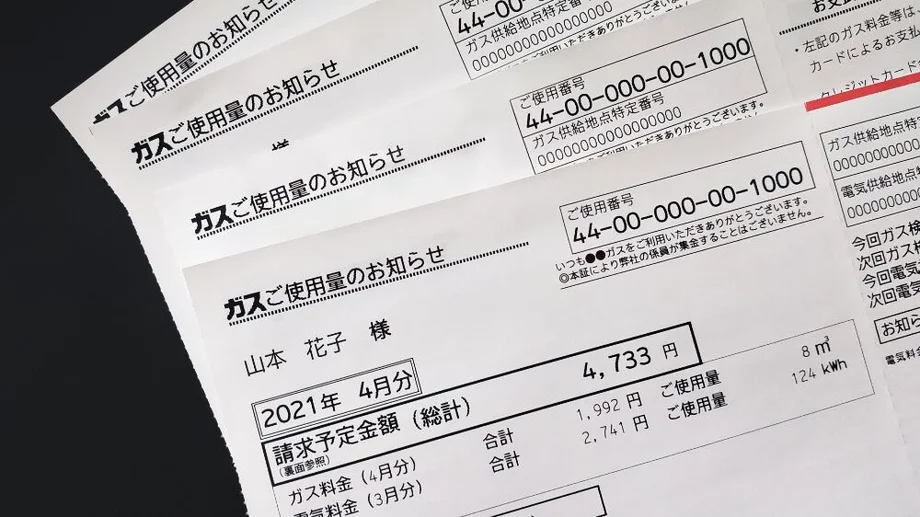
Japan's 10 major electric utilities will cut their standard household charges for December 2026 usage by ¥175 to ¥265 from the previous month, while the four major city gas companies will raise theirs by ¥8 to ¥11. The companies announced the rates on Nov. 27 for bills that will arrive in January 2027. Electricity is becoming cheaper because government subsidies have resumed, even as the fuel used by many power stations and gas suppliers becomes more expensive.
Contents
- Winter subsidies pull electricity prices down
- Why are electricity and gas bills moving in opposite directions?
- How much is deducted in each month?
- Who qualifies, and which energy users are excluded?
- Automatic discounts bring billing checks and a fraud warning
- How the winter package took shape
- Utility relief coincides with a costly gasoline pullback
- What customers should watch on the next bills
- What to Know
The electricity figures cover regulated plans, which require national approval, and represent a model household rather than the amount every customer will pay. Hokuriku Electric Power has the lowest standard bill at ¥7,752, while Okinawa Electric Power has the highest at ¥10,581. The gap between them is ¥2,829. Tokyo Electric Power's standard bill will be ¥9,563, down ¥175, the smallest reduction among the 10 utilities. Shikoku Electric Power has the largest cut, at ¥265.
Tokyo Gas will have the lowest standard city gas bill among the four majors at ¥6,726, despite an increase of ¥8. Toho Gas will have the highest at ¥7,372, a difference of ¥646. Across electricity and city gas, the government expects the winter support to reduce a standard household's burden by about ¥7,000 over 3 months. Assistance starts with December usage, a month earlier than in the previous winter season, and is scheduled to continue through February 2027 usage.
Why are electricity and gas bills moving in opposite directions?
Liquefied natural gas, or LNG, is natural gas cooled into liquid form so that it can be shipped. It is both a raw material for city gas and a fuel for electricity generation. The worsening Middle East situation has continued to push LNG prices higher. For city gas suppliers, the December subsidy does not cover the entire increase in raw material costs, leaving customers with small net increases.
Mitsuuroko Group Holdings, which is participating in the support scheme, explains the billing mechanism in its Mitsuuroko programme notice. Retailers subtract the government rate from the fuel cost adjustment applied to each unit of consumption. Japan then reimburses the retailers for those discounts. Fuel cost adjustment is the system that passes movements in energy prices through to customer bills. The government discount is a temporary reduction within that calculation, rather than a change to the underlying adjustment system.
Several regional figures show how sharply the subsidy has altered the direction of electricity charges. Chubu Electric Power's reduction is its first in 4 months and follows a record high in the previous month, according to its sales subsidiary, Chubu Electric Power Miraise. Tohoku Electric Power says its standard household bill will be ¥9,599, down ¥208. That is also its first reduction in 4 months, after record highs were set for 2 consecutive months through the November billing cycle.
Chugoku Electric Power, Hiroshima Gas and Fukuyama Gas announced their January charges on the same day under the system that reflects movements in fuel and raw material prices. Chugoku Electric's charge is falling for the first time in 4 months. Gas charges at Hiroshima Gas, based in Minami Ward in Hiroshima, and Fukuyama Gas, based in Fukuyama, are rising slightly for a fourth consecutive month.
How much is deducted in each month?
The Agency for Natural Resources and Energy, part of the Ministry of Economy, Trade and Industry, publishes the rates and eligibility rules in its official subsidy guidance. The current framework is the FY2025 electricity and gas tariff burden reduction support programme. The government supplies the money to participating retailers, which then reduce bills according to the amount each customer uses.
- For December 2026 usage, the discount is ¥1.0 per kilowatt hour for low voltage electricity, ¥0.5 per kilowatt hour for high voltage electricity, ¥4.0 per cubic meter of city gas and ¥4,862 per ton of LNG.
- For January and February 2027 usage, the rates rise to ¥4.5 per kilowatt hour for low voltage electricity, ¥2.3 for high voltage electricity, ¥18.0 per cubic meter of city gas and ¥21,880 per ton of LNG.
Low voltage supply mainly serves households, while high voltage supply is commonly used by small and medium enterprises. A kilowatt hour is the energy consumed by a 1,000 watt appliance running for one hour. All the published discount rates include tax. Multiplying the relevant rate by monthly consumption gives the basic discount amount.
A household using 300 kilowatt hours of electricity and 30 cubic meters of city gas in January would, for example, receive ¥1,350 off electricity and ¥540 off gas, or ¥1,890 in total, before other movements in its bill. The roughly ¥7,000 government estimate covers both fuels over the full 3 months for its standard household. Individual results depend on consumption, contract terms and fuel cost changes.
The January and February low voltage electricity rate is 4.5 times December's rate: ¥4.5 compared with ¥1.0. City gas support also rises by 4.5 times, from ¥4.0 to ¥18.0 per cubic meter. High voltage electricity support rises from ¥0.5 to ¥2.3, or 4.6 times. The government is concentrating the larger discounts on January and February, when heating demand and electricity consumption are expected to be highest. Those electricity and gas rates repeat the levels used in January and February 2026.
Who qualifies, and which energy users are excluded?
Electricity discounts cover low voltage and high voltage retail customers, but not special high voltage contracts, which generally serve much larger users. City gas support covers households and businesses with annual contract volumes below 10 million cubic meters. LNG customers qualify when their annual contract volume is 8,226 tons or less. The city gas discount uses one rate regardless of the gas's heat content, and gas produced from raw materials other than LNG can qualify.
Wholesale gas supplied to another gas utility is excluded, as is energy consumed by a retailer without a retail supply contract. Gas or LNG sold as fuel to generate electricity for other customers is also excluded because supporting both the generator's fuel and the resulting electricity would provide assistance twice. Fuel consumed within a power plant itself can still qualify. Electricity plans linked to market prices and plans supplying entirely renewable energy remain eligible even when they do not use a conventional fuel cost adjustment.
Apartment buildings that receive electricity in bulk at high voltage have a special arrangement. Individual homes receiving low voltage supply must receive the same discount as other low voltage households. The bulk supplier receives support for the difference between that household discount and the high voltage reduction already applied by the power company. Commercial tenants and apartment common areas do not receive that additional household amount.
LP gas, commonly called propane gas, is outside this electricity and city gas programme. Support for its users is instead being provided through priority local grants that allow municipalities to respond to regional conditions. The government decided on Nov. 13 to add money to those grants for users of LP gas, kerosene and other fuels. Kerosene also receives support through the fuel oil programme at a level comparable with gasoline assistance.
Automatic discounts bring billing checks and a fraud warning
Households do not need to submit an application. A participating electricity or gas retailer calculates the discount and deducts it from the monthly bill. Customers should check their supplier's guidance for the way the reduction is displayed, particularly if they have a flat charge, a minimum charge or another contract with a different calculation method.
JTB Corporation runs the current programme office. Officials will conduct sample checks to confirm that retailers are passing the discounts to customers correctly. Retailers that need to modify their billing systems can receive up to ¥3 million for eligible system changes. When a discount calculation produces a fraction of a yen, the programme instructs retailers to round the amount up, subject to any fractional calculation method already set out in their supply terms and shared with the programme office.
The Agency for Natural Resources and Energy is also warning about fraud that uses the discount as a pretext. Suspicious callers have requested personal information such as birth dates, addresses and family composition, or demanded fees. Other messages have impersonated the ministry or the agency by email. The agency says no procedure, personal information or payment is needed to receive the discount. It advises people not to respond to such calls or emails and to consult the programme office when concerned.
How the winter package took shape
- Oct. 29, 2026: The ministry traces the decision to Prime Minister Sanae Takaichi's press conference on emergency measures to cushion drastic energy price changes in light of the Middle East situation.
- Oct. 30: Takaichi explained at the Prime Minister's Office that support would run from December through February, with household relief estimated at about ¥7,000 over 3 months.
- Nov. 13: The government decided to expand priority local grants for regional assistance to LP gas and kerosene users.
- Nov. 14: Takaichi addressed the coming winter support at the House of Councillors Budget Committee.
- Nov. 26 and 27: Mitsuuroko published its implementation notice, and the 10 major power utilities and four major city gas companies then announced their December usage charges.
- December 2026 through February 2027: Participating retailers apply the discounts, with February usage generally appearing in March 2027 bills.
Before the final design was announced, the government had been considering about ¥6,000 per household for January through March, including more than ¥2,000 in each of January and February. It ultimately chose a December start, a February end and about ¥7,000 in total support. During the July to September 2026 round, average household assistance had been about ¥1,000 a month.
Takaichi told the upper house budget committee that the government intended to increase help during the coldest period. The measure also formed part of a coalition agreement between the Liberal Democratic Party and Nippon Ishin, the Japan Innovation Party.
We will provide support during the severely cold winter season by raising the amount a little bit.
National energy bill discounts have been introduced intermittently since January 2023. Earlier periods included January 2023 through May 2024, August through October 2024, January through March and July through September 2025, and January through March and July through September 2026. The word resumption therefore describes a return of support after the latest round, rather than the creation of the first such programme.
Utility relief coincides with a costly gasoline pullback
The electricity and gas package is arriving as the government begins to scale back record gasoline support. The gasoline subsidy reached ¥52.4 per liter from Oct. 29, followed by approval of another ¥1.1481 trillion for fuel support. The national average retail price was about ¥170 per liter on Nov. 2, compared with an estimated ¥222 without assistance.
From December, the government plans to raise the gasoline reference price of ¥170 per liter by ¥5 each month. A higher reference price allows more of the underlying fuel cost to reach motorists and reduces the amount paid to petroleum suppliers. Takaichi said the government was spending more than ¥10 billion of public money each day to suppress gasoline prices.
Reserve funds for measures addressing the Middle East fallout total ¥9.6 trillion, including about ¥1.4 trillion added under the Takaichi administration. The prime minister said fuel policy would continue to take account of both crude oil markets and daily life.
We'll closely monitor crude oil prices, while considering their impact on people's daily lives and economic activities.
What customers should watch on the next bills
December usage does not simply mean electricity or gas consumed between Dec. 1 and Dec. 31. It generally covers consumption from a meter reading in December to the next reading in January. Month end readings and other meter schedules can place the discount on different billing cycles for different customers. People changing retailers should also check the applicable period, because a new supplier is generally not required to realign its discount schedule with the previous supplier's schedule.
Tohoku Electric Power expects January and February usage charges to fall further as the unit subsidy rises. Final bills will still reflect consumption and movements in fuel costs. Company president Kazuhiro Ishiyama said on Nov. 26 that uncertainty about the Middle East made it difficult to provide an outlook for March usage and beyond.
Takaichi has also left the treatment of March open, and no decision date has been given.
We'll consider what to do for March, after assessing weather conditions and energy prices
For the months already covered, the practical check is straightforward: read the meter period, find the electricity or gas consumption, apply the relevant monthly unit rate and look for the retailer's discount entry. No application, personal information or fee is required.
What to Know
- All 10 major utilities cut standard electricity bills for December 2026 usage by ¥175 to ¥265, with payment due in January 2027 bills.
- Hokuriku has the lowest standard electricity bill at ¥7,752, while Okinawa has the highest at ¥10,581.
- All four major city gas companies raise bills by ¥8 to ¥11 because the December subsidy does not fully offset higher LNG raw material costs.
- December discounts are ¥1.0 per kilowatt hour for low voltage electricity and ¥4.0 per cubic meter for city gas.
- January and February discounts rise to ¥4.5 per kilowatt hour and ¥18.0 per cubic meter, with total standard household relief estimated at about ¥7,000 over 3 months.
- Discounts are automatic, but special high voltage electricity, LP gas and several wholesale and power generation uses are excluded.
- Support for March usage remains undecided, while gasoline subsidies are scheduled to be reduced gradually from December.