Public seed money has drawn a much bigger commitment
South Korea has assembled about 260 billion won ($194.2 million) for its fourth NewSpace Fund, surpassing the 200 billion won ($149.3 million) target by roughly 30%. The Korea AeroSpace Administration (KASA) supplied 100 billion won ($74.7 million), with private and foreign capital providing the rest. The end of November total was announced before every vehicle had finished fundraising, so the final amount could still increase.
Contents
- Public seed money has drawn a much bigger commitment
- Five vehicles for different stages of growth
- Which managers beat their targets, and what remains open?
- What happened to the first 30.1 billion won?
- Why officials see a wider investment opening
- Fund 5 will add a regional investment vehicle
- Korean startups are supplying operational evidence
- More launch tests are broadening the pipeline
- Commercial income and industrial capital remain the hard tests
- What to Know
KASA Administrator Oh Tae-seok disclosed the figures at a meeting with fund managers on Nov. 27, 2026, at the Korea Venture Capital Association in Seocho District, Seoul. Representatives of Medici Investment, Company K Partners, Harang Technology Investment, Hana Ventures, BlueCast Investment and G&P Investment attended, alongside officials from Korea Venture Investment Corp. They reviewed fundraising and operations, discussed difficulties faced by investors and considered ways to attract more private money.
NewSpace is a policy fund through which the government and private investors jointly finance promising space and aviation companies. Its purpose is simple: public money accepts part of the early risk so that other investors will participate. Space companies often need expensive facilities and years of engineering before a satellite, rocket or component produces commercial revenue. The KASA official statement for the Nov. 27 meeting said the 2026 government contribution had been expanded to 100 billion won, with the aim of forming a fund of at least 200 billion won including private capital, and that full-scale investment from the expanded fourth fund would begin in 2027.
Five vehicles for different stages of growth
The fourth fund is divided by company size, development stage and investment purpose. The vehicle-by-vehicle targets in the plan discussed at the Nov. 27 meeting add up to 200 billion won, with the government supplying half of each target amount. The structure is intended to carry a company from its first institutional investment through business expansion and entry into overseas markets.
- Two small vehicles were each assigned a target of 30 billion won, including 15 billion won from the government. Their principal focus is startups.
- The medium vehicle has a 45 billion won target, including 22.5 billion won of public money.
- The large vehicle has a 65 billion won target, including 32.5 billion won from the government. The medium and large vehicles emphasize support for companies expanding their operations.
- The global vehicle has a target of at least 30 billion won, including 15 billion won of public money, and is intended to help domestic companies expand abroad.
This is a much broader mandate than that of the earlier funds. Their investments generally supported initial company discovery and early financing, with individual cheques ranging from several hundred million won to somewhat more than one billion won. The larger vehicles are designed for companies that need considerably more capital to build production capacity, complete orbital validation or win international customers.
KASA first announced the plan on March 23, 2026, saying that it intended to establish the fourth fund by September. The 200 billion won target was nearly 25 times the 8.1 billion won size of the third fund, formed in 2025. Officials said the earlier vehicles were too small for the recent increase in investment demand.
Which managers beat their targets, and what remains open?
Two completed vehicles have publicly disclosed amounts. Medici Investment raised 40 billion won for a small vehicle, exceeding its 30 billion won target by 10 billion won. Company K Partners raised 62.3 billion won for the medium vehicle, exceeding its 45 billion won target by 17.3 billion won. Together, they secured 102.3 billion won, or 27.3 billion won more than their combined targets of 75 billion won.
Hana Ventures and BlueCast Investment, a corporate venture capital firm affiliated with Hankook Carbon, are jointly managing another small vehicle. G&P Investment and Partners Hyun are associated with the large vehicle. Formations still outstanding when those management arrangements were detailed were expected to be completed by December, within the final formation deadline of six months for the public fund of funds, including permitted extensions.
A Hana Ventures official said the capital contributions were largely secured. The official attributed the timing to the additional administration required when two general partners manage a fund jointly.
We have largely completed securing the capital contributions for the NewSpace fund. Because we are in a Co-GP status, the paperwork process of discussing detailed matters such as the fund's operating regulations took a long time.
The completion count changed between the meeting and the end of month fundraising status. The end of November tally was described as covering three of the five vehicles, with the remaining two expected to finish in December. KASA's statement for the Nov. 27 meeting recorded two completed vehicles, one small and one medium, and said the remaining vehicles were being formed sequentially. It did not provide vehicle-by-vehicle closing amounts or reconcile that meeting-day count with the later status. No final fourth fund total has been announced.
What happened to the first 30.1 billion won?
The first three NewSpace funds, formed from 2023 to 2025, raised 30.1 billion won ($22.5 million). Government contributions supplied 13.5 billion won and private investors supplied 16.6 billion won. Medici managed the 10 billion won first fund in 2023, Company K managed the 12 billion won second fund in 2024, and Harang Technology Investment managed the 8.1 billion won third fund in 2025.
By the end of September 2026, those managers had invested 22.2 billion won ($16.6 million) in space and aerospace companies. Medici had invested 8.6 billion won, Company K 10.6 billion won and Harang 3 billion won. That amounts to about 74% of the capital raised, leaving a difference of 7.9 billion won between fundraising and investment at that date.
The older vehicles had deployed most of their money, while the third had invested about 37% of its 8.1 billion won. Those figures explain why fundraising and company financing are separate milestones. Money committed to a fund becomes useful to a satellite or rocket business only when a manager selects the company, agrees terms and completes an individual investment.
Why officials see a wider investment opening
The Korean expansion coincides with a much larger flow of money into space companies worldwide. Seraphim Space put global investment in space startups at $36.2 billion, about 48 trillion won, during the first three quarters of 2026. Even without the fourth quarter, that was 2.7 times the $13.4 billion, or about 18 trillion won, invested during all of 2025.
For KASA, the fourth fund's oversubscription offers evidence that managers can attract commitments above the government's minimum matching plan. It also gives the agency a much larger pool with which to support companies beyond their earliest financing rounds. Oh had previously described space as a future strategic industry requiring investment on a large scale and technology development over long periods, and said the fund would be expanded annually.
At the Seoul meeting, the KASA administrator presented government money as seed capital intended to draw in additional investors rather than replace them.
For the sustained growth of the space and aerospace industry, it is important to build an investment ecosystem in which companies with strong technology can secure funding reliably. We will communicate closely with the investment field and actively support the government's seed investment so that it leads to an expansion of private investment.
Fund 5 will add a regional investment vehicle
KASA wants the fifth NewSpace Fund, to be raised in 2027, to reach at least 200 billion won again. Another 100 billion won government contribution for the fifth fund has been included in the government's 2027 budget proposal. The Nov. 27 statement did not report any National Assembly committee review or plenary action on that proposal. The appropriation still requires National Assembly approval, and no date for a vote was given.
The fifth fund plan also introduces a regional specialized vehicle. KASA intends to contribute 20 billion won and attract enough additional capital to form a fund of at least 40 billion won. It will select projects connected to regional strategic industries, including satellite manufacturing and aircraft manufacturing, and invest in participating small and midsize companies and ventures.
For companies outside the Seoul metropolitan area, that creates a potential new route to financing tied to local production and technology projects. KASA has not announced the selected regions, individual projects, recipient companies or a project selection timetable.
The principal dates in the program's expansion are:
- 2023 to 2025: The first three funds raised a combined 30.1 billion won.
- March 23, 2026: KASA announced its plan for a fourth fund of at least 200 billion won.
- Nov. 27, 2026: Fund managers and Korea Venture Investment officials met in Seoul to review operations and private investment.
- End of November 2026: Fourth fund commitments reached about 260 billion won.
- December 2026: Outstanding formations were scheduled for completion, potentially increasing the total.
- 2027: Full-scale fourth fund investment is due to begin, while KASA seeks the fifth fund and establishes the regional vehicle.
Korean startups are supplying operational evidence
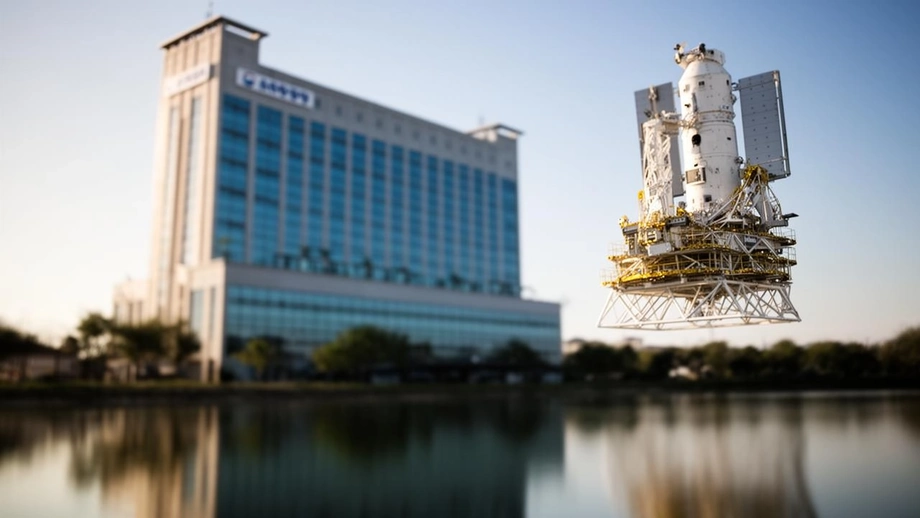
Nara Space Technology offers one example of the technical record investors can now examine. Its first Earth observation satellite, Observer-1A, has continued operating in low Earth orbit beyond its target mission life of three years. The spacecraft uses commercially available components rather than relying entirely on expensive parts specially qualified for space. Its survival through radiation exposure and temperature changes provides orbital evidence for the design approach used in public small satellite projects.
Nara Space has also signed a 10.1 billion won contract with Korea Water Resources Corp. to develop a satellite constellation. Its cumulative investment reached 61.8 billion won. A constellation is a group of satellites working together, allowing more frequent observations than a single spacecraft can provide.
Innospace has accumulated flight data through the first commercial launch of its Hanbit-Nano small satellite launcher, under the SPACEWARD mission at the end of 2025, and the first test flight of a multipurpose suborbital rocket in August 2026. It is preparing another commercial Hanbit-Nano launch for the first half of 2027. Its launch service backlog with overseas satellite operators stands at about 30 billion won, or $21.95 million.
Operational progress has yet to produce strong financial results. Nara Space's third quarter revenue fell about 10% from a year earlier to 3.447 billion won, while its operating loss widened to 3.218 billion won. Innospace reported revenue of 1.353 billion won, up 23.6%, but an operating loss of 21.479 billion won as launch preparations and research spending were recorded. An operating loss means the expenses of the core business exceeded its revenue for the period. Both companies expect order backlogs of roughly 30 billion won to begin feeding revenue as projects progress.
More launch tests are broadening the pipeline
Perigee Aerospace plans to launch its Blue Whale 0.1 small sounding rocket in the Philippines in early 2027 in cooperation with the Philippine Space Agency. A sounding rocket makes a shorter research flight rather than placing a satellite into orbit. Unastella has separately secured 5 billion won of government research funding over four years through the 2026 Global TIPS program. It is developing an electric motor pump cycle engine in the 5 ton thrust class and clustering technology, which combines several engines on one launcher.
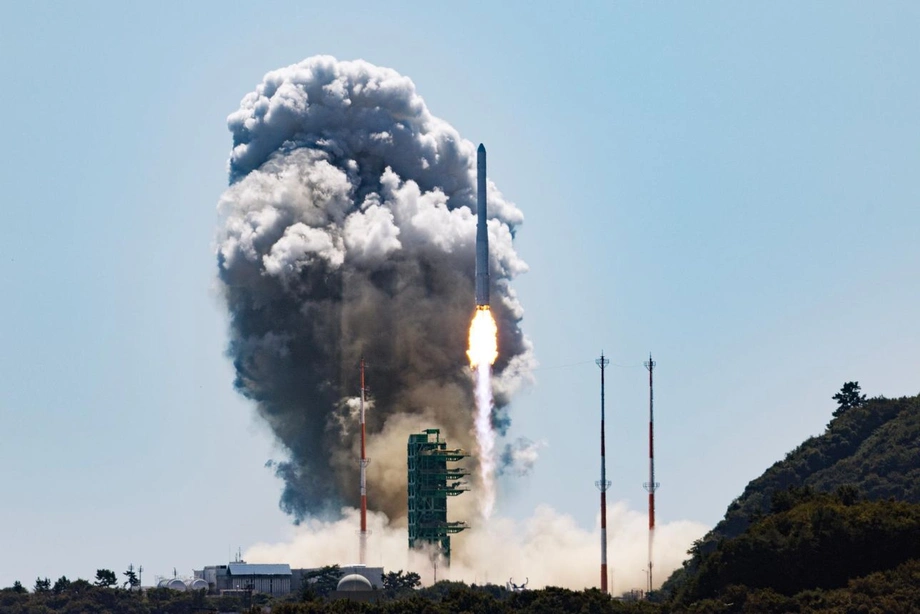
The fifth Nuri launch also gave younger companies access to space. Nine of the 10 secondary satellites were deployed, and all nine established communication with ground stations. Companies working on space medicine, radiation shielding and satellite platforms were among the participants. Cosmoworks placed a very small satellite in orbit, while Momentum Space obtained flight heritage for its reaction wheel, a device that helps control a spacecraft's orientation.
Private transfer of Nuri technology is scheduled for 2029. Until then, obtaining launch opportunities at the time a startup needs them remains difficult, particularly when a company must coordinate a commercial customer, vehicle readiness and an available government mission.
Commercial income and industrial capital remain the hard tests
Developing core launch, satellite and ground data technology and validating it in orbit can take at least five to seven years. Manufacturing infrastructure alone can require tens of billions of won. A fund must therefore support companies through several rounds while they attempt to convert public development work into repeat commercial sales.
The fourth fund's original design pairs government money with private capital at a ratio of 50% at target size and requires 60% of assets to be used for the designated main investment purpose. Those conditions have prompted calls for stronger incentives for strategic investors and corporate venture capital. A strategic investor may want supply agreements, technology access or a future acquisition as well as a financial return, while a corporate venture capital firm invests through a fund backed by an established company.
Proposals include having public capital absorb an agreed portion of losses before private limited partners, expanding tax benefits, granting priority purchase rights and connecting investments with national research projects. Another proposal concerns redeemable convertible preferred shares (RCPS), a financing instrument that can create repayment pressure if an expected conversion or exit does not occur. Later private investment rounds are also needed because domestic venture exits rely heavily on initial public offerings.
Lee Jong-woo, a business administration professor at Ajou University, said government contracts still carry much of the industry and argued that companies must develop durable commercial income while waiting for private demand to expand.
At present, Korea's space industry relies heavily on government development contracts and public procurement, rather than independent business models in private markets, so it is difficult for startups to generate sustainable profits immediately. A long-term view toward the full development of the space economy in 10 years remains valid, but the key is securing practical business viability so that startups can survive until technology becomes more accessible and private demand opens.
The next measurable checkpoints are the final December fundraising total, the National Assembly's decision on the proposed 100 billion won contribution and the pace of company investments during 2027. KASA had not announced the first fourth fund recipients. For startup employees and regional manufacturers, the practical change will come when the new capital finances equipment, launches, satellite production and customer contracts rather than remaining only as commitments in fund vehicles.
What to Know
- South Korea's fourth NewSpace Fund reached about 260 billion won by the end of November, roughly 30% above its 200 billion won target.
- KASA contributed 100 billion won, compared with annual government contributions of 3.5 billion to 5 billion won previously.
- Medici Investment raised 40 billion won against a 30 billion won target, while Company K Partners raised 62.3 billion won against a 45 billion won target.
- Final fundraising remains open, with outstanding formations expected to be completed in December.
- The first three funds raised 30.1 billion won and had invested 22.2 billion won by the end of September 2026.
- Full-scale fourth fund investment is scheduled to begin in 2027.
- KASA is seeking another fund of at least 200 billion won in 2027, subject to approval of the proposed government contribution.
- A new regional vehicle would use 20 billion won of public money to target a total of at least 40 billion won for satellite and aviation manufacturing projects.
- Global space startup investment reached $36.2 billion in the first three quarters of 2026, according to Seraphim Space.
- Korean startups are gaining satellite and launch experience, but continuing losses, limited launch access and the need for commercial customers remain central challenges.