A sharper rule for who is responsible
Japan's Defense Ministry released the Defense AI Vision on Nov. 27, 2026, revising the Basic Policy for Promoting the Use of Artificial Intelligence drawn up in 2024. The new document puts one rule above the rest: humans bear ultimate command and responsibility for military use of artificial intelligence. It also says Japan will not develop fully autonomous lethal weapons that operate beyond human control.
Contents
- A sharper rule for who is responsible
- What the five principles require
- What Koizumi wants changed
- Where AI would be used
- Why human judgment sits in the middle
- A stark warning from the United States
- AI sovereignty and the alliance balance
- How the vision becomes projects
- The hard work inside a force of 220,000
- What is still undecided
- Key Points
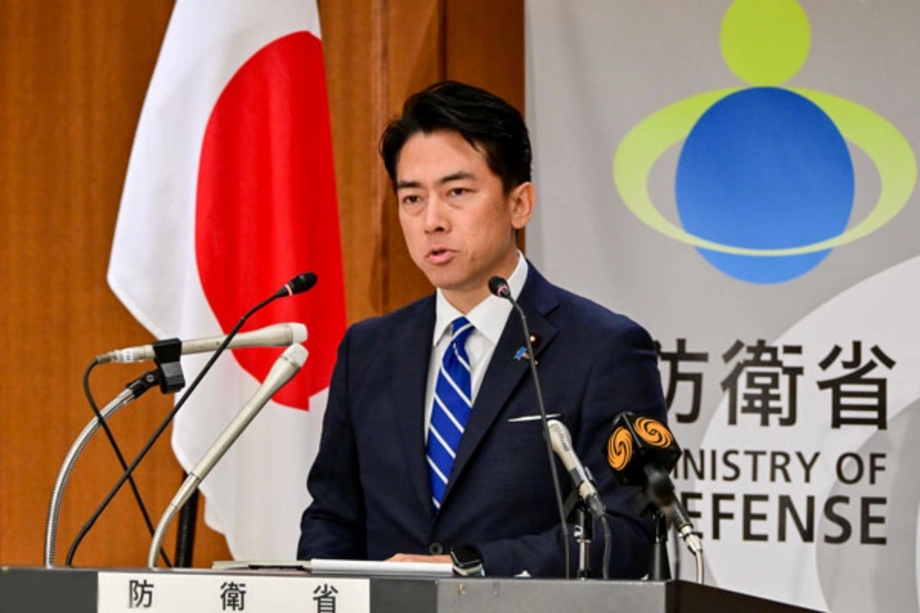
Defense Minister Koizumi Shinjiro told reporters after a Cabinet meeting that the goal is to turn AI and data into national defense strength, connect the Self-Defense Forces' capabilities and make them work as one force. The ministry published the vision in the morning and said it is meant for both peacetime and contingencies. It revises a policy that had said only that "human involvement must be ensured".
The change is small in wording and large in practice. A commander cannot blame a machine for a target, and staff cannot treat an AI recommendation as an order. The ministry wants faster decisions, but it wants a person to set the purpose, command the action and carry the responsibility.
What the five principles require
The Defense AI Vision sets out five rules for the ministry and the Self-Defense Forces. They work like guardrails on a fast vehicle: the vehicle can move quickly, but people decide where it goes and how it stops.
- Humans keep judgment and responsibility, and staff must not blindly accept AI recommendations.
- Use must be responsible and based on law and rules, including domestic law and international humanitarian law.
- Systems must be safe, reliable, transparent and accountable.
- Japan must be able to choose, use and keep improving the technologies and data it needs, while avoiding excessive reliance on one technology, product, company or country.
- AI should be introduced quickly and improved while information is protected, with work beginning from operational needs and challenges.
The law rule covers research, development and operational deployment. International humanitarian law is the body of rules for conduct in war, including protection of people who are not fighting. The ministry writes its commitment against fully autonomous lethal weapons beyond human control under this principle.
The fifth rule appears in closely related forms in the ministry's summaries: rapid introduction and improvement while protecting information, and starting AI use from operational needs and challenges. Put simply, the problem comes first and the tool comes second.
What Koizumi wants changed
Koizumi described the vision as more than a collection of AI projects. The defense minister said the ministry will focus on speed, human command and Japan's ability to choose and improve its own systems. He also said data is a strategic asset for missions.
To achieve that, we will focus on three factors: turning information into decisions and actions quickly, ensuring humans hold command and responsibility, and independently selecting and continuously improving AI systems.
The three shifts run through the document. The ministry wants information to move quickly from collection to judgment to action. It wants humans to command and take responsibility. It wants Japan to select AI systems itself and keep improving them instead of becoming dependent on one product, company or country.
Koizumi also called for breaking barriers among the Ground, Maritime and Air branches. In a large military, each branch can keep its own records, tools and habits. The vision tries to connect those separate stores so a commander sees a common picture rather than three partial ones.
Where AI would be used
Radar tracks, satellite and aerial imagery, and signals intelligence are the first clear examples. Signals intelligence means information collected from radio and electronic signals. AI can sort these large streams of clues faster than people reading them one by one.
The guidelines also list cyber defense. Cyber defense means protecting computers, networks and weapons systems from digital attack. The ministry's wider reasoning includes concern that AI could be misused to create disinformation or carry out cyberattacks, so the same technology that helps defense must be controlled carefully.
Commanders would get decision support, not a replacement for judgment. Policy drafting and office work are also named, along with analysis and integration of information from radar and artificial satellites. These are less dramatic than targeting, but they can change how fast a headquarters understands a situation and prepares orders.
The physical side matters too. The ministry wants to combine AI with unmanned assets and robots so missions can be done without sending Self-Defense Force members into hazardous environments. Logistics is part of the plan: resupply, maintenance and transportation can be made more efficient when data is shared and demand is predicted well.
Why human judgment sits in the middle
The vision says AI output can contain errors and training data can carry biases. Bias means the data used to teach a system may leave out key cases or overrepresent others. A system that looks precise can still recommend a wrong target, a false conclusion or a bad route.
Japan's answer is to keep people inside the decision loop. The ministry wants predefined limits on what AI may do on its own and human intervention in emergencies or unexpected events. Staff are to be trained not to trust the system blindly or become dependent on it.
This matters most when speed rises. The vision says AI should shorten the path from information to action, but it also says humans must remain responsible. The practical test is whether a commander can check the basis of an AI proposal, compare it with other information and stop its use when needed, even under time pressure.
A stark warning from the United States
U.S. Central Command personnel used the Maven Smart System (MSS), an AI-enabled decision support and targeting platform developed by Palantir Technologies, in the war against Iran. During Operation Epic Fury, U.S. forces reportedly struck more than 1,000 targets within the first 24 hours, according to a Washington Institute analysis. If 1,000 approvals happened within 24 hours, the pace would be about one strike every 86 seconds.
Adm. Brad Cooper, commander of US Central Command, spoke in a Defense Department video in March 2026, days after the Minab school strike. He said human approval still remained at the end of the process and argued that AI compressed work that once took much longer. His words explain both the attraction and the danger of faster targeting.
Humans will always make final decisions on what to shoot and what not to shoot, and when to shoot. But advanced AI tools can turn processes that used to take hours and sometimes even days into seconds.
The risk appeared in the erroneous bombing of an Iranian elementary school, which killed more than 150 people, including about 120 children. Targeting data was said to be outdated. For Japan, the lesson is practical: speed helps only when the underlying data is current and the human check is real.
AI sovereignty and the alliance balance
Japan's vision includes AI sovereignty, a term the ministry uses to describe avoiding excessive dependence on other countries, products or companies. The goal is to keep Japan's right to choose systems and its ability to continue using them. The document says Japan should not lose its choice or the initiative to keep operating the systems it needs.
That does not mean isolation. Japan wants interoperability with allies and nations that share its views. Interoperability means data and analysis from different systems can be understood and used together in joint missions. The ministry wants that cooperation while keeping independent command and control structures and control over sensitive data.
Systems made overseas remain possible. The ministry says it will judge them by performance, reliability, security, supply continuity and the chance to improve them. It also points to contract rights that allow data to be moved to other technology if supply stops, and to the need for Japanese personnel who can judge performance themselves.
Inside the ministry, the plan calls for a digital oversight chief, a data management team spanning the ministry and a shared digital platform. These structures would let data move across branches and offices while rules on secrecy decide who can see what.
How the vision becomes projects
The ministry has set out a short timeline. It wants to move from principles to concrete programs, with some work starting immediately and progress checked in short cycles.
- 2024: The Defense Ministry issues its first basic policy on AI use, covering seven fields including information collection and analysis.
- Nov. 27, 2026: The Defense AI Vision is released in the morning, followed by Koizumi's press conference after the Cabinet meeting.
- December 2026: The government plans to revise three security documents and include an AI system for faster decisions by the Self-Defense Forces.
- After the new year: The ministry plans to write an execution plan based on three strategic documents, including the National Security Strategy.
- Within the plan: Progress would be assessed at 30 days, 60 days and 90 days, with projects that can start early moved forward first.
The fiscal 2027 budget request also includes a decision support system able to use AI for a new integrated joint operations command, the headquarters meant to command Self-Defense Forces in an emergency. That request shows how the vision is tied to command structures, not just office automation.
The hard work inside a force of 220,000
The Self-Defense Forces have about 220,000 personnel. A vision at ministry level only changes daily work if those personnel are trained to use AI carefully and to challenge it when necessary.
Data quality is one of the main tasks. If two units record the same spare part in different formats or update it at different times, an AI forecast for resupply becomes less reliable. The ministry needs to know where data sits, align formats and terms, name who updates it and allow access according to secrecy levels.
Another task is keeping review from being treated as delay. If an AI proposal must be checked against other information, that check is part of command work. Training has to make the step routine across a force that includes ground, maritime and air units.
The payoff, if the plan works, is concrete. Analysts spend less time sorting raw information. Commanders see a fuller picture sooner. Units receive supplies with fewer gaps. Robots and unmanned systems can take on some dangerous missions. People remain the ones who decide what the force does and who answer for it.
What is still undecided
The vision gives principles and broad use cases, but it does not settle every operational detail. At a briefing before publication, a reporter asked how Japan would verify target information supplied by the US side's AI. The ministry explained the general rule that humans make judgments, but gave no concrete procedure.
No exact day was given for the execution plan beyond after the new year. The document does not name the AI products Japan will buy or set out all the rules for sharing sensitive data with partners. Those choices will come through the execution plan, the revised security documents and budget work.
Japan has now chosen the direction: faster use of AI and data, wider connection across the force, and firm human responsibility. The next stage is the execution plan, where those choices must be made.
Key Points
- Japan's Defense Ministry released the Defense AI Vision on Nov. 27, 2026, replacing its 2024 basic policy on AI use.
- The document says humans bear ultimate command and responsibility, and Japan will not build fully autonomous lethal weapons beyond human control.
- The plan covers radar and satellite analysis, cyber defense, commander support, office work, logistics, robots and unmanned systems.
- Koizumi called data a strategic asset and sought a unified mechanism across the ministry and Self-Defense Forces.
- Japan wants cooperation with allies while keeping independent command and control of sensitive data.
- The execution plan is due after the new year, with security document revisions in December and progress checks at 30, 60 and 90 days.