A New Chapter for an Iconic Japanese Design
KDDI and Okinawa Cellular announced the upcoming release of the Infobar Zero mobile phone on November 18, 2026, scheduled to hit the market on December 25, 2026. Priced at 32,780 yen, the device will be sold through the au official SIM-free brand named au Flex Style. The launch marks the first new entry in the legendary Infobar series in eight years, following the release of the Infobar xv model in 2018. The series first originated in 2003, establishing itself as a cultural icon of industrial design in Japan. The project is developed under the auspices of the au Design project, which has long explored alternative concepts for personal communication devices.
Contents
The announcement follows ongoing societal discussions about screen fatigue and digital consumption habits, echoing regional debates seen in local policy discussions like Japan's Two Hour Screen Guideline, which sought to address excessive personal screen time. While smartphones have become indispensable for daily logistics, constant connectivity has generated a countermovement among younger demographics seeking relief from relentless notifications and social media feeds.
KDDI representatives explained that the device is intended to provide a deliberate break from information overload. Tomoko Aisawa, general manager of the brand communication division, noted that the product aims to offer an intentional space of quiet rather than competing directly with modern smartphones. Meanwhile, company president Koji Matsuda expressed surprise upon learning of the project late in its development cycle, praising the initiative as a genuine return to the creative roots of the company.
Actually, I was informed about this development quite recently. I believe it was planned and developed quietly behind the scenes, and this is precisely what our origin represents.
Stripping Away the Internet for Essential Communication
Infobar Zero is classified as a dumbphone, meaning a mobile device restricted to fundamental communication functions such as voice calling and short messaging service text messages. The device completely omits web browsers, application stores, and social media platforms, deliberately excluding popular messaging services such as LINE. According to specifications from the manufacturer, the available functions are limited to calls, text messages, phonebook entries, a calendar, an alarm clock, a calculator, a 2-megapixel camera, and a music player.
The physical hardware relies on a MediaTek MT8765WA chip paired with 1 gigabyte of random access memory and 8 gigabytes of internal storage. The display consists of a 2.4-inch thin film transistor liquid crystal panel with a resolution of 480 by 640 pixels. Power is supplied by a 2,055 milliamp-hour battery. Connectivity options include 4G LTE support across multiple bands, Bluetooth 4.2, and Wi-Fi, though the wireless local area network functionality is strictly reserved for software updates and eSIM activation rather than internet browsing.
Physical dimensions measure approximately 50 millimeters in width, 138 millimeters in height, and 13 millimeters in thickness, with a total weight of 128 grams. The phone supports dual subscriber identity module configurations utilizing a physical nanoSIM card alongside an embedded eSIM. It lacks water resistance, dust resistance, near-field communication, and mobile payment systems such as FeliCa. For users seeking broader youth consumer context, the shift reflects broader generational trends similar to shifts observed in Japan's Young Gamers who increasingly balance entertainment budgets with offline fandom and personal time.
The Design Philosophy of Naoto Fukasawa
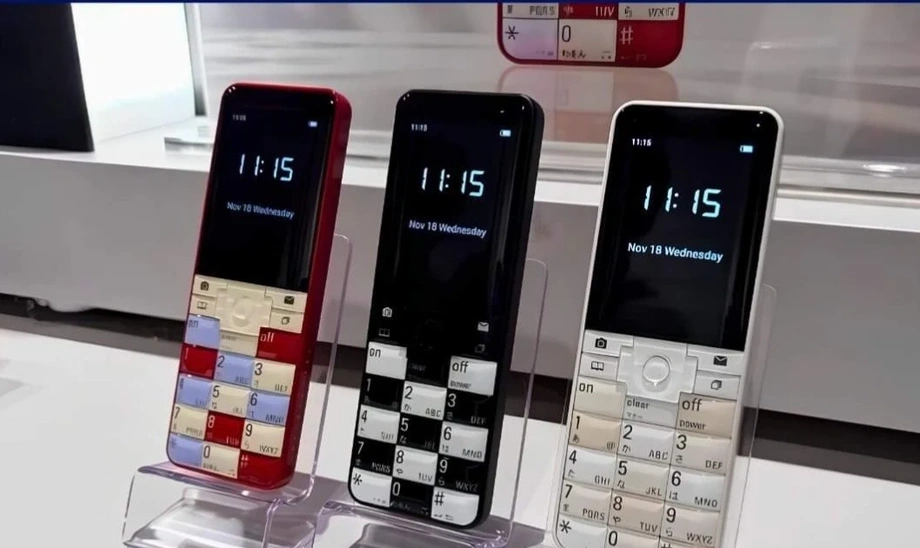
Industrial designer Naoto Fukasawa returned to shape the aesthetics of Infobar Zero, continuing his work on the series that began with the original 2003 release. The exterior revives the signature tactile acrylic tile keys last seen in the original model 23 years prior. The keys are manufactured by applying color to the reverse side of transparent material, creating a distinct visual depth and physical feedback that allows users to operate the device without constantly staring at a screen.
Three colorways comprise the launch lineup. Two options include the classic Nishikigoi and Ichimatsu patterns. A new color named Sunaneko, inspired by the sand cat, features a blend of greige and off-white tones drawn from contemporary fashion trends. The software interface includes animated icons reflecting household objects designed by Fukasawa, such as clocks and pens.
Tools are used not only because they are convenient, but also because you like them so much that you want to keep them close by your side. That is the kind of existence it becomes.
Targeting the Digital Detox Movement
The strategic intent behind Infobar Zero is to address the phenomenon of smartphone fatigue, which has driven young consumers in North America, Europe, and South Korea toward minimalist communication devices. Industry planners noted that while smartphones offer immense utility, the blurring boundary between necessary tasks and compulsive scrolling creates continuous mental friction. By removing digital distractions, the device encourages users to focus exclusively on voice calls and direct text messages.
Tetsuya Sunahara, an expert in brand management at KDDI who helped initiate the project, described the product as a container for essential priorities. Users can curate a limited selection of phone numbers and songs, returning to a style of communication reminiscent of older personal communication tools.
Pricing, Subscriptions, and Companion Services
Retail distribution is handled through direct carrier stores, online shops, Amazon Japan, and major electronics retailers including Bic Camera, Yodobashi Camera, and Yamada Denki subsidiary stores, with manufacturing managed by CP Speed. Preorders opened on November 18, 2026, ahead of the official release date on December 25, 2026.
The retail price is set at 32,780 yen including tax. Because the device is sold unlocked under the au Flex Style brand, it can operate on alternative cellular networks depending on frequency compatibility, though full functionality relies on voice-over-LTE support. Au subscribers can integrate the handset using the second number service for an additional monthly fee of 550 yen, allowing a single user to maintain a secondary voice line alongside their primary smartphone.
Users can also pair the device with basic mobile plans or data-topping systems like povo2.0, though account management requires an external smartphone. Optional accessories designed by Fukasawa include a dedicated desktop charging cradle that displays a clock during charging, an accessory kit containing protective glass, a hybrid cover, and a strap, alongside a custom SIM ejection pin shaped like the phone itself.
Hands-On Exhibitions and Future Outlook
Prospective buyers can examine working prototypes ahead of the launch at the GINZA 456 Created by KDDI brand experience facility located in Tokyo, as well as select corporate retail stores. The exhibition features interactive displays of historical Infobar models alongside an experimental installation where visitors interact with an artificial intelligence representation of alternate selves inside a telephone box.
Company executives emphasized that the product is not designed to generate massive sales volumes or replace primary smartphones. Instead, the initiative serves as an exploration of corporate philosophy and design identity, offering consumers an alternative choice in personal connectivity.
The Bottom Line
- KDDI will release the Infobar Zero dumbphone on December 25, 2026, priced at 32,780 yen.
- The device features a 2.4-inch display, physical acrylic tile keys, and a 2-megapixel camera.
- Functionality is strictly limited to voice calls, text messaging, and basic tools without web or social media access.
- It is offered through the SIM-free au Flex Style brand in three colors, including Nishikigoi, Ichimatsu, and Sunaneko.
- Users can pair the device with existing smartphones using au services like the second number plan.