Toyoake puts a daily screen limit into practice
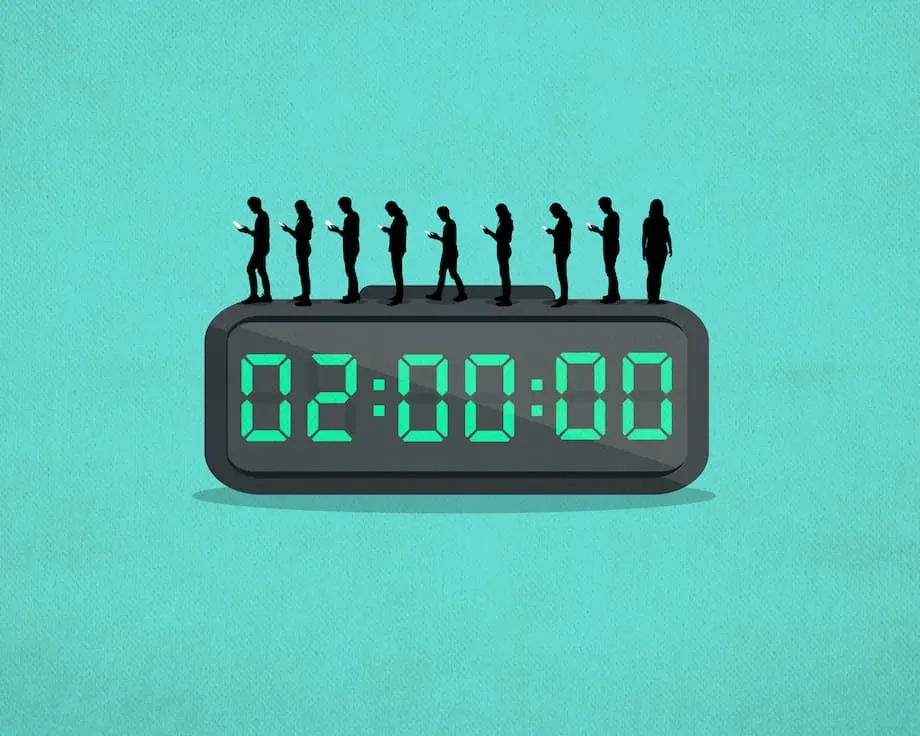
Toyoake, a city in Japan's Aichi prefecture, has introduced a voluntary guideline asking residents of every age to keep personal screen time to about two hours a day. Approved by the city assembly on September 22 and effective from October 1, the ordinance excludes work, schoolwork and daily necessities such as maps and banking. There are no penalties for exceeding the target.
Contents
- Toyoake puts a daily screen limit into practice
- What the ordinance asks residents to change
- Why sleep and family time drove the decision
- What happened when young people tried two hours
- How the target compares with daily use
- How late scrolling affects sleep and mood
- Why stopping can feel difficult
- Japan's earlier rules and approaches elsewhere
- Practical ways to interrupt the scrolling cycle
- How households can make their own plan
- What to Know
The measure also proposes evening cutoffs: primary school children should avoid smartphones after 9 pm, while junior high students, older students and adults are asked to switch off by 10 pm. Families are encouraged to agree on rules at home. Officials describe the policy as Japan's first citywide guidance covering all ages.
The city acted after concerns about children staying awake to stream videos or play games, difficulty concentrating in class, and families spending less time talking. Phones have become the first and last screens many people see each day. Toyoake wants residents to reconsider how much of the time between those moments goes to optional browsing.
The proposal met strong resistance during public consultation. Roughly eight in ten comments opposed it, with critics calling the idea unrealistic and intrusive. Supporters see a useful starting point for conversations about sleep and the quality of time spent online.
Young people who tried the limit described both frustration and unexpected gains. Some found two hours restrictive; others made more room for reading, study and exercise. Their experiences show the practical choices behind a policy that has drawn national attention: which phone activities to keep, which to shorten, and when to put the device away.
What the ordinance asks residents to change
Toyoake's two hour target applies to discretionary screen use, meaning activities people choose for leisure rather than tasks they need to complete. Messaging, social feeds, short videos, other entertainment videos and games count toward that budget. Watching a lecture for class or checking a work schedule does not.
Maps, banking and other necessities are excluded because phones also serve as everyday tools. Residents use them for transit schedules, payments, tickets, cameras, notes and podcasts, alongside entertainment and communication. The city's approach is to preserve essential uses while encouraging people to trim endless feeds, autoplay videos and late night browsing.
Masafumi Koki, the mayor of Toyoake who championed the measure, has sought to reassure residents concerned about government interference in private life. He explained that the city wants people to reflect on their habits rather than face enforcement:
People thought we were trying to impose a strict time limit. That is not the case at all. We are not trying to control anyone.
City hall also plans to advise parents and guardians on setting household rules. The emphasis is on routines that protect sleep and encourage healthier media habits for children and adults, rather than simply counting minutes.
The dates mark a short transition from proposal to practice:
- In 2020, Kagawa prefecture introduced advisory limits on children's gaming and evening smartphone use.
- On September 22, 2025, Toyoake's assembly approved its ordinance covering residents of all ages.
- On October 1, 2025, Toyoake's guidance took effect, with no penalties for exceeding the suggested limits.
Why sleep and family time drove the decision
Teachers and local officials have reported children struggling in class after staying up late streaming or gaming. They have also described a rise in truancy linked to disrupted sleep. Parents say family conversations have become shorter and mealtimes quieter.
Adults face a similar problem after work, when social media and video sites can become the default entertainment. Long evening sessions delay bedtime, shorten rest and leave less time for conversation. The mayor's message is that useful devices can still crowd out sleep, study and time together when their use has no clear stopping point.
Health authorities point to links between chronic sleep shortages and difficulties with mood, concentration, immunity and weight gain in children. These concerns explain why Toyoake combines a daily time target with suggested evening cutoffs. The policy addresses both how long residents use screens and how late they continue.
Officials describe the issue as broader than children's behavior. Including adults gives households a shared starting point, especially where parents have struggled to establish rules. The city hopes that making the subject a public conversation will encourage families to reorganize their evenings around rest and contact with one another.
What happened when young people tried two hours
Shoki Moriyama, an office worker in Tokyo in his 20s, usually spends about eight hours a day on his phone. During a trial lasting a week, he tracked his usage and tried to stay within Toyoake's target. On one day, he finished at one hour and fifty minutes.
Moriyama said the limited budget made him choose between activities. He avoided idle scrolling and saved messages for scheduled breaks. Describing both the difficulty and the time he recovered, he said:
Sticking to two hours was difficult. When I did it, I used the extra time for reading, study, and exercise.
His colleague, Tomomi Hanaoka, also stayed within the limit, although she felt that two hours was very short. Their experiences show how a fixed allowance can make ordinary checks and browsing sessions feel more consequential.
Akari Saito, a university student, had a different reaction. A strict limit created a sense of scarcity, increasing her urge to reach for the phone. She still found value in considering what she was getting from her time online:
Setting a limit made me want to use my phone more, but it helped me think about whether my time online felt purposeful.
Another participant, Yuri, already limits her phone use during examination periods. She prefers rules she chooses herself to strict restrictions imposed from outside, and views the city's approach as an invitation to make her own plan.
Aya, a university student, reduced her usage by about 60 percent during the challenge and said her days felt more meaningful. Several participants said the absence of penalties helped keep their attention on personal motivation rather than fear of punishment. Participants also described gains in sleep, study and exercise time.
How the target compares with daily use
Young people in Japan spend more than five hours online on weekdays across devices, according to a government survey by the Children and Families Agency. Many say they would like to cut back. That helps explain both the appeal of Toyoake's proposal and why some young people found it demanding.
A two hour allowance is less than half of five hours. The government figure covers time online across devices, while Toyoake's target concerns discretionary use and leaves out work, school and necessary tasks. Residents therefore need to identify what their screen time contains before deciding how much to reduce it.
Estimates of global smartphone use vary. Several analyses put the daily average at around four hours, with Gen Z often spending six hours or more. Japan frequently ranks toward the lower end of smartphone use compared with many countries, even as its government figures show substantial internet use among young people.
Moriyama's usual eight hours illustrates how large the adjustment can feel for an individual. Moving from eight hours to two would remove six hours of daily phone use. His trial showed that reaching the target was possible on at least one day, while his comments made clear that maintaining it required effort.
A time budget forces choices between activities that otherwise blend together. Messaging friends may still fit, while a long video session may consume much of the allowance. Participants described downloading playlists for a commute instead of browsing and answering messages during set periods rather than checking every few minutes.
The practical challenge is to keep the phone's useful functions while reducing passive consumption. Toyoake's voluntary approach leaves those decisions with residents and households, using the two hour figure as a reference point.
How late scrolling affects sleep and mood
Late night screen use can interfere with sleep in two ways. Fast, emotional or interactive content keeps the mind alert when it would otherwise begin winding down. Screen light may also affect circadian rhythms, the body's daily timing system, by signaling wakefulness at night.
The result can be shorter, lighter sleep and groggy mornings. In children and teenagers, insufficient sleep is linked to attention problems, low mood, weaker immune responses and weight gain. Adults report brain fog and reduced productivity after late nights on phones, even when their total time in bed changes little.
Doomscrolling adds another concern. The term describes repeatedly browsing negative news or contentious posts. Attention keeps returning to troubling material, and the search for the next update can become a cycle of anxious checking.
Dr. Ashok Khanojia, a psychiatrist who studies the pattern, explains it through negativity bias, the mind's tendency to give particular attention to negative information:
Doom scrolling feeds on the mind's negativity bias, which fuels anxiety, exhaustion, and emotional burnout.
Researchers have linked heavy phone use with reduced wellbeing in some groups and found that reducing smartphone internet use can improve mood and focus. People who break up long browsing sessions often report feeling lighter, more present and better able to concentrate on demanding tasks.
Changes can appear within days when evening habits shift. That gives the timing of phone use a practical role in Toyoake's policy: the suggested evening cutoffs are intended to preserve the part of the day when people prepare for sleep.
Why stopping can feel difficult
Infinite scroll, pull to refresh and notifications encourage repeated checking by appealing to the brain's appetite for novelty and variable rewards. A variable reward is something appealing that arrives unpredictably. Each swipe offers the possibility of a new item worth seeing, with little waiting between one item and the next.
Autoplay removes another stopping point by starting the next video automatically. Without a pause, viewers have fewer moments when they need to decide whether to continue. These design choices tilt time toward passive consumption.
Changing those settings can create useful pauses. Switching videos to manual play, disabling autoplay feeds and selecting a single window for messages make continued use a more deliberate choice. Small changes, such as a blank lock screen or a grayscale display in the evening, may also reduce the urge to check.
Participants' reactions show why one method may not suit everyone. Moriyama found a time budget useful for choosing activities; Saito found that the same kind of restriction increased her desire to use the phone. Yuri's preference for personal rules points toward the flexibility built into a policy without penalties.
Japan's earlier rules and approaches elsewhere
Kagawa prefecture introduced an advisory rule in 2020 asking families to limit children's gaming to one hour on weekdays and 90 minutes during school holidays. It also urged younger teenagers to avoid smartphones after 9 pm and older teenagers after 10 pm.
Toyoake extends the idea to all residents and focuses on leisure screen time more broadly. Adults are included alongside children, and the target covers activities beyond gaming. Both local policies rely on advice rather than punishment.
Other governments have chosen different approaches. Some countries have issued guidance for schools to restrict phones to improve classroom behavior. Others are debating age limits for social media, while education ministries in several places have announced bans on digital devices inside classrooms.
School restrictions address the hours when children are in lessons. Toyoake's guidance reaches into the evening, when screens can displace sleep and family time. The city sets expectations and offers household support while leaving residents to decide how to apply the advice.
The strong opposition during consultation shows that this reach into private routines is contentious even without fines. Critics regard the target as unrealistic or intrusive; supporters regard a common reference point as useful for families trying to agree on boundaries.
Practical ways to interrupt the scrolling cycle
People who successfully reduce browsing often change their surroundings before relying on willpower. Removing prompts and establishing a replacement routine can make the decision to stop easier to repeat. The aim is to reduce the number of times a person has to resist an impulse.
Several small changes can support the evening boundaries proposed in Toyoake:
- Set a nightly cutoff and charge the phone outside the bedroom.
- Disable autoplay and turn off social app alerts that do not need immediate attention.
- Use Do Not Disturb and allow only priority calls to ring at night.
- Move apps that consume time away from the home screen, or place them in a folder named for a goal such as Study or Sleep.
- Replace late browsing with a printed book or a podcast that stops on a timer.
- Check nightly usage through the phone's digital wellbeing tools and use app timers as a gentle stopping signal.
A replacement matters because putting down a phone leaves an opening in the routine. Reading, walking or listening to something with a clear ending gives that time another purpose. Moriyama's experience of recovering time for study, reading and exercise offers a concrete example.
Tracking can also make scattered checks easier to understand. A few minutes at a time may feel brief, but a daily usage record brings those sessions together. Residents can then choose which activities deserve space within their personal budget.
How households can make their own plan
Clear rules, simple tools and appealing alternatives can support lasting changes. A written family plan may be easier to maintain than repeated verbal reminders. Replacing one evening habit with another, such as a walk after dinner or a chapter before bed, gives the new routine a regular place.
Families and individuals can turn the city's broad target into specific choices:
- Choose a reason for cutting back, such as better sleep, more study time or more conversation at dinner.
- Set a daily two hour budget for discretionary screen time and reserve it for activities that matter most.
- Schedule brief periods for checking messages, such as five minutes at the start of an hour, then put the phone away.
- Charge the phone outside the bedroom and use a basic alarm clock to avoid picking it up first thing in the morning.
- Disable unnecessary notifications and remove badges that create a sense of urgency.
- Turn off infinite scroll or autoplay where settings allow, and use video timers to stop playback at bedtime.
- Keep easy alternatives nearby: print maps before longer trips, carry a book or download podcasts to reduce browsing.
- Protect the evening with a personal cutoff one hour before sleep and consider switching the screen to grayscale.
- Take breaks during long sessions, switch hands or use a stand to reduce strain on fingers and wrists.
- Review progress weekly, recognize small gains and adjust the plan around examinations or project deadlines.
Households can use the suggested 9 pm and 10 pm cutoffs as starting points for those discussions. Adults taking part matters because the ordinance treats sleep and distracted evenings as shared concerns, rather than placing responsibility entirely on children.
The city's planned advice for parents and guardians is intended to support that process. For residents, the immediate change is a public recommendation and an invitation to agree on boundaries at home, with no punishment for exceeding the target.
What to Know
- Toyoake approved its voluntary screen guideline on September 22, 2025, and introduced it on October 1.
- The target is about two hours of discretionary screen time daily for all ages, excluding work, schoolwork and necessary tasks.
- Suggested smartphone cutoffs are 9 pm for primary school children and 10 pm for older students and adults.
- There are no penalties. Roughly eight in ten public consultation comments opposed the proposal.
- A Children and Families Agency survey puts young people's weekday internet use across devices at more than five hours.
- Gen Z participants described difficulties with the limit alongside gains in reading, study, exercise and sleep.
- Sleep disruption, classroom difficulties, reduced family conversation and mental strain helped drive the debate.
- Kagawa introduced advisory limits for children in 2020; Toyoake's guidance includes adults and a wider range of leisure screen activities.
- Suggested practical steps include evening cutoffs, fewer notifications, disabled autoplay and charging phones outside the bedroom.