More nuclear fuel to store, with the first pools filling in 2030
South Korea expects its nuclear reactors to produce about 762,000 bundles of spent fuel over their operating lives, roughly 20% more than projected in 2021, as new reactors and longer operation of existing plants increase the amount of radioactive material requiring storage and eventual burial.
Contents
- More nuclear fuel to store, with the first pools filling in 2030
- Why the forecast has grown
- What happens when a storage pool fills?
- How a national site would be chosen
- Storage above ground, disposal deep underground
- Who pays the 72.85 trillion won bill?
- What host communities would receive
- Decades of siting disputes shape the new process
- Public comments come before final approval
- Key Points
The High-Level Radioactive Waste Management Committee's draft Third Basic Plan for High-Level Radioactive Waste Management, released on the 3rd, sets out policy for 2027 to 2056. It seeks a facility site by 2038, central interim storage operating in 2050 and permanent disposal operating in 2060.
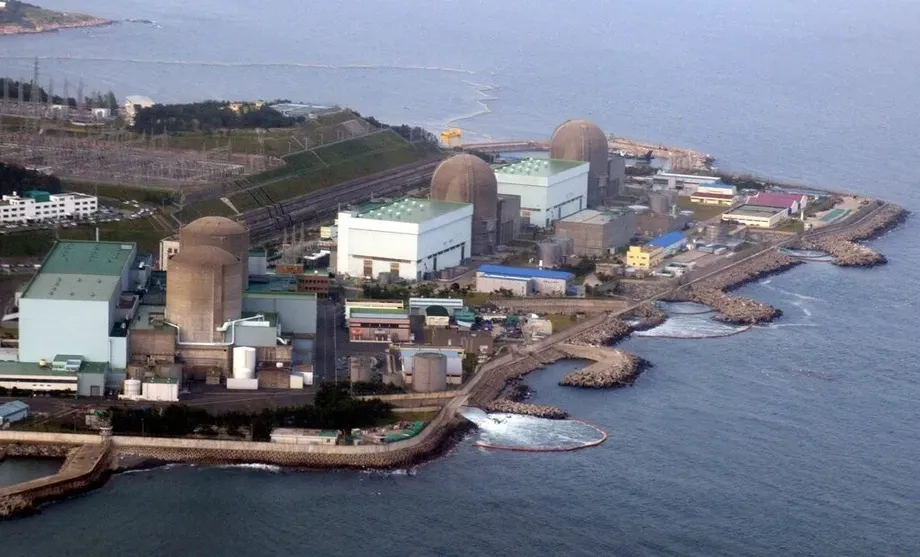
The immediate pressure comes much sooner. Storage pools at Hanbit are expected to fill in 2030, followed by Hanul in 2031 and Kori in 2032. The government therefore plans to open temporary dry storage facilities at nuclear plant sites in phases from 2030, with Korea Hydro & Nuclear Power (KHNP) paying for construction.
For communities around those plants, the timetable means spent fuel will remain nearby for decades. Even if central interim storage opens on schedule, Hanbit faces a gap of about 20 years between its projected pool saturation and the opening of a national facility that can receive its fuel.
The draft proposes at least 2.4953 trillion won in spending between 2027 and 2031 on management projects and storage at plant sites. The estimated total cost of managing the country's high-level radioactive waste is much larger, at 72.85 trillion won.
The committee must now turn a national timetable into agreements with local governments and residents, while arranging enough storage to keep operating reactors supplied with space for their used fuel.
Why the forecast has grown
The new projection includes 552,478 bundles generated through the third quarter of the reporting year and approximately 210,000 more expected in future. The Second Basic Plan, adopted in 2021, forecast 635,329 bundles. Using the rounded new total, the increase is about 126,700 bundles, or 19.9%.
The calculation now covers 35 reactors rather than 30. Following the Eleventh Basic Plan for Electricity Supply and Demand, it includes Shin Hanul Units 3 and 4, two other new large reactors and one small modular reactor. A small modular reactor is designed to produce less power per unit than a conventional large reactor.
Longer operation also adds fuel to the forecast. The committee assumed approximately two periods of continued operation for pressurized water reactors and one for pressurized heavy-water reactors. These are different reactor designs that use different forms of water in their nuclear systems.
That policy is already affecting existing plants. Following the Kori reactor extensions approved on October 27, 2026, Kori 3 may operate until September 2034 and Kori 4 until August 2035, subject to completing work and inspections needed for restart. Their return was targeted for the first half of 2027.
The bundle total counts fuel assemblies rather than tonnes of material. South Korea uses different fuel designs, so the number of bundles cannot be converted into a single weight without further information about their composition.
What happens when a storage pool fills?
Spent fuel is fuel removed from a reactor after use. It remains hot and radioactive, so operators place it in pools where water removes heat and provides radiation shielding. Reactors need available storage space as they replace used fuel during operation.
The latest storage figures put Hanbit at 86.0% of capacity, Hanul at 76.1% and Kori at 93.4%. Their different saturation dates reflect the storage space available and the fuel expected to arrive, rather than their current percentages alone.
Earlier projections put saturation at Wolseong in 2042 and Saewool in 2066. Those later deadlines spread the storage challenge across several decades, while Hanbit, Hanul and Kori require action much sooner.
Dry storage provides the next step after fuel has cooled sufficiently in a pool. Fuel is placed in sealed containers with protective shielding, and heat is carried away by air. The draft retains the policy of installing these facilities within existing nuclear plant boundaries.
Wolseong already has experience with dry storage. Other sites have depended on pools, making new dry facilities a substantial change for their surrounding communities. Residents and local governments worry that facilities described as temporary could remain in use indefinitely if the national project slips.
How a national site would be chosen
The committee plans to begin seeking applications from local governments in the first half of the year following the draft's release. Cities, counties and districts would first need local council consent and confirmation of residents' views.
Exclusion criteria would identify places where facilities cannot be located. Candidate areas would then undergo a basic survey through 2033 and a detailed survey through 2037, followed by a resident vote before the final site decision in 2038.
The proposed sequence connects several decisions that must happen years apart:
- From 2030: temporary dry storage begins operating in phases at nuclear plant sites.
- By 2032: a research underground laboratory is planned for Taebaek.
- Through 2033: basic surveys examine candidate areas.
- Through 2037: detailed surveys assess candidate sites before a resident vote.
- By 2038: the government aims to select the national facility site.
- In 2050: central interim storage is scheduled to begin operating.
- In 2060: permanent disposal is scheduled to begin operating.
The site has not been selected. Applications, geological investigations and local voting are still ahead, leaving the timetable dependent on both suitable ground and a community willing to host the facilities.
Storage above ground, disposal deep underground
The central interim facility would receive spent fuel from nuclear plants nationwide and store it at the selected disposal site. Once it starts operating, fuel would begin moving out of temporary storage at individual plants.
The permanent facility has a different task. It would place spent fuel in disposal canisters and bury them in bedrock approximately 500 metres underground. Interim storage keeps fuel in managed storage pending that final disposal stage.
The planned Taebaek laboratory would support underground research and would receive no nuclear fuel. Its proposed completion in 2032 comes before the detailed site surveys finish, allowing research to proceed while the government searches for a host location.
The 2050 and 2060 milestones also appeared in the Ministry of Trade, Industry and Energy's 2022 research and development roadmap. The new draft carries those dates forward while raising the quantity of fuel that the system must accommodate.
Who pays the 72.85 trillion won bill?
Nuclear plant operators pay fees according to the amount of spent fuel they generate. Those payments accumulate in the Radioactive Waste Management Fund, which is intended to finance the national waste management programme.
For the five years through 2031, at least 1.0373 trillion won from the fund is allocated to work including site surveys and the Taebaek research laboratory. KHNP is expected to spend another 1.458 trillion won on temporary storage within nuclear plant sites.
Those two amounts add up to the draft's minimum initial spending figure of 2.4953 trillion won. The near term budget therefore covers two tasks at once: finding and studying a national destination, and creating space at existing plants before their pools fill.
The estimated total project cost of 72.85 trillion won extends far beyond that initial period. It covers a programme whose major facilities are scheduled to start operating decades after the first round of surveys and construction spending.
What host communities would receive
The proposed host community package begins with special support of at least 300 billion won. The amount would be determined according to facility size before residents vote, so voters would know the proposed payment when deciding whether to accept the project.
Fees linked to the volume of waste received would also support the host area and surrounding communities. The 300 billion won minimum uses the support provided for a facility handling low- and intermediate-level radioactive waste as its benchmark.
That benchmark has a specific history. In his 2011 spent fuel analysis, researcher Jungmin Kang described Gyeongju's 2005 referendum on hosting a low- and intermediate-level waste disposal facility. The government offered 300 billion won upfront, alongside 637,500 won for each waste drum accepted.
Gyeongju approved hosting by 89.5%. Kang also documented a geographic difference within that result: approval was below 60% among voters living within about six miles of the facility, while most voters lived on the other side of a mountain.
The earlier experience gives the new support proposal a concrete reference point. It also shows why the distribution of payments and the views of the nearest residents matter alongside the result for an entire municipality.
Decades of siting disputes shape the new process
Kang's analysis recorded five failed attempts between 1986 and 1996 to secure a site combining disposal of low- and intermediate-level waste with central interim storage of spent fuel. Strong local resistance stopped those efforts.
After further failures, the government separated the two siting tasks. A 2005 law restricted asking the local government hosting the lower activity waste facility to also host a central interim spent fuel facility. Disputes later arose over the difference between temporary storage at Wolseong and a central interim facility.
Kang also documented how storage forecasts had already become urgent years earlier. KHNP's historical projections placed saturation at Kori in 2016, Ulchin, now Hanul, in 2018, Yonggwang, now Hanbit, in 2021, and Wolsong, also written Wolseong, in 2017.
His article described ways to create more space, including denser pool racks, transfers to pools at new reactors on the same site and dry storage. At Wolseong, dry storage capacity expanded by 4,440 metric tonnes of heavy metal between 2005 and February 2010. Such measures bought time while national siting remained unresolved.
Kang recommended consultation with local governments, access to independent experts and a local veto. The new proposal's council consent requirement and resident vote address the same central issue: communities want a meaningful role in deciding where spent fuel goes.
Public comments come before final approval
The committee's consultation schedule lists public inspection from the 4th to the 23rd, with briefings in Daegu, Busan and Gwangju from the 16th to the 18th. The announcement details give those dates without identifying the month.
Chairperson Kim Hyun-kwon said the committee would use the consultation to shape a policy grounded in safety and public confidence:
We will listen carefully to the diverse voices of the public and, based on safety and transparency, develop a management policy that the public can trust.
The committee plans to revise the draft after receiving comments and consulting relevant agencies, then seek deliberation and approval by the Atomic Energy Promotion Commission. The process also includes reporting the plan to the relevant National Assembly standing committee.
The National Assembly passed the Special Act on the Management of High-Level Radioactive Waste on February 27, providing a legal framework for the programme. Earlier discussion of the law identified a restriction tying storage capacity at plant sites to the spent fuel expected during their original design lives, creating concern about space for continued operation, particularly at Wolseong Units 2, 3 and 4.
The draft now forecasts fuel from extended operation while retaining storage at plant sites as the immediate solution. Bringing storage capacity, reactor operating plans and community agreements into line is therefore an immediate practical task, years before a national disposal site is ready.
Key Points
- South Korea projects about 762,000 spent fuel bundles, approximately 20% above its 2021 forecast.
- The calculation covers 35 reactors and includes fuel from continued operation beyond original design lifetimes.
- Hanbit's storage pools are expected to fill in 2030, Hanul's in 2031 and Kori's in 2032.
- Temporary dry storage at nuclear plants is planned to open in phases from 2030, funded by KHNP.
- The draft targets site selection by 2038, central interim storage in 2050 and permanent disposal in 2060.
- Initial spending is at least 2.4953 trillion won for 2027 to 2031, against an estimated total project cost of 72.85 trillion won.
- Host communities would receive at least 300 billion won in special support, alongside fees linked to waste received.