Two reactors gain approval to operate into the 2030s
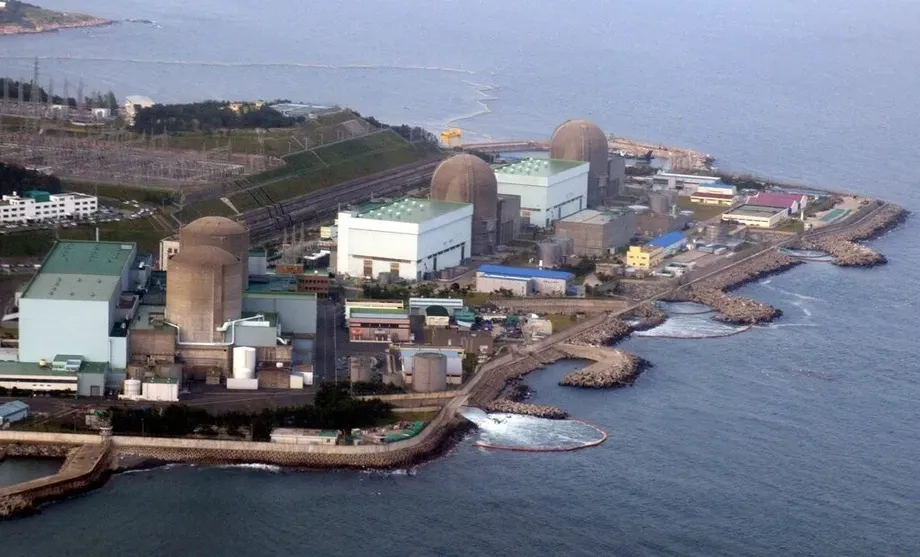
South Korea's Nuclear Safety and Security Commission has approved another 10 years of licensed operation for Kori nuclear reactors 3 and 4 in Busan's Gijang County, opening the way for 2,050 megawatts of generating capacity to return to the electricity grid. Their return depends on equipment improvements, maintenance and regulatory inspections, with restarts targeted for the first half of 2027.
Contents
- Two reactors gain approval to operate into the 2030s
- What must happen before electricity production resumes?
- A four year review, followed by a rapid final decision
- What the safety assessment found
- Why the surrounding population matters
- Typhoons, warmer seas and fuel storage
- How much electricity could return?
- The economic case and the time already lost
- Seven more reactors await decisions
- Key Points
The decision on October 27, 2026, allows Kori 3 to operate until September 28, 2034, and Kori 4 until August 6, 2035. Both reactors stopped generating electricity when their original operating periods expired, Unit 3 in September 2024 and Unit 4 in August 2025.
Five commissioners supported the extensions and two opposed them. The meeting was described as having seven commissioners participating, although another description of the approval counted nine commission seats and said five affirmative votes met the required majority.
For state operator Korea Hydro & Nuclear Power (KHNP), the decision provides a route to restoring existing generating capacity as South Korea prepares for greater electricity demand from semiconductor manufacturing and artificial intelligence. Civic groups opposing the extensions point instead to the concentration of reactors, the surrounding population and questions about the treatment of natural disasters and radioactive waste.
The central issue now moves from permission to implementation: KHNP must complete the required work, and the regulator must confirm that the reactors are suitable to restart. The new operating deadlines are fixed, so time spent on those preparations reduces the years of electricity production available under the extensions.
What must happen before electricity production resumes?
KHNP expects equipment improvements to take about four to six months. The company plans to restart the reactors sequentially in the first half of 2027, after completing safety improvements and maintenance and passing the necessary inspections. No exact restart dates have been announced.
The commission had already approved the reactors' accident management program earlier in October. This document sets out preparations for maintaining safe conditions, preventing accidents and limiting their consequences if an accident occurs. South Korea made submission of such plans compulsory for nuclear operators from 2015, following the 2011 Fukushima disaster in Japan.
Kori 3 and 4 are pressurized water reactors, each rated at 1,025 megawatts. In this type of reactor, water kept under high pressure carries heat from the reactor to equipment that produces steam, which drives a turbine to generate electricity.
The reactors received their original operating licenses in 1984 and 1985. Commercial electricity generation began later, in September 1985 for Unit 3 and April 1986 for Unit 4. The extension deadlines follow the original licensed periods rather than the anniversaries of commercial operation.
A four year review, followed by a rapid final decision
KHNP submitted its periodic safety assessment on September 26, 2022, and applied for an operating license change in November 2023. The Korea Institute of Nuclear Safety (KINS), which performs technical safety assessments, reviewed the application through September 2026. A nuclear safety expert committee also conducted about six months of preliminary examination.
The final commission stage was much shorter. The proposal first came before commissioners on October 15 and passed at its second consideration, 12 days later. The decision had been deferred at the first meeting while commissioners sought further information.
Additional material addressed matters including public hearings on the radiation environmental impact assessment and assessments of how long major equipment could safely remain in service. The sequence is important to the dispute over scrutiny: critics focused on the short interval between commission meetings, while the regulator described a technical review extending across roughly four years.
The main milestones were:
- September 26, 2022: KHNP submitted the periodic safety assessment for continued operation.
- November 2023: KHNP applied for an operating license change.
- September 2024 and August 2025: Kori 3 and Kori 4 respectively stopped generating electricity.
- September 2026: KINS completed its technical review.
- October 15 and 27, 2026: The commission first considered the extensions, then approved them.
- First half of 2027: KHNP targets sequential restarts after improvements and inspections.
What the safety assessment found
The commission concluded that the reactors could operate safely throughout the additional licensed period. Its assessment considered aging equipment and the service life of major components separately for each reactor, taking account of their different operating and maintenance histories despite their shared design.
The radiation environmental impact assessment estimated a maximum exposure of 0.096 millisieverts during normal operation, compared with a stated limit of 0.25 millisieverts. For an accident, including a severe accident, the maximum estimate was 103.3 millisieverts, against a stated limit of 250 millisieverts.
A millisievert is a unit used to describe the effect of radiation exposure on the human body. The assessment's normal operation estimate was about 38% of its stated limit, while the accident estimate was about 41% of the corresponding limit. These figures describe modeled exposure under the conditions assessed.
Civic groups challenged the treatment of a disaster affecting several reactors at once. Their concern was whether estimates adequately calculated the radiation residents might receive if a natural disaster caused radioactive releases from multiple units.
KINS acknowledged during deliberations that related domestic research had produced new evaluation methods and results. It said that research had not yet reached a stage where it could be applied directly to existing licensing procedures.
Why the surrounding population matters
About 3.82 million people lived within 30 kilometers of Kori in 2017, a population figure cited by opponents of the extensions. For comparison, about 140,000 people lived within the same distance of Fukushima at the time of the 2011 disaster. On those figures, the population around Kori was roughly 27 times larger.
The comparison places emergency planning at the center of the local debate. A release requiring protective action could affect a densely populated area, making decisions about warnings, shelter and evacuation consequential for millions of residents.
The nuclear complex extends across two neighboring locations. Kori is in Busan's Gijang County, while Saeul is about one kilometer away in Ulsan's Ulju County. Together, the locations contain 10 reactors when permanently shut units and units under construction are included.
Saeul 3 and 4 are expected to enter full operation, further expanding a concentration of nuclear facilities described as comparable in scale with China's Qinshan complex. The combination of operating, stopped and new reactors gives the area a different safety planning challenge from a site containing only one or two units.
A coalition opposing the extensions argued that the safety of the aging reactors had not been adequately verified and that the review process was deficient. Lee Heon-seok, a policy committee member of Energy Justice Action, also criticized the time commissioners had to examine two reactors with different operating histories.
Typhoons, warmer seas and fuel storage
Typhoon Maysak interrupted external electricity supplies to Kori units 1 through 4 and Shin Kori units 1 and 2 in 2020. External power matters because a nuclear plant needs electricity for essential equipment, including cooling systems, even when it is not generating electricity.
Asked about that event during deliberations, KINS said it had not been examined from the perspective of continued operation. Critics argued that the experience should form part of the assessment of future risks at the complex.
KINS projected a maximum seawater temperature of 32.26 degrees Celsius in 2035, compared with the reactors' design reference of 33.3 degrees Celsius. The difference is 1.04 degrees. Seawater temperature matters because coastal nuclear plants use the sea to carry away heat, and warmer water affects cooling conditions.
Spent nuclear fuel presents another concrete constraint. The Kori headquarters' wet storage facilities were 93.4% full at the end of June and were projected to reach capacity in 2032, before either reactor's extended license expires.
Wet storage keeps used fuel under water to cool it and shield radiation. South Korea had not selected a site for a disposal facility for high level radioactive waste. Additional operation will produce more spent fuel, making storage arrangements part of the practical work required alongside reactor maintenance.
How much electricity could return?
Kori 3 and 4 together account for 2.05 gigawatts of generating capacity. Using a comparison of 350 megawatts for a large semiconductor plant, their combined rating is equivalent to about six such plants. Actual electricity production will depend on operating schedules and maintenance.
Eight of South Korea's 26 reactors were offline at the time of the decision, representing 7,150 megawatts, or 27.4% of national nuclear generating capacity. Four, Kori 3 and 4 and Hanbit 1 and 2, had stopped after reaching their original operating limits. Four others were undergoing maintenance or other work.
The two Kori units account for about 29% of that offline capacity, calculated from 2,050 megawatts out of 7,150 megawatts. Their return would therefore restore a substantial portion of nuclear capacity currently unavailable to the grid.
South Korea was not facing an immediate electricity shortage. The government's concern is supply over the coming years, particularly as semiconductor factories and artificial intelligence data centers expand. Its projection for peak electricity demand in 2040 was raised by about 27 gigawatts to a range of 158.4 to 165 gigawatts after incorporating three major development projects.
KHNP President Kim Hoe-cheon said continued operation would help meet advanced industries' electricity demand, support stable supply and contribute to carbon neutrality. The company also committed to completing improvements and inspections with safety as its priority.
The economic case and the time already lost
Audit material obtained from KHNP by Democratic Party lawmaker Hwang Jeong-a estimated that the four reactors stopped at their original operating limits had forgone about 25.3 million megawatt hours of generation. The estimated value of the associated electricity sales was about 2 trillion won.
Existing reactors offer an economic attraction because their sites, major generating equipment and grid connections are already in place. Building replacements requires spending on construction and a lengthy process of obtaining land and approvals.
Shim Hyeong-jin, a nuclear engineering professor at Seoul National University, explained the financial argument for continuing to use existing reactors when safety requirements are met.
A large share of the cost of nuclear power generation comes from the initial investment, and much of the investment in existing reactors has already been recovered over their design life,
He added:
If safety can be assured, continued operation is a highly economical choice.
The license extensions run from the original expiry dates, rather than from the approval or restart dates. A restart in the first half of 2027 would therefore leave Kori 3 with roughly seven to eight years of operation and Kori 4 with roughly eight to nine years under their new permissions.
Shim suggested considering extensions in increments of 20 years if safety is rigorously verified. South Korea currently grants continued operation in increments of 10 years, so time spent reviewing an application after a reactor stops reduces the useful operating period.
Seven more reactors await decisions
South Korea has now approved operating life extensions for five reactors: Kori 1, Wolsong 1, Kori 2, Kori 3 and Kori 4. Kori 1 and Wolsong 1 have since been permanently shut down. Kori 2 received its extension the previous year and is licensed until April 8, 2033.
Seven other reactors remain under review: Hanbit 1 and 2, Wolsong 2, 3 and 4, and Hanul 1 and 2. The commission plans to bring the Hanbit applications before a meeting in the first half of 2027.
The regulator is publishing continued operation application documents through its nuclear safety information portal and plans to disclose technical assessments, expert committee reviews and commission deliberation results. Public access to those records will matter as later applications face similar questions about aging equipment, disaster preparation and the length of final deliberations.
The government also plans two new large reactors with combined capacity of 2.8 gigawatts by 2037 to 2038 and is pursuing small modular reactors. The Kori extensions could return generating capacity much earlier, provided the remaining work and inspections are completed as planned.
Key Points
- Kori 3 is licensed until September 28, 2034, and Kori 4 until August 6, 2035.
- The reactors have combined generating capacity of 2,050 megawatts.
- KHNP targets sequential restarts in the first half of 2027 after improvements, maintenance and inspections.
- The technical assessment lasted roughly four years; the final commission decision followed two meetings 12 days apart.
- Opponents raised concerns about multiple reactor accidents, nearby residents, natural disasters and spent fuel storage.
- Seven more reactors await continued operation decisions, with Hanbit 1 and 2 scheduled for consideration in the first half of 2027.