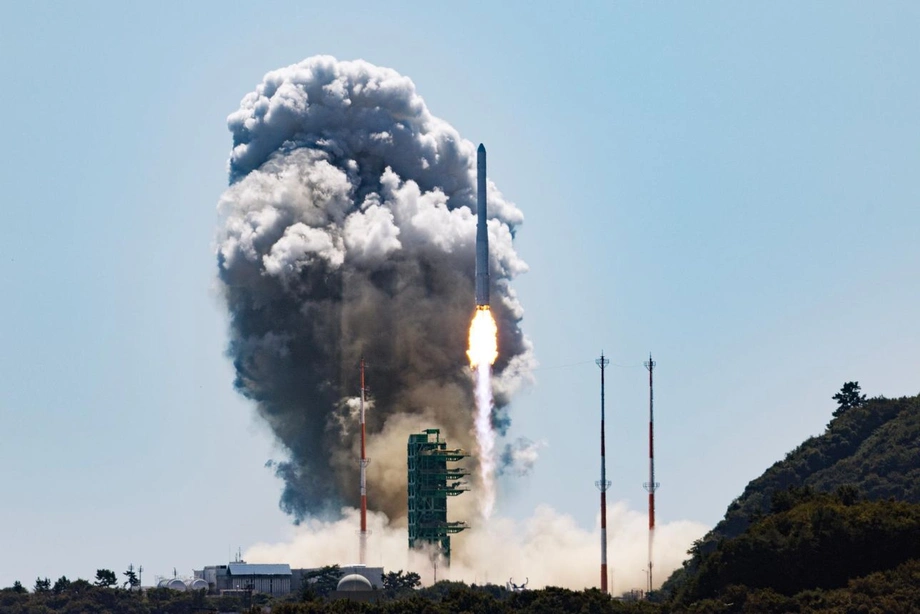
Nuri's Fifth Flight Changes the Question
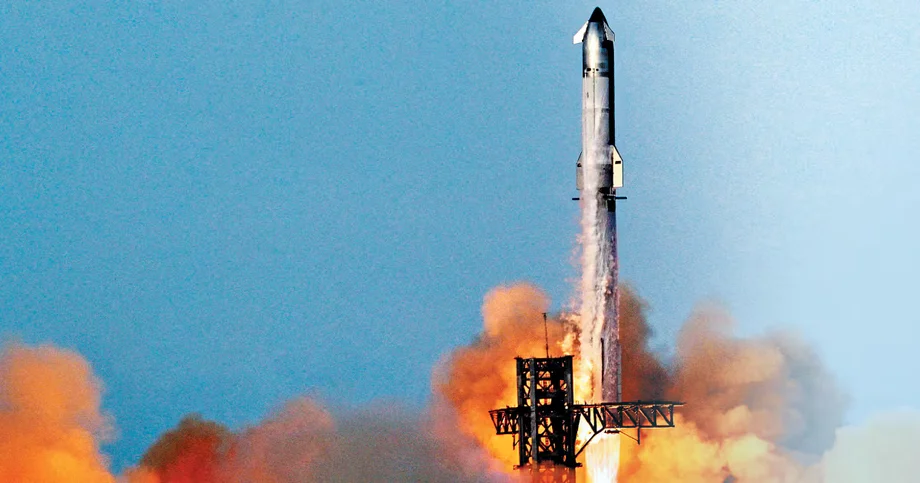
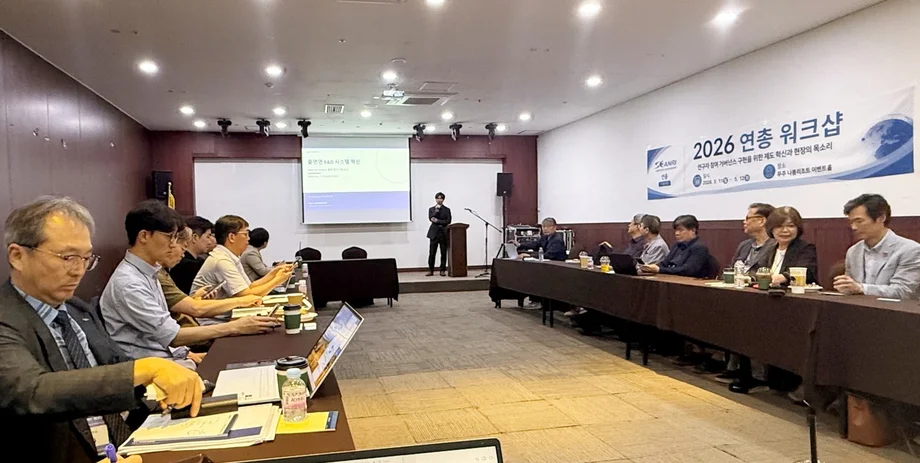
On 26 November 2026, as South Korea marked the fifth successful launch of the Nuri rocket, the conversation at the first Korea Space Forum Y moved from whether the country can reach space to what it will need to do there often. Experts gathered at the Planetarium Theater of the National Gwacheon Science Museum in Gwacheon said the next challenge is people: engineers, software developers, materials specialists, lawyers, philosophers and others who can turn a handful of launches into a working industry.
Contents
- Nuri's Fifth Flight Changes the Question
- What K-LEO Would Demand
- Why the Next Rocket Is a Delivery Truck
- The Hidden Army Behind Each Nuri Launch
- Why Talent Is the Bottleneck
- What Space Companies Look for First
- People Outside the Traditional Pipeline
- How Companies and Universities Are Building the Pipeline
- Environment Satellites Need Workers Too
- Timeline for a Busier Space Program
- Key Points
The forum's roundtable, titled 'Routinizing Space Launches... What Will Happen?', was chaired by Go Jung-hwan, former director general of the Korean Launch Vehicle Development Program at the Korea Aerospace Research Institute. Park Soon-young, head of the Reusable Launch Vehicle Program at the Korea AeroSpace Administration, Shim Soo-yeon, CEO of Perigee Aerospace, and Eun Young-ho, professor in the Department of Satellite Systems at Yonsei University, joined him. The event was hosted by Dong-A Science, jointly organized by KARI and the National Gwacheon Science Museum, and supported by KASA and the Korea Astronomy and Space Science Institute.
Nuri's October flight was the fifth launch in the program and made four consecutive successes. It took place around noon, the earliest launch time in the program's history, and carried the largest number of satellites so far. Those details matter because they show a rocket moving from test flights toward repeat service. A space industry that launches often needs far more than one rocket team. It needs satellite factories, launch crews, safety forces, repair teams, data businesses and universities feeding them new workers.
What K-LEO Would Demand
Park pointed to the Korean Low Earth Orbit Satellite Communication Network, known as K-LEO, as the project that will make launches routine. The government aims to complete the network by 2035. It is a plan to place many communication satellites in low Earth orbit, the region a few hundred to a few thousand kilometers above Earth, so they can relay signals across wide areas. It is often called the Korean version of Starlink.
Park Soon-young said the scale of that plan changes the whole industry:
For space development to truly take root as an industry in Korea, hundreds or even thousands of launch vehicles will have to be launched.
K-LEO alone is expected to require domestic production of hundreds of communication satellites. Park put the launch pace needed for that work at at least 60 launch vehicles a year, roughly one every six days:
To launch hundreds of satellites, we will need to fire at least 60 launch vehicles per year, and this process will drive the growth of the domestic space industry.
The space agency's broader target is much lower than the forum figure: more than 20 launches a year by the mid-2030s. The space transport plan, discussed at the 11th working committee on space development promotion at the Sejong Marriott Hotel, seeks to meet most major domestic satellite demand with Nuri, next generation rockets and private sector vehicles. The goal includes launch demand from K-LEO.
The National Aerospace Industry Development Strategy, approved at the fifth National Space Council meeting at Gyeongsang National University in Jinju, gave the cost range. It estimates 4 trillion won to 14.2 trillion won (US$2.6 billion to US$9.3 billion) every five years, assuming communication satellites last five years. That works out to an average of 800 billion won to 2.8 trillion won (US$526 million to US$1.8 billion) a year. Three constellation options remain under review: 128 satellites at 1,280 kilometers, 256 satellites at 888 kilometers, or 512 satellites at 1,280 kilometers.
The strategy also sets up a Special Purpose Company, a company created for one project, to operate a satellite information platform and data businesses. It links regional sites into a South Coast Aerospace Industry Belt: launches in Goheung, satellite work in Sacheon and Jinju, and manufacturing in Sacheon and Changwon. A NewSpace Fund and procurement reforms are part of the support package. Oh Tae-Seok, administrator of KASA, said the South Coast Belt would become a key engine of economic growth. The exact constellation choice remained one of the three options in the strategy.
Why the Next Rocket Is a Delivery Truck
Park used a plain image to explain why rockets matter to ordinary life. He compared launch vehicles to delivery trucks: just as a truck brings goods to a town, a rocket carries satellites and equipment into orbit so communications, research and data services can work. A reusable rocket, the next main vehicle after Nuri, is designed so its first stage returns to Earth instead of being lost after launch. That can lower the cost each time and make frequent flights more practical.
Park Soon-young said Korea now needs that shift:
Through Nuri, we have confirmed that Korea can reach space on its own. By the 2030s, we will need a main launch vehicle that can lower launch costs and increase launch frequency.
KASA changed the next generation launcher plan to a reusable system last year, with the first stage landing after launch. Park listed six uses for future launch vehicles: communications that connect people everywhere, Earth observation, space factories, services in orbit, deep space exploration and space security. Low Earth orbit communication satellites need replacement when their working life ends, so a network creates repeat demand instead of a one time launch. The roadmap includes a lunar lander in 2032 and a Mars landing by 2045. He also said Korean humanoid robots could take part in construction work if the United States builds a lunar base.
Park asked the audience what they would send if they could put about 100 kilograms into space, then urged them to imagine businesses that do not yet exist. He also called for people from fields such as philosophy and law to join the space sector. A latecomer country can learn from space leaders, he said, but new uses may come from people trained to ask different questions.
The Hidden Army Behind Each Nuri Launch
At a Nuri launch, the public often sees only the countdown and liftoff. Park Jong-chan, head of KARI's Korea Launch Vehicle Advancement Program, described the work around one Nuri flight at the same forum. Each launch draws about 1,400 people: roughly 400 KARI technical staff at the Naro Space Center and about 1,000 personnel from the Army, Navy, Air Force, Coast Guard, police, fire services and local governments.
On land, about 300 people block unauthorized vehicles and illegal drones. At sea, 28 Navy and Coast Guard vessels and about 350 personnel secure an ocean zone stretching over an area comparable to the distance from Seoul to Cheonan. About 90 residents of Hangdo and Gwangdo leave their homes for a day starting the day before launch because the islands fall inside the maritime safety zone.
After liftoff, work continues on the ground. The exhaust flames char the waterproof coating on the launch pad, and the ground support equipment that held Nuri in place is badly damaged. Crews repair the site while researchers return to the Mission Control Center at 9 a.m. the next day to study a document called QLM, which gathers unusual flight data.
Park Jong-chan said experience from earlier delays and scrubs helped the fourth and fifth launches run on time:
Drawing on the delays and scrub experiences we went through in earlier launches, we were able to carry out the fourth and fifth launches right on time without any issues.
Nuri was developed through a program that has invested about 2 trillion won over 14 years since 2010. Since 2022, the work has continued under the Korea Launch Vehicle Advancement Program with a budget of about 800 billion won. Park said that by the mid-2030s, when about 20 launches a year were expected, 'space doctors, space police officers, and people in many other professions' would work with space as their stage.
Why Talent Is the Bottleneck
Shim Soo-yeon, CEO of Perigee Aerospace, said the commercial launch era will be shaped by a shortage of workers. Her company operates close to the practical side of space development, where a rocket has to be built, tested and flown. The problem is not just a lack of rocket scientists. It is also hard to place space work in places where young people want to live.
Shim Soo-yeon said:
On the ground, we are facing serious difficulties in securing talent.
She pointed to two causes: space projects often grow in regions with smaller populations, and job seekers are reluctant to work in regional areas. Experts from software, electronics, mechanics and other fields also do not automatically move into aerospace.
Space industry projects tend to grow in regions with smaller populations, but job seekers are reluctant to work in regional areas, and experts from diverse fields are not flowing into the aerospace sector.
Eun Young-ho, professor in the Department of Satellite Systems at Yonsei University, said universities can widen the pipeline. Aerospace draws from many fields, and students do not have to start in one dedicated aerospace program.
Aerospace is an inherently interdisciplinary field, so we need to educate undergraduates majoring in mechanical engineering, electrical and electronic engineering, physics, and other disciplines so that they can apply their expertise to aerospace.
Eun said Yonsei established a Department of Aerospace Engineering in September and already has dozens of graduate applicants. He expects those students to become specialists and enter the industry. Shim described space development as 'a field that stimulates human desire.' She said routine launches would give the public more chances to watch rockets in person. Some young people who see those scenes may grow up wanting to work in space, while startups get faster chances to test their own technology.
What Space Companies Look for First
Kim I-eul, CEO of Satrec Initiative, Korea's first private space company, gave a lecture at the forum titled 'I Need You for Space'. His message to students was direct: before space expertise, companies want people who can find the cause of a problem, think through several solutions and work with colleagues from other fields.
Kim described today's space sector in three ways. It is a place of business, a field of national competition and a stage for conflict. He pointed to SpaceX, which more than 90 percent of space industry insiders expected to fail when Elon Musk founded it. It later grew more than tenfold and now has operating profit of about US$4.4 billion. He cited the race among countries to build reusable rockets, limits on Starlink access during the war in Ukraine, and Russian military satellites making close passes near commercial Earth observation satellites.
Satrec builds satellites, and its workforce shows why collaboration matters. Of about 300 research and development staff at the company's Space Technology Center, only about 14 percent majored in aerospace or space science. Software, electrical engineering and electronic engineering graduates work with them on the same satellites.
Kim I-eul said no single person can build a spacecraft alone:
There is nothing you can do alone.
He said students should learn how to work with colleagues from different fields, whether the project is a satellite, a launch vehicle or a probe. Specialized aerospace knowledge matters, Kim said, but it comes after those habits of mind. His advice to students was to look first at what they like and what they do well, then choose a challenge. Kim I-eul, CEO of Satrec Initiative, said space remains hard after 26 years of satellite development:
Space is still difficult.
He told students to think about how they would recover from failure and what they would learn from it.
People Outside the Traditional Pipeline
Telepix showed one route into space work that does not begin with an aerospace degree. Shim Sang-cheol, senior researcher on Telepix's Space AI team, said he studied liberal arts, spent five years preparing for the civil service exam and failed. He then tried artificial intelligence (AI), was rejected by nearly 200 companies and was hired by only one. He is now in his fourth year at Telepix.
Shim Sang-cheol said the move was hard because he had not studied the required engineering in depth:
I didn't major in space, and I hadn't properly studied related engineering, so there were a lot of challenges.
He kept a simple rule, 'I'll keep trying until it works.' Reading skills from exam preparation helped him digest developer documents. His work touches a practical space problem. Telepix's AI carried on satellites can detect wildfires and determine fire coordinates in orbit. In simple terms, the software looks for signs of fire in data collected above Earth and sends useful locations back, rather than making people wait for all raw images to be processed.
Kim Hae-dong, CEO of Walker in Space, said his company with 35 employees shows how varied a space team can be. Only around 30 percent of employees studied subjects related to aerospace. He described a female engineer who studied geography as an undergraduate and is doing excellent work. Diversity, Kim said, is a deliberate choice, because a major does not decide a career on its own.
Han Song-i, senior engineer on Kolon Space Works' Aerospace Development Team, spoke about why space companies need people from outside the main specialty. She entered aerospace materials work and found room to apply knowledge from a different starting point. Han said a major can be a starting point rather than a boundary:
A major is just a starting point, not the limit of your potential.
Students can take a practical lesson from those accounts: learn the basics well, understand the problem in front of you, and look for a place where your existing skills can connect to space.
How Companies and Universities Are Building the Pipeline
Korea Aerospace Industries, known as KAI, has moved to secure aerospace talent through agreements with major science universities. On 23 November 2026, KAI said it had signed industry and university cooperation agreements with DGIST on 19 November and UNIST on 20 November, after a September agreement with KAIST. Kim Jong-chul, CEO of KAI, and university leaders Lee Geon-woo of DGIST and Park Jong-rae of UNIST attended the ceremonies.
The agreements cover talent training councils, joint research, technology exchange, academic events and shared research facilities. KAI wants to combine its aircraft and spacecraft system development experience with the research strength of the science institutes. The fields in focus are AI, space, and unmanned and autonomous flight.
Kim Jong-chul said future aerospace technology depends on training the next generation:
To lead future aerospace technology, nurturing next generation core talent is the most important thing.
He said expanded joint research would raise Korea's aerospace technology competitiveness by another step.
Environment Satellites Need Workers Too
KASA's 11th working committee on space development promotion also approved a development plan for Chollian Satellite 6 at the Sejong Marriott Hotel. KASA is developing the satellite with the Ministry of Climate, Energy and Environment and the Ministry of Oceans and Fisheries. It will follow Chollian Satellite 2B, which launched in 2020.
Chollian Satellite 6 is designed to track air pollution such as ultrafine dust and ozone, and ocean problems such as red tides and oil spills. A geostationary satellite stays over roughly the same part of Earth, which makes it useful for watching changes across a wide region. During development, Korea plans to produce a geostationary environment and ocean payload domestically for the first time. A payload is the instrument package that does the main observation job.
The project passed a preliminary feasibility study in August. Development is due to begin next year, with launch targeted for 2033. The space transport strategy and other committee items still require final approval by the National Space Committee. Oh Tae-Seok, administrator of KASA, called space an essential resource for national survival that affects daily life, communications, navigation, the economy and security. He wants ministries and the private sector to work together to expand national launch capacity and space territory.
Timeline for a Busier Space Program
The plans discussed at the forum and related government meetings stretch almost two decades. They show why companies are pushing now for people who can stay with long projects.
- September: Yonsei University establishes a Department of Aerospace Engineering; KAI signs a cooperation agreement with KAIST.
- 19 November and 20 November: KAI signs agreements with DGIST and UNIST.
- 26 November: The first Korea Space Forum Y brings launch, satellite and education leaders together in Gwacheon.
- 2027: A new interagency task force is due to be formed for the low Earth orbit network.
- 2030: Two initial LEO communication satellites are due to launch; a large scale satellite production ecosystem is planned.
- 2030 to 2032: Mass production prototypes are planned, with validation in orbit by 2032.
- 2032: A lunar lander is planned with the next generation rocket.
- 2033: Chollian Satellite 6 is targeted for launch.
- 2035: The K-LEO network is due to be complete.
- Mid-2030s: Korea aims for more than 20 launches a year under the transport expansion plan.
- 2045: A Mars landing is the stated long term exploration goal.
The schedule leaves little time for a country to discover skills at the last minute. Satellite replacement cycles, launch cadence and deep space missions all depend on people who can design, build, test, repair, regulate and imagine new uses.
Key Points
- Nuri's fifth launch and four consecutive successes moved Korea from proving access to space toward repeat launches.
- Park Soon-young linked K-LEO to at least 60 launches a year, while the transport plan targets more than 20 launches a year by the mid-2030s.
- The LEO network could cost 4 trillion won to 14.2 trillion won every five years, with three constellation options still under review.
- Reusable rockets are central to cheaper and more frequent launches, with planned uses ranging from communications to lunar and Mars missions.
- Each Nuri launch mobilizes about 1,400 people, including about 400 KARI staff and about 1,000 safety and support personnel.
- Companies and universities said the main shortage is talent, especially people who can work across fields and in regional areas.
- Satrec Initiative said only about 14 percent of its Space Technology Center researchers majored in aerospace or space science.
- KAI signed cooperation agreements with DGIST, UNIST and KAIST to train aerospace workers and expand joint research.
- Chollian Satellite 6 is planned for 2033 with domestically produced environment and ocean instruments.