Seven Proposals Handed to the Government
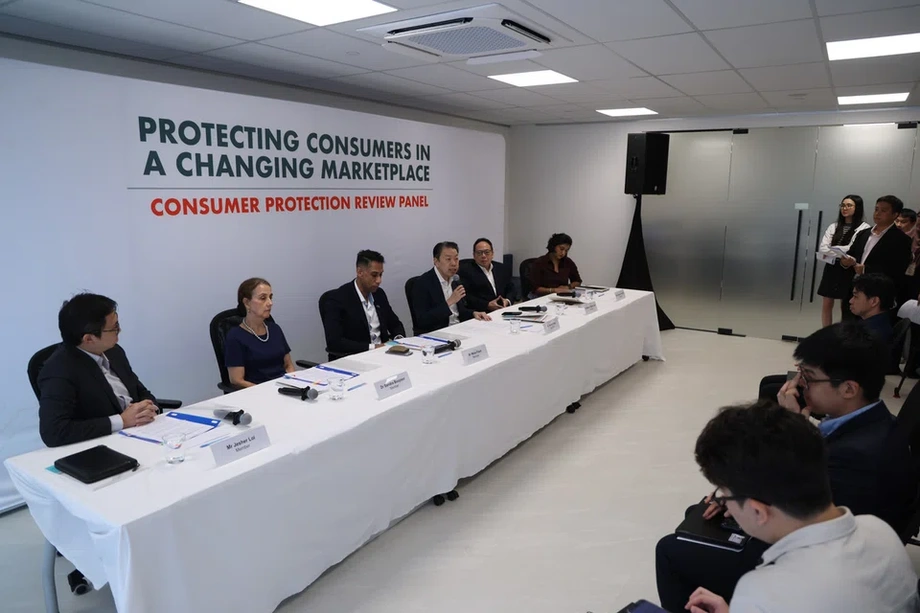
Singapore consumers who pay thousands of dollars upfront for a spa, beauty or wellness package could soon get several working days to change their minds, under proposals delivered to the Government on November 27, 2026. The Consumer Protection Review Panel, co-chaired by Consumers Association of Singapore (CASE) president Melvin Yong and former judicial commissioner Foo Tuat Yien, submitted seven recommendations after more than a year of consultation. It was convened on March 15, 2025, and its work is the first comprehensive review of Singapore's consumer protection regime since the last major amendment to the Consumer Protection (Fair Trading) Act in 2018.
Contents
- Seven Proposals Handed to the Government
- Why the Panel Thinks Consumers Need Time to Rethink
- The Money Lost Before Services Are Delivered
- Bigger Claims, More Types of Dispute
- Influencers, Sponsorships and Ads That Do Not Look Like Ads
- Concert Tickets, Scams and the BTS Rush
- Dark Patterns and the Next Wave of Risk
- A Timeline of the Review
- What the Government Says, and What Remains Open
- Key Points
The panel organised its findings around four areas: e-commerce, prepayment losses and pressure selling, ticketing for entertainment events, and access to effective recourse. Its seven recommendations are:
- Strengthen oversight of influencer advertising disclosures.
- Review whether the Consumer Protection (Fair Trading) Act covers emerging unfair practices.
- Introduce a cooling-off period for prepaid deals in sectors considered high risk.
- Spread good practice and strengthen CaseTrust, the accreditation arm of CASE.
- Make digital tickets secure and support authorised resale platforms.
- Raise the Small Claims Tribunal limits and widen the types of cases it can hear.
- Review contractual barriers that keep consumers out of the Small Claims Tribunal.
The panel drew on feedback from more than 8,000 consumers and close to 250 business and industry representatives, including a survey of 5,522 consumers, 26 business operators, 12 influencers, nine CASE mediators and four members of the Law Society of Singapore. It also held eight focus group discussions and four in depth interviews, and ran public outreach between September 25, 2025 and April 21, 2026 with members of the public, young people and legal professionals.
Why the Panel Thinks Consumers Need Time to Rethink
Pressure selling is at the centre of the panel's case for a cooling-off period. The idea is simple: a customer who has just been talked into a large prepaid package inside a sales room may not think clearly until after leaving it. A mandatory window would let that customer cancel. The panel named beauty and wellness services as the priority sector for a first rollout.
Public appetite for the idea looks strong. About 81 per cent of survey respondents backed it, and industry feedback suggested the approach is workable, with five to seven working days described as a practical duration. A small group of businesses already lives with such a rule. Spa and wellness operators accredited by CaseTrust must give customers a five day cooling-off period, though only about 2.4 per cent of beauty and wellness businesses hold that accreditation.
The panel deliberately declined to fix a duration. At its November 27 press conference, members said the Government would need to consult the industry and weigh existing business practices before setting one. Consumers whose provider refuses to honour a cooling-off period would be able to seek recourse through CASE or the Small Claims Tribunal where applicable, the panel said.
Melvin Yong, who is also assistant secretary-general of the National Trades Union Congress and an MP for Radin Mas, framed the package as prevention first. He said the way Singaporeans shop, pay for goods and services, and deal with businesses has changed substantially over the years.
Consumer protection should not begin only after a consumer has suffered a loss. We need to do more to prevent harm in the first place, empower consumers to make informed decisions, and ensure that they have effective avenues for redress when things go wrong.
Foo said the review sought balance, describing consumer vigilance and business responsibility as twin pillars. She said the panel weighed safeguards against consumer choice, business realities and digital commerce.
The Money Lost Before Services Are Delivered
Hard numbers on prepayment losses gave the panel its urgency. CASE said on October 5, 2026 that consumers reported total prepayment losses of $6.69 million between January 1 and September 30, about 147 per cent higher than the $2.71 million reported for the whole of 2025. Prepayment losses are cases where a customer pays in advance for a service that is never delivered.
Fitness business failures drove much of the recent jump. Between September 10 and September 30, CASE received 1,610 complaints involving about $3.82 million in prepayment losses after the closure of fitness operators including True Fitness, True Yoga and Yoga Inc. Of these, 1,518 complaints involving losses of $3.78 million related to the closures of True Fitness and True Yoga, while 92 complaints involving losses of $32,826.73 related to the closure of Yoga Inc. CASE said it has assisted affected consumers in lodging their claims and proofs of debt with the relevant liquidators. Earlier prepaid closures that drew attention included True Fitness and Wan Yang.
Existing protections cover part of the gap. In the ministry's written reply on January 12, 2026, Deputy Prime Minister and Minister for Trade and Industry Gan Kim Yong told Parliament that CASE runs a scheme accrediting businesses committed to fair trading and to honouring claims on unused prepayments if the business closes. He encouraged consumers to use CaseTrust accredited businesses when a transaction involves significant prepayment.
The panel wants that accreditation to mean more. It recommended that CaseTrust recognise businesses that go beyond basic expectations, including through stronger prepayment safeguards and measures tailored to specific sectors, and that CASE review how to make the protections attached to accreditation clearer to shoppers.
Bigger Claims, More Types of Dispute
The Small Claims Tribunal, a low cost route for small consumer disputes, has limits that were last raised in 2019. The panel found that the value and nature of consumer transactions have moved on since then, leaving some people to abandon part of a claim, seek the other side's consent, or pay for a costlier legal route.
It recommended lifting the standard limit to $30,000 from $20,000, and allowing both parties to agree to raise it to $60,000 from $30,000. It also proposed widening the categories of claims the tribunal can hear. Car sharing disputes over withheld deposits and charges for minor damage, along with deposits under vehicle rental contracts, were named as gaps in the current coverage.
Survey evidence shaped the numbers. Among 1,014 respondents who had considered filing a claim but did not go ahead, 42 per cent said their claim exceeded the $30,000 limit, and 29 per cent said getting the other party's consent was difficult. The panel stressed that the issue was not how well the tribunal works, but that some consumers cannot reach it at all.
A further recommendation targets contracts rather than dollar limits. The panel called for a review of the legal framework so that standard contractual terms cannot easily shut consumers out of courts, tribunals or certain dispute resolution processes.
Influencers, Sponsorships and Ads That Do Not Look Like Ads
The panel found that sponsored posts are not always obvious. About 80 per cent of online shoppers said they have seen influencers or celebrities promoting products, from fashion to technology. Unlike print or broadcast advertising, social media posts pass through no gatekeeper before publication.
It recommended voluntary training for influencers, advertising agencies, brands and business owners so they know when a sponsorship must be disclosed, with disclosure expected whenever a commercial relationship exists with an advertiser, brand, agency or sponsor. It also asked the Advertising Standards Authority of Singapore, a council under CASE that promotes ethical advertising, to strengthen its monitoring of influencer advertising.
Concert Tickets, Scams and the BTS Rush
Ticket scams are the other area where the panel wants structural change. Concert tickets were the most common item in e-commerce scams in 2024, accounting for 22.4 per cent of such cases. At least 722 concert ticket scam cases were reported between January and October 2025, with losses of at least $615,000. In ten days, from June 1 to June 10, 2025, at least $68,200 was lost to scams involving tickets for a December concert by K-pop group BTS.
The panel recommended that official ticketing providers and event organisers make secure digital tickets the default for major concerts and high demand events. Such tickets are tied to verified accounts protected by two-factor authentication, can be transferred only through controlled mechanisms, and use dynamic entry codes that change and cannot be shared.
Panel member Vanessa Paranjothy, co-founder of Freedom Cups, pointed to the risk that physical and static electronic tickets can be copied and forwarded to several people at once.
Buyers through unofficial channels have no reliable way to know whether a ticket has already been passed to someone else or whether multiple copies are circulating. The panel also recommended that ticketing providers set up procedures to restore access for consumers who lose a device or account credentials, and that practical help be given to people who are less confident online.
Resale is not the target. The panel said it does not want to prohibit resale, recognising that consumers have legitimate reasons to sell tickets on. It wants authorised resale platforms to speed up their rollout and to show the original price, the resale price and all applicable fees before a purchase is completed.
Dark Patterns and the Next Wave of Risk
Online sales tactics that steer shoppers without their full awareness are poorly covered by current rules, the panel found. It pointed to practices the Competition and Consumer Commission of Singapore has identified as dark patterns: fake reviews, countdown timers, hidden costs and subscription traps. Dark patterns are interface designs that nudge people toward choices they would not otherwise make.
The panel proposed that the Government and the commission study whether the Consumer Protection (Fair Trading) Act covers these deceptive digital practices, and whether the commission should be able to issue directions and impose financial penalties on businesses that use them. Artificial intelligence was flagged as an emerging risk, because businesses can use it to tailor prices, recommendations, advertising and sales prompts to individual shoppers, shaping what each person decides to buy.
A Timeline of the Review
- March 15, 2025: the Government convenes the independent review panel under Melvin Yong and Foo Tuat Yien.
- September 25, 2025 to April 21, 2026: public outreach and consultation with members of the public, young people and legal professionals.
- January 12, 2026: Gan Kim Yong sets out existing protections in a written reply to a parliamentary question from MP Alex Yeo about a closed health product and foot reflexology business.
- October 5, 2026: CASE reports $6.69 million in prepayment losses for January to September 30.
- November 27, 2026: the panel submits its seven recommendations to the Government and announces them at a press conference at CASE.
What the Government Says, and What Remains Open
The Ministry of Trade and Industry said it welcomes the recommendations. A spokesperson said the ministry is studying the findings and will provide its response in due course. No date has been set for that response, and the panel did not name a deadline.
The January written reply shows the legal ground the Government is working from. Gan said it is an unfair practice under the Consumer Protection (Fair Trading) Act 2003 for a supplier to exert undue pressure or influence on a consumer to enter a transaction, or to accept payment for goods or services when the business knows it will not be able to supply them. He said the Competition and Consumer Commission of Singapore can take enforcement action against such suppliers, and that consumers facing these practices may approach CASE for redress. Asked about the panel's work at that point, he said its findings and recommendations were expected later in 2026 and that the Government would study them and consider additional measures.
Several details are still undecided. The length of any cooling-off period was left to the Government, which the panel said would need to consult industry first. The sectors covered beyond beauty and wellness have not been listed. The new Small Claims Tribunal limits and the widening of its jurisdiction depend on approval. Whether the competition commission gains power to issue directions and impose penalties is also open, subject to a study the panel recommended.
Key Points
- The Consumer Protection Review Panel submitted seven recommendations to the Government on November 27, 2026, its first full review since the 2018 amendment to the Consumer Protection (Fair Trading) Act.
- It proposed a mandatory cooling-off period for prepaid packages in sectors considered high risk, starting with beauty and wellness, with no duration fixed and industry suggesting five to seven working days.
- About 81 per cent of surveyed consumers supported a cooling-off period, while only about 2.4 per cent of beauty and wellness businesses hold CaseTrust accreditation, which already requires a five day window.
- Prepayment losses reached $6.69 million from January to September 30, 2026, about 147 per cent above the $2.71 million reported for 2025, with 1,610 complaints worth about $3.82 million filed between September 10 and September 30 after fitness closures.
- The panel wants the Small Claims Tribunal limit raised to $30,000 from $20,000, and to $60,000 with both parties' consent, plus coverage of car sharing and vehicle rental deposit disputes.
- At least 722 concert ticket scam cases were reported from January to October 2025, with at least $615,000 lost, and $68,200 lost in ten days in June 2025 over BTS tickets.
- Other proposals cover influencer disclosure training, monitoring by the Advertising Standards Authority of Singapore, secure digital tickets, authorised resale platforms, and a study of whether the competition commission should be able to fine businesses over deceptive digital practices.
- The Ministry of Trade and Industry said it is studying the findings and will respond in due course, with no date given.