A Reporting Trip Ends at a Police Station
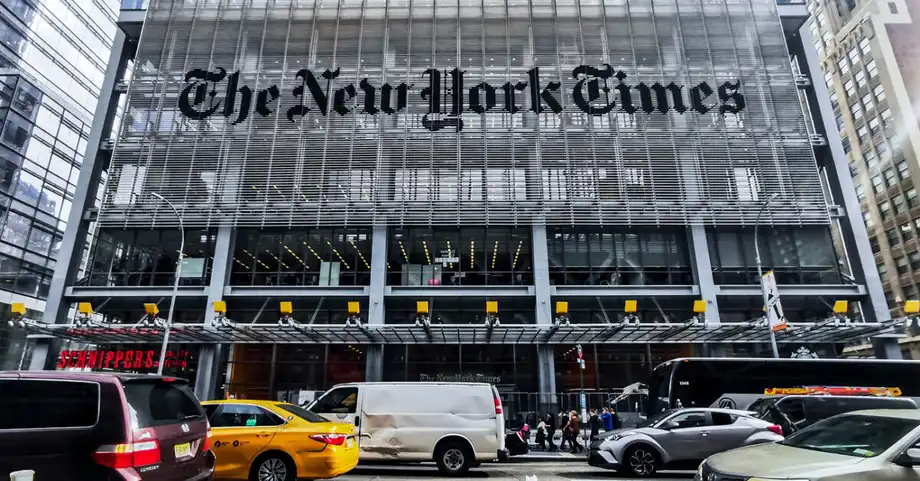
Chinese police stopped two New York Times journalists in Nanzhushan, a remote industrial town in Hunan province, and took them to a police station after they interviewed village leaders and residents about Alice Huang. She is the Chinese businesswoman whose contacts with the Ministry of State Security and affair with Jensen Huang have shaken Nvidia, Washington and a network of companies involved in artificial intelligence computing.
Contents
- A Reporting Trip Ends at a Police Station
- Why Nanzhushan Became Part of the Story
- What Does US Intelligence Actually Say?
- Megaspeed and the Export Control Question
- What $270 Million in Financing Records Reveal
- How Jensen Huang Lost and Regained Nvidia's Top Job
- Why Washington Is Still Arguing
- How China Reacted to the Return
- What Investigators and Congress Will Examine Next
- Key Points
The journalists were tracing Huang's childhood and family history as part of an investigation spanning four countries. That work drew on corporate records and interviews with more than a dozen sources. The newspaper disclosed the encounter on Tuesday, days after Jensen Huang returned as Nvidia's chief executive following his resignation and an extraordinary intervention by President Donald Trump.
The newspaper's account described how the reporting trip ended.
Interviewed village leaders and several residents before the police halted their reporting and took them to the nearest police station for questioning.
The published account gave no duration for the questioning and described no charge against the journalists. It also did not say whether police ordered them to leave Nanzhushan or imposed conditions on further reporting. Alice Huang and Jensen Huang are not related.
The episode adds a press freedom dispute to a story already involving intelligence agencies, chip exports, corporate governance and political influence. Reporting about a person's family and hometown is a standard way to check a public narrative, but the police intervention shows how sensitive that basic journalistic work can become when it touches intelligence allegations and China's defense industry.
Why Nanzhushan Became Part of the Story
State-Owned Factory No. 282 dominated the town where Alice Huang grew up. The sprawling weapons complex manufactured hand grenades and components for guided missiles. Her father worked there as a clerk, and she attended a school for children of employees. The factory belonged to a subsidiary of Norinco, a Chinese defense supplier that Washington has sanctioned repeatedly.
The hometown account also discussed a residential name, Patriotic Village 5. Its treatment provoked anger among Chinese commentators, ethnic Chinese readers and some Western readers, who accused the newspaper of turning an ordinary address and an old weapons factory into suspicion by association. One American reader compared that reasoning to treating someone who grew up near a naval shipbuilding town in Maine as an agent of the Pentagon.
Chinese commentators also objected to the weight given to anonymous intelligence assessments while friendlier explanations of Huang's conduct remained under examination. Their criticism concerns the framing of her childhood. Investigators are focusing on her adult business activities, her contact with Chinese intelligence officials and the movement or financing of advanced computing equipment.
That distinction matters for readers trying to separate biography from evidence. A parent's clerical job explains where Huang grew up. It cannot answer what information she possessed decades later, what she told Chinese officials or whether companies connected to her family helped customers obtain computing power that US export rules were intended to keep out of China.
What Does US Intelligence Actually Say?
People familiar with the intelligence said Alice Huang maintained contact with an official at China's Ministry of State Security from spring 2025 until autumn 2026. That period overlapped with her relationship with Jensen Huang. Some officials who reviewed the underlying material described her as a possible intelligence asset, meaning a person who supplies information or assistance, rather than a professionally trained intelligence officer.
US agencies have also gathered evidence concerning Kang Wei, her business partner, who was often introduced as her husband. Officials briefing Congress described him as an asset of the same ministry who remained in touch with Chinese intelligence. The precise nature of his work and Alice Huang's own conduct remain under investigation.
A classified memo written on March 30, 2026, by Marco Rubio, who serves as national security adviser and secretary of state, warned about the relationship and indicated that the ministry had recruited Alice Huang, potentially as an asset. Trump had already received an intelligence briefing in autumn 2025 and received another in May 2026. US officials did not give Jensen Huang a defensive briefing, the kind of warning commonly offered when authorities believe a foreign service may be targeting an American citizen.
The agencies have not spoken with one voice. The FBI assessed that the available intelligence did not show Alice Huang was either an officer or an asset of Chinese intelligence, according to two people briefed on its position. The CIA considered her contact with the ministry through the lens of Chinese law, which can compel citizens to cooperate with intelligence authorities. Its analysis found no clear showing that she possessed sensitive national security information and passed it to China, while leaving open the possibility of new evidence. Director of National Intelligence Jay Clayton said her status remained unclear.
Attorney General Todd Blanche said on November 12 that the Justice Department had reached no conclusion about whether she was a spy. Officials from the CIA, FBI, Office of the Director of National Intelligence and National Security Agency later gave a classified briefing to congressional intelligence committee staff and chamber leaders.
Officials at that November 24 briefing said there was no evidence that the ministry directed Alice Huang to begin the affair or to spy on Jensen Huang. They described the available evidence as pointing toward a romantic relationship. They also said she had contacted the Chinese agency during the affair, but that officials had found no indication she disclosed significant intelligence. Other officials familiar with the congressional discussions said she did pass information to Chinese officials while the relationship was continuing. The content and value of that information are now central to the continuing inquiry, and the assessment could change.
Megaspeed and the Export Control Question
Megaspeed, the company formerly controlled by Alice Huang, sits at the center of the separate question about chips. It was incorporated in Singapore in 2015 as 7Road International and grew substantially after President Joe Biden introduced restrictions on advanced artificial intelligence hardware sales to China in October 2022. It changed its name to Megaspeed International in March 2023.
Another ownership change followed in October 2023, when the business was sold to a Singapore company owned by Tan Yong Pong, who became chief executive. Four days later, Megaspeed became an Nvidia Cloud Partner. The company eventually bought billions of dollars worth of Nvidia processors and offered access to large amounts of computing capacity.
People with direct knowledge of the events said Nvidia's sales team introduced Alibaba to Alice Huang twice in 2022. Those introductions helped her win Alibaba as a customer for a business renting chips and then obtain bank loans to buy Nvidia hardware. After the export restrictions began, Nvidia sales employees again suggested that Alibaba could rent computing capacity from Megaspeed in Southeast Asia. The rules then in force did not prohibit that arrangement.
This explains why investigators are examining two different routes around restrictions. Smuggling concerns physical processors entering China without authorization. Remote access concerns customers in China renting computing power located overseas, even when the hardware never crosses the Chinese border.
The US Commerce Department added Megaspeed to its trade blacklist on Monday, November 23. The listing restricts transfers of items subject to US export rules and generally requires special licenses. Megaspeed denied wrongdoing, said it conducts lawful business and complies with export controls, and stated that Alice Huang left in August 2025. It also said some assertions about its business lacked verifiable evidence.
What $270 Million in Financing Records Reveal
Filings in a credit registry run by China's central bank provide the clearest picture yet of the business network surrounding Alice Huang, her sister Huang Yu and Kang Wei. Companies connected to the family and their associates used artificial intelligence servers and computing modules worth $270 million to obtain financing. The records identify as many as 764 servers and modules, together with $31 million in networking equipment.
Much of the hardware was listed at a Shanghai data center developed by Century Huatong, a gaming company in which Tencent holds a minority stake. The dollar figures describe assets covered by financing arrangements, so they should not be added together as though every entry represented a new purchase.
- Century Litong, an Nvidia preferred cloud partner, entered five leasing arrangements covering as many as 512 servers with a declared value of 1.42 billion yuan, about $200 million, between May and December 2024.
- An affiliate of the Aviation Industry Corporation of China, a state aviation and defense conglomerate known as AVIC, financed another 128 servers worth $57 million that were leased to Century Litong.
- An inventory at the Shanghai facility listed more than 10,000 Nvidia ConnectX-7 networking cards and 730 BlueField-3 units. Such equipment connects large groups of computers so they can work together on demanding artificial intelligence tasks.
- In April 2026, Wuhu Century Longteng pledged 252 computing modules as collateral for a $70 million loan from Ping An Bank. Huang Yu had held majority control of the company through investment vehicles until early 2026.
Corporate records connect Century Litong, Century Longteng and Century Huatong to Huang Yu and Kang. Century Litong later came under the ownership of Jiangsu Lettall Electronic, which also owns Nanjing Jinning Microwave, a manufacturer of components used in Chinese radar and missile systems. Other connections identified by Strider Technologies include AVIC and China Electronics Technology Group.
A Strider analysis found that about $3.6 billion in Chinese government money had flowed through companies associated with Huang's family and business associates. Greg Levesque, the intelligence firm's chief executive, described its interpretation of those connections.
Follow the money and, too often, you find the PLA at the end of it.
Tencent's roughly 10 percent stake in Century Huatong brought another major technology company into the debate. The Pentagon has placed Tencent on its Section 1260H list of Chinese military companies operating in the United States, a designation that itself carries no immediate ban. Tencent called the designation a mistake, denied being a military supplier and said its Century Huatong investment concerned gaming. It also denied any commercial relationship with Megaspeed and said it had never owned or operated the Shanghai data center project.
The registry leaves several practical questions unanswered: whether the machines contained chips whose export to China was banned, how and when hardware entered the country, whether the People's Liberation Army used the resulting computing capacity, and whether Tencent bought, rented or operated any of the listed servers.
How Jensen Huang Lost and Regained Nvidia's Top Job
The corporate crisis moved almost as quickly as the intelligence story. On November 11, five Nvidia employees described another extramarital relationship involving Jensen Huang and Kimberly Powell, an executive who reported to him. Such a relationship conflicted with Nvidia's code of conduct. People familiar with the board's deliberations said its main concern was his lack of candor, rather than national security alone.
- October 29: The first account of a suspected Chinese intelligence operation targeting Jensen Huang became public.
- November 11 and 12: Nvidia's board discussed his removal and accepted his resignation. The company announced on November 12 that he had stepped down as chief executive, president and board member.
- November 12: Colette Kress became interim chief executive, while Harvey C. Jones became board chair.
- November 17: The board chair said there was no intention to bring Huang back, even as an open letter supporting his reinstatement passed 178,000 signatures in four days.
- November 23: Nvidia restored Huang to all three positions after saying it was satisfied with his candor and had received assurances from senior US officials that his return presented no national security risk.
- November 24: Intelligence officials briefed congressional staff about Alice Huang, one day before further accounts of that briefing emerged.
The financial swings were enormous. By November 20, Nvidia's market value had fallen about $2.7 trillion from its October 6 peak amid the scandal, the investigations and a broader decline in chip shares. Huang's return then added almost $1 trillion in market value. These figures measure changes in the stock market's valuation of the company, not cash entering or leaving Nvidia's accounts.
Trump took credit for pressing directors to reverse their decision. He said a preliminary review had exonerated Huang and that stock market turmoil was a leading reason for his involvement. The president described his conversation with the board in a television interview.
I spoke to them, let me put it that way. And I convinced them ... I made the deal.
Pentagon leaders also discussed invoking the Defense Production Act if Nvidia resisted, according to three people familiar with that debate. The 1950 law gives a president broad authority to intervene in the economy during emergencies and was previously used to press General Motors to produce ventilators during COVID-19. It was discussed in this episode but not invoked.
Why Washington Is Still Arguing
Vice President JD Vance and Trump concluded after speaking with Blanche that Jensen Huang did not pose a security threat. Rubio was not involved in those later discussions and was caught off guard by the reinstatement, according to one person familiar with the events. Blanche subsequently declined to say whether the Nvidia chief himself would be investigated.
Trump has repeatedly minimized the underlying concern. Asked whether he believed Alice Huang was a spy, he said he did not know that she was. Last spring, when questioned about Chinese espionage, he answered that the United States also spied extensively on China. He has argued that losing Jensen Huang's expertise would present a greater danger than the relationship under investigation.
Senator Tom Cotton, the Republican chair of the Senate Intelligence Committee, rejected the idea that returning Huang to his job settled the matter.
I have warned the administration from the start about communist China obtaining our most advanced chips through both smuggling and remote access. The controversy with Nvidia and Megaspeed is just the tip of the iceberg, and it's not resolved because Jensen Huang has his job back.
Mitt Romney, the former Republican senator and presidential nominee, criticized Washington for rushing artificial intelligence development without safeguards while allowing China access to advanced chips. John D. Woodward Jr., a former CIA officer and senior Defense Department official now at Boston University, objected to using stock market concerns as a reason to restore Huang while espionage questions remained.
Conservative writer Rich Lowry placed the episode within decades of Chinese intellectual property theft and urged stronger corporate security and closer examination of Chinese investment and research partnerships. His argument reflects one side of a widening debate: whether the gravest danger lies in a personal relationship, in China's acquisition of computing power, or in political leaders deciding security questions without a full institutional review.
The National Security Council did not hold cabinet level meetings bringing together the different agencies to debate the intelligence before Huang's removal, according to people familiar with the process. That absence helps explain why Rubio's warning, the FBI's assessment and the CIA's more qualified reading could coexist without producing a common administration position.
How China Reacted to the Return
Chinese state commentary welcomed Jensen Huang's reinstatement and portrayed the espionage narrative as an American political spectacle. The Global Times called the reporting malicious and warned that future investigations and congressional hearings could become political witch hunts against companies or people accused of Chinese connections. Blogger Niu Tanqin said Huang's return showed that the allegations against Alice Huang were nonsense.
China's Foreign Ministry declined to comment on the reinstatement. The government has consistently denied directing an operation against Jensen Huang, dismissing the allegations as groundless speculation and later as slander and defamation.
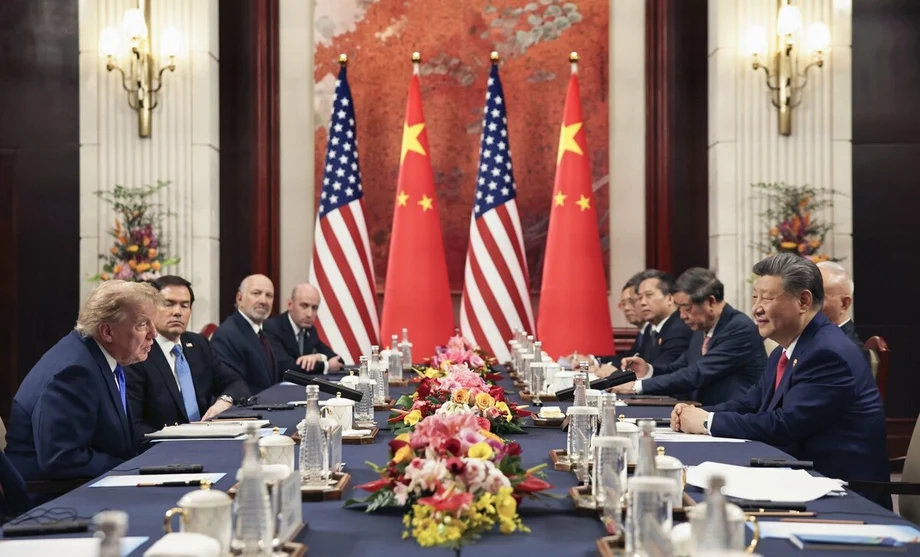
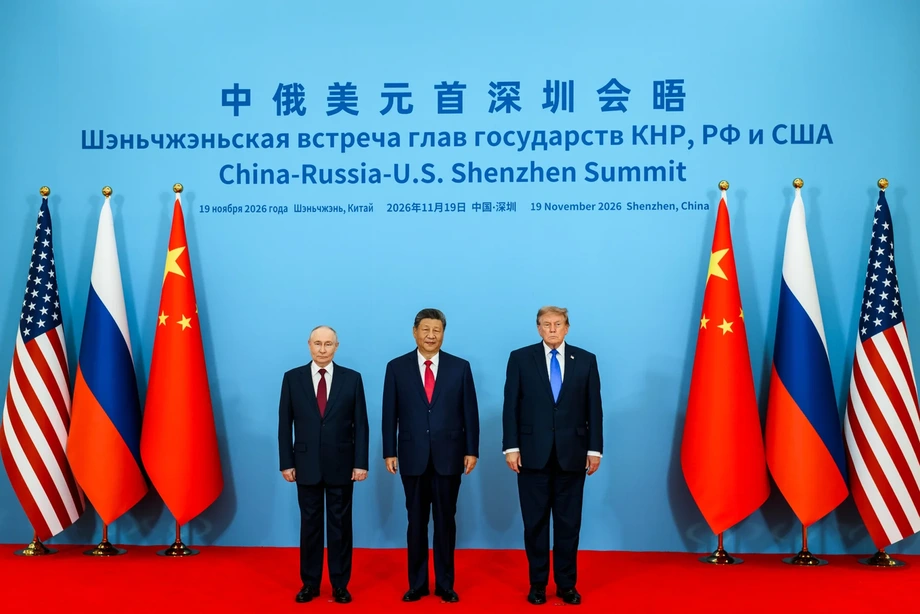
Trump said Chinese leader Xi Jinping had called Jensen Huang a brilliant man during their recent meeting in Shenzhen. Chinese social media users celebrated the comeback with memes and videos generated with AI, including depictions of Huang as the Terminator and as Jack Torrance from The Shining. One video placed an AI version of interim chief Colette Kress in a revenge scene, illustrating how a corporate governance crisis had become popular entertainment.
George Chen, a partner at The Asia Group consultancy, wrote that Chinese policymakers were likely to draw a simpler political lesson: Trump remains the most influential figure in American politics and a decisive variable in relations between Washington and Beijing. The board's reversal after presidential pressure gave that assessment a concrete example.
What Investigators and Congress Will Examine Next
Singapore has taken a narrower position than either Washington's strongest critics or Beijing's defenders. Its Ministry of Home Affairs said evidence was insufficient for the suspected offenses involving possible false declarations in server purchases, and Singapore did not investigate Alice Huang for espionage. Police nevertheless concluded that she knowingly supplied inaccurate information about her role in Megaspeed. She received a stern warning and was barred from entering Singapore again, while inquiries into Megaspeed continue.
US intelligence agencies are still examining what influence, if any, the affair had on suspected chip diversions. Nvidia's board is also continuing its own investigation. Those inquiries must distinguish personal conduct from corporate decisions and identify whether export controls were broken, bypassed through arrangements that were legal at the time, or complied with in full.
Jensen Huang faces congressional scrutiny next week, although no precise hearing date has been given. Lawmakers can seek the intelligence behind Rubio's memo, the reasoning presented at the November 24 briefing and the assurances given to Nvidia's directors. No deadline has been announced for the intelligence review, Nvidia's internal inquiry or Singapore's continuing examination of Megaspeed.
Key Points
- Chinese police took two New York Times journalists to a station in Nanzhushan after interviews about Alice Huang's childhood; the duration of their questioning was not disclosed.
- US intelligence tracked her contact with the Ministry of State Security from spring 2025 to autumn 2026, overlapping her affair with Jensen Huang.
- Officials briefing Congress found no evidence that Beijing directed the affair or significant intelligence sharing, although other officials said she passed information whose value remains under examination.
- Financing records identify $270 million in AI servers and computing modules, plus $31 million in networking equipment, connected to companies around Huang's family and associates.
- Megaspeed denies wrongdoing and says Alice Huang left in August 2025; the United States placed the company on its trade blacklist on November 23.
- Jensen Huang resigned on November 12 and returned on November 23 after Trump pressed Nvidia's board, with lawmakers from both parties criticizing the decision.
- Congressional scrutiny is expected next week, while US, Nvidia and Singapore investigations remain unfinished.