A record climate event changes China's winter enforcement plan
China will use satellite imagery, electricity consumption, video footage and continuous pollution monitoring to find illegal emissions this winter, as the strongest El Niño on record raises the risk of prolonged and widespread smog. The Ministry of Ecology and Environment announced the enforcement plan on November 27, 2026, alongside warnings that heavy pollution could affect large areas for extended periods.
Contents
- A record climate event changes China's winter enforcement plan
- Why a warmer Pacific can trap pollution over China
- How inspections, company grades and rectification will work
- Key dates from ocean warming to next summer
- A warmer winter still brings cold waves and damaging ice
- Provinces prepare for floods, drought and frozen roads
- The delayed risks for farms, power supplies and trade
- Past disasters show why the economic estimates are so large
- Food relief and emergency preparations cross national borders
- Practical precautions for winter, spring and summer
- Key Points
Zhao Shixin, director of the ministry's Ecological Environment Enforcement Bureau, said at a regular press conference in Beijing that inspectors would concentrate on three tasks: finding problems precisely, applying different controls to different companies and making sure every confirmed problem is corrected. The aim is to direct limited enforcement staff toward the greatest risks while reducing unnecessary visits to companies with strong environmental performance.
China's National Climate Center said a super El Niño formed in the central and eastern equatorial Pacific in September 2026 and became the strongest event since systematic monitoring began in October. It is expected to peak around the end of autumn and the beginning of winter, with other climate assessments placing the peak around December.
Why a warmer Pacific can trap pollution over China
El Niño is a natural climate event in which surface waters across the central and eastern equatorial Pacific become unusually warm. It generally appears every two to seven years and lasts about nine to 12 months, although some events continue longer. Normally, trade winds push warm surface water toward the western Pacific, allowing colder water to rise near South America. When those winds weaken, the ocean and atmosphere interact differently, changing rainfall and temperature patterns far beyond the Pacific.
The World Meteorological Organization traces the current event's development to June, with clear formation by mid August. Its measurements show that the temperature anomaly in the Niño 3.4 region, a key part of the Pacific used to assess El Niño, rose from about 1.6 degrees Celsius above average in June to about 2.5 degrees in August. The organization forecast in October that temperatures in the event's central region could average about 3.8 degrees above normal from November 2026 to January 2027. An anomaly of 0.5 degrees is enough to prompt an El Niño alert.
Celeste Saulo, secretary general of the World Meteorological Organization, described the event's exceptional strength when the organization released its 2026 State of the Climate Update.
The strength of this El Niño event may be unprecedented, even beyond the range of the monitoring charts we have used for the past 40 years.
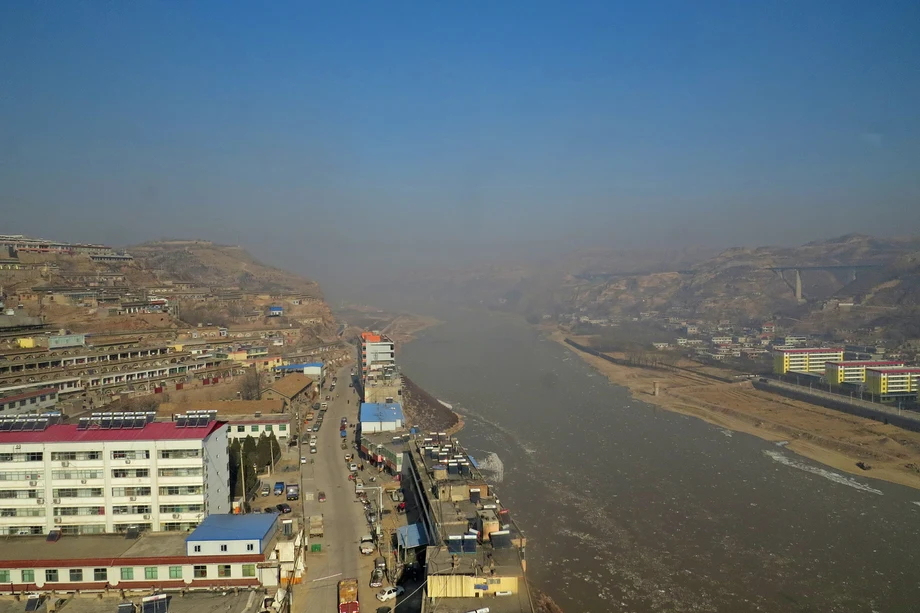
For northern China, the immediate concern is the connection between El Niño and winter air movement. A weaker East Asian winter monsoon can bring fewer incursions of cold air. Without stronger winds and vertical air movement, pollutants can remain near the ground. An inversion, in which warmer air sits above cooler air, can act like a lid and make dispersion even harder. Winter heating adds another pressure during these periods.
Zhao Shixin explained the meteorological concern and its consequences for pollution control.
Super El Niño often causes the East Asian winter monsoon to weaken, reduces cold air activity in northern China and worsens atmospheric diffusion conditions. It can easily produce prolonged and widespread episodes of heavy pollution, making the response more difficult.
How inspections, company grades and rectification will work
The first stage combines information that has often been held in separate systems. Satellite remote sensing, air quality stations, automatic monitors at pollution sources, electricity and operating data, video cameras and mobile monitoring vehicles will feed models that identify suspicious clues. The ministry calls one warning sign air quality bubbling: an abnormal local reading that prompts investigators to trace its origin. Continuous monitoring can reveal illegal emissions, while data collected during a heavy pollution alert can show whether a company failed to apply required controls.
This approach changes the reason for an inspection. Officers can begin with an unusual station reading, a mismatch between production activity and reported emissions, or electricity data suggesting that equipment is operating without the expected controls. They can then visit the locations connected to that evidence instead of treating every factory in an area as equally suspect.
The second stage uses company performance grades during heavy pollution alerts. The legal basis is China's new environmental code, adopted by the National People's Congress on March 12, 2026 and put into effect on August 15. The Ecological and Environmental Code provides for performance grading in key industries and allows emergency response plans to suspend or limit production at some companies when necessary. A company's grade helps determine which measures apply.
Companies performing at Grade A will mainly be watched through remote monitoring. If no clue points to a violation, inspectors are expected to leave them undisturbed. Companies with lower grades, large emissions or repeated violations will face more frequent checks. In practical terms, a cleaner factory could continue operating with fewer interruptions during an alert, while a repeat offender could receive closer scrutiny and tighter production restrictions.
The third stage is a rectification cycle with five steps: assign the problem, investigate it, verify the facts, correct it and close the case. A problem is not completed simply because an inspection occurred. Officers must track the remedy, review it again and remove the case from the outstanding list only after correction. The ministry may also send unannounced inspection teams when circumstances require them.
No national list of companies or fixed date for these unannounced visits was announced. Zhao said local action would follow air quality forecasts, pollution warnings and related official deployments. He described the autumn and winter pollution situation as severe and complex, and said enforcement should achieve the best possible result with the least disturbance and cost.
Key dates from ocean warming to next summer
The climate event and the preparations for it have developed over several months, with different agencies describing different stages of its formation.
- June to mid August 2026: The World Meteorological Organization says El Niño developed rapidly and was clearly established by mid August.
- September 2026: China's National Climate Center says a super El Niño formally formed in the central and eastern equatorial Pacific.
- October 2026: The Chinese center says it became the strongest El Niño in the monitoring record.
- November 20 to 26: Water and regional authorities in Heilongjiang, Guangxi, Hunan and Zaoyang hold meetings on flooding, drought, reservoirs and winter hazards.
- November 27: The Ministry of Ecology and Environment sets out its winter pollution enforcement plan.
- December 2026: International and Chinese assessments point to a peak around this month. The World Meteorological Organization says there is almost a 100 percent probability that the event will persist until February 2027.
- Summer 2027: Chinese forecasters warn of greater rainfall and flood risks around the Yangtze River, alongside stronger heat waves in several regions.
The World Meteorological Organization expects extreme heat, drought and heavy rainfall risks to continue into 2027. Its assessment also says the event could rank among the strongest since at least 1950, while Chinese monitoring describes it as the strongest in that country's record.
A warmer winter still brings cold waves and damaging ice
Zhao Junhu, a chief forecaster at the National Climate Center, said China's winter temperature would probably average 0.5 to 1 degree Celsius above normal. That milder average does not remove the danger of severe cold. Forecasters expect two or three cold waves, compared with a seasonal norm of 1.8, with considerable swings between colder and warmer periods. The earlier part of winter may be colder, followed by a warmer later period.
A previous winter illustrates the distinction. The winter of 2020 and 2021 was classified as warm after China's average temperature came in 0.8 degrees above normal. Yet a powerful cold wave struck central and eastern China in early January 2021. Beijing's Nanjiao Observatory recorded minus 19.6 degrees Celsius, the capital's lowest reading since the 1960s.
Rain and snow present a separate concern. Winter precipitation is forecast to be 50 to 80 percent above normal in central and southern Zhejiang, Jiangxi, Fujian, southern Hunan, Guangdong and eastern Guangxi. Guizhou and Hunan face risks from freezing rain, snow and ice, while northern China could experience more episodes of heavy snow. Ice can make roads dangerous and add weight to power lines, even when the seasonal temperature average is high.
The event has already coincided with unusual storm activity. By late November, 32 numbered typhoons had formed in the northwestern Pacific and South China Sea, making 2026 the most active typhoon year of the 21st century so far. Wei Ke, a researcher at the Institute of Atmospheric Physics under the Chinese Academy of Sciences, said warm water in the western Pacific and an active monsoon trough extending eastward supplied favorable heat and atmospheric conditions.
The larger temperature effect may arrive after El Niño peaks. Wei explained that the ocean releases heat into the atmosphere over time, with global temperatures often reaching their highest point three to six months later. On that basis, 2027 could become the hottest year in the observational record. Gu Wei, another chief forecaster at the National Climate Center, expects its influence on China's summer climate to exceed that of 2026.
Provinces prepare for floods, drought and frozen roads
Local preparations extend well beyond air pollution. On November 23, Guangxi Communist Party secretary Chen Gang chaired a meeting that warned of periods of meteorological drought, low temperatures, snow, ice and severe convection during winter and spring. The region also faces elevated rainstorm, flood and typhoon risks during the main flood season of 2027. Officials were told to improve meteorological, hydrological and geological monitoring and ensure warnings reach communities, a challenge often described as covering the last mile.
Guangxi also called for lessons to be drawn from the emergency response to Typhoon Maysak. Its preparations cover forest fires, floods, drought, freezing weather and rapid switches between drought and flooding. That last risk matters because dry ground and damaged water systems can be followed by intense rain, leaving little time to change from conserving water to moving it away safely.
Heilongjiang's Water Resources Department met on November 20 to begin planning flood and drought defenses for 2027. Provincial meteorological and hydrological forecasts point to generally higher spring and summer rainfall, distributed unevenly across the province. Basin flooding could occur on the Songhua and other rivers during the summer flood period. The department ordered faster repairs to weak engineering points, reconstruction after disasters, revised emergency plans and preparation for operating reservoirs and sluice gates.
Heilongjiang is also preparing for water shortages at the same time. Emergency water sources and plans for transferring and supplying water are intended to protect urban and rural supplies and farm irrigation. Hunan's water resources director, Zhu Dongtie, chaired a November 23 meeting that similarly called for hazard inspections, stronger monitoring, better reservoir operations and improved defenses against mountain torrents.
Zaoyang in Hubei used a November 26 meeting to connect El Niño preparations with a campaign lasting 100 days for water projects. The city plans to complete safety work on the Xingchuan and Shiti reservoirs, advance preparation for work on nine aging reservoirs, improve integrated urban and rural water supplies and build farmland to higher standards. Dangerous reservoirs, reservoirs above settlements, villages exposed to mountain floods and urban locations prone to waterlogging are to receive named responsibilities and an emergency plan for each location.
The delayed risks for farms, power supplies and trade
Wang Peijuan, a researcher at the Chinese Academy of Meteorological Sciences, said agricultural danger would vary sharply by region, crop and season, with effects often more pronounced in the year after a super El Niño. Rice and rapeseed in the middle and lower Yangtze region, Jiangnan and South China could suffer waterlogging. Saturated soil can deprive roots of oxygen, while humid conditions favor diseases including rice blast and sheath blight. Heavy rain in hills and mountains can also damage farm infrastructure.
The Huang-Huai-Hai region and parts of northern China face a different combination: episodes of heat and insufficient rain. Summer maize exposed to both stresses can experience declining pollen activity, obstructed pollination and poor grain filling, leaving more empty or shriveled kernels. Northeastern China must also watch for summer drought and abrupt changes between dry and wet conditions.
Wang recommended seasonal and monthly forecasts broken down by region, crop and growth period. Automatic weather stations, soil moisture monitors and satellites can provide more frequent observations of crop condition and soil water. Local plans need to cover drainage, irrigation, disease and pest control, and protection from freezing, connecting climate forecasts and public warnings with action in fields.
Energy systems face connected pressures. Li Xiang, a senior engineer at the National Climate Center, said regions dependent on hydropower need stronger grid peak management and energy reserves. Peak management means moving or reducing electricity demand when supply is tight, rather than assuming every river reservoir can produce its usual amount of power. Li also called for coordinated reservoir operations in major river basins, stronger flood protection for essential infrastructure and greater resilience in cities.
International markets provide another route for effects to reach Chinese consumers. Peng Qihua, an associate professor at Nanjing University's School of Atmospheric Sciences, said disruption to Peru's fisheries could tighten fishmeal supplies and raise the cost of feed for farmed fish. Drought-related reductions in Southeast Asian palm oil and natural rubber production could affect cooking oil and tyre industries. Peng recommended monitoring food and energy markets, diversifying imports and arranging reserves to reduce pressure on domestic prices and industrial supplies.
Past disasters show why the economic estimates are so large
Previous events demonstrate how ocean warming can produce very different disasters in different places. During the super El Niño of 1997 and 1998, rainfall in western Peru and Ecuador reached 10 times normal levels, contributing to floods and mudslides that killed 450 people and caused more than $3 billion in losses. Indonesia experienced vast forest fires and haze. China first suffered extensive drought in the north in 1997, then catastrophic flooding along the Yangtze, Songhua and Nen rivers in 1998, with more than 1,800 deaths and economic losses of about 200 billion yuan.
The event of 2015 and 2016 brought severe haze to Indonesia, where more than 135,000 people developed respiratory illnesses, alongside serious flooding and heat in China. Australian fires between 2018 and 2020 also show the need to consider several causes together: two winters of weak El Niño combined with other climate factors before fires burned more than 24 million hectares over roughly nine months. Thirty three people died directly, while another 445 deaths were attributed indirectly to smoke.
Economic estimates for the current event remain projections rather than a tally of damage. A model analysis published in Nature Communications in 2023 found that global economic growth averaged 1 percentage point lower in the year of a super El Niño. Including delayed effects over the following three years, the cumulative output gap reached 4 to 5 percent of global economic output.
Applying those historical response ratios to the International Monetary Fund's estimate of about $126 trillion for the current global economy produces an estimated loss of $1.3 trillion to $1.6 trillion in the peak year and $6 trillion to $8 trillion from 2026 to 2029. A stronger assumption involving lasting compound effects pushes the extrapolation above $10 trillion. The Peterson Institute for International Economics used another scenario, estimating a 2027 loss of about $986 billion if this event's strength approaches that of 1997 and 1998, with further losses possible if investment remains weak.
Food relief and emergency preparations cross national borders
The United Nations World Food Programme estimates that this El Niño could deepen food insecurity in at least 45 countries. Across the countries covered by its analysis, the number of people facing severe food insecurity could rise from 225 million to 274 million by the end of 2027, an increase of 49 million. Areas of particular concern include the Central American Dry Corridor, southern Africa and places where agriculture depends heavily on rainfall.
The agency has begun anticipatory action in more than 50 countries, including Uganda and Guatemala, and has urged governments not to restrict food exports in ways that could push global prices higher. Tom Fletcher, the United Nations emergency relief coordinator, said in October that more than $50 million had been allocated from the Central Emergency Response Fund to support preparations in 11 countries at high risk, including Chad, El Salvador, Ethiopia, Somalia and South Sudan.
Several national governments acted before the expected December peak. Colombia declared a state of national disaster lasting one year in July, allowing resources to be arranged in advance for water, food, energy, public health and forest fire protection. Peru placed 796 districts under a 60 day state of emergency over heavy rainfall risks. Kenya created a special cabinet committee to identify vulnerable places, prepare supplies and rescue capacity, and arrange food imports. South Africa introduced a roadmap connecting early warnings with disaster management and coordination among public agencies.
Global temperature measurements add to the concern. The World Meteorological Organization said the average surface temperature from January to September 2026 was about 1.47 degrees Celsius above the preindustrial level, making 2026 likely to rank among the four warmest years on record. Secretary General António Guterres warned that rising ocean and air temperatures had brought the world into what he called a danger zone for extreme weather.
Practical precautions for winter, spring and summer
Chinese forecasters advise households to prepare for sharp temperature changes rather than relying on the winter average. Older people and children may need additional clothing during cold waves, while influenza vaccination is recommended because flu peaks in El Niño years have arrived about three weeks earlier on average. People with cardiovascular or cerebrovascular conditions are advised to keep regular medicines available. Drivers in southern freezing rain and northern snow should check transport information and reduce speed on icy roads.
Spring preparations differ by location. Southern residents may need protection against persistent rain, damp interiors and spring flooding, while southwestern forest areas face heightened fire danger and restrictions on unauthorized outdoor burning. Before summer, communities in the middle and lower Yangtze region are being urged to follow flood warnings and become familiar with evacuation routes. Stronger and more extensive heat waves will require cooling and protection for outdoor workers. In southern South China, removing standing water around homes can reduce mosquito breeding and the risk of diseases such as dengue.
The immediate test for the environmental ministry will come during winter pollution alerts, when forecasts, remote monitoring and local inspections must work together. The wider test will continue through reservoir maintenance, farm preparation, energy planning and food security measures into 2027.
Key Points
- China's National Climate Center says a super El Niño formed in September 2026 and reached record strength in October.
- The Ministry of Ecology and Environment will use integrated monitoring, company performance grades and a five step rectification cycle to control winter pollution.
- Grade A companies with no suspicious clues will generally avoid inspections, while large emitters and repeat violators will face more checks.
- The World Meteorological Organization expects a December peak and says persistence until February 2027 is almost certain.
- China's winter is forecast to be 0.5 to 1 degree Celsius warmer than normal, but two or three cold waves and damaging snow and ice remain possible.
- Guangxi, Heilongjiang, Hunan and Zaoyang have begun work on floods, drought, reservoir safety, water supplies and local emergency plans.
- Summer 2027 could bring heavier rain and flooding around the Yangtze, stronger heat waves and regional agricultural losses.
- The World Food Programme projects that severe food insecurity across the countries it analyzed could grow by 49 million people, from 225 million to 274 million, by the end of 2027.