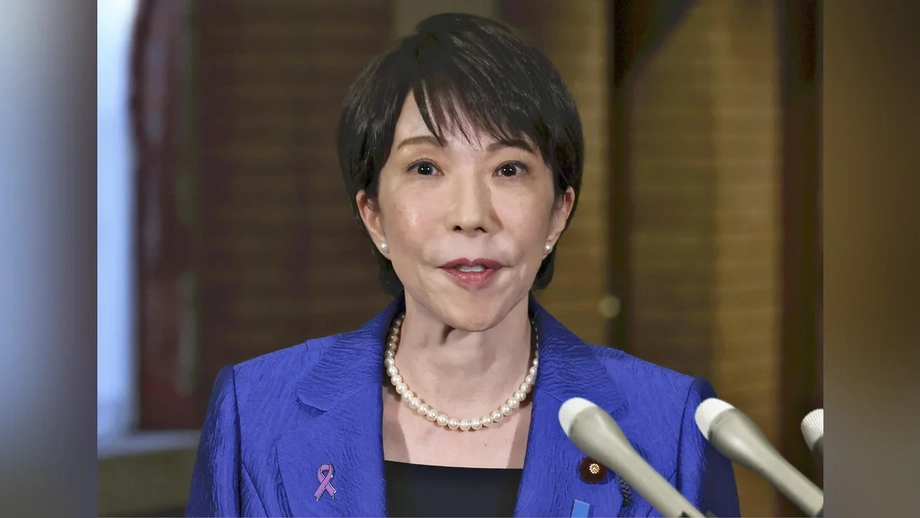
A possible encounter with urgent demands
Japanese Prime Minister Sanae Takaichi is expected to seek the release of detained journalist Yuki Imai and the restoration of Japan Tobacco's Russian operations during a possible brief encounter with President Vladimir Putin at the November 18 and 19 APEC summit in Shenzhen, China.
Contents
- A possible encounter with urgent demands
- What Moscow and Tokyo have said
- Imai's detention moves to the leaders' agenda
- Public pressure grows while Japan maintains sanctions
- Japan Tobacco adds a commercial dispute
- Territory and an airspace incident deepen tensions
- A crowded summit offers a narrow opening
- The dates shaping the dispute
- Key Points
Several Japanese government officials said on November 17 that Russia had responded positively to Japan's request for direct contact between the leaders. The exchange would likely be a short conversation rather than a formal meeting. Putin arrived in Shenzhen early on November 18, with the possible encounter expected that afternoon.
Imai, 34, a reporter based in Yuzhno-Sakhalinsk for the Hokkaido Shimbun newspaper, was detained in Russia's Sakhalin region on October 13 on suspicion of espionage and transferred to Moscow. More than a month later, Japan's repeated demands for his release have produced no clear progress.
Takaichi also wants to challenge Russia's decision to place Japan Tobacco's local businesses under Russian management. She is expected to protest Putin's August visit to Etorofu, an island controlled by Russia and claimed by Japan.
Putin could use the exchange to seek changes to Japan's sanctions over Russia's invasion of Ukraine. The encounter would therefore bring immediate demands concerning a detained Japanese citizen and a major company into a relationship already divided by war, territory and security.
What Moscow and Tokyo have said
Kremlin spokesman Dmitry Peskov left open the possibility of an informal conversation at APEC. Describing how the summit could provide an opportunity for the two leaders to speak, he said:
We do not rule out that both the president and the prime minister will have the opportunity to take advantage of the summit's informal setting to hold talks.
Japanese officials have similarly described a possible brief exchange, with a formal meeting considered difficult. No confirmed meeting time, agreed agenda or joint announcement has been disclosed.
September 2019 was the last time a Japanese prime minister held a formal meeting with Putin, when Shinzo Abe was in office. Seven years later, Takaichi would be trying to reopen direct communication under much harsher conditions.
Russia's February 2022 invasion of Ukraine led Japan to continue sanctions in coordination with European countries. Those measures have further strained relations, while the detention of Imai and intervention in Japan Tobacco's businesses have created specific matters Tokyo wants Putin to address personally.
Imai's detention moves to the leaders' agenda
Russia's Federal Security Service, known as the FSB, announced Imai's detention on October 13. Russian authorities accuse him of gathering information connected to defence. Japan rejects the espionage allegations, and the Hokkaido Shimbun has defended its independence from the Japanese government.
Imai is being held at Lefortovo detention centre in eastern Moscow, far from his reporting base on Sakhalin, near northern Japan. A Russian lawyer retained by his newspaper had visited him several times by November 12 and confirmed that he had no health problems. Clothing and food have also been delivered regularly.
Japanese diplomats first received consular access on October 26. Such visits allow officials to check a detained citizen's welfare and help them communicate with people outside custody. Japan's Foreign Ministry has requested further visits.
The first visit came 13 days after the announced detention. The bilateral treaty provides for consular access within four days of detention, making access itself a point of concern alongside Japan's demand for release.
Tokyo had already taken the case directly to Russia's Foreign Ministry during diplomatic talks in Moscow on October 20. A Moscow court ordered Imai held until December 12, the next stated date in the custody process. He faces a possible prison term of up to 20 years if convicted.
Public pressure grows while Japan maintains sanctions
Chief Cabinet Secretary Minoru Kihara said on November 12 that Japan would keep using opportunities to demand Imai's immediate release, humanitarian consideration and fair treatment. He also said the government's policy of maintaining sanctions against Russia had not changed.
Japan is therefore pursuing two positions at once: seeking action on Imai's detention while continuing its response to the invasion of Ukraine. Putin may press Takaichi to reconsider sanctions, but Tokyo has publicly maintained that policy as its appeals for the journalist continue.
Support for Imai has spread beyond government channels. By November 12, an online petition backing an emergency appeal organised by volunteers, including journalist Shoko Egawa and University of Tokyo associate professor Yu Koizumi, had gathered about 38,000 signatures. Another petition organised by former Hokkaido Shimbun reporters had collected more than 2,000.
Japan's newspaper association and other organisations have called for his immediate release. The British, American, Ukrainian and Polish diplomatic missions or their representatives have expressed support or solidarity. The board of the Seoul Foreign Correspondents' Club, representing roughly 100 foreign media organisations in South Korea, expressed concern on November 12.
Supporters are planning a symposium in Tokyo in December. For Imai, the immediate practical issues remain release, continued access to his lawyer and further visits by Japanese diplomats.
Japan Tobacco adds a commercial dispute
Japan Tobacco's Russian businesses were placed earlier in November under what Moscow calls temporary administration by a Russian company. Takaichi is expected to ask Putin to restore the company's operations to their previous position.
Temporary administration means an outside administrator takes control of running a business. For Japan Tobacco, the issue is who can make decisions about its Russian subsidiaries and how those operations are managed.
Tokyo's expected request concerns restoring the situation before Russia's intervention. A brief conversation would give Takaichi an opportunity to put that demand directly to the president whose government imposed the measure.
Imai's detention and Japan Tobacco's management dispute involve different Russian institutions and different remedies. Bringing both to Putin would concentrate Japan's most immediate demands into a short exchange, alongside its protest over the disputed islands.
Territory and an airspace incident deepen tensions
Putin visited Etorofu in August, his first visit to the island. It is one of four islands controlled by Russia and claimed by Japan, which calls them the Northern Territories. Tokyo maintains that they are an inherent part of Japanese territory and were illegally occupied after World War Two.
Takaichi is expected to protest the visit if she speaks with Putin. The territorial dispute adds a longstanding sovereignty issue to demands for action on the journalist and Japan Tobacco.
Two aircraft believed to be Russian were also reported to have violated Japanese airspace northwest of Okinoshima, in Fukuoka Prefecture, on November 17. Their reported nationality remained an assessment. The incident adds a fresh security concern immediately before the summit.
Japan's approach combines protest with an effort to keep direct communication possible. Takaichi would be speaking to Putin while challenging Russian actions affecting a citizen, a company, disputed territory and Japan's security.
A crowded summit offers a narrow opening
Shenzhen is hosting the Asia-Pacific Economic Cooperation leaders' meeting on Wednesday and Thursday, November 18 and 19. Takaichi was due to travel to China on November 18, while Putin arrived early that day for his first attendance in person at APEC since the November 2017 gathering in Da Nang, Vietnam.
Putin's schedule includes talks with Chinese President Xi Jinping and planned meetings on November 18 with Vietnamese leader To Lam and Thai Prime Minister Anutin Charnvirakul. He is also expected to meet US President Donald Trump separately.
A planned meeting among Trump, Xi and Putin on November 19 gives the summit another major diplomatic focus. The planned three president meeting was announced alongside an economic agenda centred on trade, artificial intelligence and regional cooperation.
Takaichi's visit also carries a separate question: whether there will be movement toward improving relations with Xi. Beijing and Tokyo remain divided over her remarks linking a possible Taiwan conflict to circumstances in which Japan could exercise collective self defence. China's demand for Takaichi to address those remarks has complicated efforts to improve relations.
APEC brings these leaders into the same setting even when a formal bilateral meeting is difficult to arrange. For Tokyo, a short conversation could provide a direct channel for its demands during a summit already crowded with other negotiations.
The dates shaping the dispute
Imai's case has moved through detention, diplomatic protests and a first consular visit without securing his release. The immediate sequence now leads to Shenzhen, followed by the December custody deadline.
- August: Putin visited Etorofu for the first time.
- October 13: The FSB announced Imai's detention in Sakhalin and his transfer to Moscow.
- October 20: Senior Japanese and Russian diplomats discussed his case in Moscow.
- October 26: Japanese diplomats made their first consular visit to Imai.
- Early November: Japan Tobacco's Russian subsidiaries were placed under temporary administration.
- November 12: Kihara renewed Japan's demand for Imai's release and confirmed that sanctions policy was unchanged.
- November 18 and 19: APEC leaders meet in Shenzhen, with a possible Takaichi-Putin encounter on November 18.
- December 12: Imai's current court ordered detention period is due to end.
Takaichi's immediate opportunity is to deliver Japan's demands directly. The next concrete developments would be a confirmed encounter, a Russian response on release or business management, and further consular access to Imai.
Key Points
- Takaichi and Putin may speak briefly during the November 18 and 19 APEC summit in Shenzhen.
- Japan is expected to seek the immediate release of Hokkaido Shimbun journalist Yuki Imai and restoration of Japan Tobacco's Russian operations.
- Imai has been detained since October 13 and is held in Moscow, with his current custody period running to December 12.
- Takaichi is also expected to protest Putin's August visit to Etorofu, which Russia controls and Japan claims.
- Japan says its sanctions over Russia's invasion of Ukraine remain unchanged.
- No formal meeting time or agreed outcome has been announced.