Domestic bank cards enter Apple Wallet
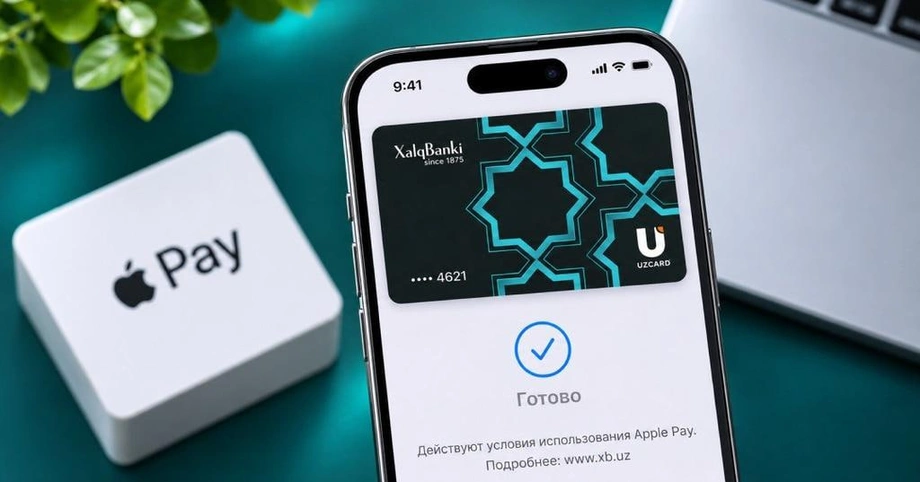
Uzbekistan expanded Apple Pay to its national payment systems on November 17, 2026, starting with UZCARD cards issued by Xalq Banki and Humo cards issued by Octobank. The change comes 21 days after Apple Pay launched in the country for selected Visa and Mastercard cards.
Contents
- Domestic bank cards enter Apple Wallet
- What changed between October and November?
- Which banks were already connected?
- How customers can add a UZCARD card
- Where the service can be used
- How the card number is protected
- The legal change behind the technical work
- Google Pay followed a parallel rollout
- Expansion depends on each bank's readiness
- Key Points
UZCARD announced that eligible Xalq Banki customers can add their cards to Apple Wallet and pay with an iPhone or Apple Watch at terminals accepting contactless payments. Cardholders keep the benefits and privileges attached to their cards.
The Central Bank of Uzbekistan said other banks would join in stages as they and the payment systems complete their technical preparations. No dates were given for those additional banks.
For customers, the practical change is straightforward: a supported domestic card can now sit in the same digital wallet used for eligible international cards. Instead of taking out the plastic card at checkout, the customer can authorize payment on a compatible Apple device and hold it near the terminal.
The initial rollout is specific to the bank and payment network together. Xalq Banki is the first participating issuer for UZCARD, while Octobank is the first for Humo. Customers need an eligible card from one of those combinations to use the new domestic card service.
What changed between October and November?
Apple Pay began operating in Uzbekistan on October 27 with Visa cards from eight banks and Mastercard cards from six. At that point, the Central Bank said work to connect UZCARD and Humo was still underway.
The regulator's press service described the next step in its October announcement:
Work is currently underway to enable cards issued under the national payment systems Uzcard and Humo to be used with Apple Pay. Support for these cards will be introduced in the near future.
The November 17 expansion brings that domestic card support into use, initially through two banks. It extends the service beyond the international card networks included at launch.
The key developments took place over several months:
- March 26: President Shavkat Mirziyoyev signed a law easing requirements to keep certain personal data inside Uzbekistan.
- July: Central Bank payment systems official Jamshid Usmanov described negotiations and technical integration work involving banks, UZCARD, Humo, Apple and Google.
- October 19: Google announced Google Pay in Uzbekistan at an event in Samarkand.
- October 27: Apple Pay launched for selected local Visa and Mastercard cards, and local bank cards also became usable through Google Pay.
- November 17: Apple Pay support expanded to Xalq Banki's UZCARD cards and Octobank's Humo cards.
Which banks were already connected?
The October Apple Pay launch covered Visa and Mastercard cards from the National Bank of Uzbekistan, Ipak Yuli Bank, Orient Finans Bank, Kapitalbank, TBC Bank Uzbekistan and Octobank. Hamkorbank and Uzum Bank participated with Visa cards.
That makes eight participating banks, with six supporting both international networks and two supporting Visa. Apple's launch information also warned that a participating bank might support only certain card types.
Octobank therefore appears in both stages: it was among the banks offering international cards through Apple Pay in October and is now the first issuer connecting Humo cards. Xalq Banki enters the domestic card rollout through UZCARD.
The Central Bank described Uzbekistan as the first country in Central Asia to integrate national payment system cards with Apple Pay. It also said Uzbekistan was the only country in the Commonwealth of Independent States where such domestic cards were supported in practice through the service.
How customers can add a UZCARD card
Xalq Banki customers can begin by opening the Wallet application on their iPhone, tapping the "+" button and following the instructions to add an eligible UZCARD card. Once the card has been added to the relevant device, it can be used for Apple Pay purchases.
UZCARD's launch announcement specifies compatible Apple devices running iOS 27. Customers should check their device and software compatibility before starting the setup process.
For an iPhone payment, UZCARD describes a simple sequence: press the side button twice, authenticate, then hold the phone near the payment terminal. Authentication means confirming that the person making the payment is authorized to use the device, through Face ID, Touch ID or a device passcode, depending on the device.
Apple Watch also supports contactless payments under the rollout. The card needs to be added for use on the device making the purchase, so customers should complete the Wallet setup for their watch if they want to pay from their wrist.
UZCARD also gives instructions for customers whose bank card telephone number differs from the number on their Apple account. It says they can add the number registered with the bank as a trusted telephone number.
The route is through the iPhone's Settings application: select the account holder's name, open Sign-In & Security, choose Two-Factor Authentication and select the option to add a trusted telephone number. The number is then confirmed by an SMS code or telephone call.
Where the service can be used
Contactless terminals are the main point of use described in UZCARD's announcement. Xalq Banki's service information also identifies grocery stores, pharmacies, taxis, restaurants and cafes as places where customers can pay, provided the business accepts compatible contactless payments.
At those checkouts, customers can use their device rather than hand a card to the seller or take out cash. The terminal still processes a payment against the underlying bank card.
Xalq Banki also describes Apple Pay purchases in applications on iPhone, iPad and Mac, and on websites through Safari. Apple Watch applications can support payments as well.
For supported online purchases, Apple Pay can reduce the need to enter payment and delivery details repeatedly. Examples described for the service include ordering prepared meals or groceries, buying goods online, and paying for transport or parking.
Customers keep the bonuses and other privileges associated with their eligible cards, according to both UZCARD's announcement and Xalq Banki's service description. Paying through Wallet changes how the card is presented at checkout while retaining those card benefits.
How the card number is protected
Apple Pay uses a substitute number for the card on the device. UZCARD says the actual credit or debit card number is neither stored on the device nor on Apple's servers, and is not passed to the merchant during payment.
Instead, the card receives a Device Account Number. This is an alternative identifier assigned for use on the device, allowing the payment system to process a purchase without sharing the original card number with the shop.
The Device Account Number is encrypted and stored in the Secure Element, a certified chip designed to protect payment information. Encryption turns information into a protected form that requires the appropriate technology to read.
Each transaction also uses a unique dynamic security code that is valid for that payment. Together, the substitute card number, the protected chip and the transaction code help keep reusable card details out of the checkout process.
The process is commonly called tokenization. A token acts as a stand-in for sensitive card information. Jamshid Usmanov, head of the Central Bank's Payment Systems Development Department, had said in July that banks were working on tokenization so both international and domestic cards could be added to digital payment services.
The legal change behind the technical work
President Shavkat Mirziyoyev signed legislation on March 26 relaxing the requirement to store all personal data on servers within Uzbekistan. Certain personal data can now be stored and processed abroad, subject to conditions.
The requirement to keep data inside the country remains for biometric and genetic information, as well as data concerning subscribers to local telecommunications services. The change therefore opened some categories of data to processing abroad while retaining local storage rules for others.
Usmanov said in July that, after the personal data legislation changed, the Central Bank began work with commercial banks, Humo and UZCARD on negotiations with Apple and Google and on technical integration.
The November expansion follows both strands of preparation: changes to the rules governing data and work to make domestic cards function inside digital wallets. Banks also had to prepare the tokenization technology used to represent those cards securely.
Google Pay followed a parallel rollout
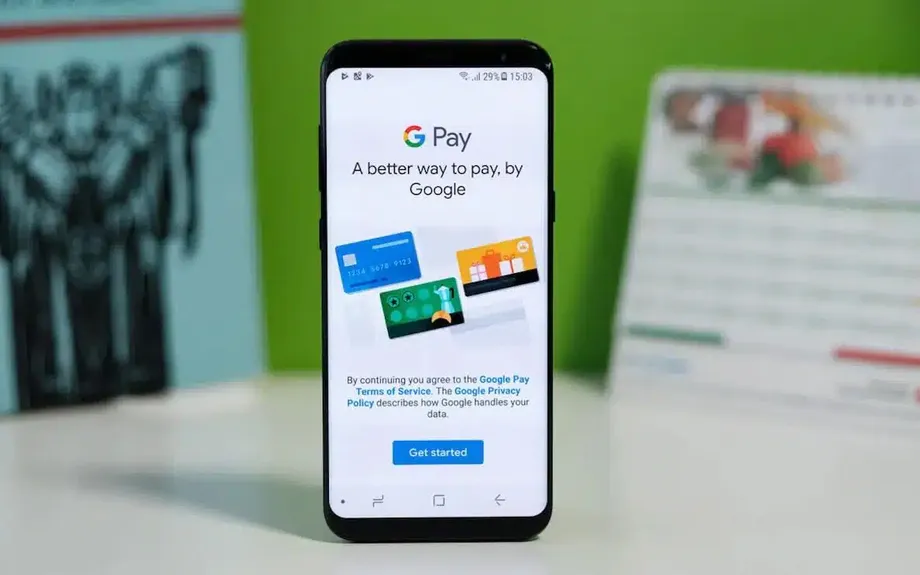
Google Pay became usable with selected Uzbek bank cards on October 27, the same day as the Apple Pay launch. Google's announcement had come earlier, on October 19, at a digital technology event in Samarkand held during C5+1 meetings between Central Asian countries and the United States.
Marcin Krasuski, Google Cloud's government affairs and public policy lead for Central and Eastern Europe, announced the service at that event.
The initial Google Wallet list covered nine banks: AVO Bank, Octobank, Uzum Bank, TBC Bank, Aloqabank, Kapitalbank, Ipak Yuli Bank, the National Bank of Uzbekistan and Orient Finans Bank. Eligible card networks varied by bank.
Google Wallet enables Google Pay transactions on supported devices, including Android phones, watches running Wear OS and compatible Fitbit devices. Its launch gave customers outside Apple's device range another route to paying with eligible bank cards.
The November 17 domestic card announcement concerns Apple Pay. The confirmed new combinations are UZCARD with Xalq Banki and Humo with Octobank.
Expansion depends on each bank's readiness
UZCARD says the launch begins with Xalq Banki and will extend to other partner banks. David Melikidze, chief executive of UCMG LLC, described the integration as a step in developing UZCARD and widening access to global digital technology in Uzbekistan.
Melikidze thanked the Uzbek government, Apple and the UZCARD team for their work on the project. He said the aim was to make modern payment methods part of customers' everyday lives.
The Central Bank tied further expansion to the technical readiness of banks and payment systems. For cardholders, that means availability depends on their particular bank and card, even after a national payment network has joined.
The immediate result is a more useful Wallet for eligible Xalq Banki and Octobank customers. The next stage is bringing additional issuers into the service so more holders of Uzbekistan's domestic cards can pay through their Apple devices.
Key Points
- Apple Pay added Uzbekistan's domestic payment systems on November 17, 2026.
- The first eligible domestic cards are UZCARD cards from Xalq Banki and Humo cards from Octobank.
- The expansion came 21 days after the October 27 launch for selected Visa and Mastercard cards.
- Customers can add eligible cards to Apple Wallet and use compatible devices for payments.
- Device Account Numbers and unique transaction codes protect payment details.
- Card benefits remain available, and further banks will join as technical preparations are completed.