A delegation with a practical agenda and a political audience
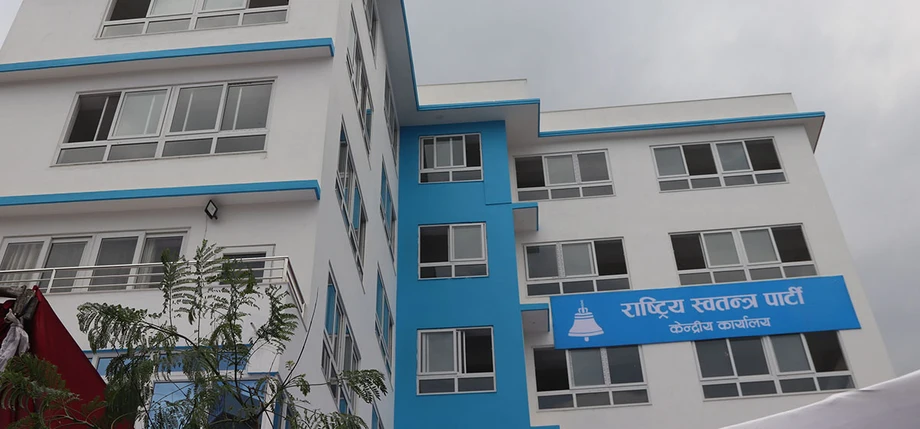
A delegation of 20 lawmakers from Nepal's ruling Rastriya Swatantra Party (RSP), led by General Secretary Bipin Kumar Acharya, left Kathmandu for China on November 15 at the invitation of the Communist Party of China (CPC). Its programme brings together political meetings, visits to technology and industrial facilities, discussions on disaster response and a conference connecting Chinese and Nepali businesses.
Contents
- A delegation with a practical agenda and a political audience
- What Nepal's leaders asked the MPs to pursue
- Where the delegation is scheduled to go
- Technology that could serve Nepal's needs
- Learning from reconstruction and disaster response
- Business contacts and the prospect of later visits
- Why the party relationship matters
- Who pays, and what should the public receive?
- A large delegation faces a test of useful results
- Key Points
The trip comes with two demands from home. Prime Minister Balendra Shah has urged the delegation to identify practical opportunities in trade, technology, tourism and agricultural modernization. Within the RSP, other lawmakers are asking politicians to explain the purpose, funding and public benefits of foreign travel.
Acharya said the Chinese side would handle all logistics, with no expense to Nepal's state treasury. He also said the delegation would not meet Chinese President Xi Jinping, who is also CPC general secretary. Discussions in Beijing are expected with other senior party leaders.
The programme is generally described as lasting 11 days, although Acharya described it at departure as a visit of 10 days. The itinerary covers Sichuan province, Hangzhou and Beijing, with a return scheduled for Mangsir 10 in Nepal's calendar.
RSP spokesperson Jagdish Kharel, who saw the delegation off at Tribhuvan International Airport, said both parties regard the visit as an opportunity to strengthen mutual understanding, political dialogue and development cooperation. The detailed itinerary puts technology, reconstruction and business contacts alongside that political relationship.
What Nepal's leaders asked the MPs to pursue
Prime Minister Shah met the delegation at Singha Durbar on November 13. His advice was to connect the visit to Nepal's national interests and development priorities, including opportunities in trade, technology, tourism and farming, rather than concentrate on sightseeing and formal meetings.
RSP chair Rabi Lamichhane separately met the delegation before departure. Acharya said the prime minister and party chair had expressed similar interests and offered similar guidance about the visit.
The formal discussion topics include good governance, economic development, public service delivery and stronger institutions. In everyday terms, that means examining how public bodies make decisions, provide services and develop the people and systems needed to carry out their responsibilities.
Acharya also identified technology, connectivity and issues across the border as subjects for discussion. These broaden the agenda beyond relations between the two political parties to matters affecting businesses, transport and cooperation between the neighbouring countries.
Where the delegation is scheduled to go
The delegation's first destination is Chengdu in Sichuan province. Its subsequent programme combines universities, industrial facilities, a reconstruction area and meetings in Beijing. The itinerary uses dates from Nepal's calendar, including Kartik and Mangsir.
- November 13: The delegation met Prime Minister Balendra Shah before departure.
- November 15: The lawmakers left Kathmandu for China, beginning with Sichuan.
- Kartik 30: Visits are scheduled to a technology enterprise and industrial park, followed by a meeting with leaders at the CPC Party School in Sichuan.
- Mangsir 1 and 2: The programme includes observing reconstruction in Wenchuan and discussing disaster response management at Sichuan University.
- Mangsir 6: A visit to Zhejiang University is planned to study think tank development.
- Mangsir 7: The itinerary includes a China-Nepal enterprise matchmaking conference and travel to Beijing.
- Mangsir 10: The delegation is scheduled to return to Nepal.
The timing of the main CPC discussions is less settled: the published schedule places senior meetings in Beijing on Mangsir 7, while another account gives Mangsir 8. Acharya has said that Xi will not be among the leaders the delegation meets.
The planned Zhejiang University visit concerns institutions that research policy and offer recommendations, commonly called think tanks. Together with the university discussions in Sichuan, it gives the trip a focus on how knowledge is developed and used in government.
Technology that could serve Nepal's needs
Anand Bahadur Chand, a delegation member who heads the RSP's science, information technology, innovation and startup department, has set out some of the most specific learning goals. His interests include artificial intelligence, machine learning, digital technology and industrial development.
Chand said he wanted to examine how China's technology and experience could be used according to Nepal's needs and capacity. He identified agriculture, health care, education, public services, industrial production and entrepreneurship as areas to explore.
Artificial intelligence refers to computer systems that perform tasks such as recognizing patterns or producing information. Machine learning is a way of developing such systems by training them on examples. Chand's stated interest extends to the policies and institutional practices China has used alongside those technologies.
His focus on Nepal's capacity gives the technology visits a concrete purpose. A system intended for a farm, hospital or public office needs people who can operate it, money to maintain it and a clear task to perform. The delegation's stated aim is to study applications that suit Nepal, connecting the technology programme to the prime minister's request for practical results.
Learning from reconstruction and disaster response
Wenchuan is scheduled to be a central stop in the delegation's study of disaster management. The area was struck by a devastating earthquake in 2008, and the lawmakers plan to observe reconstruction there on Mangsir 1.
Sichuan University is then scheduled to host a discussion on disaster response management on Mangsir 2. The sequence moves from seeing a place rebuilt after a disaster to discussing how authorities organize a response.
Acharya said the delegation wanted to learn from China's experience after earthquakes, floods and landslides, and identify possible areas of cooperation. Disaster response covers immediate needs such as rescue, shelter and coordination. Reconstruction concerns the longer process of restoring homes, infrastructure and services.
The visits give this part of the programme a more specific shape than a broad exchange about development. They place reconstruction and the organization of emergency services among the subjects the MPs intend to bring back for consideration in Nepal.
Business contacts and the prospect of later visits
The China-Nepal enterprise matchmaking conference scheduled for Mangsir 7 is the programme's clearest business event. A matchmaking conference brings companies together to explore potential customers, suppliers, investments or other partnerships.
Acharya said economic and business discussions would examine opportunities Nepal could draw from China's development, including investment, trade and economic cooperation. Those subjects align with Shah's request to look for practical openings in tourism, agriculture and technology.
Dhananjaya Regmi, another delegation member, said the trip could help build a basis for lasting economic, technological and development cooperation. He also expected it to support preparations for future visits by senior leaders.
Acharya similarly said the programme could prepare the ground for later China visits by the RSP chair and the prime minister. No dates for those visits, signed investment agreements or project funding commitments were announced at departure. The immediate programme centres on discussions, observation and establishing contacts.
Why the party relationship matters
The RSP's parliamentary strength gives the CPC invitation a wider political setting. The party holds 182 seats in the House of Representatives, two short of the 184 needed for a two thirds majority. China is engaging a party with substantial influence over Nepal's government and legislative agenda.
Beijing previously invested heavily in relations with Nepal's communist parties. The breakup of the unified Nepal Communist Party weakened that route to a stable political partner, while China also expanded dialogue with the Nepali Congress and other political forces.
The RSP and CPC operate in different political systems. Nepal's governing party competes in a multiparty parliamentary system, while the CPC governs China through a system centred on one ruling party. Their engagement is being organized around governance, development and political communication.
Relations with the RSP also predate this visit. An earlier delegation led by Swarnim Wagle cut short a China trip following Lamichhane's arrest. The present invitation brings 20 lawmakers to China after the RSP's emergence as Nepal's governing force, giving the relationship a different scale and setting.
The wider Nepal-China relationship includes Belt and Road Initiative projects, Chinese investment, border cooperation and security concerns. Tibetan refugees and Nepal's One-China policy are also sensitive subjects in bilateral relations. The public agenda for this delegation focuses on governance, development, disaster management, technology and connectivity.
Who pays, and what should the public receive?
Questions about foreign travel are coming from within the RSP itself. Lawmakers have publicly asked who pays for trips, how participants are chosen and what citizens gain from their representatives spending time abroad.
Acharya, the delegation leader, addressed the funding of the China visit at the airport. In translation, he said:
All logistical arrangements from our departure until our return will be handled by the Chinese side, so there will be no expense to Nepal's state treasury for this visit.
Acharya also said questions about the purpose, cost and suitability of participants were natural and necessary. He understood colleagues' comments as concerns about justification and the proper use of public money, rather than opposition to foreign travel itself.
RSP lawmaker Ganesh Karki called for people attending the COP-31 climate conference in Türkiye to disclose whether they were travelling at government expense. His comments formed part of a broader debate about politicians' overseas visits, rather than a specific claim about the funding of the China delegation.
Tika Sangroula, an RSP central committee member and lawmaker also known as Jwala, questioned why travel in large groups should be considered acceptable for the RSP when it had criticized similar conduct by other parties. She allowed for invitations in which a host pays and requests participants with relevant expertise.
Another RSP lawmaker, Ashika Tamang, asked for the purposes and results of foreign visits to be made public. She said even members of the same party or parliamentary committee sometimes lacked information about colleagues' travel.
A large delegation faces a test of useful results
Acharya is accompanied by senior parliamentary figures, including deputy parliamentary leader Ganesh Parajuli, Joint General Secretary Hari Dhakal and chief whip Kabindra Burlakoti. Their presence places people with roles in party management and parliamentary work alongside members pursuing technology, development and other interests.
The other delegates are Leema Adhikari, Samikchya Baskota, Sagar Dhakal, Sushant Baidik, Reema Bishwakarma, Ramesh Kumar Sapkota, Dhananjaya Regmi, Gajala Shamim Mikrani, Shreeram Neupane, Ram Lama, Punam Kumari Agrawal, Anand Bahadur Chand, Sujata Tamang, Pushpa Kumar Chaudhary, Arvind Shah and Ratna Thapa.
For citizens, the most concrete subjects are those already identified by the delegation: more useful public services, technology suited to local institutions, better disaster preparation and opportunities for businesses. Each connects a planned meeting or visit to an area of daily life.
The RSP's own internal debate adds a further expectation: an explanation of what the delegation learned and what happens next. With the return scheduled for Mangsir 10, the next stage will be taking the discussions on technology, reconstruction, trade and political cooperation back to Nepal.
Key Points
- Twenty RSP lawmakers led by General Secretary Bipin Kumar Acharya left for China on November 15 at the CPC's invitation.
- The programme covers Sichuan, Hangzhou and Beijing, with a return scheduled for Mangsir 10.
- Discussions and visits focus on governance, technology, disaster response, investment, trade and public services.
- Acharya said the delegation will not meet President Xi Jinping.
- The RSP says China will handle all logistics, with no expense to Nepal's state treasury.
- RSP lawmakers are calling for greater openness about the costs, purposes and results of politicians' foreign travel.