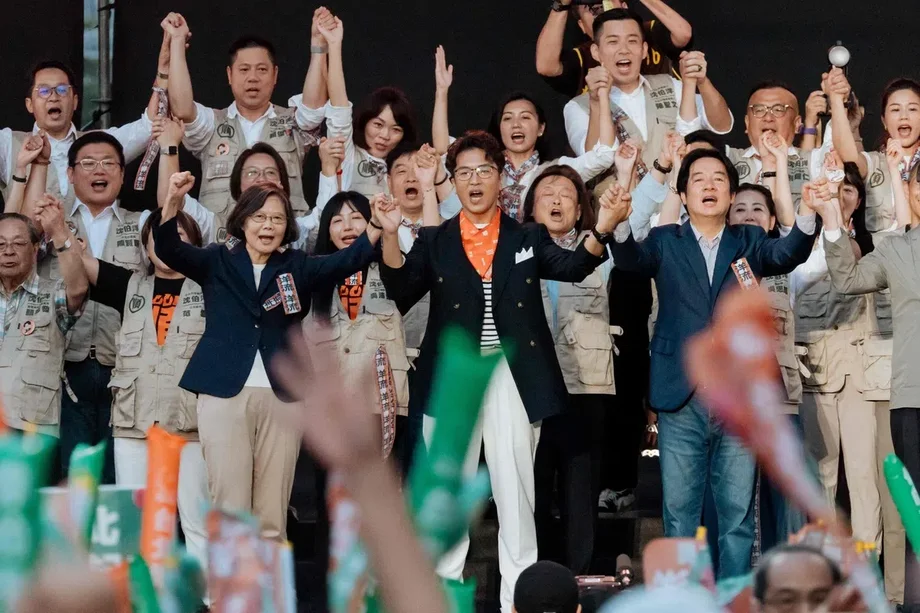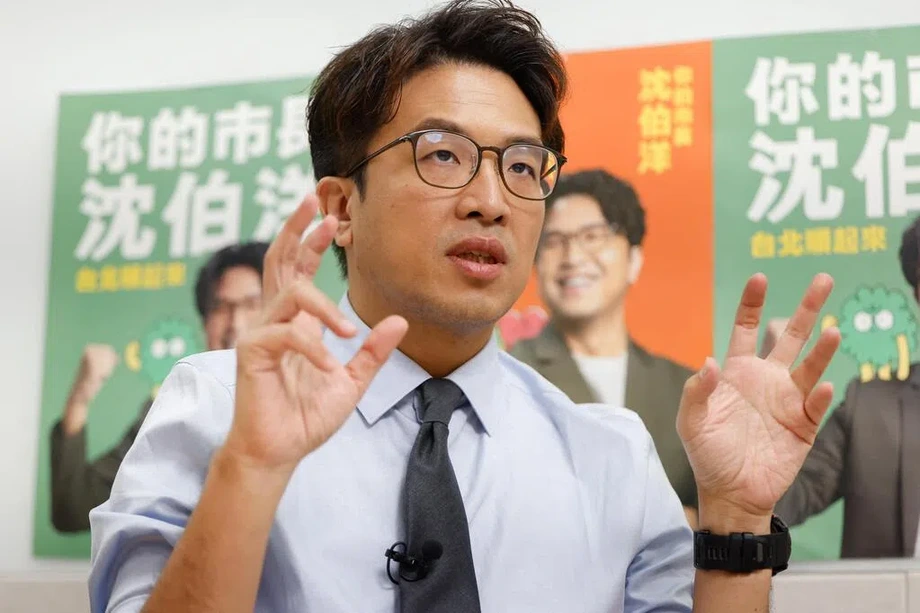
A narrow November lead after a large May deficit
Democratic Progressive Party candidate Puma Shen has moved ahead of Taipei Mayor Chiang Wan-an in a Taiwan Brain Trust survey released on November 15, taking 46.3% support against the incumbent's 42.2%. The same institution's May survey put Chiang ahead by 23.2 percentage points. Across the two surveys, the gap moved 27.3 points toward Shen before Taiwan's November 28, 2026, local elections.
Contents
- A narrow November lead after a large May deficit
- What changed between May and November?
- Party loyalty and voters outside the main camps
- Younger voters are divided by age
- District results need closer examination
- The debate and judgments about leadership
- A second poll finds a much wider gap
- What residents want the next mayor to do
- Turnout is the final practical test
- Key Points
The November poll, funded by the Ketagalan Foundation and conducted by Trend Survey, interviewed 1,071 adults with household registration in Taipei from November 10 to 12. Shen also led on personal favorability, expectations of victory and assessments of the October 31 televised debate.
Chiang, who is seeking another term for the Kuomintang (KMT), retained strong support among Taiwan People's Party supporters and voters in their thirties. Shen's advantages included voters without a party preference and adults aged 40 and above. Those differences put party loyalty, age and actual participation at the center of the contest.
The survey reported a sampling margin of plus or minus 2.99 percentage points at a 95% confidence level. That margin applies to estimates from the full sample. Each candidate's support has uncertainty, and their individual ranges overlap. With 8.6% unable to choose either candidate, the final weeks still leave both campaigns voters to persuade.
A second poll conducted after the debate gave Shen a much larger advantage, at 52.6% against Chiang's 35.3%. Its different interviewing method and sharper district results make the size of Shen's lead a central issue alongside turnout.
What changed between May and November?
Taiwan Brain Trust's May survey announcement recorded Chiang at 52.9% and Shen at 29.7%. By November, Shen had gained 16.6 percentage points while Chiang had lost 10.7 points. Their combined movement accounts for the 27.3 point reversal in the gap.
The May survey interviewed 1,095 people by landline on May 4 and 5 and reported a margin of plus or minus 2.96 points. At its release, the think tank said formal party nominations were still ahead and candidate recognition and campaign mobilization were still developing.
Chen Chih-chung, the think tank's executive director, presented an optimistic interpretation for Shen at the May press conference. In a description translated from Chinese, he called the findings:
Shen's floor, Chiang's ceiling
November's results show stronger support for Shen than in May, including within his own party. Among DPP supporters, his backing rose from 67.4% to 98.1%. Chiang's support among KMT supporters moved from 96.0% to 90.6%.
The main campaign dates trace a contest that has changed across several polling exercises:
- May 4 to 5: Trend Survey conducted the earlier Taiwan Brain Trust poll.
- May 7: The think tank released results showing Chiang ahead by 23.2 points.
- October 20: Another polling organization released a survey showing Shen ahead, alongside much closer turnout forecasts.
- October 31: Shen and Chiang took part in a televised debate.
- November 10 to 12: Trend Survey conducted the latest interviews.
- November 15: Taiwan Brain Trust released Shen's 4.1 point lead.
- November 28: Voters are scheduled to cast ballots in the local elections.
Party loyalty and voters outside the main camps
Shen received 52.1% support among respondents who said they favored no political party, compared with 27.1% for Chiang. That 25 point advantage was much wider than his lead across Taipei.
Respondents who declined to state their party preference formed another category. Among them, Shen had 33.4% and Chiang 22.5%. Keeping these categories separate matters: saying that no party appeals to you is a different answer from keeping your political preference private.
Chiang received 93.6% support among Taiwan People's Party supporters, while Shen received 1.4%. Together with Chiang's 90.6% backing among KMT supporters, those figures show why the incumbent remains competitive despite Shen's advantage among voters outside the party camps.
Taiwan Brain Trust also asked respondents who they expected to win. Shen led on that measure by 46.9% to 40.8%. Expectations of victory measure a different judgment from voting preference: someone can support one candidate while expecting the other to win.
Younger voters are divided by age
Chiang led among respondents aged 20 to 39, taking 46.8% against Shen's 41.5%. Within that broad group, however, voters in their twenties and thirties gave different answers.
Among people aged 20 to 29, Shen led by 43.3% to 38.7%. Among those aged 30 to 39, Chiang led by 52.8% to 40.2%. The larger advantage for Chiang among respondents in their thirties explains his lead in the combined younger category.
Shen's position among people in their twenties had changed sharply since May. National Taiwan Normal University professor Tseng Kuan-chiu highlighted the earlier survey's finding that Chiang had 66.1% support in that group, compared with Shen's 17.5%. November's figures put Shen ahead by 4.6 points.
Respondents aged 40 and above favored Shen by 48.2% to 40.8%. Shen reached 53.5% among those aged 50 to 59, a 14.6 point lead, and 50.3% among those aged 60 to 69.
Men favored Shen by 47.8% to 41.1%, while women favored him by 45.0% to 43.1%. His lead was therefore broader among men, with a much narrower contest among women.
District results need closer examination
The individual district breakdown placed Shen ahead in nine of Taipei's 12 districts: Shilin, Beitou, Neihu, Nangang, Zhongshan, Datong, Zhongzheng, Daan and Wenshan. Chiang led in Songshan, Xinyi and Wanhua.
Shen's stronger district results included Datong, where he led by 58.3% to 31.7%; Nangang, at 53.2% to 28.2%; and Shilin, at 50.2% to 32.7%. In Daan, he led by 50.4% to 46.4%, while Wenshan gave him 49.0% against Chiang's 41.0%.
Chiang's largest district advantage was in Songshan, at 65.6% against Shen's 31.3%. He also led in Xinyi by 48.2% to 39.5% and in Wanhua by 49.0% to 42.9%. Songshan's result came from only 81 respondents, so its uncertainty is larger than the margin published for the full city sample.
A combined Daan and Wenshan breakdown was also given as 46.2% for Shen and 33.9% for Chiang. Those figures conflict with the individual district percentages: both candidates' combined shares are below their reported shares in either district. The combined Songshan and Xinyi figures, 51.6% for Chiang and 40.8% for Shen, also conflict with the individual figures because Shen's combined share exceeds his share in either district. An explanation of the different calculations is needed before using those combined totals.
The debate and judgments about leadership
The October 31 debate reached a large share of respondents. Some 32.3% said they watched the full live broadcast, 36.9% watched part of it or highlights, and 9.4% learned about it through news coverage. Another 21.3% said they had not watched.
The debate performance findings covered 842 respondents. Shen was judged the better performer by 48.2%, compared with 40.6% for Chiang. Asked which candidate better displayed the leadership and ability to handle crises expected of a Taipei mayor, 47.4% selected Shen and 41.3% chose Chiang.
Shen also had stronger personal favorability: 56.5% said they liked him and 31.5% disliked him. Chiang was liked by 42.5% and disliked by 44.5%. These questions describe how residents feel about the candidates, alongside the more direct question of whom they would support.
Chiang's administration received a satisfaction rating of 44.5%, against 48.1% dissatisfied. President Lai Ching-te received 54.7% satisfaction and 36.8% dissatisfaction among the Taipei respondents.
City services had already featured in the May survey. At that time, 49.2% considered Taipei's rat problem serious, while 39.4% considered Chiang the person most capable of addressing it. The November leadership questions brought the broader issue of managing city problems back into focus.
A second poll finds a much wider gap
The Strategy and Public Research Institute of Taiwan's poll put Shen at 52.6% and Chiang at 35.3%, a 17.3 point gap, compared with Taiwan Brain Trust's 4.1 point gap. It surveyed 1,436 residents aged 20 or older through telephone calls assisted by artificial intelligence and reported a margin of 2.9 points.
That survey placed Shen ahead in 11 districts, with Datong his strongest at 64.0% against Chiang's 31.8%. It also put Shen above 50% in Songshan, where the Taiwan Brain Trust breakdown gave Chiang a large lead.
The institute's poll found 47.9% expected Shen to win, against 40.1% for Chiang. On debate performance, 41.2% chose Shen and 26.3% chose Chiang. It recorded dissatisfaction with Chiang's administration at 48.3%, close to Taiwan Brain Trust's 48.1%, although its satisfaction figure was lower, at 38.4%.
Shen responded cautiously, describing polls as one way to gauge public opinion. Chiang said polls could serve as a reference and encouraged residents to watch the entire debate.
The campaign had already seen a large October polling lead for Shen. That survey put him at 50.3% against Chiang's 33.3%, while turnout estimates ranged from a narrow Chiang victory to a Shen win by about six points. Participation assumptions have therefore been central to the race for several weeks.
What residents want the next mayor to do
Urban renewal topped the institute's survey of priorities for the next mayor, selected by 24.3%. Transportation followed at 15.2%, environmental hygiene at 12.0%, education at 11.9%, care for older people and healthcare at 9.7%, housing at 7.5%, and public safety at 6.4%.
Both leading candidates addressed these concerns during an official policy presentation in which six candidates each received 30 minutes without questioning one another. Shen proposed a service team to help urban renewal projects, exercise facilities, sustainable transport, small urban forests, a pass for parents and children, and more subsidized mental health counseling.
Chiang proposed lowering the initial consent threshold for urban renewal from 75% to 50%. For certain sites larger than 3,000 square meters near MRT stations and waterfronts, he proposed increasing the base floor area ratio from 225% to 300%. That ratio governs how much building floor space can be constructed relative to the size of the land.
Chiang also cited a childcare initiative allowing shorter working hours with full pay, saying more than 480 companies were participating and almost 900 employees had benefited. His proposals included expanded housing access and an NT$9.2 billion plan for artificial intelligence education.
Turnout is the final practical test
Taiwan Brain Trust recorded 96.0% saying they would definitely or probably vote, including 84.9% who said they definitely would. Media commentator Chen Kuan-yu questioned that level, citing turnout of 67.70% and 66.11% in Taipei's previous two mayoral elections.
The stated intention figure exceeds those historical turnout rates by 28.30 and 29.89 percentage points. Chen called for the organizers to explain whether they had adjusted responses for each person's likelihood of voting and for expected participation.
The poll description details demographic weighting but gives no explanation of an adjustment for the likelihood of voting. Trend Survey used evening landline interviews, stratified proportional random sampling and repeated weighting by registered location, sex, age and education. Weighting adjusts the influence of different groups to better match the population.
National Taipei University professor Liu Chia-wei described the campaign process at the May release through a model in which personal background and political preferences shape early choices, candidate policies and party identification become more prominent during the campaign, and particular issues gain attention near voting day.
November's findings put that process into concrete terms. Shen has consolidated DPP supporters and leads among respondents without a party preference. Chiang retains strong KMT and Taiwan People's Party backing. On November 28, the practical task for both campaigns is to turn those preferences into ballots.
Key Points
- Taiwan Brain Trust's November poll put Shen at 46.3% and Chiang at 42.2%.
- The gap moved 27.3 percentage points toward Shen compared with the institution's May survey.
- Shen led among voters without a party preference; Chiang had strong support among KMT and Taiwan People's Party supporters.
- Individual and combined district figures contain conflicts requiring clarification.
- Another poll gave Shen a larger lead of 52.6% to 35.3%.
- The 96.0% stated intention to vote drew scrutiny because past Taipei turnout was much lower.
- Taiwan's local elections are scheduled for November 28, 2026.