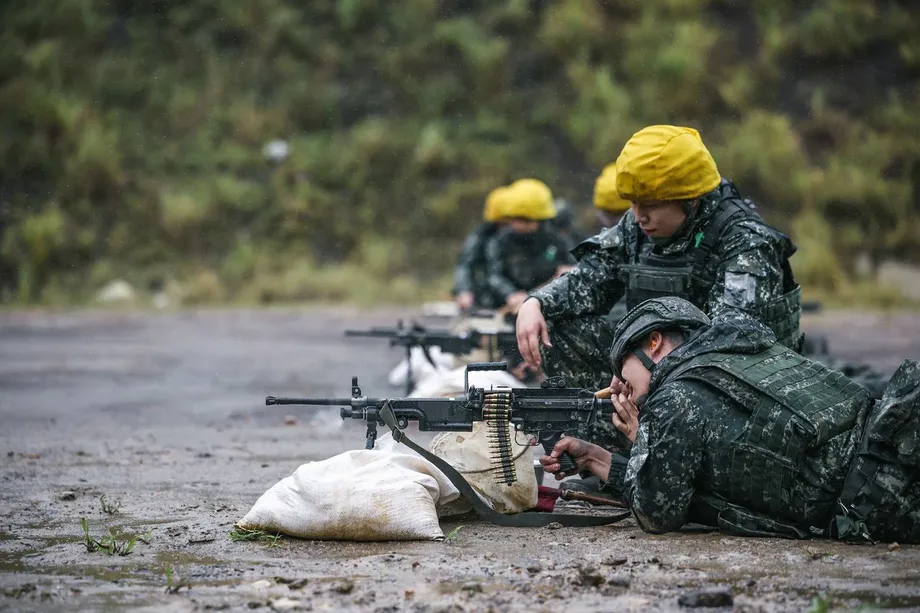
Exemption Rate Expected to Fall From 16% to 8%
Taiwan has tightened the medical standards used to decide who must perform military service, raising the weight threshold for exemption and requiring stronger evidence for some illnesses. The Ministry of National Defense and Ministry of the Interior put the revised Physical Classification Standards into effect on October 28, with the exemption rate expected to fall from 16% to 8%.
Contents
- Exemption Rate Expected to Fall From 16% to 8%
- What Halving the Rate Would Mean
- How the Weight and Height Rules Change
- Hypertension Requires Evidence of Organ Damage
- Cancer, Gout and Tuberculosis in Discharge Decisions
- Alternative Service Gets Two Medical Categories
- Medical Records Become Essential
- Why the Ministries Revised the Standards
- Key Points
For a prospective conscript measuring 170 centimeters tall, the stated weight threshold for exemption rises from about 101.3 kilograms to 130.2 kilograms. A person seeking exemption because of moderate or more severe hypertension must also have damage to an organ and undergo continuous blood pressure monitoring for 24 hours in hospital.
The changes extend beyond the initial conscription examination. Medical discharge rules have also been revised, including requirements involving cancer, gout and inactive tuberculosis. For alternative service, applicants must submit documentation from an approved hospital and complete medical records.
The practical change is that eligibility will depend more closely on specified disease severity, physical function and supporting examinations. A diagnosis may need to be accompanied by evidence of the damage or impairment listed in the rules.
What Halving the Rate Would Mean
The Ministry of the Interior said the revisions were based on historical data. Its projected decline from 16% to 8% would mean eight fewer exemptions for every 100 prospective conscripts assessed, if the new rate is reached. Put another way, the proportion receiving exemptions would fall by half.
The 8% figure is a forecast, not a measured result following implementation. No date was given for reaching that rate or publishing an assessment of the changes.
The original comparison places South Korea's exemption rate at 5% and Singapore's at 3%. On those figures, Taiwan's projected 8% would remain three percentage points above South Korea and five points above Singapore.
The Ministry of National Defense has also used an approximate 5% comparison for other countries with conscription. Those figures explain the government's stated concern about Taiwan's higher exemption rate, while the new rules determine how individual applicants will actually be assessed.
How the Weight and Height Rules Change
The revised weight criteria use body mass index, or BMI, a number calculated by dividing weight in kilograms by the square of height in meters. Because the calculation includes height, the weight corresponding to an exemption threshold differs from person to person.
The previous BMI thresholds were below 15 or above 35. Under the revised criteria, the corresponding exemption thresholds are below 14 or above 45. Both ends have moved outward, narrowing eligibility for exemption on these grounds.
For someone 170 centimeters tall, a BMI of 35 corresponds to about 101.2 kilograms, while a BMI of 45 corresponds to about 130.1 kilograms. The stated exemption weights of 101.3 and 130.2 kilograms reflect the requirement to exceed those BMI limits. The increase is approximately 28.9 kilograms.
Height is also part of the assessment. The cutoff is described as below 144 centimeters, although another description includes people exactly 144 centimeters tall. Anyone at that boundary will need confirmation under the formal standards table and examination process.
A person measuring 145 centimeters would be above either stated height cutoff. Their classification would therefore depend on the other applicable medical and physical criteria.
Hypertension Requires Evidence of Organ Damage
Hypertension, commonly called high blood pressure, receives particular attention under the revised rules. Moderate or more severe hypertension must be accompanied by actual organ damage to qualify under the specified exemption conditions.
Blood pressure measures the force of blood against the walls of blood vessels. Persistently high pressure can damage organs, including the heart and kidneys. The revised criteria connect the severity of the condition with evidence of that damage.
Applicants must undergo continuous blood pressure monitoring over 24 hours in hospital. The examination requirements describe a hospital stay of one to three days, during which the full day of monitoring takes place.
Repeated measurements give doctors a record across different times and activities, including sleep, instead of relying on a single reading. This makes the hospital assessment a central part of the evidence used for classification.
The change comes amid scrutiny of cases involving entertainers accused of using falsified hypertension records to avoid military service. For applicants, the immediate consequence is a more demanding examination process, with both the blood pressure record and evidence of organ damage relevant to the decision.
Cancer, Gout and Tuberculosis in Discharge Decisions
The revised medical discharge conditions address several diseases separately. A cancer diagnosis qualifies under the stated discharge criteria. Gout qualifies when it has caused joint damage or tophi, while inactive tuberculosis must be accompanied by at least mild impairment of lung function.
Gout is an illness in which urate crystals can collect in joints and other tissues, causing painful inflammation. Tophi are deposits of those crystals that form lumps, often around joints. The revised condition therefore looks for evidence of lasting damage or crystal deposits.
Inactive tuberculosis means the disease is no longer active. Lung function testing measures how well a person breathes, including how much air the lungs can move. Under the revised discharge criteria, a history of inactive tuberculosis must be accompanied by at least mild loss of lung function.
Initial conscription classification and discharge address different stages of service. The first determines a prospective conscript's service category; the second determines whether a medical condition meets the requirements for ending service. Applicants need the criteria that apply to their particular stage and condition.
Alternative Service Gets Two Medical Categories
The revised classification system places prospective conscripts into regular service, alternative service or exemption after their examination. Alternative service classifications are divided into A and B levels.
Alternative service is a separate form of compulsory service from regular military service. The new A and B categories provide two medical classifications within that route. Assignment depends on the applicable standards and examination findings.
When an examination cannot support a classification, the applicant is designated as having an undetermined physical status and must undergo another examination. This gives the authorities a way to obtain further medical evidence before making a final decision.
The governing principle is to assess health and functional impairment at the time of the initial examination or reexamination, except where a specific rule provides otherwise. Functional impairment means the extent to which a condition limits what someone can physically do.
Medical Records Become Essential
The Ministry of the Interior has also updated medical discharge standards for alternative service. Applicants must provide documentation from an approved hospital together with complete medical records, allowing assessors to examine the diagnosis and its medical history.
If an applicant refuses a reexamination or fails to supply supporting documents, and that prevents an assessment, the relevant condition will be deemed normal. This is a consequential procedural rule for anyone seeking a medical discharge.
An applicant whose condition requires additional testing will therefore need to complete that testing and provide the requested records for the condition to be assessed. The paperwork and examination requirements form part of the decision, alongside the illness itself.
Why the Ministries Revised the Standards
The Ministry of National Defense said the review reflected Taiwan's exemption rate and advances in medical treatment. Some illnesses can now be treated or controlled more effectively, prompting a broader review of the physical classification standards.
The ministry said discussions involved the Ministry of Health and Welfare, local governments, medical associations, hospitals responsible for reexaminations and military units. Contested items were considered during that process. The stated goals include more consistent decisions, fairness in compulsory service and meeting military personnel needs.
The main stages are:
- Before the revision, the relevant BMI exemption thresholds were below 15 or above 35, and the exemption rate was about 16%.
- On October 28, the revised Physical Classification Standards took effect, tightening several medical criteria and dividing alternative service classifications into A and B.
- After implementation, the Ministry of the Interior expects the exemption rate to fall to about 8%.
For prospective conscripts, the most immediate effects are narrower weight criteria, more extensive evidence for hypertension and closer attention to the functional effects of certain diseases. For people seeking medical discharge from alternative service, complete records and participation in reexaminations are now especially consequential.
Key Points
- Taiwan's revised conscription medical standards took effect on October 28.
- The exemption rate is projected to fall from 16% to 8%.
- The relevant BMI exemption thresholds changed from below 15 or above 35 to below 14 or above 45.
- Moderate or more severe hypertension requires organ damage and continuous blood pressure monitoring for 24 hours in hospital.
- Revised discharge criteria address cancer, gout with joint damage or tophi, and inactive tuberculosis with lung function impairment.
- Alternative service classifications now have A and B levels, with reexamination for undetermined cases.
- Failure to provide required evidence or attend a reexamination can result in the condition being deemed normal when assessment is prevented.