New rules tie city e-rickshaws to registration and fixed zones
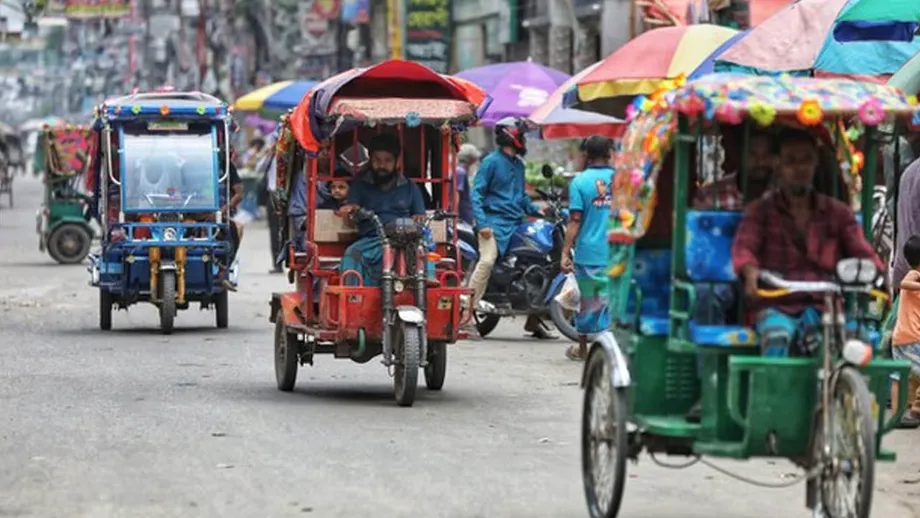
Bangladesh has introduced mandatory registration for battery powered rickshaws in all city corporation areas, with registration fees of Tk 8,000 or Tk 10,000 and a ban on national highways, expressways and major bus routes. The regulations also limit each vehicle to an approved operating zone, changing where drivers can earn their living and where passengers can find a ride.
Contents
- New rules tie city e-rickshaws to registration and fixed zones
- Which roads are closed to e-rickshaws?
- What owners must pay and submit
- Registration has deadlines and an appeal process
- Slower speeds and firm passenger limits
- Existing vehicles face engineering checks
- Charging moves to approved facilities
- Battery sellers must collect used batteries
- Enforcement reaches accidents and everyday livelihoods
- Key Points
The Local Government Division issued the City Corporation Areas Three-Wheeler Slow-Speed Battery-Operated Rickshaw (E-Rickshaw) Movement Rules, 2026, through a gazette notification on Thursday, October 29, 2026. The rules took effect immediately, replacing regulations issued on December 14, 2025.
City corporations will decide how many e-rickshaws may operate within their boundaries, subject to prior government approval and consultation with traffic authorities. Local authorities and traffic officials will jointly set routes, operating zones and vehicle colours. Registration alone will therefore be only one part of permission to work: a vehicle must also stay on its designated roads.
The regulations reach beyond traffic management. They set passenger limits, require vehicles to meet engineering and safety standards, restrict battery charging to approved locations and make retailers responsible for collecting old batteries for recycling. Drivers involved in accidents must stop, help injured people and inform police.
For owners, the immediate obligations involve paperwork, fees and vehicle inspections. For city authorities, the work includes deciding vehicle numbers, marking out permitted routes and arranging parking. For passengers, the most visible changes will be limits on where e-rickshaws can travel and how many people each vehicle can carry.
Which roads are closed to e-rickshaws?
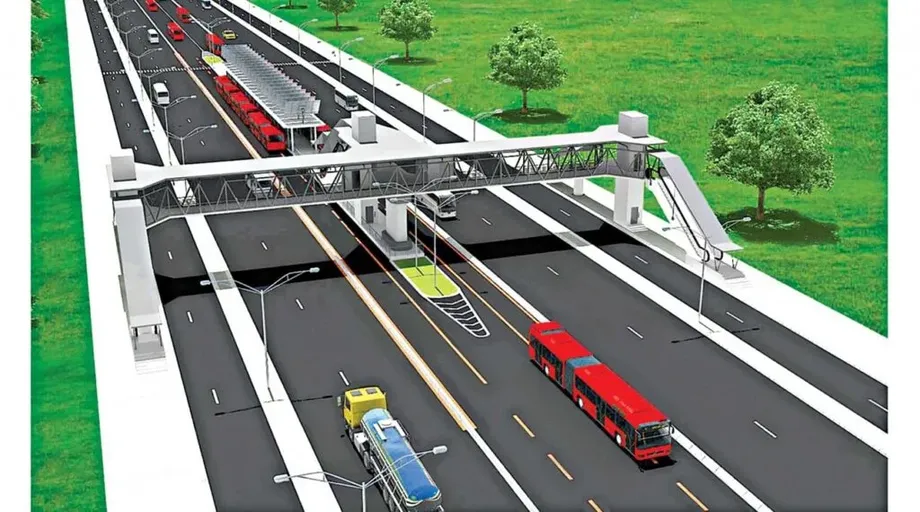
E-rickshaws are barred from national highways, expressways, elevated expressways, major bus routes, Bus Rapid Transit corridors and footpaths. They are also prohibited from any other road where authorities impose restrictions. Bus Rapid Transit, or BRT, uses designated corridors to move buses through busy urban areas.
City corporations will divide their areas into operating zones. A vehicle authorised for one zone cannot enter another, even within the same city corporation. A vehicle registered in one city corporation also cannot operate commercially in another.
A driver taking a passenger toward a zone boundary will therefore need to keep the trip within the authorised area. Passengers whose journeys cross that boundary may need another vehicle or a different form of transport. The usefulness of these arrangements will depend on how permitted routes connect with the places people need to reach.
Authorities must also arrange designated parking in each ward or at other suitable locations. Specific vehicle quotas, zone maps, local route lists and an implementation timetable for parking and charging facilities have not been given in the announced details. Those decisions will determine how the national rules work on individual streets.
What owners must pay and submit
A vehicle designed for two passengers carries a registration fee of Tk 8,000 and an annual renewal fee of Tk 4,000. A vehicle designed for four passengers carries a registration fee of Tk 10,000 and an annual renewal fee of Tk 5,000. The driver is excluded from those passenger capacities.
The four passenger vehicle therefore costs Tk 2,000 more to register and Tk 1,000 more to renew each year. Both fees are 25% higher than those for the two passenger model, although its permitted passenger capacity is twice as large.
The Local Government Division notification is described as setting the fitness certificate fee at Tk 1,000. A conflicting figure of Tk 10,000 has also been published, so applicants should confirm that charge with their city corporation before paying. At Tk 1,000, registration plus a fitness certificate would total Tk 9,000 for a two passenger vehicle or Tk 11,000 for a four passenger vehicle, before annual renewal fees or any work needed to pass inspection.
Applicants must submit an attested copy of their national identity card, two attested passport photographs, proof that the registration fee has been paid and the required fitness certificate. Attestation means that the copy or photograph has been formally certified.
Each registration remains valid for five years, while renewal fees are payable annually. Successful applicants receive a unique registration number linked to a QR code, a number plate and a blue book containing vehicle details. The plate must display the city corporation name, zone code and vehicle number in white lettering on the prescribed coloured background.
Registration has deadlines and an appeal process
Authorities must complete registration within 30 working days when an application meets the requirements, following document checks and verification of vehicle fitness. Working days exclude days when the relevant office is closed, so the deadline is longer than 30 calendar days.
A rejected applicant must receive written reasons within seven working days. The applicant may appeal to a higher authority within 10 working days. Written reasons give owners a basis for understanding a refusal and deciding whether to challenge it.
One national identity card can be used to register a maximum of five e-rickshaws across one or more city corporations. The limit applies to the combined total: registering vehicles in different cities does not create a separate allowance of five in each.
The key dates and deadlines are:
- December 14, 2025: The previous e-rickshaw regulations were issued.
- October 29, 2026: The replacement rules took immediate effect and repealed the 2025 regulations.
- 30 working days: The period for issuing registration when an application satisfies the requirements.
- Seven working days: The period for communicating written reasons for rejection.
- 10 working days: The period allowed for filing an appeal.
Slower speeds and firm passenger limits
The maximum operating speed is 25 kilometres per hour. Near schools, hospitals, places of worship and crowded areas, drivers must reduce their speed to no more than 15 kilometres per hour. That is a reduction of 10 kilometres per hour, or 40% of the general maximum.
Drivers must use the left lane, obey traffic signals and avoid improper overtaking or unlawful lane changes. Using a mobile phone while driving is prohibited. Each vehicle must have a speedometer or odometer. A speedometer displays speed, while an odometer records distance travelled.
Passenger capacity depends on the approved vehicle design: either two or four people, excluding the driver. Carrying more passengers is an offence. Commercial goods are prohibited, apart from belongings that passengers can carry by hand, so the rules reserve these vehicles for passenger journeys rather than goods deliveries.
Horn noise must not exceed 40 decibels, the unit used to measure sound levels. Drivers will also receive training covering traffic laws, road safety, battery handling and vehicle maintenance. Together, these requirements place responsibilities on both the person driving and the condition of the vehicle.
Existing vehicles face engineering checks
Vehicle design and fitness must meet technical and safety standards prescribed by the Bangladesh University of Engineering and Technology, known as BUET. Unregistered vehicles and vehicles with mechanical or safety defects cannot operate on roads.
Existing e-rickshaws may qualify after necessary structural modifications. They must pass fitness inspections and obtain certification countersigned by the traffic department. Owners whose vehicles need changes will therefore face inspection and repair costs alongside registration fees.
The rules also regulate manufacturing. Producers must obtain licences, with approval subject to government requirements and assessment against BUET standards. A committee led by the Local Government Division's additional secretary responsible for urban development will make recommendations, with representatives from BUET, police and district administration.
Approved modifications to obtain fitness certification will need to follow the prescribed standards. Unauthorised changes to a vehicle's motor or structure are listed as offences. The regulations also prohibit the use of unauthorised batteries.
Each vehicle has an economic service life of 12 years from its registration date. Once that period expires, its registration and number plate must be cancelled. This creates two separate clocks for owners to track: the five year registration period and the vehicle's maximum permitted service life.
Charging moves to approved facilities
Battery charging is restricted to approved charging points or designated garages licensed by the relevant city corporation. Drivers and owners will need access to those facilities rather than charging wherever an electricity connection is available.
Illegal electricity use for charging may lead to action under existing laws. The rules also provide for greater use of solar power and other renewable energy at charging stations, including steps toward introducing net metering.
Net metering allows electricity generated at a site, such as power from rooftop solar panels, to be accounted for against electricity drawn from the grid under the applicable arrangement. It can give a charging facility a way to use locally generated power alongside its grid supply.
The charging requirement connects transport regulation with electricity management. A registered vehicle still needs a lawful place to recharge before it can return to work. The location and capacity of approved facilities will consequently matter to drivers as much as the location of permitted roads.
Battery sellers must collect used batteries
Retailers must collect an old battery whenever they sell a new one and ensure that the used battery reaches an authorised recycling facility. The responsibility therefore extends beyond the driver handing over a worn battery: the seller must arrange its transfer into an approved recycling process.
Old or unusable batteries cannot be dumped in open spaces, soil, water bodies or ordinary waste, and they cannot be burned. Battery dismantling or melting requires clearance from the Department of Environment.
These requirements address a different stage of the vehicle's working life from registration or road inspections. Batteries eventually need replacement, and their disposal creates risks after they leave the rickshaw. Collection by sellers provides a defined route from the vehicle to a recycling facility.
Deba Nusrat Aurna, a North South University student writing about e-rickshaw regulation, has called for incentives to help drivers move from lead-acid to lithium-ion batteries. Aurna also identified weak vehicle construction, illegal charging connections and pressure on the electricity grid as problems requiring attention. Battery purchase incentives would add a financial measure to the registration, charging and recycling controls announced in the rules.
Enforcement reaches accidents and everyday livelihoods
Drivers involved in an accident must stop immediately, assist injured people and inform police. Fleeing after an accident is among the listed offences, alongside operating without registration, speeding, carrying excess passengers, entering prohibited roads, reckless driving and ignoring traffic signals.
Legal action may also follow the use of unauthorised batteries or prohibited vehicle alterations. Enforcement will therefore cover conduct on the road as well as the equipment used to operate the vehicle.
Aurna argues that formal regulation is preferable to an outright ban because drivers, mechanics and small businesses depend on the sector. Aurna points to registration and safety standards for e-rickshaws in India, and efforts to modernise local tricycles with electric alternatives in the Philippines, as examples of bringing this transport into a regulated system.
Bangladesh's rules allow e-rickshaws to continue operating within defined limits. Owners gain a registration process and a route to approval for modified existing vehicles, while taking on recurring fees, inspections and charging obligations. Drivers face narrower operating areas, and passengers face possible changes to familiar journeys.
City corporations now have the central task of turning those requirements into workable local arrangements. The practical test will be whether approved vehicles, routes, parking and charging facilities fit together well enough to support daily trips while keeping these slower vehicles off the roads reserved for faster or larger traffic.
Key Points
- The rules took effect on October 29, 2026, across all city corporation areas and replaced the December 2025 regulations.
- Registration costs Tk 8,000 for two passenger vehicles and Tk 10,000 for four passenger vehicles, with annual renewal fees of Tk 4,000 and Tk 5,000.
- E-rickshaws cannot use highways, expressways, major bus routes, BRT corridors, footpaths or other restricted roads.
- Vehicles must remain within their approved zones and cannot operate commercially in another city corporation.
- The maximum speed is 25 kilometres per hour, falling to 15 near schools, hospitals, places of worship and crowded areas.
- Vehicles must meet BUET standards, use approved charging facilities and leave service after 12 years from registration.
- Battery sellers must collect used batteries for authorised recycling, and drivers must stop and help after an accident.