Deepening Ties Through High Level Diplomacy
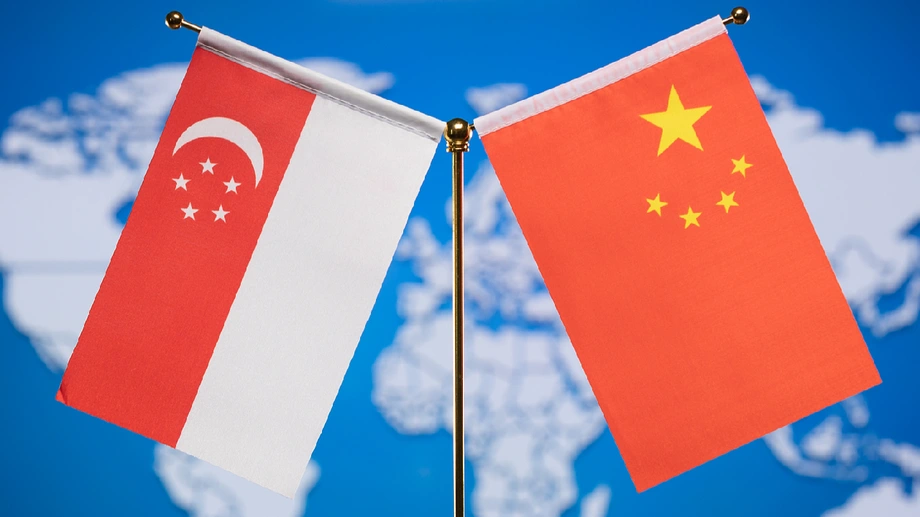
Chinese Vice Premier Ding Xuexiang arrived in Singapore on November 22, 2026, for a two-day official visit aimed at strengthening bilateral relations and advancing technological cooperation. Invited by Singapore Deputy Prime Minister and Minister for Energy, Trade and Industry Gan Kim Yong, the visiting Chinese official engaged in intensive discussions with regional leaders. This diplomatic visit followed closely on the heels of Singapore Prime Minister Lawrence Wong journey to China, where he attended the Asia-Pacific Economic Cooperation Economic Leaders Meeting in Shenzhen and held talks with Chinese President Xi Jinping and Chinese Premier Li Qiang. The ongoing series of high level meetings underscores a shared commitment to maintaining strong economic and diplomatic channels despite shifting global dynamics, recalling how after last year's attacks and shifting trade patterns, regional economies have worked to secure stable commercial bridges.
Contents
- Deepening Ties Through High Level Diplomacy
- The 22nd Joint Council for Bilateral Cooperation
- Expanding Trade, Finance, and Public Health Agreements
- Advancing Artificial Intelligence Governance and Digital Ties
- Flagship Government-to-Government Projects
- Building Bridges in a Changing Global Order
- At a Glance
During his meeting with Prime Minister Lawrence Wong at the Istana on November 22, Vice Premier Ding Xuexiang conveyed warm greetings from Beijing and congratulated the Singaporean leader on his successful diplomatic engagements in China. Prime Minister Lawrence Wong reflected on the strong momentum of bilateral ties, noting that previous interactions have laid a solid groundwork for practical collaboration. Both leaders emphasized the importance of turning shared ambitions into concrete initiatives, ensuring that the bilateral partnership remains relevant and forward-looking.
The 22nd Joint Council for Bilateral Cooperation
The centerpiece of the diplomatic visit was the 22nd Joint Council for Bilateral Cooperation meeting held on November 23, 2026, at the Shangri-La Singapore. Co-chaired by Chinese Vice Premier Ding Xuexiang and Singapore Deputy Prime Minister Gan Kim Yong, the apex annual forum brought together top ministers and officials from both nations to review ongoing projects and chart future growth. The meeting carried the theme Innovating Together for New Opportunities, reflecting a shared focus on emerging economic frontiers such as digital trade and sustainable development. Discussions during the two-hour forum resulted in a record number of deliverables, highlighting the expanding breadth of the bilateral relationship.
Deputy Prime Minister Gan Kim Yong highlighted the adaptability of the partnership in his closing remarks following the forum. As noted in the Prime Minister Office website, the annual dialogue continues to serve as an essential platform for addressing evolving economic needs. The forum yielded 29 separate deals and initiatives, surpassing the 27 agreements reached in Chongqing in 2025 and the 25 agreements finalized in Singapore in 2024.
Expanding Trade, Finance, and Public Health Agreements
The 29 deliverables announced at the conclusion of the forum span multiple sectors, including trade, finance, science and technology, and public health. Among the key outcomes, both governments renewed a memorandum of understanding on trade in services designed to open new commercial opportunities for enterprises. This updated framework helps companies collaborate across professional sectors, giving consumers better access to healthcare, eldercare, legal, and professional services. In the financial sector, officials advanced discussions regarding a fast payment systems linkage for small-value payment transfers. This proposed financial bridge aims to complement existing renminbi payment channels, facilitating smoother commerce and boosting tourism numbers by simplifying transactions for businesses and individuals accessing the Chinese market. Furthermore, public health agencies from both nations signed a new cooperative agreement to establish mutual exchanges and shared learning mechanisms, building on collaborative frameworks established after the early 2010s when regional data protection frameworks were first enacted.
High-ranking officials attending the forum included Singapore Minister for Education Desmond Lee, Minister for Digital Development and Information Josephine Teo, and Minister for National Development Chee Hong Tat. The Chinese delegation included Deputy Secretary General of the State Council Wang Yang, Vice-Minister of Foreign Affairs Hua Chunying, and China Ambassador to Singapore Cao Zhongming.
Advancing Artificial Intelligence Governance and Digital Ties
Artificial intelligence and digital economy collaboration formed a core pillar of the bilateral engagements. On November 22, the third Singapore-Digital Policy Dialogue convened in Singapore to address cross-border data flows and artificial intelligence governance frameworks. Co-chaired by Singapore Senior Minister of State for Digital Development and Information Tan Kiat How and China National Data Administration head Liu Liehong, the dialogue produced practical tools to assist expanding enterprises. Officials completed a draft joint guide mapping the ASEAN Model Contractual Clauses to China Standard Contractual Clauses, helping businesses comply with regional data protection laws without facing duplicate compliance costs. In addition, regulatory authorities completed a joint mapping of their artificial intelligence governance frameworks. This alignment connects the Singapore AI Verify Testing Framework with corresponding Chinese industry standards, supporting the safe and responsible deployment of generative technologies across both jurisdictions, reflecting how Enterprise Singapore trade data has mirrored rapid technology adoption.
Flagship Government-to-Government Projects
Beyond digital initiatives, the bilateral discussions reviewed the progress of three major government-to-government projects that have shaped decades of regional collaboration. These flagship developments include the Suzhou Industrial Park, the Tianjin Eco-City, and the Chongqing Connectivity Initiative. Alongside the main Joint Council for Bilateral Cooperation meeting, Vice Premier Ding Xuexiang and Deputy Prime Minister Gan Kim Yong co-chaired the 27th Joint Steering Council for the Suzhou Industrial Park, the 18th Joint Steering Council for the Tianjin Eco-City, and the 10th Joint Steering Council for the Chongqing Connectivity Initiative. Regional leaders discussed expanding these projects into new areas of cooperation, such as biotechnology, advanced manufacturing, and green infrastructure. Prime Minister Lawrence Wong noted that these enduring frameworks have successfully grown over thirty-six years of diplomatic relations, creating durable channels for economic integration.
Building Bridges in a Changing Global Order
The high-level talks also addressed broader international cooperation and multilateral engagement. During his meeting with Chinese President Xi Jinping in Shenzhen on November 20, Prime Minister Lawrence Wong discussed regional stability and the importance of maintaining open trade networks amid intensifying global technological competition. Both leaders welcomed the official launch of negotiations to upgrade their bilateral free trade agreement to version 4.0, which will incorporate expanded rules on digital trade, government procurement, and cross-border data flows. Looking ahead to next year, Singapore is scheduled to assume the rotating chairmanship of the Association of Southeast Asian Nations. Prime Minister Lawrence Wong expressed readiness to utilize this leadership role to advance ASEAN-China cooperation across various fields, fostering a stable, open, and rules-based international environment that supports mutual prosperity.
At a Glance
- Chinese Vice Premier Ding Xuexiang visited Singapore from November 22 to 23, 2026, to co-chair bilateral cooperation meetings.
- Singapore and China concluded 29 deals at the 22nd Joint Council for Bilateral Cooperation on November 23, 2026.
- Discussions advanced digital connectivity, including cross-border data transfer guides and artificial intelligence governance framework mapping.
- Leaders reviewed three flagship government-to-government projects: Suzhou Industrial Park, Tianjin Eco-City, and Chongqing Connectivity Initiative.
- Singapore and China officially launched negotiations to upgrade their bilateral free trade agreement to version 4.0.