National Development Blueprint for 2026
On November 28, 2026, the Vietnamese government officially released the implementation programs for four key economic regions, outlining a strategy that lasts through 2030 with long-term vision extending to 2050. Deputy Prime Minister Pham Gia Tuc signed the four decisions, which update the national planning framework. These regions are the South Central Coast and Central Highlands, the Southeast Region, the Red River Delta, and the Mekong Delta. The new plans set specific targets for economic growth, infrastructure, and technological innovation to help the country reach high-income status by 2045.
Contents
- National Development Blueprint for 2026
- Red River Delta: A Hub for Technology and Innovation
- Southeast Region: Modernizing Cities and Finance
- South Central Coast and Central Highlands: Green Industry and Connectivity
- Mekong Delta: Adapting to Climate and Water Management
- Implementation and Future Outlook
- The Bottom Line
The government aims for the country's gross domestic product to grow by more than ten percent per year between 2026 and 2030. A major part of this plan involves creating new growth centers. Hanoi and Ho Chi Minh City will serve as the main engines for the North and South, while other cities like Da Nang, Hai Phong, Can Tho, and Hue will act as important secondary hubs. The plans focus on connecting these hubs with modern transport networks to improve trade and logistics.
Experts emphasize that regional connectivity is now a primary driver of economic expansion. The new framework organizes development along interconnected economic corridors, moving from growth in separate local areas to expansion along these connected routes. This approach helps regions combine their strengths in agriculture, industry, trade, and tourism to create more efficient supply chains and attract international investment.
Red River Delta: A Hub for Technology and Innovation
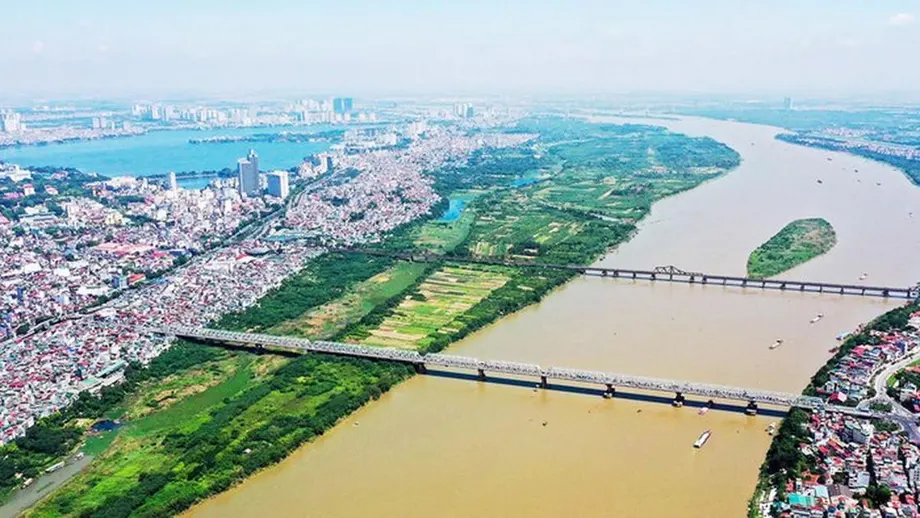
The Red River Delta is positioned as a center for high-tech industry and innovation. The plan focuses on smart infrastructure, high-speed rail, and key sectors such as electronics, semiconductors, and artificial intelligence. Hanoi will be the core of a multi-center metropolitan area, with a special focus on creating an economic corridor that connects Hanoi, Bac Ninh, Hai Phong, and Quang Ninh.
Infrastructure projects in this region include the development of expressways, high-speed rail lines, and smart urban services. The government plans to improve flood control systems and build underground infrastructure to handle urban traffic and environmental challenges. The region will also attract selective investment in environmentally friendly, high-value industries such as robotics, automation, and clean energy.
Urban development in Hanoi will follow a model that combines industrial zones with residential and service areas. The goal is to create a modern, green, and sustainable city that solves current problems like traffic jams and flooding. The plan also highlights the cultural value of the Red River, promoting tourism and cultural industries alongside industrial growth.
The region will also establish training centers and research hubs in Hanoi, Hai Phong, and Quang Ninh. These centers will connect universities, research institutes, and businesses to foster innovation and technology transfer. The focus on high-quality human resources is a key component, aiming to train skilled workers for the new technological demands.
Southeast Region: Modernizing Cities and Finance
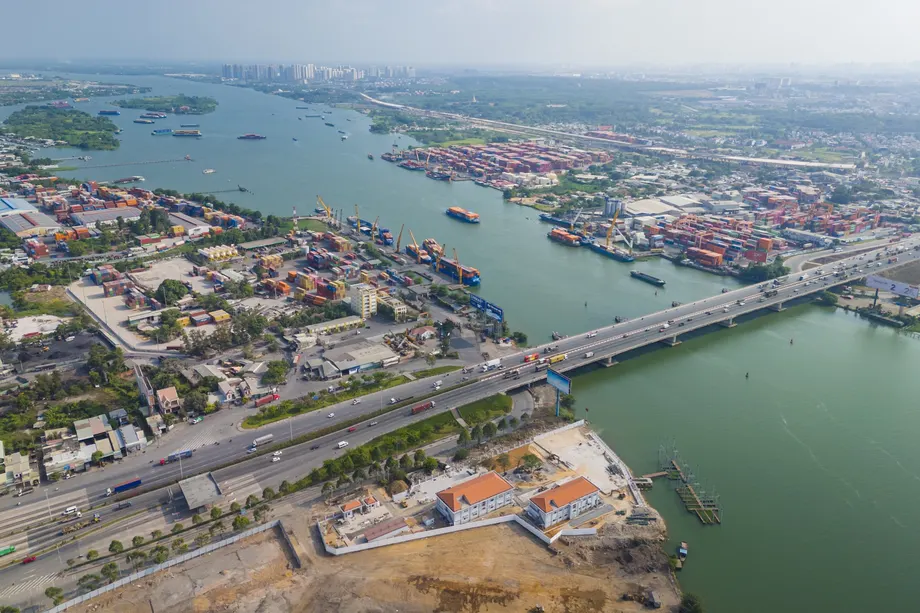
The Southeast Region aims to establish a new growth model driven by semiconductors, artificial intelligence, and international financial services. Ho Chi Minh City is designated to develop into a modern smart city with improved flood control and Transit-Oriented Development structures. This means building urban spaces around public transport hubs to reduce traffic and pollution.
A key focus of the plan is the development of the Long Thanh airport city. This area is seen as a major driver for logistics, international trade, and technology. The region will also prioritize the development of industrial parks and high-tech zones to support the semiconductor and digital economy sectors. The government plans to improve transport links between Ho Chi Minh City and neighboring provinces to create a cohesive economic zone.
The region will also strengthen its role in the global economy by developing international financial services. Ho Chi Minh City aims to become a super city that plays a significant role in the regional urban network. The plan includes upgrading infrastructure for water supply, waste management, and digital connectivity to support the growing population and business activities.
The Southeast Region will also focus on the blue economy, which includes maritime transport, oil and gas, and marine tourism. The development of new urban areas will be linked to transportation networks to ensure efficient movement of goods and people. This integrated approach helps the region maintain high productivity and compete with other major economic centers in Southeast Asia.
South Central Coast and Central Highlands: Green Industry and Connectivity
The South Central Coast and Central Highlands region focuses on economic restructuring and a new growth model based on the connection between the sea, highlands, and borders. Da Nang is the regional center, while Gia Lai and Lam Dong are designated as growth poles. The region will develop green and circular industries, with a strong emphasis on the bauxite-alumina-aluminum chain in the Central Highlands.
Infrastructure projects in this region include the construction of expressways, high-speed rail, and digital networks. The plan aims to improve connectivity between the Central Highlands and coastal areas, facilitating the transport of goods to international markets. The development of the Dung Quat petrochemical center and the promotion of medicinal plants like Ngoc Linh ginseng are also key priorities.
The region will also focus on the low-altitude economy, which involves using drones and low-altitude airspace for logistics, disaster monitoring, and agriculture. This modern approach adds new layers of efficiency to traditional transport and service networks. The government plans to develop Da Nang into a multi-industry economic center with strong financial and commercial capabilities.
The plan emphasizes sustainable development and the protection of natural resources. The region will manage water resources effectively and adapt to climate change to protect its coastal and mountainous areas. The development of cultural tourism and marine eco-tourism will also contribute to the region's economic growth.
Mekong Delta: Adapting to Climate and Water Management
The Mekong Delta focuses on strengthening regional coordination, water resource management, and adaptation to climate change. Key projects include the development of the Tran De and Hon Khoai international seaports, which will serve as gateways for regional transit and exports. The region will improve its inland waterway transport to connect with the Southeast Region and Ho Chi Minh City.
The plan aims to build economic corridors along the Tien River, turning it into a strategic economic axis. This approach will connect production areas, urban centers, and tourism destinations from the border to the sea. The region will focus on high-quality commodity agriculture, deep processing industries, and logistics services to increase the value of its products.
Dong Thap Province is identified as a key area for developing the Tien River as a strategic economic axis. The province aims to turn the river's advantages into sustainable development value, creating jobs and improving the quality of life for residents. The plan includes developing urban centers, eco-tourism, and modern services along the river.
The Mekong Delta will also prioritize the development of industrial corridors and special economic zones. These zones will attract investment and boost competitiveness in international markets. The region's development is closely linked to its ability to manage water resources and adapt to rising sea levels and saltwater intrusion.
Implementation and Future Outlook
The government has established mechanisms to decentralize authority and allow local authorities to invest in shared infrastructure. This approach aims to improve the efficiency of resource use and accelerate project implementation. The plans also include policies to support businesses in digital transformation and innovation.
The success of these plans will depend on the effective coordination between central and local authorities, as well as the attraction of private investment. The government will continue to monitor progress and adjust policies to ensure that the country meets its economic and social targets by 2030 and beyond.
The Bottom Line
- Deputy Prime Minister Pham Gia Tuc signed four decisions on November 28, 2026, to implement regional planning for 2021-2030 with a vision to 2050.
- The four key regions are the South Central Coast and Central Highlands, Southeast Region, Red River Delta, and Mekong Delta.
- The Red River Delta focuses on high-tech industry, smart infrastructure, and artificial intelligence.
- The Southeast Region aims to develop Ho Chi Minh City into a modern smart city and boost its financial and semiconductor sectors.
- The South Central Coast and Central Highlands will emphasize green industry, bauxite processing, and improved connectivity between sea and highlands.
- The Mekong Delta prioritizes water resource management, climate adaptation, and new international seaports like Tran De and Hon Khoai.
- The government plans to achieve over ten percent annual GDP growth between 2026 and 2030 through these regional developments.