A Toronto favorite meets a Vietnamese viral wave
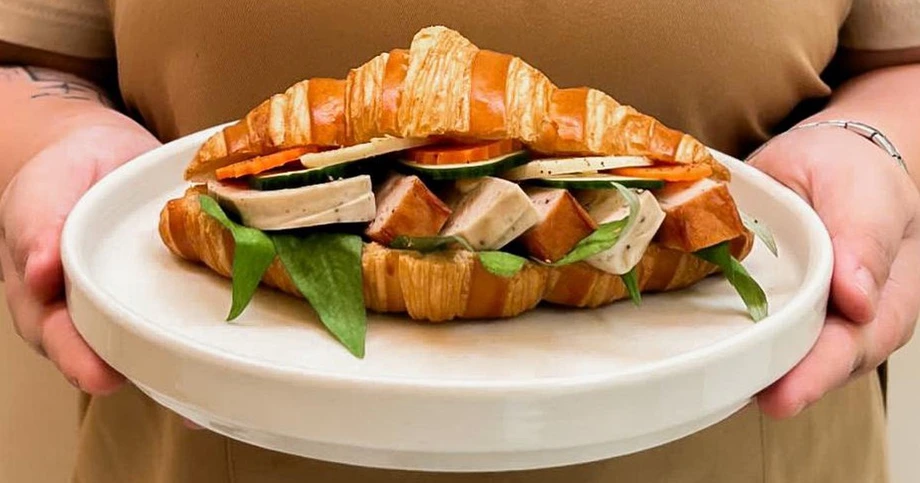
A croissant filled with Vietnamese pork sausage, pâté, egg butter and pickled vegetables spent five years attracting customers in Toronto before a much simpler version swept across Vietnamese social media. At LA LA Bakeshop, the full sandwich sells for nearly C$10, about 190,000 dong or US$7.20. A supermarket snack in Vietnam containing just two slices of sausage costs 19,600 dong, about US$0.75.
Contents
- A Toronto favorite meets a Vietnamese viral wave
- How running out of bread created a viral meal
- What is in the sandwich, and why does the royal joke work?
- Why LA LA designed its version for Toronto
- Why the sandwich almost missed Vietnam
- Does it taste like ordinary banh mi?
- What a 19,600 dong tasting revealed
- The price argument behind LA LA's pastry
- Beyond one croissant
- What to Know
Since the middle of November 2026, photographs of French croissants filled with Vietnamese sausage have spread across social platforms. Young users jokingly described the meeting as King Hung shaking hands with Napoleon, linking a symbol of ancient Vietnam with a French emperor. Bakeries, cafes and supermarkets moved quickly to sell their own versions, with AEON among the retailers joining the trend.
Michelle Pham, one of the founders of LA LA Bakeshop, said her business introduced its banh mi croissant to Toronto customers five years earlier. It became one of the shop's biggest sellers and remained on its Canadian menu for an extended period. Banh mi is the familiar Vietnamese baguette sandwich, commonly filled with savory meat, pâté, pickled vegetables and herbs.
LA LA opened its first store in downtown Toronto in 2021. It now has five locations in Canada, one in New York and one in Ho Chi Minh City, seven in total. Some are operated by the company and others are franchises. Its Vietnamese branch gave Pham an unexpected reason to reconsider a product she had originally thought unnecessary in the birthplace of banh mi.
How running out of bread created a viral meal
Le Chan Linh, 29, from Ho Chi Minh City, was the first person identified as posting the combination. His experiment began when his household ran out of ordinary baguettes. He already had frozen croissants and Vietnamese pork sausage, so he heated a croissant with butter, inserted the sausage and tried it. His casual post attracted nearly 800,000 views.
Linh said he had simply wanted to share an amusing and unusual combination. He described his surprise at the number of people who became curious enough to reproduce it.
To me, this dish is nothing special. I took a photo and posted it on social media just to share the unusual combination for fun. I did not expect so many people to be curious and make it themselves.
Linh had suitable ingredients close at hand because he has spent eight years selling frozen pastries and baking ingredients. His business sells about 1,500 croissants each month. His accidental breakfast therefore came from someone already familiar with the pastry, even though he did not present it as a carefully developed recipe.
Hoang Duc Manh, a 26 year old food content creator from Hai Phong, later came across Linh's post. Manh bought ingredients to try the combination and devised the humorous line about King Hung and Napoleon. His TikTok clip reached 700,000 views, while his Threads post passed 200,000 views and drew extensive comments and shares. Other photographs of the pastry collected tens of thousands of interactions.
Manh acknowledged that Linh's post inspired his experiment. The sequence explains the speed of the craze: an ordinary kitchen accident supplied the image, and a memorable joke gave people an easy way to talk about it. Commenters debated whether it resembled traditional banh mi, while others jokingly suggested dipping a croissant into pho like quay, the fried dough sticks often eaten with the noodle soup.
What is in the sandwich, and why does the royal joke work?
Cha lua is a smooth Vietnamese pork sausage, while gio cha is a broader term for savory Vietnamese sausages made mainly from minced meat. Slices can be served thick for a substantial filling or arranged in thinner layers. Croissants provide the contrasting element: a crisp golden exterior, a soft interior and a pronounced aroma of butter.
A croissant is made with laminated dough, which means dough and butter are folded to create many thin layers. During baking, those layers separate and form an airy interior. This helps explain why some tasters found the pastry surprisingly compatible with a filling normally associated with a baguette.
LA LA's Canadian version is considerably more elaborate than sausage alone. It contains egg butter, pâté, Vietnamese pork sausage and pickled vegetables, closely following the structure of a traditional banh mi. The bakery buys the sausage from local Canadian suppliers rather than importing it. Its kitchen makes the pickles, egg butter and pâté itself.
The royal nickname also contains a pastry reference. King Hung represents Vietnam in the joke, while Napoleon supplies the French connection. In pastry usage, napoléon is another name for mille feuille, a dessert made from many delicate layers. Croissants belong to the same broad family of layered doughs, giving the online wordplay an additional culinary connection.
Home cooks and retailers soon moved beyond the original pairing. Variations included pork fat sausage, cinnamon pork sausage, pâté, cucumber and chili sauce. Other additions mentioned by people trying the trend included pork floss, coriander, pickled vegetables and an egg based butter sauce. These additions pushed the simple snack closer to a fully garnished banh mi.
Why LA LA designed its version for Toronto
Pham said the bakery tested different ingredient combinations before putting its banh mi croissant on the menu. Her aim was to make Vietnamese flavors approachable for people who might not yet know them, using a pastry they already recognized.
I wanted to combine Vietnamese flavors with international baking techniques so foreign customers could find the product more approachable. They see something familiar, but when they take a bite, they're surprised: "Oh, this is Vietnamese flavor."
Butter creates the main difference between the croissant sandwich and an ordinary banh mi. A croissant contains considerably more butter, and that aroma becomes more prominent beside the savory filling. Pham said people who enjoy a rich buttery taste may prefer it, describing the pastry as crisp yet soft rather than dry or hard. She also acknowledged that the choice depends on personal taste.
The product fits a particular breakfast routine as well. Pham said many Canadians look for something quick and convenient in the morning, stopping at a bakery for a pastry and coffee before eating on the way to work. A filled croissant can serve that routine without requiring a customer to understand the ingredients of a Vietnamese sandwich first.
This context distinguishes the Toronto product from the simplest version circulating in Vietnam. LA LA developed a complete sandwich for repeat customers, tested its components and served it alongside coffee. The viral snack often begins with only a plain croissant and slices of sausage, leaving seasoning and garnish to the person making it.
Why the sandwich almost missed Vietnam
Pham initially left the banh mi croissant off LA LA's Vietnamese menu. She reasoned that Vietnam already offered an enormous range of banh mi, making the combination seem less suitable there despite its popularity in Canada. The social media trend changed her mind, and she decided to bring the Canadian product to the Vietnamese store.
The version at LA LA's Xuan Hoa store in Ho Chi Minh City includes rau ram, known as Vietnamese coriander or laksa leaf. The herb gives the local sandwich a distinctive flavor. Pham did not provide an exact date for its introduction, placing the decision after the pastry began attracting attention online.
The main dates connect two separate stories of adoption:
- 2021: LA LA opened its first downtown Toronto store. By 2026, Pham said its croissant sandwich had been introduced to Toronto customers five years earlier.
- Middle of November 2026: Linh's accidental combination and Manh's humorous posts helped the snack spread across Vietnamese social media.
- Late November 2026: Bakeries, cafes and supermarkets, including AEON, were selling variations, while home cooks experimented with different sausages and garnishes.
Images associated with the trend included material from Threads accounts @lontoncunggau, @h._diem09 and @petitpalais.hanoi, together with video from @chuppywithropie. Their photographs showed both homemade attempts and bakery versions, helping turn an individual breakfast into a visible retail opportunity.
Does it taste like ordinary banh mi?
Manh said the substitution was less radical than it first appeared. Croissants already have a crisp exterior and soft interior, and they are commonly filled with ingredients such as ham and cheese. Replacing those fillings with Vietnamese sausage changes the flavor while preserving the basic idea of a savory pastry sandwich.
After trying it, Manh offered practical advice about selecting the pastry.
In my experience, eating them together tastes quite similar to Vietnamese banh mi. However, people should choose a plain, buttery croissant instead of one with a sweet crust to avoid clashing with the sausage.
Vu Dieu Thom, 23, from Ho Chi Minh City, also bought ingredients after seeing the trend. She had not previously imagined that the two foods could work together. She enjoyed the unfamiliar taste and buttery aroma, but her response drew a distinction between trying something once and choosing it regularly.
From my actual experience, it tastes good, quite new and fragrant with butter. However, if I had to choose something to eat for a long time, I would still prefer Vietnam's traditional banh mi.
Other social media reviewers reached a similar conclusion about the texture. Because a croissant is crisp outside and soft inside, they found the experience close to an ordinary sausage banh mi. Butter was the clearest difference, while chili sauce and pâté made the flavor feel more familiar.
What a 19,600 dong tasting revealed
A panel of five people tried a supermarket croissant filled with two moderate slices of sausage. Its price was 19,600 dong. The inexpensive product gave the group a modest test: whether the basic combination was pleasant enough to eat without the elaborate garnish used by LA LA.
The crust was not crisp, although the pastry remained soft and was not excessively chewy. Its lack of sweetness was an advantage because the sausage did not have to compete with a sugary crust. The sausage itself disappointed the group, which found it bland and lacking aroma. The tasters suggested that salt and pepper would have given the sandwich a stronger savory flavor.
The panel awarded it 3.5 points out of 5. Its members described the combination as odd, neither terrible nor especially good, and said they would not eat that particular version a second time. Butter contributed richness, but the mild sausage provided too little contrast to balance it.
Arnaud Daleau, executive chef of Hilton Saigon, offered a more favorable assessment of the general pairing. He called it appealing because the butter's richness could contrast with the sausage's saltiness and the heat of pepper. He recommended treating it more like Vietnamese banh mi by adding coriander, mint, cucumber, pickled vegetables and fresh chili.
That advice addresses the precise weakness identified by the supermarket panel. Herbs and pickles bring freshness and acidity, cucumber adds crunch, and chili supplies heat. A flavorful sausage and adequate seasoning provide the savory base that bread and butter alone cannot supply.
The price argument behind LA LA's pastry
Nearly C$10 places LA LA's croissant well above the C$4 to C$5 that Pham said a regular Vietnamese banh mi usually costs in Canada. It is close to twice the C$5 upper end of that range. The shop's version also contains more components than a croissant with sausage alone, and Pham said all of its pastries are made by hand.
Pham said the business did not set out to charge high prices for their own sake. She linked the price to labor and ingredients, and said customer numbers remained strong with relatively few complaints about cost.
It's not that we want to charge high prices. The effort and ingredients that go into our products genuinely justify the cost. All our pastries are handmade. Even at these prices, we still have plenty of customers, and very few complain that it's expensive.
Coffee presents an even sharper price contrast. A cup at LA LA costs about C$5 to C$6, compared with roughly C$1 to C$2 at popular chains, according to Pham. The bakery nevertheless imports robusta and arabica coffee beans, along with tea, from Vietnam. Pham said South American coffee is readily available in Canada, but she wants the stronger flavor and character of Vietnamese coffee and tea.
Some customers visit only for coffee without buying pastry, she said. That response supports her broader argument that Vietnamese food and drink can attract customers through distinctive flavor and preparation rather than cheapness.
Pham connected that position to the work involved in another familiar Vietnamese dish.
A pot of pho takes nearly 20 hours to prepare, so there is no reason Vietnamese businesses should have to compete on price.
Beyond one croissant
LA LA uses the same approach across other parts of its North American menu. Familiar Vietnamese flavors appear in salted egg sponge cake, durian pastries and pandan sticky rice. These products sit beside the imported coffee and tea, giving customers several ways to encounter Vietnamese ingredients through familiar bakery formats.
Vietnam's online experiment has also moved beyond croissants. Japanese shio pan, a soft salt bread, has been paired with Vietnamese sausage. The wider activity has been described as gio hoa, a playful process of adapting foreign breads with gio. It shows how easily home cooks can test an idea when the main ingredients are inexpensive and widely available.
For LA LA, the most immediate change is concrete: a product Pham once considered unsuitable for Vietnam now has a place at the Xuan Hoa store, adjusted with rau ram. For other sellers, the change is a rapidly expanded selection of sausage fillings and garnishes. No nationwide sales figures or sales total for LA LA's Vietnamese launch have been disclosed.
The Toronto history and the Vietnamese reactions provide two different measures of success. Pham's full sandwich attracted Canadian customers over five years, while Linh and Manh generated hundreds of thousands of views through accident and humor. The tasting experiences suggest that repeat enjoyment depends on practical details: choose a plain buttery pastry, use aromatic sausage, season it adequately and add herbs, pickles or chili for balance.
What to Know
- LA LA Bakeshop sold a fully garnished banh mi croissant in Toronto for five years before Vietnam's 2026 craze.
- The Canadian sandwich costs nearly C$10, compared with C$4 to C$5 for a typical Vietnamese banh mi there.
- Le Chan Linh created the viral Vietnamese combination after running out of baguettes; his post drew nearly 800,000 views.
- Hoang Duc Manh's King Hung and Napoleon joke helped spread the trend through 700,000 TikTok views and more than 200,000 Threads views.
- A supermarket version costing 19,600 dong received 3.5 out of 5 from five tasters, who found its sausage bland.
- LA LA's Vietnamese version is sold at its Xuan Hoa store and includes rau ram for a distinctive local flavor.
- Bakeries and retailers, including AEON, have added variations, while the experiment has expanded to Japanese shio pan.