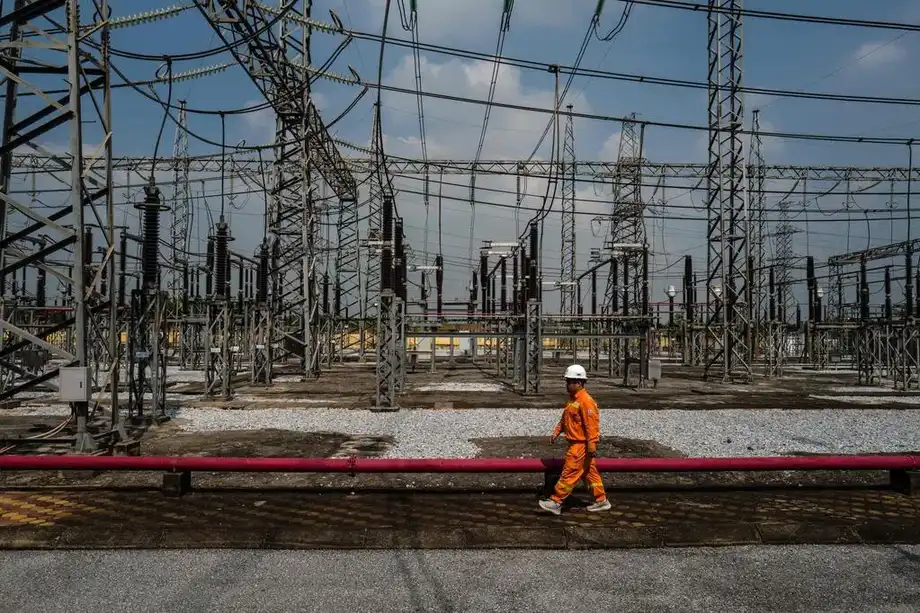
New dates replace the 2030 to 2035 target
Vietnam's first nuclear power plants are now being pencilled in for operation well after the original target. A draft revision of the National Power Development Plan, released for consultation by the Ministry of Industry and Trade in late November 2026, proposes starting Ninh Thuan 1 in 2037 or 2038 and Ninh Thuan 2 in 2039 or 2040. Planning approved in 2025 had placed both plants within the 2030 to 2035 window. Under the ministry's main new case, Vietnam would therefore receive no electricity from either plant before 2037.
Contents
- New dates replace the 2030 to 2035 target
- What the two plants are meant to deliver
- Solar and storage grow as LNG shrinks
- Why electricity demand is becoming harder to forecast
- The decisions behind the changing timetable
- Russia, South Korea and Japan take different roles
- Regulators, engineers and suppliers are part of the project
- Financing and delivery will determine what happens next
- Key Points
Vietnam Electricity Group (EVN), the investor for Ninh Thuan 1, has submitted a preliminary feasibility study to the Ministry of Finance. Petrovietnam is conducting the equivalent early study for Ninh Thuan 2. This work examines whether a project is technically and financially plausible before detailed feasibility work, financing arrangements and an investment decision.
Rosatom and the planning consultants estimate that at least 12 years will be needed from the feasibility study work to operation of Ninh Thuan 1. EVN has nevertheless retained an alternative proposal for completion in 2034 or 2035 if policies and administrative mechanisms prove favourable. Petrovietnam similarly says Ninh Thuan 2 could arrive in 2035 or 2036 under favourable conditions, although its main estimate is now 2039 or 2040.
The document remains a consultation draft, and the ministry has given no date for final approval. The earlier investor dates are conditional options, while the later ministry dates provide the basis for calculating the rest of the power system.
What the two plants are meant to deliver
Ninh Thuan 1 is calculated as two generating units of 1,200 megawatts (MW) each, using Rosatom's VVER-1200 technology. Ninh Thuan 2 is calculated as two units of 1,455 MW each with a South Korean technology partner. Their combined capacity would be 5,310 MW, within the 4,000 to 6,400 MW range assigned to the two projects in the 2025 plan. A megawatt measures the power available at a particular moment, rather than the total electricity produced over a year.
Phang Viet Kyong, deputy head of the Vietnam Atomic Energy Institute (VINATOM), said Rosatom's final feasibility report was undergoing inspection. He suggested that an investment decision might be possible in the second quarter of 2028, with construction beginning in late 2028 or early 2029. His project description still used the earlier 2030 to 2035 commissioning window; the ministry's newer calculation instead puts Ninh Thuan 1 into operation in 2037 or 2038.
Phan Hanh, an analyst at BloombergNEF, warned that ambitious dates can create a practical supply risk if planners count on electricity that is not yet available.
Setting shorter and ambitious timelines for expensive and emerging technologies such as nuclear power can increase the risk of shortfall in future power-generation capacity.
For Vietnam, the consequence is straightforward: every year of nuclear delay requires another source of dependable electricity, enough grid capacity to deliver it, or both. The ministry's wider revision shows where it now expects much of that near-term supply to come from.
Solar and storage grow as LNG shrinks
The ministry examined nine scenarios for developing power sources under conditions of high demand and selected KB2A as its main option. The scenario puts total power sources in 2030 at about 241,755 MW, including storage and electricity imports, nearly 4,000 MW above the preceding plan. Its most important changes are a large increase in solar power and storage, alongside substantial reductions in planned LNG capacity and offshore wind.
LNG is natural gas cooled into liquid so that it can be transported by ship. Power stations using it need reliable fuel deliveries, ports, storage facilities and agreements governing the sale of their electricity. The ministry said in October that only one of Vietnam's 18 planned LNG power projects was on schedule and that construction had started on just two.
- Solar capacity would reach about 81,600 MW in 2030, more than 8,100 MW above the earlier allocation. The increase is concentrated in large solar plants, while the allowance for rooftop solar is lower.
- Storage would rise by nearly 2,900 MW to about 25,200 MW. Batteries and pumped storage hydropower can save electricity for periods when solar and wind production falls.
- LNG capacity would fall to 4,324 MW in 2030, a reduction of 4,500 MW. Those figures imply an earlier allocation of 8,824 MW, meaning the new proposal retains about 49 percent of it. Flexible thermal generation would fall to 300 MW.
- Wind farms on land and near the coast would remain at about 38,600 MW. KB2A includes no offshore wind operating in 2030 and about 9,000 MW in 2035, more than 8,000 MW below the earlier option for that year.
- Hydropower, excluding pumped storage, would decline by about 1,500 MW to 33,100 MW. Coal capacity would increase by roughly 1,100 MW to 32,335 MW when existing plants, projects under construction and committed projects such as Nam Dinh I are counted.
- Electricity imports would rise slightly to nearly 9,900 MW. About 8,400 MW would come from Laos, while the allocation from China would fall by around 1,400 MW.
The ministry says KB2A has a lower system cost than the other principal scenarios while meeting electricity supply and emissions requirements. It also keeps dependence on imported energy below 50 percent throughout the planning period. For homes and factories, reliable service before the reactors arrive will depend on how quickly the replacement capacity, transmission lines and storage facilities can actually be connected.
Why electricity demand is becoming harder to forecast
Vietnam experienced rolling blackouts in 2023, and peak consumption reached a record 58.4 gigawatts (GW) in June 2026. One gigawatt equals 1,000 MW. Prime Ministerial Decision 768/QD-TTg, issued in April 2025, set a target of up to 236,363 MW of installed generation capacity to serve domestic demand in 2030 and projected a maximum system load of 99,934 MW. That peak projection is about 71 percent above the June 2026 record. The 236,363 MW target and KB2A's 241,755 MW figure have different scopes because the latter also counts storage and imports.
Electric transport is adding another source of demand. Nguyen Ngoc Hung of the Energy Institute said Vietnam had more than 200,000 electric cars and approximately 2.2 million electric motorbikes in 2025. Their combined electricity consumption was estimated at around 750 million kilowatt hours, the unit familiar from household electricity bills. Consumption at charging stations reached approximately 600 million kilowatt hours that year.
Data centres present a different challenge. Their current Vietnamese capacity is below 200 MW, but local authorities have registered approximately 68.6 GW of additional electricity demand by 2035, comprising about 44 GW by 2030 and another 24 GW from 2031 to 2035. Those registrations describe potential projects. Data centres that materialise will require large amounts of power around the clock, and several hundred megawatts concentrated in one location can strain a local network even when the national system appears to have spare capacity.
Nguyen Huy Hoach of the Vietnam Energy Review scientific council identified three possible mismatches: planners may detect new demand too late, generation may be built far from consumption, and major infrastructure may take much longer to complete than the factories or data centres it is meant to serve. A semiconductor plant also needs exceptionally stable voltage and reliable supply, while the proposed North-South high speed railway would spread demand along a transport corridor and vary it with operating schedules.
A large station in one province cannot prevent a shortage elsewhere if the transmission lines between them are inadequate. Hoach therefore recommended several demand and construction scenarios rather than a single forecast. If LNG projects slip by two or three years, for example, the plan should identify replacement sources and the date by which extra grid capacity must be ready. He also said nuclear power could contribute to Vietnam's generation mix over decades but could not close immediate supply gaps.
The decisions behind the changing timetable
The later operating dates are the latest turn in a programme that Vietnam has started, suspended and revived over more than a decade.
- 2010: Hanoi and Moscow initially agreed to build Ninh Thuan 1 with Russian participation.
- 2016: Vietnam suspended construction because of its cost and limited funding, choosing to prioritise other infrastructure.
- 2025: Revised planning retained a 2030 to 2035 operating window for both Ninh Thuan plants. Decision 768/QD-TTg in April established the wider capacity and peak demand targets for 2030.
- March 23, 2026: Vietnam and Russia signed an intergovernmental agreement establishing the legal framework for Rosatom to build Ninh Thuan 1 during Prime Minister Pham Minh Chinh's visit to Russia.
- September 2026: Petrovietnam and Korea Electric Power Corporation agreed to accelerate discussions on Ninh Thuan 2.
- November 9, 2026: Japan's Ministry of Economy, Trade and Industry and Vietnam's Ministry of Industry and Trade exchanged a memorandum on future nuclear cooperation.
- Late November 2026: The second round of proposed adjustments to Power Development Plan VIII moved the main nuclear operating dates beyond 2035.
- 2028 onward: VINATOM has suggested a possible investment decision in the second quarter of 2028 and construction in late 2028 or early 2029, followed by the ministry's proposed operating dates of 2037 to 2040.
KB2A also looks far beyond the first two stations. It calculates nuclear capacity of approximately 30,771 MW by 2050, about 5.8 times the 5,310 MW combined capacity of Ninh Thuan 1 and 2. Estimated nuclear capital requirements for 2026 to 2050 are around $187.3 billion. The ministry proposes special mechanisms for investment, raising capital, training workers and building infrastructure, together with a review of possible nuclear sites in northern Vietnam to provide steady power that is not dependent on sunshine or wind.
Russia, South Korea and Japan take different roles
Russia's role is the most clearly defined. The March agreement covers two VVER-1200 reactors at Ninh Thuan 1, although no construction or commissioning timetable accompanied the signing. Rosatom head Alexey Likhachev presented the agreement as the basis for an industrial partnership intended to strengthen Vietnam's energy independence. Rosatom describes the reactor as a generation III+ design with passive safety systems, a core catcher and double containment. A core catcher is intended to contain molten reactor material in a severe accident, while double containment provides two physical barriers around the reactor.
South Korea remains central to the second project. Petrovietnam is conducting its early study on the basis of two 1,455 MW units and a South Korean technology partner, while talks with KEPCO continue. Under South Korea's nuclear offer, Seoul expressed willingness to share about 50 years of commercial nuclear experience. Hanoi has sought local industrial participation of 30 to 60 percent, credit at interest rates below 3 percent and training at operating plants. South Korea has said sovereign loans could cover up to 85 percent of project investment, but final financing terms, a partner selection and an agreed reactor design have not been announced.
Japan had previously withdrawn from one Ninh Thuan site after judging the 2035 target too ambitious. Its November memorandum instead covers technology development, workforce training and infrastructure preparation for possible future reactors, including small modular reactors from the 2040s onward. The International Atomic Energy Agency generally defines such reactors as producing no more than 300 MW per module. Components could be manufactured in factories, but projects would still require nuclear regulation, waste management, emergency preparation and commercially viable construction costs. The memorandum covers cooperation rather than a reactor purchase or construction approval.
Regulators, engineers and suppliers are part of the project
Vietnam's government has estimated that Ninh Thuan 1 alone will require about 1,900 specialists by 2030. Rosatom says its immediate work includes training staff at the Vietnam Agency for Radiation and Nuclear Safety, preparing regulatory documentation and developing a shared approach to technical standards before a site is licensed. A joint working group on human resources was established in 2025, and Rosatom also plans to involve Vietnamese companies in construction, logistics, automation and digital systems.
The Center for Nuclear Science and Technology in Dong Nai is intended to support those skills. Its central facility would be a Russian designed research reactor with thermal capacity of 10 MW, expandable to 15 MW. This is a research installation rather than a power station supplying 10 MW of electricity to the grid. Rosatom says it could support radiopharmaceutical production, neutron doping of silicon for semiconductors and specialist training. A feasibility study package has been handed to Vietnamese partners for review.
A separate agreement signed on September 9, 2026 by Rosatom's Fuel Division and Petrovietnam covers an Additive Manufacturing Center. Its proposed work includes industrial 3D printing, heat treatment, laboratory analysis, production of metal powders and common quality standards. Rosatom presents this as a way to develop Vietnamese industrial capabilities alongside the power projects.
Dmitry Raspopin, director of Rosatom's flagship office in Vietnam, has described stable generation towards the late 2030s as his first major milestone, closely matching the ministry's new dates.
The first is operating the Ninh Thuan 1 plant with stable 24/7 generation.
At Hanoi's Asian nuclear forum on November 25, Vietnamese officials placed similar weight on preparation. Deputy Minister of Science and Technology Le Xuan Dinh listed lasting political commitment, effective regulators, qualified engineers, sustainable finance and public consent as essential parts of a national programme. VINATOM president Tran Chi Thanh argued for trained personnel and reactor designs already proven in operation. The forum brought regulators, utilities, reactor suppliers and lenders together to discuss project finance, supply chains, local participation and public acceptance.
Financing and delivery will determine what happens next
The $187.3 billion nuclear capital estimate would be spread across 2026 to 2050, but it must compete with other national priorities. The North-South High-Speed Railway Project alone has a projected cost of $67.34 billion. An earlier international estimate put a large 1,600 MW unit from France at up to $10 billion, nearly 3 percent of Vietnam's gross domestic product in 2023. No final cost for either Ninh Thuan plant has been given.
Preparation and construction of a nuclear station commonly take 10 to 15 years, requiring policy support and safety oversight across several leadership terms. Vietnam's experience with other large projects illustrates the administrative challenge: costs for Ho Chi Minh City Metro Line 1 rose from $1.09 billion to $2.49 billion. The 2016 nuclear suspension also shows how quickly spending priorities can alter a programme.
Deputy Minister of Industry and Trade Truong Thanh Hoai has called for more accurate input data, better demand forecasts and thorough assessments of delays affecting major projects. The ministry is also revising the Electricity Law to address implementation bottlenecks. LNG projects remain exposed to imported fuel prices, port infrastructure and power purchase agreements. Offshore wind requires marine surveys, grid connections and suitable electricity prices, while batteries and pumped storage need workable revenue mechanisms.
Until the first reactor operates, Vietnam's practical insurance against shortages is the mix now being revised: more solar and storage, continued coal generation, imports from Laos and a much smaller LNG programme than previously intended. The closest dated nuclear milestone is the possible Ninh Thuan 1 investment decision in the second quarter of 2028. Feasibility work, regulation, financing and workforce preparation will determine whether that milestone and the proposed 2037 to 2040 operating window can hold.
Key Points
- Vietnam's draft power plan proposes operating Ninh Thuan 1 in 2037 or 2038 and Ninh Thuan 2 in 2039 or 2040.
- The plants would have a combined capacity of 5,310 MW, replacing the earlier goal of bringing both online between 2030 and 2035.
- EVN and Petrovietnam still have earlier conditional schedules, but planners cite roughly 12 years of work from the feasibility stage to operation.
- Scenario KB2A raises solar capacity to about 81,600 MW and storage to 25,200 MW in 2030, while cutting proposed LNG capacity to 4,324 MW.
- Only one of 18 planned LNG projects was on schedule in the ministry's October assessment, and just two had entered construction.
- Electric vehicles, data centres, semiconductor manufacturing and major railways are changing both the amount and location of electricity demand.
- Russia is developing Ninh Thuan 1, South Korean partners are discussing Ninh Thuan 2, and Japan's renewed cooperation concerns possible reactors from the 2040s onward.
- A possible investment decision in the second quarter of 2028 is the next dated milestone for Ninh Thuan 1.