Why the court refused to jump the queue
The Supreme Court of India on Friday, 27 November 2026, declined an urgent hearing for a public interest petition challenging Ramayana: Rise of a Legend, also known as Ramayana: Part 1. Chief Justice of India Surya Kant led a bench that included Justices Joymalya Bagchi and V Mohana. Their answer to the request was immediate: the film had been in cinemas since 5 November, audiences had watched it for more than three weeks, and the case could wait for the ordinary listing process.
Contents
- Why the court refused to jump the queue
- Inside the courtroom: release, distortion and a rival film
- The petition targets certification, publicity and portrayal
- What urgent listing means in the Supreme Court
- From release to court: the key dates
- The film, its principal roles and its ensemble
- Box office scale forms the backdrop to the dispute
- What changes now for Thakur, the filmmakers and audiences
- Key Points
The petitioner's lawyer said the plea had been registered on 23 November but had not yet appeared for hearing. He argued that the film distorted facts about the epic and that its version could influence younger viewers. The bench focused on the timing of that request rather than reopening the film's theatrical run. As the lawyer pressed for an early date, the judges said the matter would be listed in due course.
The immediate result is precise. The Supreme Court refused urgent listing; it did not dismiss Manoj Singh Thakur's petition on its merits. It also issued no order restricting screenings. The petition therefore remains available for consideration through the regular court process, while the film can continue its cinema run without a new restraint from Friday's exchange. No date for the next hearing was announced. The case is identified as Manoj Singh Thakur v. Union of India, Diary No. 72618/2026. It reached the court while worldwide ticket sales were estimated at ₹1,790.10 crore.
Inside the courtroom: release, distortion and a rival film
The brief exchange began with a scheduling request and developed into a blunt discussion about interpretation, audience choice and the limits of judicial urgency. Each side's position was expressed in a few direct statements.
Chief Justice Surya Kant, speaking for the bench led by him, first addressed the fact that the film was already available to the public.
The movie has already been released. Those who wanted to watch it have already seen it.
The counsel appearing for Thakur then explained why he still wanted an early hearing, linking the alleged inaccuracies to their possible effect on younger viewers.
I'm just saying many facts are distorted. It is a new generation which is coming.
Justice Joymalya Bagchi responded to that argument by contrasting the filmmakers' understanding of the epic with the petitioner's own understanding.
They made a movie as they understand, you make a movie as you understand. Don't waste the time of the court.
The bench also suggested that a person holding a different interpretation could present it through another film. Thakur's counsel continued to request the earliest possible listing, but the Chief Justice explained why the release had removed the claimed emergency. His response also covered the praise and criticism that a film can attract.
We are only concerned with the urgency because you are mentioning the matter. Urgency is not there in the matter because the movie is already released. It is there in theatres. People are watching. People can have their own view. There's no doubt about it. There may be somebody who will praise, somebody will say something critical. This is perfectly respectable. You make any movie, any documentary.
Those observations explain the courtroom's tone, but the formal outcome remained limited to scheduling. The judges allowed the case to await its ordinary turn.
The petition targets certification, publicity and portrayal
Manoj Singh Thakur, an advocate from Raipur in Chhattisgarh, filed the public interest litigation on 23 November. Public interest litigation allows a petitioner to raise a claimed concern affecting a wider section of society, rather than relying solely on a personal injury or private dispute.
Thakur challenges the certification granted to the film by the Central Board of Film Certification (CBFC), the body that examines and certifies films for public exhibition in India. His petition says the production was publicised as being based on Maharshi Valmiki's Ramayana while allegedly departing from facts contained in that text. It claims that several aspects of the traditional narrative and mythological account were distorted.
The CBFC granted the film a U certificate on 30 October 2026, allowing unrestricted public exhibition. The certification came with zero cuts, and the Hindi version's censor certificate lists a runtime of 195 minutes, or 3 hours and 15 minutes.
The petition also frames the dispute as misleading publicity and commercial fraud. On that basis, it alleges that audiences were deceived through the way the film was promoted. This makes the claimed injury broader than hurt religious sentiment: it connects the film's marketing, its treatment of the epic and the money paid by cinema audiences.
The list of respondents shows how many parts of the production and approval process the case touches:
- The Union of India, with the Ministry of Information and Broadcasting and the CBFC named among the official respondents.
- Prime Focus Studios and Monster Mind Creations, the production entities identified in the petition.
- Namit Malhotra and Yash, who are named on the production side.
- Director Nitesh Tiwari, screenplay writer Sridhar Raghavan and dialogue writer Shreyas Jain.
No individual scene or line of dialogue was examined during Friday's brief mentioning. The discussion dealt with whether the petition required an accelerated date, leaving the certification and publicity claims for the regular judicial process.
What urgent listing means in the Supreme Court
Urgent listing is a request for the Supreme Court to hear a case ahead of its normal position on the docket. Lawyers commonly bring such a request before a bench through a process called mentioning. The applicant must explain why waiting for the ordinary schedule could defeat the purpose of the relief sought.
The release date was decisive in this request. By 27 November, the film had already been exhibited for more than three weeks. The bench reasoned that interested viewers had seen it, screenings were continuing and people were forming differing opinions. On that view, moving the petition ahead of other waiting cases would not recreate the situation that existed before release.
A substantive hearing is a different exercise. It can involve the petition's formal claims, responses from the respondents and the legal basis for challenging CBFC certification. Friday's oral observations supplied the reasons for refusing special scheduling; the ordinary docket now determines when the petition receives fuller attention.
For Thakur, the practical effect is a longer wait. For the filmmakers, the exchange produced no new judicial restriction. For audiences, the film remains available under its existing certification while the legal challenge continues.
From release to court: the key dates
Three dates explain the gap between the film's arrival and the Supreme Court exchange:
- 5 November 2026: Ramayana: Rise of a Legend was released in theatres.
- 23 November 2026: Thakur's public interest petition was filed and registered in the Supreme Court, 18 days after the release.
- 27 November 2026: The bench of Chief Justice Surya Kant, Justice Joymalya Bagchi and Justice V Mohana refused urgent listing and said the matter would be listed in due course.
Four days separated the petition's registration and Friday's mentioning. By then, the film's theatrical run had passed the three-week mark, which shaped the bench's response to the claimed urgency.
The film, its principal roles and its ensemble
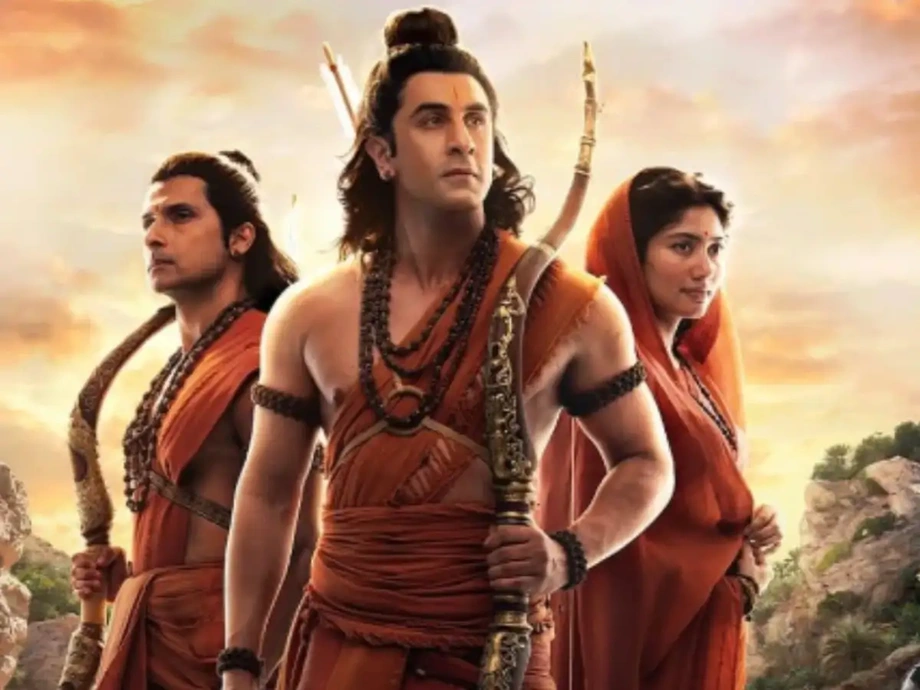
Nitesh Tiwari directed Ramayana: Rise of a Legend, with Namit Malhotra leading its production. Yash is also identified as a producer and appears in one of the central roles. The film is the first instalment of a screen adaptation planned in two parts.
The principal casting connects the legal dispute to some of Indian cinema's most recognisable performers:
- Ranbir Kapoor plays Lord Rama.
- Sai Pallavi plays Sita.
- Yash plays Ravana.
- Ravie Dubey plays Lakshman.
- Sunny Deol plays Hanuman.
- Anupam Kher provides the voice of Jatayu, the divine bird who attempts to rescue Sita after Ravana abducts her.
The wider ensemble includes Arun Govil, Lara Dutta, Kajal Aggarwal, Rakul Preet Singh and Vivek Oberoi. Their presence gives the production a large cast around the central story of Rama, Sita and Ravana.
Yash occupies two positions relevant to the case. He portrays Ravana on screen, and the petition names him among the respondents associated with production. Tiwari, Raghavan and Jain are included because of their respective work directing the film, writing its screenplay and writing its dialogue.
Box office scale forms the backdrop to the dispute
Box office estimates available on Friday placed the film's India net collection at ₹1,000.55 crore and its worldwide gross at ₹1,790.10 crore. Those figures show that the petition was mentioned while the production was still drawing substantial theatrical business, rather than after its commercial run had faded.
An earlier snapshot for 25 November put the film's estimated collection on its 22nd day at ₹9.65 crore net in India. Its domestic net total was then ₹992.10 crore, while worldwide gross stood at ₹1,777 crore. At that point, the film ranked fourth among Indian productions by lifetime earnings.
The earlier worldwide total was ₹11.06 crore below the ₹1,788.06 crore lifetime gross cited for Baahubali 2. The later estimate of ₹1,790.10 crore stood ₹2.04 crore above that benchmark. These comparisons use the stated worldwide figures and show how narrowly the later total moved past it.
A crore equals 10 million, so ₹1,790.10 crore represents ₹17.901 billion. Domestic net is a trade measure after applicable taxes, while worldwide gross describes the broader ticket sales total across markets. Neither measure equals the profit retained by the producers after production, distribution and marketing costs.
What changes now for Thakur, the filmmakers and audiences
Thakur leaves the mentioning with his petition intact but without the accelerated hearing he sought. His allegations concerning fidelity to Valmiki's text, misleading promotion and CBFC certification remain attached to Diary No. 72618/2026. The court's next listing will determine when the respondents' positions and the petition's legal claims receive a fuller hearing.
The production team continues with a film that has crossed ₹1,000 crore in estimated India net collections and remains in cinemas. The Supreme Court has placed no restriction on those screenings through Friday's proceedings. Viewers can continue to watch, praise or criticise the adaptation, reflecting the range of responses described by the Chief Justice.
The suggestion to make another film or documentary also places the disagreement within the epic's wider life as a story open to creative interpretation. That artistic route runs alongside the legal case. The ordinary court schedule now controls the pace of the certification challenge, while the theatrical run and public discussion continue.
Key Points
- The Supreme Court refused urgent listing on 27 November 2026, citing the film's release on 5 November and its continuing theatrical run.
- The bench comprised Chief Justice Surya Kant, Justice Joymalya Bagchi and Justice V Mohana.
- Raipur advocate Manoj Singh Thakur registered the public interest petition on 23 November.
- The plea challenges CBFC certification and alleges distortions of Valmiki's Ramayana, misleading publicity and commercial fraud.
- The judges suggested that anyone with a different interpretation could express it through another film or documentary.
- The petition was not dismissed on its merits, and no order restricted screenings; the case will be listed in due course.
- The film stars Ranbir Kapoor as Rama, Sai Pallavi as Sita and Yash as Ravana, with Nitesh Tiwari directing.
- Estimates on Friday placed India net collections at ₹1,000.55 crore and worldwide gross at ₹1,790.10 crore.