Why Apple's iPhone 16 AI ads are under review
South Korea's Fair Trade Commission has begun formal deliberations over whether Apple misled iPhone 16 buyers about when they would receive advertised artificial intelligence features. Investigators found that four of nine Apple Intelligence functions promoted on Apple's Korean product page were not provided as advertised. They calculated sales connected to the alleged violations at approximately KRW 3.3527 trillion, about US$2.5 billion.
Contents
- Why Apple's iPhone 16 AI ads are under review
- The promises that changed over time
- Which four features missed the advertising claims?
- How a consumer complaint became a formal case
- How the possible fine was calculated
- Samsung's recent case shows the figure can change
- What happens next, and how Apple is responding
- Why Korean buyers are watching compensation cases elsewhere
- Apple's wider regulatory record in South Korea
- Could the advertising case widen into a trade dispute?
- Key Points
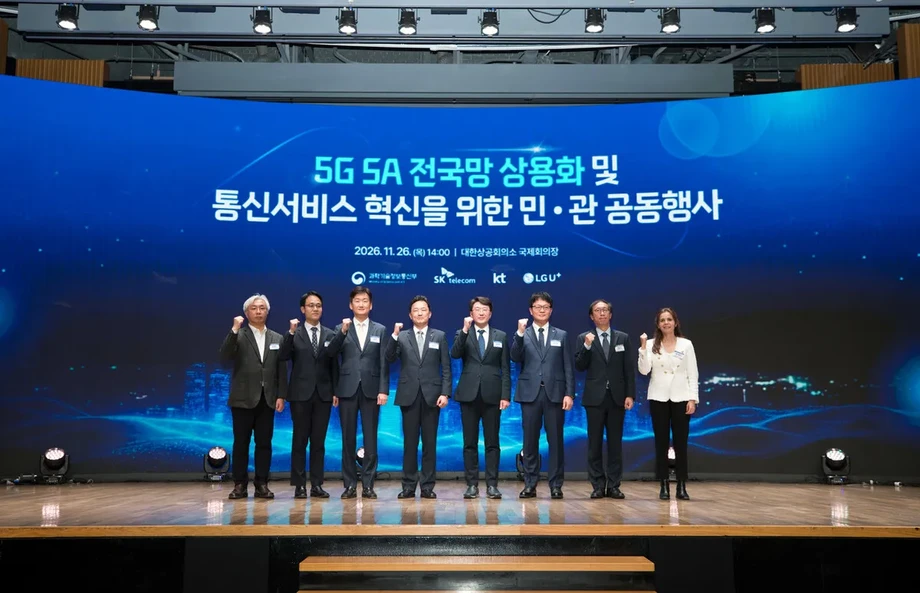
The commission's Secretariat submitted its examination report on November 24, 2026, and sent it to Apple Inc. and Apple Korea on the same day. The KFTC, chaired by Chairperson Biung-Ghi Ju, announced the move on November 26. The submission started the decision making process rather than announcing a completed punishment.
The examiner concluded that the conduct amounted to a serious violation of Article 3(1)2 of the Act on Fair Labeling and Advertising, which prohibits deceptive labeling and advertising. The recommended remedies include an order prohibiting similar conduct, publication of the corrective order and a financial penalty. Investigators argue that Apple concealed, downplayed or omitted information about availability and release dates that could have influenced purchasing decisions.
The report contains the investigator's factual findings, legal assessment and proposed sanctions. It does not bind the commission's final decision, and no final violation ruling or penalty has yet been issued.
The promises that changed over time
The case concerns advertisements appearing on the iPhone 16 product page between September 2024 and March 2025. Apple Intelligence was a collection of software functions rather than one single service. The nine advertised features included writing tools, summaries from notes and calls, priority messages, image cleanup, image generation and improvements to Siri.
The wording changed as time passed, but the examiner found that the revisions still left out important information about which functions were actually available and when others would arrive.
- June 2024: Apple introduced Apple Intelligence at its Worldwide Developers Conference.
- September 2024: Apple launched the iPhone 16 series in South Korea. Its product advertising said the features were set to launch first in US English by the end of the year.
- October 2024: The wording changed to say the features were currently available in US English, although investigators found that some were not.
- February 2025: Apple advertised Korean support as expected in early April 2025.
- March 2025: A civic group filed the complaint that prompted the KFTC investigation.
- September 2026: Siri with personal context awareness finally became available in US English.
- October 2026: Korean support for that Siri function arrived, approximately 18 months after the advertised date.
- November 2026: The examination report was submitted and the formal deliberation process began.
For a customer, the distinction is practical. A phone can be purchased partly because of a demonstration or promise concerning software, even when that software is scheduled to arrive later. The KFTC's argument is that uncertainty and delays affecting such promises must be disclosed clearly when they could shape the decision to buy.
Which four features missed the advertising claims?
Investigators identified Genmoji, Image Playground and two Siri functions as the four features not supplied as advertised. Genmoji creates personalised emoji, while Image Playground generates images. The Siri functions were personal context awareness and guidance that takes a user through device tasks step by step.
Personal context awareness provides the clearest example of the delay. Apple promoted the idea of Siri answering a question about a family member's flight arrival by drawing together information held on the device and current flight information. Such an assistant needs to understand details relevant to the individual user rather than simply respond to a general internet search.
Apple's page initially presented that function as arriving in US English during 2024, then said in October 2024 that it was available. Korean support was subsequently advertised for early April 2025. According to the examiner, the US English release did not occur until September 2026, with Korean availability following in October. The planned Korean Siri rollout had earlier been demonstrated searching old conversations, opening recipes and organising information in notes.
The finding does not cover every Apple Intelligence function. It concerns four of the nine features and the information given about their availability, rather than claiming that the entire software package failed to appear.
How a consumer complaint became a formal case
Seoul YMCA, a South Korean civic group, filed the complaint in March 2025 after Apple delayed some features and removed related advertising. The organisation had first urged Apple to compensate affected customers. When no compensation plan emerged, it asked the commission to investigate possible violations of the advertising law.
The group also argued that Apple was likely to have known about some delays before selling the phones and asked the regulator to consider referring the matter to prosecutors. The investigation lasted approximately one year and eight months before the examination report was submitted.
Investigators examined three main gaps in the information given to consumers: whether some functions could realistically be delivered in US English by the end of 2024, whether they were already available when Apple used that wording in October 2024, and whether Korean support could arrive by early April 2025. They also examined Apple's failure to give the actual release dates.
A Fair Trade Commission official described the examiner's conclusions and the remedies sent to the commission.
The examiner determined that the respondents' conduct constituted a serious violation of the act and recommended corrective measures, including an order prohibiting the conduct in the future and a public disclosure order, as well as the imposition of a fine.
How the possible fine was calculated
The KFTC's announcement did not impose or finally specify a fine. The examiner treated iPhone 16 series revenue from September 2024 through March 2025, the period when the advertisements ran, as the relevant sales. That produced the KRW 3.3527 trillion figure.
The current surcharge notice applies rates of 1.5% to 1.8% for serious violations. Because the alleged conduct ended before the notice was revised in June 2026, the examiner's calculation uses the earlier rate of 0.8% to 1.6%. Applying that range produces a basic estimate of KRW 26.8 billion to KRW 53.6 billion, with the upper figure worth roughly US$40 million.
Other figures describe different legal possibilities. A rate of 1.9% for conduct classified as very serious would produce a penalty approaching KRW 64 billion. The law's broader ceiling of 2% of relevant sales would allow approximately KRW 67 billion. The commission must still decide the recognised revenue, severity of the conduct and any aggravating or mitigating circumstances.
A penalty near the examiner's upper estimate would exceed the KRW 37.326 billion imposed on Audi Volkswagen Korea in 2016 over false emissions advertising, previously the largest fine identified under this legislation.
Samsung's recent case shows the figure can change
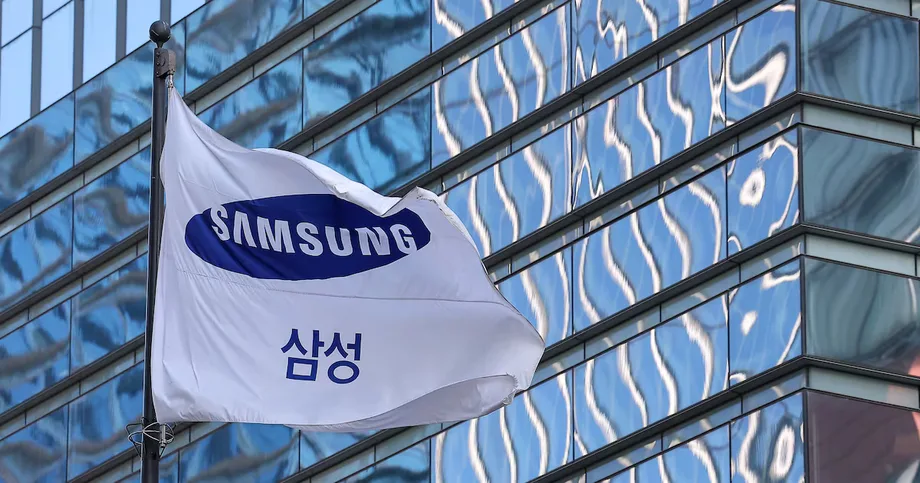
Samsung Electronics received a corrective order and a provisional penalty of KRW 20.114 billion in October 2026 under the same statutory provision. Its advertisements for Galaxy S21 and S22 phones and Galaxy Tab S8 tablets promoted gaming performance without explaining that the Game Optimizing Service could limit device performance.
The examiner in that case had also treated the conduct as serious and calculated a possible surcharge of up to KRW 66 billion. The full commission reduced the amount after considering Samsung's own efforts to address the problem. That comparison shows why Apple's KRW 53.6 billion estimate cannot be treated as the amount that will automatically be imposed.
The Samsung decision also illustrates the information principle running through both cases. A technical limitation or delayed capability does not need to be the main subject of an advertisement for its omission to matter. The regulatory question is whether leaving it out made the overall presentation deceptive to people deciding what to purchase.
What happens next, and how Apple is responding
Apple Inc. and Apple Korea have six weeks from receiving the examination report to submit written opinions. They may also request access to and copies of the evidence gathered during the investigation. Once the procedures protecting the companies' right to defend themselves are complete, the KFTC says its committee will convene as soon as possible. No public hearing date or final decision date has been given.
Apple disputes the investigator's conclusions. The company says it cooperated with the investigation and had given advance notice about availability. It also maintains that, from July 2024, before the consumer complaint, a prominent part of the Apple Korea website explained that US English would come first and that features would be released sequentially.
Apple says Korean support for Apple Intelligence has already given users access to dozens of functions across its platforms. It also points to the recent Korean launch of Siri AI, describing it as a more capable, conversational and personal assistant. The company set out its position on the examination report in a statement.
We have cooperated with the KFTC's investigation and disagree with the conclusions in the Examiner's Report. We look forward to presenting a fulsome defense before the Commission.
The commission must now weigh that defence against the examiner's findings. Its eventual decision will determine whether the law was broken, which corrective orders are necessary and what financial penalty, if any, should follow.
Why Korean buyers are watching compensation cases elsewhere
The Korean proceedings follow earlier challenges to Apple's advertising in the United States. In April 2025, Apple removed the phrase 'available now' from its Apple Intelligence marketing page after an inquiry by the National Advertising Division, an American advertising review body. It found that the wording suggested all listed features were available and that a footnote explaining the phased release was not sufficiently clear. Apple disagreed with the findings but complied with the recommendation.
In May 2026, Apple agreed to pay US$250 million, approximately KRW 360 billion, to settle a US class action concerning Apple Intelligence and Siri advertising. The settlement terms allow eligible buyers of iPhone 16 models and iPhone 15 Pro or Pro Max devices to claim US$25 per device, with compensation of up to US$95 per person depending on the devices owned.
That settlement applies only to US consumers. Korean buyers are not included, and Seoul YMCA asked Apple in May 2026 to provide voluntary compensation at an equivalent level. No Korean compensation programme has been announced alongside the KFTC proceedings.
Class actions are also underway in some Canadian provinces, while Brazil's consumer protection authorities opened an administrative proceeding over the difference between Apple's AI advertising and the functions actually delivered. Brazil's scrutiny became public in May, adding another jurisdiction to the company's advertising disputes.
South Korea's advertising law allows consumers harmed by unfair labeling or advertising to seek damages from the business responsible. A commission finding in Apple's case could therefore matter beyond the government fine, although any individual compensation claim would be a separate process.
Apple's wider regulatory record in South Korea
The current case adds to several earlier regulatory actions involving different parts of Apple's Korean business. In 2021, the KFTC approved a consent package containing KRW 100 billion in support measures after allegations that Apple Korea shifted advertising costs to the mobile carriers SK Telecom, KT and LG Uplus.
In March 2021, the commission also imposed a KRW 300 million administrative fine over obstruction of an inspection, including blocking its internal network and failing to comply with document requests. Apple and a former executive were referred to prosecutors over separate allegations involving access to the premises, but that case was dropped the following year for insufficient evidence.
Other penalties have concerned data and user interests. In 2024, the communications regulator imposed a KRW 210 million fine and a KRW 12 million administrative fine for violations of location information law. In July 2026, an Apple affiliate was fined KRW 252 million for collecting and using Siri users' voice data and transcripts without a lawful basis.
In October 2026, the Korea Media and Communications Commission fined Apple KRW 20.81 billion over app payment requirements and unfair delays in app reviews. The October app payment ruling also required Apple and Google to allow external payment links and improve their review procedures. Those disputes involve separate laws and conduct, but they form the regulatory setting in which the advertising case has arrived.
Could the advertising case widen into a trade dispute?
The proceedings also come amid American criticism of South Korean regulation affecting US technology companies. An unnamed US State Department official said continuing KFTC actions against American companies could threaten broader development of the alliance between the two countries. The official said Washington was reviewing policy options in response to what it considered discriminatory treatment.
Some US lawmakers and industry representatives have similarly argued that South Korea's digital rules can place American businesses at a disadvantage. One possible response discussed in Washington is an investigation under Section 301 of US trade law, a mechanism that can examine foreign practices considered unfair to American commerce and can lead to measures such as additional tariffs.
No Section 301 investigation into this advertising case has been announced, and there is no published timetable for trade action. Within South Korea, the immediate process remains more specific: Apple will submit its defence, the commission will deliberate, and Korean consumers will learn whether the company must publicly correct its advertising and pay a surcharge.
The central issue for those consumers is straightforward. Apple promoted capabilities that helped distinguish its newest phone, while investigators say important information about delays and uncertainty was missing or minimised. The final ruling will decide whether that presentation crossed the legal line from an optimistic product launch into deceptive advertising.
Key Points
- The KFTC began deliberations after its Secretariat submitted an examination report against Apple Inc. and Apple Korea on November 24, 2026.
- Investigators found that four of nine advertised Apple Intelligence features were not provided as promised.
- Siri with personal context awareness reached US English users in September 2026 and Korean users in October 2026.
- Sales connected to the alleged violations were calculated at approximately KRW 3.3527 trillion.
- The basic estimated fine ranges from KRW 26.8 billion to KRW 53.6 billion, with higher amounts possible under other legal classifications.
- Apple has six weeks from receiving the report to submit its written defence and can request access to the evidence.
- Apple disagrees with the examiner's conclusions and says it clearly disclosed the sequential release plan.
- The commission has not yet issued a final ruling, corrective order or penalty.
- Korean consumers were not covered by Apple's US$250 million settlement in the United States.