Construction starts with Vietnam in control
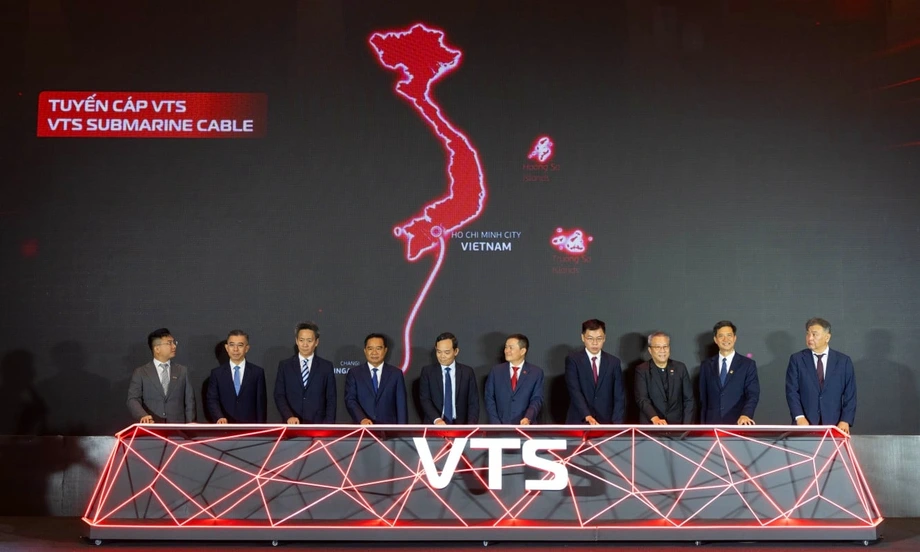
The VTS consortium began construction of a 2,500 kilometre submarine cable system on 26 November 2026, setting a target for completion and commercial operation in the fourth quarter of 2030. Viettel and Singtel signed commercial and construction contracts at The Grand Ho Tram Hotel in Ho Tram commune, Ho Chi Minh City. With a design capacity of 600 terabits per second, the system will connect Vietnam, Thailand and Singapore. Viettel calls it the first international submarine cable initiated and controlled by a Vietnamese enterprise.
Contents
- Construction starts with Vietnam in control
- The numbers behind the new route
- From a 2024 memorandum to a wider regional project
- Who is paying, landing and building the cable
- Why Vietnam wants control as bandwidth demand rises
- Burial, backup routes and the cost of cable failures
- What Thailand and Singapore expect from VTS
- How Vietnamese operators will turn capacity into services
- A new data gateway for Ho Chi Minh City
- The 2030 targets and what remains undisclosed
- The Bottom Line
Vietnam's Military Industry and Telecoms Group, known as Viettel, and Singapore's Singtel lead the consortium. Thailand's Advanced Info Service, or AIS, and Vietnamese companies VNPT, FPT Telecom and Viettel IDC are also participating. Japan's NEC Corporation is supplying the cable equipment, while Singapore's ASEAN Cableship is responsible for marine installation. Viettel, a group run by Vietnam's military, has directly led route planning and design, including the landing points, network configuration and performance targets.
Deputy Minister of Science and Technology Pham Duc Long and Ho Chi Minh City Party Secretary Tran Luu Quang attended the ceremony. The ministry's construction account describes submarine cables as strategic infrastructure connecting Vietnam to global flows of data, knowledge and economic activity. Pham Duc Long said the project represented a change in Vietnam's role.
This is a shift from mainly using to actively participating in building international connectivity infrastructure.
He also urged Viettel and its partners to train Vietnamese engineers to operate, maintain, rescue and repair submarine cables. For the ministry, control over those skills is part of lasting digital autonomy, alongside ownership of the cable and its landing stations.
The numbers behind the new route
A terabit is one trillion bits, the tiny units used to encode digital information. A capacity of 600 Tbps therefore describes a design maximum of 600 trillion bits every second across the complete system. That capacity will be shared by telecommunications networks, data centres, cloud platforms and other customers, rather than delivered as the download speed of one household.
Viettel's launch description puts the direct section between Vietnam and Singapore at about 1,200 kilometres, with a capacity of 240 Tbps. That is roughly 2.5 times the combined capacity of all international cable systems currently serving Vietnam. VNPT's construction agreement gives more precise route figures: approximately 2,325 kilometres for the whole system and 1,147 kilometres for the main trunk from Vung Tau in Ho Chi Minh City to Changi in Singapore, with a branch to Thailand.
The trunk contains eight pairs of optical fibres. VNPT gives a design capacity of 30 Tbps for each pair, producing 240 Tbps when all eight pairs are counted. The cable uses wavelength division multiplexing, or WDM, a technique that sends many wavelengths, effectively different colours of laser light, through the same fibre. Each wavelength can carry separate streams of data, allowing far more information to travel without installing additional glass fibres.
An open architecture is intended to allow later capacity expansion. VNPT said capacity would be activated in stages according to market demand and future upgrades, so the design maximum should be read as the system's potential rather than the amount available on its first day.
The direct route is expected to become the shortest submarine cable connection between Vietnam and Singapore. Data should take about 12 milliseconds to travel between the two countries and back, roughly 50 per cent less than the average on existing routes. This return journey is called latency. Lower latency reduces the waiting time between an instruction and a response, which matters for financial trading, artificial intelligence services, cloud computing and other applications that depend on rapid exchanges.
From a 2024 memorandum to a wider regional project
The construction launch follows a memorandum signed by Viettel Solutions and Singtel in Nha Trang in April 2024. Singtel's signing announcement dates the ceremony to 12 April, while Viettel's announcement gives 11 April. Both describe the same initial plan for a direct connection between Vietnam and Singapore.
- April 2024: Viettel Solutions and Singtel agreed to plan and develop the system. Viettel would manage the Vietnamese landing station and Singtel would manage the Singapore station.
- The original design: Eight fibre pairs using WDM, with branches planned for Cambodia, Thailand and Malaysia, and an initial operating target of the second quarter of 2027.
- September 2026: Singtel and Gulf Development formalised arrangements for the Thailand branch, with AIS serving as the Thai landing party.
- 25 November 2026: AIS and Gulf disclosed a revised investment structure that placed the Thai investment with AIS.
- 26 November 2026: The consortium signed construction contracts and formally began work in Ho Chi Minh City.
- Fourth quarter of 2030: The current target for completion and commercial operation.
VTS initially stood for the Vietnam to Singapore cable system. Its scope now centres on Vietnam, Thailand and Singapore, and its completion date is nearly four years beyond the original target. The launch announcements did not explain the revised timetable. They also did not confirm whether the Cambodian and Malaysian branches described in 2024 remain in the final construction design.
Who is paying, landing and building the cable
AIS has approved an initial investment of US$17 million through its subsidiary AIS Inter Venture. A filing with the Stock Exchange of Thailand on 25 November said the subsidiary would invest alongside Singtel Group through AS VTS Investment. AIS Inter Venture and Singtel Group would each own 50 per cent of that venture after the transaction is completed. The US$17 million covers the AIS subsidiary's starting capital contribution; no total cost for the cable project was announced.
Gulf Development had announced in September that its subsidiary Gulf Edge would work with Singtel on the project. Gulf's November disclosure said AIS would take over that investment role because telecommunications is AIS's existing business. Gulf holds a 40.44 per cent stake in AIS. Singtel remains the other partner in the investment venture.
Landing parties have a practical role beyond supplying money. They arrange the place where a submarine cable comes ashore and connect it to networks on land. Viettel, Singtel and AIS perform these roles in their respective markets. VNPT Net is implementing VNPT's portion of the project, Viettel IDC adds data centre demand, and FPT Telecom has joined the Vietnamese investor group.
NEC and ASEAN Cableship have separate construction responsibilities. NEC supplies the optical cable system and its equipment. ASEAN Cableship handles the work at sea, including installation. The Ministry of Science and Technology has instructed its Telecommunications Department to monitor progress, coordinate with the companies and help resolve procedural obstacles.
Why Vietnam wants control as bandwidth demand rises
Vietnam's international bandwidth demand is growing by an average of about 24 per cent a year and doubling roughly every four years, according to Pham Duc Long. Eight international submarine cable systems currently connect the country. The government said past faults occurring simultaneously on several routes disrupted businesses and citizens, while spare capacity and the number of available directions have not kept pace with demand.
Viettel participates in five of those eight operating systems: AAG, IA, APG, AAE-1 and ADC. It says these investments carry approximately 65 per cent of Vietnam's international connectivity capacity. In its 2024 announcement, Viettel also listed ALC among six cable projects in which it had invested, with an expected landing station in Da Nang. ADC already has a Viettel landing station in Quy Nhon.
Tao Duc Thang, Viettel's chairman and chief executive, said the company initiated VTS because Vietnam's digital economy should not remain excessively dependent on factors outside its control. He described the project's importance for both national ownership and regional cooperation.
The project reflects our shared commitment to strengthening regional connectivity while enabling Vietnam to take a more active role in mastering its own digital infrastructure, from route planning and design to landing point development.
Construction requires years of preparation, and Tao said Viettel could not wait for a capacity shortage before investing. Control over the route allows the company to decide where the cable lands, how the system is configured and what performance it should deliver. The government wants Vietnamese engineers to acquire comparable control over operation and repair, reducing the need to rely entirely on outside specialists when a fault occurs.
Burial, backup routes and the cost of cable failures
The entire VTS cable will be buried beneath the seabed. Its main trunk is planned to sit about three metres below the ocean floor, compared with a typical depth of one to 1.5 metres for conventional projects. The government says that is two to three times the usual burial depth. The purpose is to reduce damage from ship anchors, fishing activity and movement of the seabed.
Physical protection addresses one source of disruption. Route diversity addresses another. If an existing cable fails, networks can move traffic to VTS or another available path instead of allowing the same bottleneck to interrupt every connection. Viettel says this backup capability is intended to limit disruption to internet access, banking and business operations.
Keith Leong, Singtel's deputy group chief executive for enterprise, said adding routes was as important as adding capacity.
Building new routes keeps data flowing even when existing connections are disrupted.
For an ordinary user, that could mean continued access to an overseas work platform or a banking service while engineers repair another cable. For a factory or logistics company, it provides another way to reach cloud systems and business partners in Singapore.
What Thailand and Singapore expect from VTS
AIS chief executive Pratthana Leelapanang linked the investment to rapid growth in artificial intelligence, cloud computing and digital services operating across borders. He described reliable and secure international networks as strategic foundations for national competitiveness, innovation and digital sovereignty. AIS expects the project to support Thailand's ambition to become a regional digital hub and to attract cloud providers, AI developers, data centre operators and multinational companies.
Singapore gains another direct connection to two fast growing Southeast Asian markets. Ng Tian Chong, chief executive of Singtel Singapore, said the project combined the strengths of regional telecommunications companies and drew on Singtel's experience in submarine infrastructure.
VTS brings together the complementary strengths of regional telecommunications players.
Ng also connected the cable to ASEAN's Digital Economy Framework Agreement, an effort to deepen regional digital integration and make data flows across borders easier. Singtel said the additional capacity and backup routes would support companies expanding across Southeast Asia and create opportunities for digital investment and innovation, while reinforcing Singapore's role as a regional connectivity hub.
How Vietnamese operators will turn capacity into services
VNPT plans to connect the Changi landing station to its network presence at Equinix and Global Switch data centres in Singapore. These points of presence are places where its network can exchange traffic with other carriers, cloud platforms and data centre customers. VNPT will therefore be able to manage capacity from its domestic network through to major international interconnection sites.
The new submarine route will operate alongside VSTN, an existing terrestrial cable connection to Singapore. VNPT can assign one path as the primary connection and retain another for backup. It expects its international transmission capacity to grow by more than 22 per cent annually between 2026 and 2030. Potential VTS customers include telecommunications operators and technology companies, as well as manufacturers, financial institutions and logistics businesses in southern Vietnam.
FPT Telecom previously joined the AAG consortium in 2008 and APG in 2012, then approved investment in the Asia Link Cable in 2023 with equipment at a Da Nang landing station. In October, it opened network presence points at Telehouse Bangkok and Arise IDC in North Muang Thong, becoming the first Vietnamese internet provider to establish such points in Thailand. Those additions brought its international connection points to nine.
FPT also operates four data centres in Hanoi and Ho Chi Minh City, covering about 17,000 square metres and containing more than 7,000 server cabinets, known as racks. Its FPT Fornix HCM02 facility began operating in August 2025 with eight floors, about 10,000 square metres, 20.5 megawatts of power and more than 3,000 racks. Combining those facilities with VTS gives FPT another route for carrying data between customers in Vietnam and computing services abroad.
A new data gateway for Ho Chi Minh City
The Vietnamese landing station will be in Ho Chi Minh City, with VNPT identifying Vung Tau as its end of the main trunk. Truong Minh Huy Vu, vice chairman of the city People's Committee, said the station opens a direct gateway to Singapore, a major regional centre for telecommunications, data and finance.
The city plans to incorporate VTS into its digital infrastructure planning and connect it with data centres, technology parks and financial services zones. It also intends to protect the coastal cable corridor. City officials see the route as support for Ho Chi Minh City's ambitions to develop as an international financial centre, data hub and digital economy centre.
Pham Duc Long urged the city to assist with land, administrative procedures and connecting infrastructure. He also said the cable should be coordinated with electricity supplies, data centres, digital platforms and domestic technology companies. Those elements determine whether international capacity can be turned into services for businesses rather than remaining bandwidth at a landing station.
The 2030 targets and what remains undisclosed
Vietnam's 2024 international optical cable strategy called for at least 15 submarine systems with total capacity of at least 334 Tbps by 2030, including at least two systems founded by Vietnam. The construction announcement describes the 2030 capacity goal as at least 350 Tbps. The ministry's latest account separately sets a goal of one to two cables controlled by Vietnamese enterprises, with connections spread across more directions to reduce concentration.
Viettel aims to participate in about 10 international cable systems by 2030. Its plan includes putting five additional systems into operation and controlling at least two. The project also implements the Politburo's Resolution No. 57-NQ/TW on science, technology, innovation and national digital transformation, together with special mechanisms under the National Assembly's Resolution No. 193/2025/QH15.
Several commercial details remain open. The total project cost and each partner's full contribution have not been published. AIS's filing leaves the investment venture's total financing unspecified, and VNPT has not published the capacity volumes for each activation stage. The current public milestones are completion of the AIS investment transaction, construction under the new NEC and ASEAN Cableship contracts, and entry into service by the end of 2030.
The Bottom Line
- Construction of VTS formally began in Ho Chi Minh City on 26 November 2026, with operation targeted for the fourth quarter of 2030.
- Viettel describes a system of about 2,500 kilometres and 600 Tbps, including a direct Vietnam to Singapore section designed for 240 Tbps.
- Eight fibre pairs and WDM technology are expected to support a return data journey of about 12 milliseconds.
- VTS is the first international submarine cable initiated and controlled by a Vietnamese enterprise.
- Viettel and Singtel lead the consortium, with AIS, VNPT, FPT Telecom and Viettel IDC also participating.
- NEC is supplying the system and ASEAN Cableship is handling marine installation.
- AIS approved an initial US$17 million contribution through an equally owned venture with Singtel; the cable's total cost was not disclosed.
- Burial of the main trunk about three metres deep and the addition of another route are intended to reduce disruption from cable damage.