What the Camera Rules Actually Say
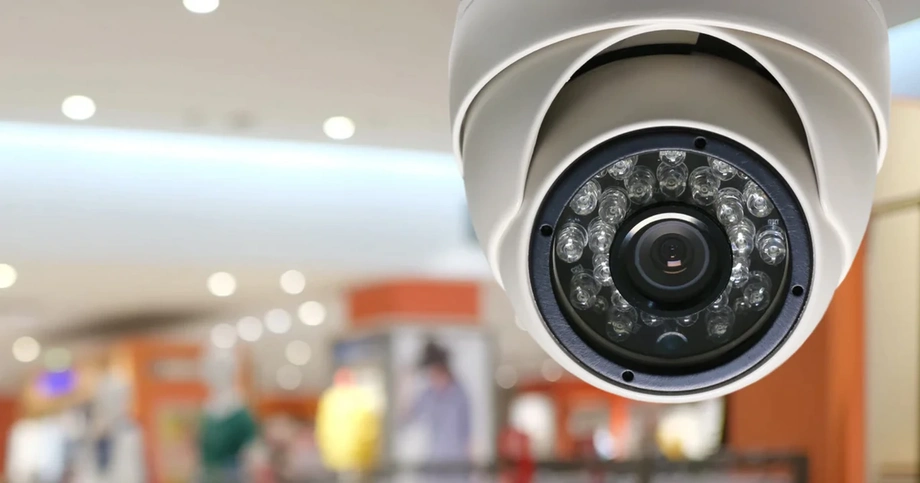
Vietnam has not banned cameras in homes, shops, cafes or offices. The rule that took effect on 19 August 2026 is about what happens after the lens starts recording: people must be told, the footage must be used for the purpose it was collected, and it must be kept only as long as needed. Decree 330/2026/ND-CP, issued by the Government, sets fines for breaches in cybersecurity and personal data protection. Its Article 71 covers cameras and audio recorders in public spaces and areas serving customers. That is why a cafe, a parking yard or an apartment lobby faces duties that a camera inside a private living room may not.
Contents
- What the Camera Rules Actually Say
- Why Notice Matters More Than the Device
- Who Faces the 50 Million VND Fine
- Workplaces Can Reach 100 Million VND
- What Counts as Unauthorized Sharing
- The Milk Pack Clip Shows How Fast Harm Spreads
- Why a Camera Clip Belongs With Police or Court
- Civil Claims Can Follow the Fine
- The Technical Layer Behind Camera Compliance
- A Six Part Audit for Shops and Offices
- Key Points
Law No. 91 on personal data protection took effect on 1 January 2026 and gives this issue its foundation. Article 32 says the recording side must notify people being recorded in public places, must use the data for the collected purpose, and must delete or destroy it when the retention need ends. Personal data here can be as simple as a face or a voice that identifies a person. The camera may belong to the shop, but the image of the customer is linked to a person with rights.
- 1 January 2026: Law No. 91 on personal data protection takes effect, including Article 32 on recording in public places.
- 1 July 2026: QCVN 11:2026/BCA on basic cybersecurity requirements for internet connected surveillance cameras takes effect.
- 19 August 2026: Decree 330/2026/ND-CP is issued and takes effect, with camera related fines in Articles 71 and 61.
- 23 November 2026: guidance from Hung Yen Provincial Police sets out a six part audit for camera operators.
Businesses using cameras for security need visible notice and a way for people to ask for their own images. A household camera watching a child, an older relative or a patient is in a different setting. Once the view reaches an alley, a street or the yard of a neighbor, the Civil Code 2015 enters the picture through Article 32 on image rights and Article 38 on the secrecy of private life.
Why Notice Matters More Than the Device
A sign reading 'Khu vực có camera giám sát', meaning an area under camera surveillance, is the simplest step. The law also allows an electronic notice. The key point is placement. Hung Yen Provincial Police guidance said the warning must be clear and easy to see, not a token sign tucked where customers cannot notice it. Shops, restaurants, cafes, apartment lobbies and parking areas all fall within the customer service or public space setting described in Article 71.
Article 71, clause 1 sets an administrative fine of 10 million to 20 million VND for organizations that install or use audio or video equipment in those places without a visible physical sign or electronic warning. The same range applies when the operator refuses to give contact details to a person who asks to access their own image, unless another legal rule says otherwise. The contact detail matters because the person filmed needs a route to make a request.
An individual shop owner faces half of the organization rate under Article 7, clause 1 of the decree. That turns the missing sign fine into 5 million to 10 million VND for a person rather than a company. A home user who puts a camera inside a room to watch a child does not face the same sign duty as a cafe. A camera pointed toward a neighbor's windows or yard is a different matter, because civil law protects image rights and private life.
Who Faces the 50 Million VND Fine
Article 71, clause 2 sets the higher range of 30 million to 50 million VND for organizations. It covers use of images, voices or personal data from public surveillance cameras for commercial purposes, behavior analysis or automatic face recognition to build personal profiles without lawful consent. Behavior analysis means studying where people go, how long they stay or what they do. Face recognition means software that matches a face to a person.
The 50 million VND figure is often repeated as if every household camera owner could receive that fine. The number in Article 71 is the organization rate. For the same act, an individual is fined one half under Article 7, clause 1. That means a person who unlawfully extracts, shares or publishes camera data can face 15 million to 25 million VND, while a missing sign in a customer area can bring 5 million to 10 million VND.
The same article allows more than a fine. For the higher group of violations, authorities may seize the items or equipment used in the breach. For both groups, they may order destruction or deletion of unlawfully collected data to the point that it cannot be recovered. A written request from a competent authority is the stated exception to the ban on extracting, sharing or publishing recordings.
Workplaces Can Reach 100 Million VND
Article 61 of Decree 330/2026/ND-CP deals with employee data collected through technology. A company can be fined 50 million to 70 million VND if it uses cameras, device tracking software or other technical measures to collect personal data of workers without making sure those workers know about the measures. A company can be fined 70 million to 100 million VND if it processes or uses employee data collected through those measures in breach of the law.
Workplace tools covered by the rule include cameras at the workplace and software that tracks devices. The concern is simple. A worker who does not know about monitoring cannot make sense of how data about movements, work times or equipment use may be handled. The general one half rate for individuals also applies to parallel individual violations, so the business figure is not the only number that can appear in a case.
No later compliance deadline was given in the guidance reviewed here. The rules were already in force by late November 2026. For employers, that means the practical task is not waiting for a future date. It is checking whether notices, access rules and data handling already match the decree.
What Counts as Unauthorized Sharing
A camera recording is data. Once it shows a person who can be identified, the rules on personal data apply. A shop owner may watch a recording to check a missing item. That owner may hand a clip to police when reporting a loss. The owner may not automatically turn that clip into a public accusation, an advertising asset or a file for behavior analysis. Valid consent or another lawful basis is needed for uses beyond the original purpose.
The guidance from Hung Yen Provincial Police gives a common example of risk. An employee extracts a video, saves it on a personal phone, posts it on social media or sends it to another person without a proper basis. Each step creates a data handling decision. The camera may sit on the company wall, but the phone and the posting are new uses of the data.
That is why access control is central. Businesses need to know who may view footage, who may copy it, who may export it and who may provide it to another party. Without those controls, a security system can become a source of personal data leaks. The fine rules focus on conduct after recording as much as on the act of installation.
The Milk Pack Clip Shows How Fast Harm Spreads
A small grocery shop provides a clear example. In the afternoon, the owner noticed a pack of milk missing. The camera showed a woman taking the pack, putting it into a basket and leaving. The owner cut the clip and posted it in a neighborhood group with the caption 'Ai biết người này nhắn giúp, lấy đồ không trả tiền', meaning anyone who knows this person should message that she took goods without paying.
By that evening, the clip had hundreds of shares and the woman had been recognized. The next morning, she brought a screenshot of a bank transfer to the shop. She had paid the owner's son, who had been standing at the counter when she took the pack. The owner removed the post and apologized by message. The harsh comments had already moved farther than the clip.
The legal lesson is direct. A recording can contain valuable facts and still cause new problems when shared in the wrong way. The woman may have had a payment record that explained the scene. Social media did not wait for that record. The law asks the camera user to slow the process down and place the footage with the right decision maker.
Why a Camera Clip Belongs With Police or Court
Judge Le Thiet Hung, a legal commentator, explained that a camera can help establish facts only when its recording reaches the right authority. He warned against using a clip as public punishment. His warning was:
Camera là để làm chứng cứ, không phải 'bóc phốt'.
The phrase means cameras are for evidence, not for public shaming. In legal proceedings, electronic data, including camera footage, is a recognized source of evidence. Court practice has included cases where household camera clips helped clarify who encroached on land, who caused an accident or who took property. The value comes from handing the clip to police when filing a report or to a court when there is a dispute.
A simple way to understand the rule is to picture the camera as a witness. A good witness speaks at the right time, in the right place, to the person who can decide the case. A crowd online cannot decide whether a shop loss occurred or whether a payment was made. It can only repeat the clip faster than the facts arrive.
Civil Claims Can Follow the Fine
Article 592 of the Civil Code 2015 sets out civil liability where honor, dignity or reputation is harmed. A person may ask for an apology, a public correction and compensation. Beyond reasonable costs to fix the harm, the person may seek compensation for mental distress. If the parties cannot agree on the amount, the cap is ten times the base salary. The base salary is the official pay benchmark used in Vietnam to calculate certain legal amounts.
An administrative fine and a civil claim can sit side by side. The fine is paid to the state for the breach. A civil claim is brought by the person who says the posting harmed them. In the milk pack example, the shop owner removed the clip and apologized, but the source account notes that a lawsuit could still bring claims for apology, public correction and damages.
This matters for ordinary households as much as for shops. A person who posts a neighbor, a delivery worker or a customer without a lawful reason may face a data protection penalty and a separate demand from the person filmed. The second path focuses on the effect of the public accusation, not only on how the camera was installed.
The Technical Layer Behind Camera Compliance
Not all camera duties come from data protection fines. The Ministry of Public Security issued Circular 48/2026/TT-BCA with the national technical regulation QCVN 11:2026/BCA. It took effect on 1 July 2026 and applies to internet protocol cameras, often called IP cameras, that are manufactured, sold, imported or circulated in Vietnam. An IP camera sends video over a network, which makes security settings as important as image quality.
QCVN 11:2026/BCA covers password management, user authentication, protection of stored data, software updates, handling of security flaws and disabling network interfaces that are not needed. It also requires devices to be configurable so data can be stored in Vietnam. These measures reduce the chance that a stranger takes over a camera or pulls private footage from it.
For buyers, the rule changes what to ask before purchase. A cheap camera with a default password and no update path can create a data risk from the start. Installing it behind a shop counter does not solve the problem if the device can be reached from an unsafe network. Merchants and households need to check whether the product meets the standard and then change factory passwords immediately.
A Six Part Audit for Shops and Offices
Hung Yen Provincial Police recommended that agencies, organizations, businesses and shops review their camera systems. The advice turns the legal rules into a practical checklist. Each step is aimed at narrowing what is collected, who can see it and how long it stays.
- Inventory the system: count cameras, record positions, recording range, purpose, audio capability, storage location and people with access.
- Place notices: use signs or electronic warnings where recording happens, and put them where customers and passersby can see them.
- Control access: set permissions for viewing, exporting, copying and using footage, and name the person responsible for the system.
- Create a data request process: define who may ask for footage, who approves, who carries out the request and what data may be provided.
- Set purpose and retention: keep data only as needed, and do not reuse it for advertising, business, behavior analysis, face recognition or personal profiles without meeting legal conditions.
- Improve security: update software, change default passwords, manage administrator accounts and limit access from unsafe devices or networks.
The checklist also helps with evidence. A business that reports a theft can give a relevant clip to police more confidently when it knows where the footage is stored, who exported it and why. A clear record of access makes it easier to answer later questions from the person filmed.
No single retention length was given for every device or location. The rule is tied to need, so a parking yard and a small shop may set different periods based on their purpose. No further deadline was announced; the duties had already started.
Key Points
- Vietnam has not banned cameras in homes, shops or offices, but recording must be transparent and limited to its purpose.
- Law No. 91 took effect on 1 January 2026, and Decree 330/2026/ND-CP took effect on 19 August 2026.
- Organizations face 10 million to 20 million VND for missing clear camera notices in public or customer areas, while individuals face half that rate.
- Organizations face 30 million to 50 million VND for unlawful use, extraction, sharing or publication of camera data, while individuals face 15 million to 25 million VND.
- Employers can face 50 million to 100 million VND over hidden technology based monitoring of workers, depending on the violation.
- Camera footage is recognized as electronic evidence, but it should go to police or court rather than a social media crowd.
- IP cameras sold or used in Vietnam also face cybersecurity rules under QCVN 11:2026/BCA, including password, update and local storage requirements.